

If you’ve seen ads for the NanoKlean Scratch Remover Cloth, you probably know the pitch. A scratched car panel is wiped for a few seconds, the marks seem to vanish, and the vehicle suddenly looks clean and polished again. No sanding, no machine polishing, no body shop bill, just one small “nanotech” cloth.
That is exactly why people are paying attention. But once you move past the flashy before-and-after clips, the science behind this product starts looking much less impressive. NanoKlean appears to be another dropshipping-style car care product built around exaggerated claims, cheap generic cloths, fake urgency, and refund terms that may not be as simple as the sales page suggests.
What Is NanoKlean?
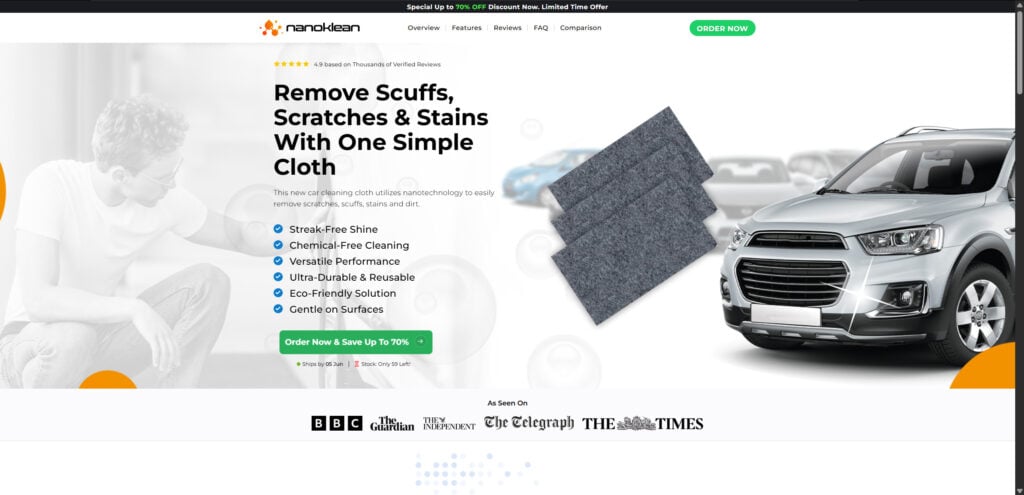
NanoKlean is marketed as a car cleaning and scratch-removal cloth that supposedly uses “nanotechnology” to remove scratches, scuffs, stains, dirt, and marks from vehicle paint.
The ads and product pages commonly claim it can:
- Remove scratches
- Remove scuffs
- Remove stains
- Restore shine
- Clean without chemicals
- Work on car paint
- Be gentle on surfaces
- Save money on detailing or body shop repairs
- Deliver results with one simple cloth
- Work quickly with minimal effort
- Be reusable and durable
- Provide a streak-free finish
The marketing makes NanoKlean look like a miracle car paint repair tool. The problem is that real scratch removal is not magic. It depends on the depth of the scratch, the condition of the clear coat, the type of paint damage, and the method used to level or polish the surface.
A cloth can clean. A cloth may apply a light polish or chemical residue. A cloth may temporarily hide some marks. But a cheap fabric pad cannot truly repair deep scratches, missing clear coat, damaged paint, primer-level scratches, or scratches that expose metal.
Why the NanoKlean Ads Are Misleading
The NanoKlean ads appear to rely on a familiar visual trick: show a car panel with visible scratches, wipe it with a cloth, and reveal a cleaner-looking surface.
That kind of demonstration can be misleading for several reasons.
Some “scratches” in ads may be surface marks, dirt transfer, chalk, wax residue, oxidation, paint transfer, or removable grime rather than actual paint damage. These can often be reduced with cleaning, polish, or solvent. That does not prove the cloth can remove real scratches.
Actual scratches are physical damage. If the scratch has cut through the clear coat or color coat, wiping it with a cloth will not replace missing paint. At most, the product may make the damage look less noticeable temporarily.
The more dramatic the ad looks, the more cautious buyers should be.
The Main Problem: A Cloth Cannot Fix Deep Paint Damage
Modern automotive paint usually has several layers:
- metal or plastic body panel
- primer
- color coat
- clear coat
Light scratches can sometimes be polished out if they are only in the outer clear coat. That is because polishing gently levels the surrounding clear coat so light reflects more evenly.
But deeper scratches are different.
If a scratch catches your fingernail, cuts through the clear coat, exposes color damage, reaches primer, or reaches bare metal, no cloth can truly remove it. It may temporarily hide it with oils, fillers, or residue, but it will not repair the paint structure.
A real repair may require:
- cleaning
- polishing compound
- machine polishing
- wet sanding
- touch-up paint
- clear coat
- blending
- professional refinishing
NanoKlean’s ads make the process look far easier than real paint correction usually is.
What Scratch Removers Can Actually Do
Scratch removers are not all fake. Some products can improve light surface defects.
A legitimate scratch remover may help with:
- light clear-coat scratches
- swirl marks
- fingernail marks around door handles
- mild paint transfer
- oxidation
- minor scuffs
- very fine surface scratches
But these products usually work through abrasive polishing, chemical cleaning, or filling. They require the right technique and realistic expectations.
They usually cannot fix:
- deep scratches
- cracked paint
- missing paint
- primer-level scratches
- key scratches
- dents
- gouges
- rust
- exposed metal
- peeling clear coat
- severe bumper damage
So if NanoKlean is being advertised as a one-cloth solution for scratches, stains, scuffs, and paint damage, the claim is too broad.
The Product Appears to Be a Cheap Generic Cloth
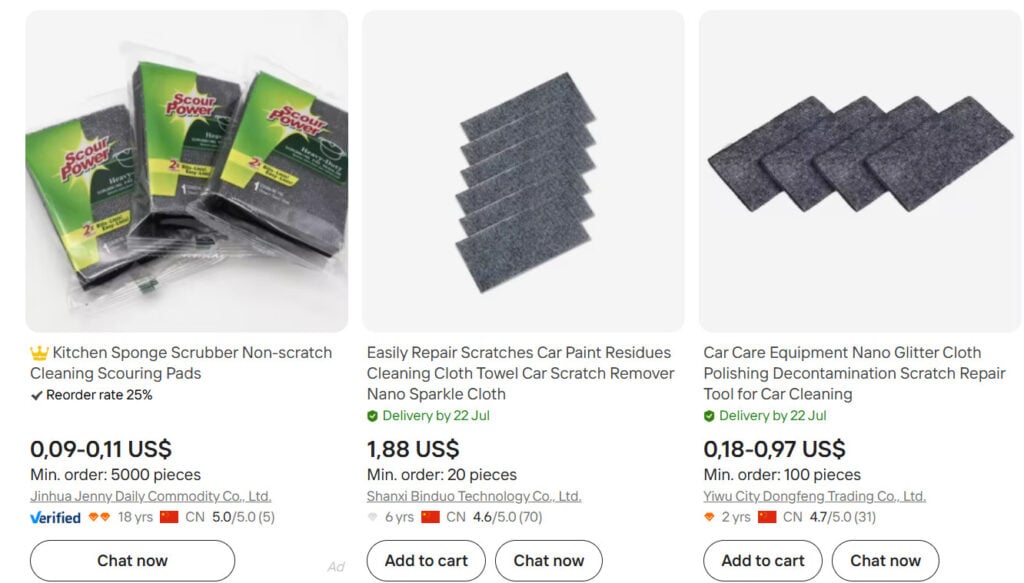
The biggest red flag is that similar “nano sparkle cloth,” “car scratch remover cloth,” and “car polishing cleaning cloth” products are widely sold by Chinese suppliers and low-cost marketplaces.
The user-provided supplier screenshots show very similar gray cloth products listed at extremely low wholesale prices, including examples around:
- $0.18 to $0.97 per unit
- $1.88 per unit
- cheap sponge or scouring pad variants
Some listings describe the same kind of product as a car scratch remover, polishing cloth, residue cleaner, or nano cleaning tool.
That is important. It suggests NanoKlean may not be a unique invention at all. It appears to be a generic cloth or abrasive cleaning pad rebranded with premium marketing.
The dropshipping pattern is simple:
- A seller finds a very cheap car cleaning cloth from a supplier.
- The cloth is renamed “NanoKlean.”
- A polished sales page is built around “nanotechnology.”
- Ads show dramatic scratch-removal videos.
- The product is sold at a much higher price.
- Refunds become difficult when buyers complain.
That does not mean every buyer receives nothing. The more likely issue is that buyers receive a real cloth, but it does not perform like the ads.
The “Nanotechnology” Claim Sounds Like Marketing
NanoKlean’s branding leans heavily on “nano” language. This is a common tactic in car care and cleaning ads.
Words like “nano,” “nanotech,” “nano-fiber,” and “nano repair” make a product sound advanced. But buyers should ask what the claim actually means.
Important questions include:
- What material is the cloth made from?
- What particles or coating are used?
- Is there an abrasive compound embedded in the cloth?
- Does it contain chemicals?
- Is the product independently tested?
- Is there proof it removes real clear-coat scratches?
- Is it safe for all paint types?
- Can it damage ceramic coating, wax, or clear coat?
- Does the seller provide before-and-after lab testing?
If the sales page does not answer these clearly, “nanotechnology” may simply be a buzzword.
The “As Seen On” Logos Are Suspicious
The NanoKlean sales page shown in the screenshot displays major media logos such as BBC, The Guardian, The Independent, The Telegraph, and The Times.
This is a common trust-building tactic. It makes the product look like it has been featured by major news outlets.
Buyers should verify this carefully. A page can show media logos without proving that the product was actually reviewed, tested, or recommended by those outlets.
If a product claims “As Seen On,” look for direct articles from those publishers naming the exact product. If you cannot find credible coverage, treat the logos as marketing decoration, not proof.
The Website Uses Fake Urgency
The NanoKlean page uses urgency tactics such as:
- “Special up to 70% off”
- “Limited time offer”
- “Stock: only 59 left”
- “Ships by” date
- large green order buttons
- low-stock warnings
These are designed to push buyers into ordering quickly.
This is common in dropshipping funnels. The sale often appears permanent, and stock warnings may refresh for every visitor.
Urgency is not proof of demand. It is a sales tactic.
Buyers May Be Pushed Into Multi-Pack Orders
NanoKlean checkout pages may promote multi-unit deals. One visible checkout result showed a package such as “3 NanoKlean Cloths, Get 4 FREE.”
That is another common dropshipping tactic.
The seller increases the order value by making buyers think they are getting a better deal. But if the product does not work, receiving several cloths only increases the frustration.
There is also a risk that buyers may accidentally order more units than intended through:
- preselected bundles
- “best value” offers
- post-purchase upsells
- downsell pages
- one-click add-ons
- confusing checkout layouts
- quantity changes
Before paying, buyers should screenshot the checkout page showing the exact quantity and final total.
Why Returns May Be Difficult
NanoKlean pages advertise a 30-day money-back guarantee. But that does not automatically mean refunds are easy.
The return policy matters more than the banner.
Customers may face:
- return shipping costs
- handling fees
- original packaging requirements
- support approval requirements
- tracking requirements
- inspection delays
- refunds only after the product is received
- partial refund offers
- no refund for shipping and handling
- confusion over which site processed the order
For a cheap imported cloth, return shipping and refund friction may make the process not worth pursuing.
This is one of the biggest problems with low-cost dropshipped products: the item may technically be returnable, but the practical process discourages buyers from getting their money back.
The Product May Damage Paint If Used Incorrectly
A scratch-removal cloth is not risk-free.
If the cloth contains abrasive material or is used on dirty paint, it may create more micro-scratches or swirl marks. Rubbing aggressively on a dry, dirty surface can grind dirt into the clear coat.
Possible risks include:
- dulling the clear coat
- removing wax or sealant
- damaging ceramic coating
- creating swirl marks
- making scratches look worse
- leaving residue
- uneven polishing
- haze on dark paint
- damage from over-rubbing
Dark-colored cars are especially unforgiving because swirl marks and haze show more clearly.
If buyers use NanoKlean, they should test it on a small hidden area first and avoid using it on dirty paint, matte paint, vinyl wrap, ceramic coating, or damaged clear coat without confirming safety.
What Buyers Actually Receive
Most buyers should expect a simple cloth or pad, not a professional scratch repair system.
Possible outcomes include:
- it removes dirt or surface stains
- it reduces light paint transfer
- it makes shallow marks look less visible
- it leaves oily or polished residue
- it does nothing to real scratches
- it does not work on deep damage
- it creates haze if overused
- it removes wax or coating
- it performs like a cheap cleaning pad
That is very different from the ad impression that one cloth can erase scratches and restore paint instantly.
Main Red Flags
- Claims to remove scratches, scuffs, stains, and dirt with one cloth.
- Uses “nanotechnology” language without clear technical proof.
- Ads show dramatic instant scratch removal.
- Similar cloths are sold by Chinese suppliers for very low prices.
- Product appears to be a generic rebranded cleaning cloth.
- Uses up to 70% off discount pressure.
- Uses low-stock warnings and “ships by” urgency.
- Displays major media logos that should be independently verified.
- Multi-pack checkout offers may increase order size.
- Refunds may require return shipping and handling fees.
- A cloth cannot repair deep paint damage.
- Incorrect use may create haze or micro-scratches.
- Buyers may receive a cheap cloth that performs nothing like the ads.
Is NanoKlean a Scam?
NanoKlean may ship a physical product, so this may not be a simple “pay and receive nothing” scam.
The scam concern is the marketing.
NanoKlean appears to be a high-risk dropshipping-style car care product because it combines exaggerated scratch-removal claims, generic low-cost supplier similarities, “nano” buzzwords, fake urgency, multi-pack upsells, and refund friction.
The cloth may clean some marks or reduce very light surface scuffs. But buyers should not expect it to erase real scratches, repair clear coat, restore missing paint, or replace professional polishing and paint correction.
A fair conclusion is this:
NanoKlean is likely an overpriced generic scratch-remover cloth marketed as a miracle car repair tool.
What NanoKlean Can and Cannot Do
NanoKlean may help with:
- light surface marks
- dirt transfer
- mild scuffs
- very light clear-coat haze
- minor residue
- cleaning small areas
- temporary shine improvement
NanoKlean is unlikely to fix:
- key scratches
- deep scratches
- primer-level damage
- exposed metal
- cracked clear coat
- peeling paint
- rust
- dents
- gouges
- damaged bumpers
- stone chips
- severe swirl marks
- ceramic coating damage
If the scratch is deep enough to catch your fingernail, a simple cloth is unlikely to remove it.
How to Check Whether a Scratch Is Too Deep
A simple test is the fingernail test.
Gently run your fingernail across the scratch.
If your nail does not catch, the scratch may be in the surface clear coat and could be improved by polishing.
If your nail catches, the scratch is likely deeper and may need more than a cloth or basic scratch remover.
Also look at the scratch color:
- white or cloudy mark: may be clear-coat damage
- same color as paint but dull: may be clear-coat scuff
- different color underneath: may have reached primer
- silver or metal visible: paint is gone
- black plastic visible on bumper: paint has been removed
A cloth cannot replace missing paint.
What To Do Before Buying
1. Compare similar cloths first
Search for:
- nano sparkle cloth
- car scratch remover cloth
- magic car scratch cloth
- nano cleaning cloth car
- car polishing cloth scratch remover
- scratch repair cloth wholesale
If the same-looking cloth appears for a few dollars or less, that is a sign the product is generic.
2. Do not trust the ad demonstration alone
Videos can be staged using:
- surface dirt
- removable paint transfer
- wax marks
- water
- polish residue
- lighting tricks
- edited clips
- shallow clear-coat scuffs
Real scratch repair should be judged on real, close-up, unedited tests.
3. Avoid multi-pack bundles
Do not buy 3, 5, or 7 cloths before testing one. If the product does not work, the larger bundle increases your loss.
4. Read the return policy carefully
Check:
- who pays return shipping
- whether there is a handling fee
- whether opened or used cloths qualify
- whether original packaging is required
- refund processing time
- whether shipping and handling are refunded
- return address location
5. Use a payment method with buyer protection
Use a credit card or PayPal when possible. Avoid payment methods that make disputes harder.
What To Do If You Already Ordered NanoKlean
1. Check your order confirmation
Confirm:
- quantity ordered
- total amount charged
- shipping fees
- handling fees
- merchant name
- delivery estimate
- whether any upsell was added
2. Save the ad and product page
Save screenshots of:
- scratch-removal claims
- nanotechnology claims
- discount offer
- media logos
- low-stock warning
- checkout page
- return policy
- order confirmation
This helps if you need to dispute the charge.
3. Do not use it immediately on visible paint
Test it first on a small hidden area. Make sure the surface is clean. Do not rub aggressively.
4. Document results
If the product does not work, take before-and-after photos or videos under the same lighting.
5. Request a refund quickly
If the product fails to match the advertised claims, contact support within the return window.
Use clear wording:
“The product was advertised as a scratch remover, but it did not remove the scratches as shown in the ad. I am requesting a refund under the advertised guarantee.”
6. Do not accept vague support delays
If support stalls until the return period expires, escalate.
7. Dispute if necessary
Contact your bank, credit card issuer, or PayPal if:
- the product never arrives
- you were charged for more units than ordered
- the product is not as advertised
- the seller refuses the advertised guarantee
- the return process is unreasonable
- support does not respond
- the cloth damages your car paint
Use clear wording such as:
- “item not as described”
- “misleading advertising”
- “merchant refuses advertised refund”
- “unauthorized quantity charged”
- “product did not perform as advertised”
Safer Alternatives to NanoKlean
If your car has scratches, use the right solution for the damage.
For very light marks:
- wash and dry the car properly
- use a reputable polish or scratch remover
- use a clean microfiber applicator
- work gently in a small area
- protect with wax or sealant afterward
For deeper scratches:
- use touch-up paint
- use a clear-coat repair kit
- visit a detailer
- visit a body shop
- consider professional machine polishing
For paint transfer:
- use car-safe cleaner or polish
- avoid harsh household solvents
- test in a hidden area first
For ceramic-coated cars:
- contact the installer or a professional detailer before using abrasive cloths
FAQ
What is NanoKlean?
NanoKlean is a car cleaning and scratch-removal cloth marketed as a nanotechnology solution for scratches, scuffs, stains, and dirt.
Is NanoKlean a scam?
NanoKlean may ship a real cloth, but the offer has several red flags: exaggerated scratch-removal claims, generic low-cost product similarities, fake urgency, multi-pack upsells, and refund friction.
Can NanoKlean really remove scratches?
It may reduce very light surface marks or scuffs, but it is unlikely to remove deep scratches, missing paint, primer-level damage, or scratches that catch your fingernail.
Is NanoKlean really nanotechnology?
The marketing uses “nano” language, but buyers should ask for real technical proof. Many cheap cleaning products use “nano” as a buzzword.
Why do the ads look so convincing?
The ads may show removable marks, paint transfer, dirt, wax residue, or shallow scuffs rather than real deep scratches. Lighting and editing can also exaggerate results.
Is NanoKlean sold on multiple sites?
Yes, NanoKlean appears across several related domains and sales pages, including get-nanoklean.com and nanoklean.org-style promotional pages.
Is NanoKlean a cheap product from China?
Very similar scratch-remover cloths and nano cleaning pads are sold by Chinese suppliers for low wholesale prices. This supports the generic dropshipping concern.
Can NanoKlean damage paint?
Possibly, especially if used aggressively, used on dirty paint, or if the cloth is abrasive. It may create haze, remove wax, or add micro-scratches.
Are refunds easy?
Not necessarily. The site advertises a 30-day guarantee, but returns may involve shipping costs, handling fees, approval steps, and original packaging requirements.
Should I buy NanoKlean?
Be cautious. If you want to try it, buy only one, avoid bundles, test on a hidden area, and do not expect professional scratch repair.
The Bottom Line
NanoKlean Scratch Remover Cloth is marketed as a simple nanotech solution for car scratches, stains, and scuffs. The ads make it look like a miracle cloth that can restore damaged paint in seconds.
In reality, the product appears to be a cheap generic scratch-remover or polishing cloth sold through a dropshipping-style funnel. Similar cloths are available from Chinese suppliers at very low prices, while NanoKlean’s marketing uses dramatic demos, 70% discounts, low-stock warnings, and broad claims that go far beyond what a cloth can realistically do.
NanoKlean may clean light marks or temporarily reduce the appearance of minor scuffs. But it should not be treated as a real solution for deep scratches, missing paint, or clear-coat damage. Buyers should compare alternatives, avoid multi-pack upsells, read the return policy carefully, and use proven car paint repair methods when the damage is more than superficial.

Join the discussion
0 commentsShare your experience or ask a question about this article.
Discussion
Start the conversation
Have a question or something useful to share? Add the first comment.