

At first glance, it looks like the kind of lucky find that disappears in minutes. A Nintendo Switch 2, a clean product photo, and a price low enough to stop almost anyone from scrolling.
But one detail changes how the entire offer should be read. It is easy to miss when attention stays on the price, and it is where a possible Nintendo Switch 2 listing scam begins.
Overview
The $200 price creates the feeling of a rare opportunity
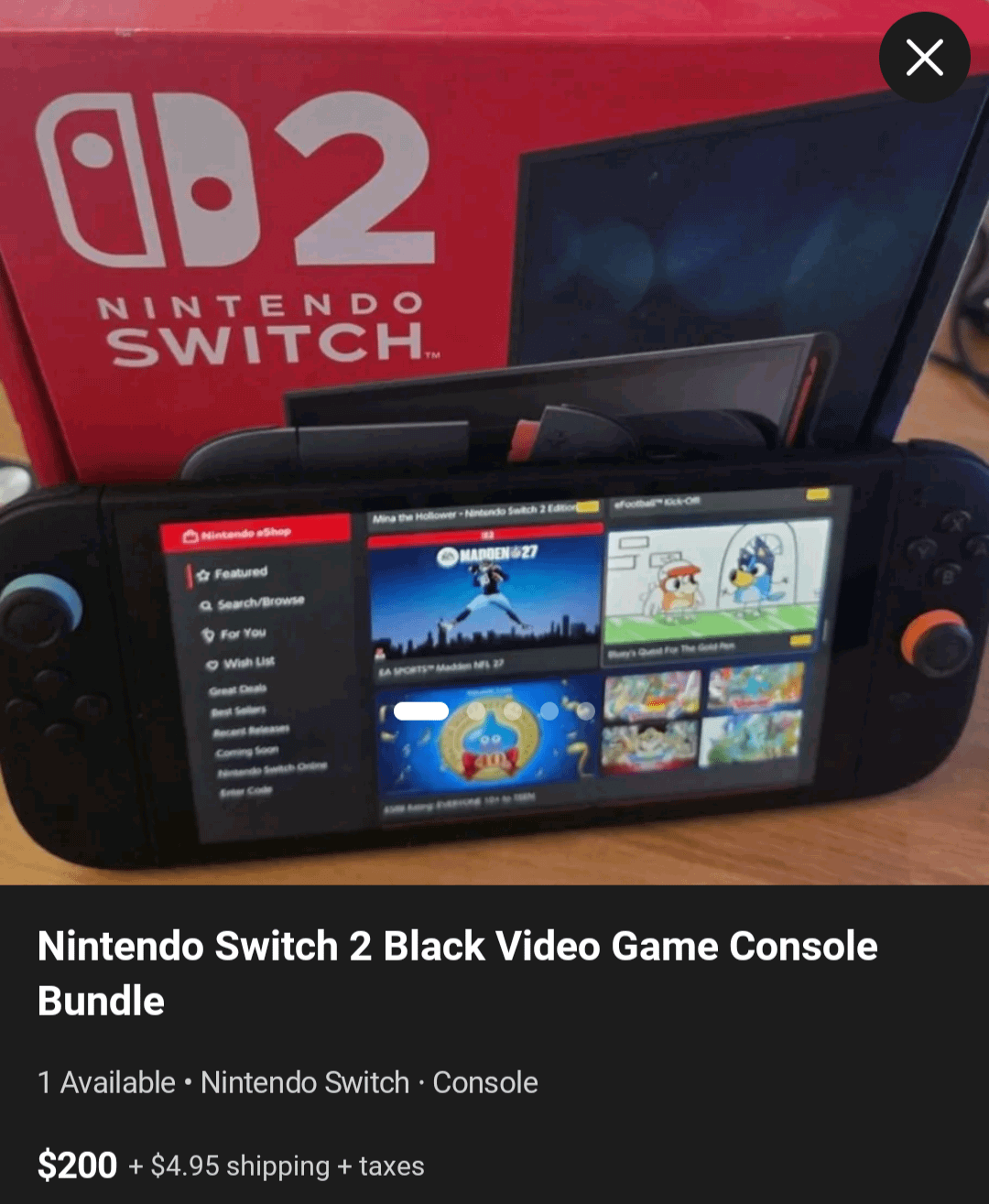
A recent consumer report highlighted several cheap Switch 2 listings on Whatnot that used this pattern. One showed a console bundle for $200, far below the official retail price visible when the listing was reviewed.
The product photo alone does not prove that the seller possesses the console. It could be copied, reused, or generated. Even an original-looking photo does not establish who took it or whether the pictured device will ever be shipped.
The hidden clue moves the sale outside Whatnot
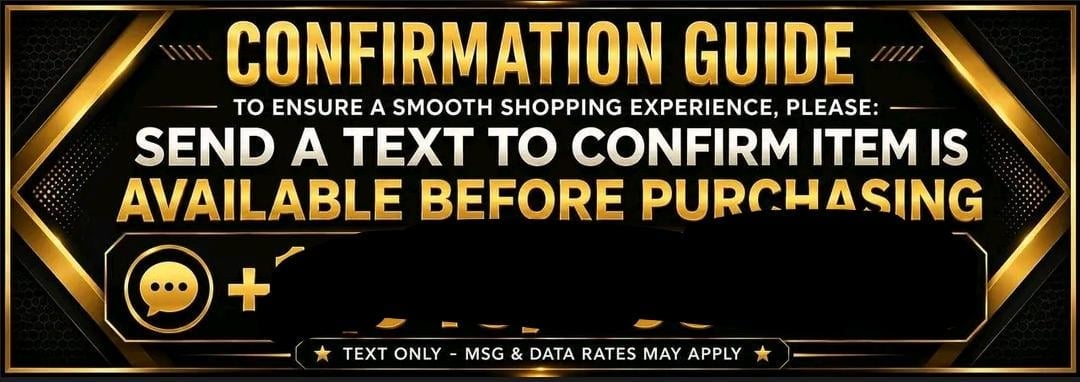
Another listing image tells shoppers to send a text to confirm that the item is available before purchasing. The phone number was hidden in the public report, so no private contact information is reproduced here.
The low price attracts attention, while the text instruction creates a private route away from the listing. Once the conversation leaves Whatnot, the person behind the ad can change the price, invent a special payment method, or send a different checkout link.
Whatnot tells users to keep transaction conversations and payments on its platform. It also warns that it cannot support transactions completed elsewhere. A request to text is therefore not a harmless convenience when it is tied to a sale.
The payment switch, not the low price alone, creates the danger
A phone number by itself does not take money. The danger comes when the contact replies with instructions to use Zelle, Cash App, a bank transfer, cryptocurrency, gift cards, or PayPal Friends and Family.
Those methods may be legitimate between people who know each other, but they are poor substitutes for a marketplace checkout. They can remove buyer protection and make a fraudulent payment difficult to reverse.
Used consoles can be discounted for honest reasons. A seller may need money quickly, the box may be damaged, accessories may be missing, or the device may have cosmetic wear. Price alone is not proof of fraud.
The combination is what matters. Immediate warning signs include:
- A product image contains a phone number or tells buyers to text.
- The seller discourages use of the marketplace checkout.
- The price is dramatically lower than comparable verified listings.
- The seller promises a private discount for paying another way.
- The account has little history or unrelated listings with similar instructions.
- The seller refuses to provide fresh proof that the console exists.
Why the Phone Number Is the Biggest Red Flag
A marketplace already provides messaging, checkout, order records, shipping updates, and dispute tools. A genuine seller does not need a buyer’s mobile number to confirm that an item shown as available is available.
Moving the conversation to SMS separates the pitch from the platform’s records. Moderators may still see the public listing, but they may not see later promises, payment instructions, pressure tactics, or links delivered by text.
The seller can also continue contacting the buyer after the listing disappears. If one marketplace account is suspended, the same number can redirect victims to a different account, payment tag, or imitation checkout page.
Text messages feel personal and immediate. A scammer can claim that several buyers are waiting, the console will be held for ten minutes, or the discount applies only if payment is sent now. That urgency is easier to create in a private exchange.
Whatnot’s own seller guidance says not to share phone numbers, email addresses, or social handles for the purpose of moving transactions off-platform. It also prohibits asking for or accepting payment outside the platform.
The instruction in the listing may avoid saying “pay me by text.” It only says to confirm availability. That first step sounds modest, but it opens the channel needed for the payment switch.
How the Nintendo Switch 2 Listing Scam Works
Step 1: A scarce, desirable console is listed at a shockingly low price
The seller chooses a product with broad demand and an easily recognized retail value. A price such as $200 creates a strong feeling that another buyer will act first.
The listing may show a console, retail box, accessories, or an on-screen menu. Those details make the offer feel tangible without proving who took the photo or owns the device.
Step 2: An image tells the buyer to text before purchasing
Instead of placing the instruction only in the description, the operator may embed it in a polished graphic. The image can say “confirmation guide,” “text only,” or “confirm item is available before purchasing.”
Text inside an image may also be less obvious to automated listing checks than ordinary description text. The graphic makes an unusual demand resemble part of a professional sales process.
Step 3: The buyer is moved outside the marketplace
The shopper sends a message and receives a friendly reply. The contact may confirm that the console is available, answer simple questions, and claim that the marketplace charges excessive fees.
At this stage, the scammer is building trust and learning whether the buyer will follow instructions. The marketplace can no longer see the complete conversation.
Step 4: A reason is invented for using another payment method
The contact may offer free shipping, a lower price, or faster delivery if the buyer pays directly. Another version claims the marketplace checkout is broken, the seller has reached a payment limit, or an order must be “reserved” with a deposit.
No explanation changes the underlying risk. A seller who wants the protections of a marketplace transaction should complete the sale through that marketplace.
Step 5: The buyer sends a payment with little protection
The requested payment may be presented as a transfer to a trusted individual rather than a purchase from an unknown seller. The recipient name may not match the marketplace profile.
Some operators send a fake invoice or a page that imitates Whatnot, PayPal, or a delivery company. The page can collect card information, account credentials, or a one-time security code in addition to the payment.
Step 6: Shipping proof is delayed, recycled, or fabricated
After payment, the seller may provide a tracking number that is invalid, belongs to another shipment, or shows delivery only to the buyer’s city. A photo of a labeled box can also be copied or edited.
Excuses keep the buyer waiting until the payment becomes harder to dispute. The seller may blame weekends, warehouse delays, a carrier scan, or a relative who supposedly handles shipping.
Step 7: The listing, account, and phone route disappear
Once challenged, the operator can block the number, remove the listing, or abandon the marketplace profile. Similar listings can return under new names with the same basic phone-number graphic.
This rotation is why searching only one seller name is not enough. The story, payment detour, reused product images, contact pattern, and shipping excuses matter more than a temporary account label.
Why Nintendo Switch 2 Is Effective Bait
Popular game consoles combine high demand with a price that many buyers want to reduce. Shoppers already expect limited promotions, bundles, open-box units, and fast-moving resale listings, so an unusually cheap offer can appear possible for a moment.
The Switch 2 also has a familiar visual identity. A scammer can collect convincing product photos from retail pages, reviews, completed sales, or social media. AI tools can generate additional promotional graphics around those images.
A buyer may rationalize missing details because the apparent savings are large. The thought is not “this is definitely safe,” but “I should ask before someone else buys it.” That is exactly the action the phone-number graphic requests.
The product’s value also makes a private payment worthwhile to a criminal. One successful transfer can produce more money than many low-cost phishing attempts, while the operator never needs to store, package, or ship a console.
The same method can target graphics cards, smartphones, cameras, concert tickets, collectible cards, sneakers, and other desirable items. The product changes, but the off-platform detour remains the essential mechanism.
Company, Address, and Fulfillment Checks
A marketplace profile is not a verified business identity
A username, profile photo, and polished description can be created quickly. Check the account’s age, completed sales, review pattern, live activity, and whether its other products make sense together.
Reviews deserve context. Repetitive praise, many reviews posted close together, or feedback for inexpensive unrelated items does not prove that an expensive console will be delivered.
A phone number does not reveal who will receive the money
The number may be temporary, internet-based, forwarded, or controlled by someone whose identity differs from the payment recipient. A familiar area code does not establish that the seller lives nearby.
Do not use caller-identification apps as proof of ownership. Their labels can be outdated, user-submitted, or wrong. The safest identity trail is the one recorded inside the marketplace order.
A real shipping address should exist inside a protected order
Do not accept a privately typed warehouse address, return address, or shipping label as proof. Labels can be prepared without handing a parcel to the carrier, and addresses can belong to unrelated homes or forwarding services.
Fulfillment should be attached to the marketplace order, with tracking that corresponds to the purchase. Keep all messages, status updates, and delivery evidence in that order record.
The console’s origin and condition must be traceable
Ask for current photos showing the exact console, box, included accessories, and a handwritten note with the seller’s username and date. A short video can show the device powering on and reaching its system settings.
Never ask the seller to publish a complete serial number. Request enough information through the platform to compare the device with the receipt and packaging while keeping sensitive identifiers out of public view.
How to Check a Cheap Console Listing Safely
Start with a price comparison. Look at the official retail price and several completed or established marketplace sales. A major gap needs a concrete explanation such as damage, missing parts, or a clearly described used condition.
Reverse-search the product photos. A match on an old auction, retailer, review, or another seller’s account shows that the image does not prove possession. No match does not make the listing genuine because generated or newly stolen images may not be indexed.
Read the entire account history. A new seller can be honest, but a new account offering only high-demand electronics at deep discounts deserves more caution. Look for sudden category changes and identical wording across multiple listings.
Ask specific questions through Whatnot’s own messaging system. Which accessories are included? Is the console sealed, used, repaired, or banned from online services? Why is the price low? Honest answers should remain consistent with the photos and description.
Request fresh proof without moving to SMS. A legitimate seller can add a new listing image or respond through the platform. Refusal, irritation, or repeated attempts to redirect the conversation are stronger warnings than a simple delay.
Finally, pay only through the marketplace checkout. Whatnot says eligible on-platform purchases receive Buyer Protection, while off-platform transactions do not receive the same safeguards or platform support.
What a Legitimate Switch 2 Listing Should Explain
A complete listing should identify the exact model or bundle, condition, included Joy-Con controllers, dock, cables, packaging, games, and any missing pieces. Stock images should not replace photos of a used device.
The seller should disclose scratches, screen damage, controller problems, repairs, liquid exposure, account restrictions, or other defects. A low price sometimes reflects a real fault, but that fault must be described before checkout.
Shipping cost, handling time, carrier, return conditions, and the marketplace’s protection process should be visible or available within the platform. A seller should not rewrite those terms after moving the buyer to text.
For a sealed console, proof of purchase can help establish origin and warranty status. For a used one, fresh power-on evidence and consistent device details are more useful than a glossy marketing image.
No single check guarantees safety. The goal is to build a consistent record inside the protected transaction system. A genuine seller benefits from that record too because it documents what was promised and shipped.
Payment Methods That Remove Your Safety Net
Zelle and similar transfer services are designed primarily for sending money to people or businesses you trust. A completed authorized transfer can be difficult to recover merely because the promised item never arrives.
PayPal Goods and Services and PayPal Friends and Family are not interchangeable. A scammer may insist on the friends option to avoid purchase protections and fees. That request is incompatible with a sale to a stranger.
Gift cards and cryptocurrency are even more dangerous in this setting. The codes or coins can be transferred rapidly, and the recipient can disappear without creating a normal consumer purchase record.
A card used through an imitation checkout introduces another problem. The scammer may obtain the card number, security code, billing information, and one-time authentication prompt. The page can steal data even if it later displays “payment failed.”
The Federal Trade Commission advises marketplace shoppers not to buy from sellers who insist on payment outside the marketplace. Leaving the approved checkout can mean losing the site’s refund and dispute protections.
Warning Signs Before You Text or Pay
- The listing image contains contact information instead of normal product details.
- The seller claims platform messaging is unavailable while the listing remains active.
- A private payment produces an extra discount that was not in the listing.
- The payment recipient has a different name with no credible explanation.
- The seller will not add fresh proof to the marketplace conversation.
- A timer, waiting buyer, emergency, or travel story pressures immediate payment.
- The tracking page arrives through an unfamiliar shortened link.
- The seller asks for a one-time code, card PIN, or account password.
A scam can look polished and still contain these structural problems. Judge how the transaction works, not how attractive the console photo or “confirmation guide” appears.
What to Do if You Have Fallen Victim to This Scam
- Stop communicating and do not send another payment. Ignore claims that a second transfer is needed for insurance, customs, delivery release, or a refund. Additional fees usually deepen the loss.
- Preserve the complete record. Save the listing URL, seller profile, images, SMS conversation, phone number, payment receipt, recipient name, tracking details, and timestamps. Take screenshots before accounts or messages disappear.
- Report the seller to Whatnot. Identify the public listing and explain that it directed buyers to text and pay outside the platform. Include the private payment request so the safety team can connect the account with the off-platform conduct.
- Contact the payment provider immediately. Tell it that the transfer funded a suspected marketplace scam. Ask whether the transaction can be recalled, disputed, frozen, or traced. Speed matters, but recovery is not guaranteed.
- Protect any exposed financial account. If you entered card or banking information on a linked page, contact the issuer through its official app or number. Replace compromised cards, review transactions, and reject unknown authentication prompts.
- Secure accounts whose credentials were entered. Change the password from a trusted device, sign out other sessions, and enable two-factor authentication. If you downloaded a file or app, run a full Malwarebytes scan to check for common threats.
- Block further malicious pages. AdGuard can stop many known phishing domains, redirects, and harmful ads. It cannot make an off-platform payment safe, so continue checking the seller, URL, and checkout route.
- File fraud reports and watch for recovery scams. Report the incident to the FTC, local police when appropriate, and relevant financial institutions. Do not pay anyone who guarantees recovery or asks for remote access, gift cards, or a security code.
Frequently Asked Questions
Is every $200 Nintendo Switch 2 listing a scam?
No. A damaged, incomplete, used, or urgently sold console could be priced far below retail. The risk rises sharply when the seller also asks buyers to leave the marketplace, text privately, or use an unprotected payment method.
Why would a seller put a phone number inside an image?
The image makes the instruction look like part of the listing and may reduce automated detection of the text. It also gives the operator a contact route that can survive after a listing or account is removed.
Can I safely text the number without paying?
Sending a text confirms that your number is active and exposes it to further pitches or phishing. There is no reason to take that risk when the marketplace already provides a messaging system.
What if the seller says Whatnot fees are too high?
Fees do not justify bypassing the rules and protections of the platform used to find the buyer. If the seller will not complete the advertised transaction through Whatnot, walk away.
Does a tracking number prove the console was shipped?
No. A number may be newly created, invalid, recycled, or associated with another parcel. Follow tracking through the carrier’s official site and keep it tied to the protected marketplace order.
Will Whatnot refund a payment sent through another app?
Whatnot says off-platform transactions do not receive the same protections and cannot be supported like purchases made through its checkout. Contact the payment provider immediately, but do not assume the marketplace can reverse a private transfer.
The Bottom Line
A Nintendo Switch 2 listing scam does not need to begin with an obviously fake website. It can begin inside a familiar marketplace with a tempting product, a copied photo, and one instruction that moves the buyer to text.
The safest response is simple: do not text, do not follow a private checkout link, and do not send payment outside the marketplace. Report the listing and buy only through a protected order that records the seller’s promises, payment, and shipment.








