

Quitting smoking can feel like fighting the same urge dozens of times each day. That makes a small, drug-free breathing tool sound unusually appealing.
Noluva sold BreathLink with confident success claims and a reassuring guarantee. The surviving evidence tells a more complicated story that buyers should understand.
Overview
Noluva BreathLink was a breathing necklace, not a medical treatment
BreathLink was a hollow pendant that users inhaled through when a cigarette craving appeared. It supplied resistance, ritual, and something to hold near the mouth.
That behavior may feel calming for some people. Slow breathing and replacing a familiar hand-to-mouth habit can provide a momentary distraction from an urge.
Those modest possibilities are different from proving that the necklace treats nicotine dependence. We found no product-specific clinical trial validating Noluva’s advertised success claims.
The same basic item appears under many storefronts
Nearly identical breathing necklaces are sold under BreathLink, Noluva, Proustore, and other names. Prices, guarantees, review totals, and supposed technologies vary between sellers.
Current promotional pages still call the device “patented” and describe “Cognitive Inhalation Technology.” They do not provide a patent number or independent test identifying unique technology.
Marketplace listings describe comparable products more plainly as hollow breathing necklaces. Brand language can therefore add perceived sophistication without changing the simple physical object.
The old sales trail raises practical concerns
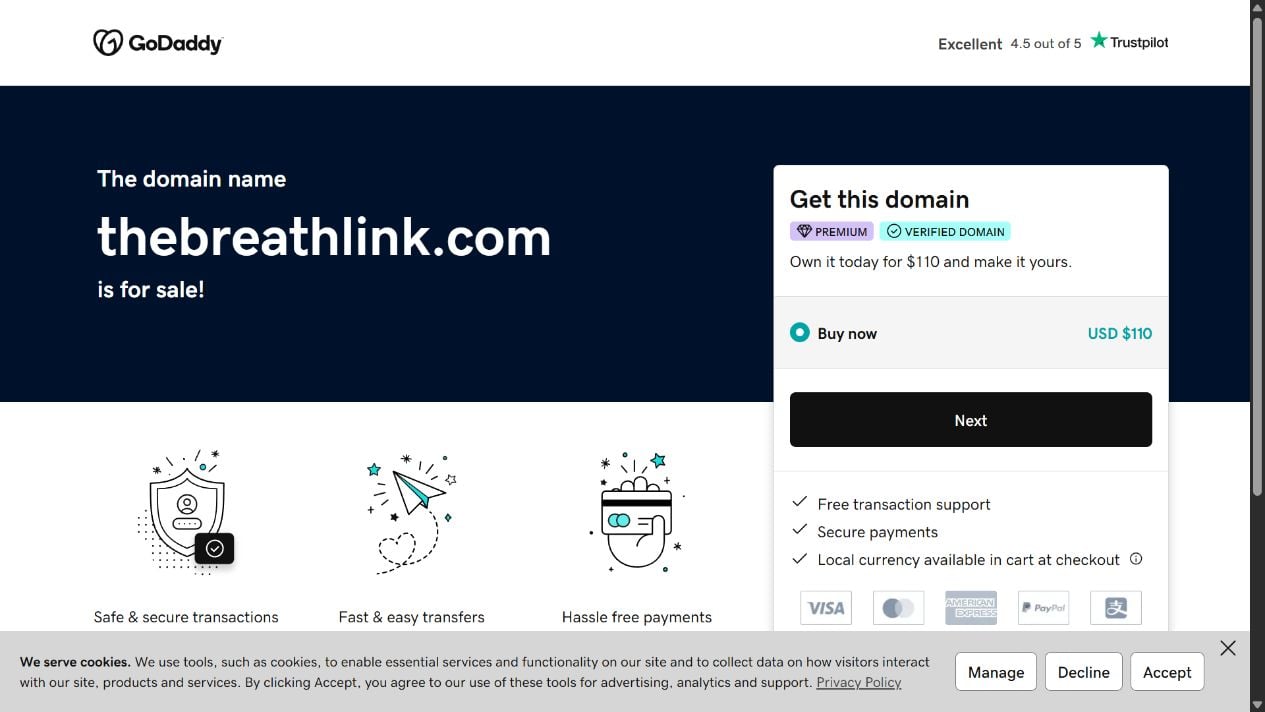
Noluva’s original product presence has become difficult to verify. A BreathLink-branded domain now redirects to a domain-sale page instead of customer support.
Nuvoula, the store linked by customer accounts to Noluva BreathLink purchases, currently presents itself mainly as a fashion and accessories retailer.
Public reviews describe delayed deliveries, wrong addresses, repetitive support responses, and prolonged return negotiations. These are allegations from customers, not independently adjudicated findings.
- The necklace is a real physical product with a simple function.
- Evidence does not support a 94% quit-smoking success rate.
- Very similar items appear across unrelated-looking stores.
- Historical buyers report delivery and refund difficulties.
- The former BreathLink domain no longer operates as a store.
- There is no evidence that the necklace replaces proven cessation care.
Is Noluva BreathLink a Scam?
Noluva BreathLink was not an imaginary product. Buyers could receive a metal breathing pendant, and similar devices remain available from multiple online sellers.
The central problem is the gap between the object and the promise. A hollow breathing tube was promoted as a high-success solution for nicotine addiction.
Calling it useless for every person would also go too far. A breathing ritual may interrupt a craving, occupy the hands, or support relaxation.
However, those subjective benefits do not establish that BreathLink directly reduces dependence or produces the advertised quit rate.
The marketing becomes misleading when a behavioral aid is presented as patented science without accessible proof, then surrounded by unverifiable testimonials and urgency.
Customer complaints add commercial risk. Several reviewers say support delayed returns, proposed partial refunds, or provided return instructions only after repeated emails.
Our conclusion is narrow. Noluva BreathLink appears to have been a real, inexpensive-style breathing accessory sold with unsupported health claims and significant service concerns.
What the Quit-Smoking Evidence Actually Supports
Nicotine dependence involves brain chemistry, withdrawal, routines, triggers, stress, and social cues. No single necklace addresses all those factors.
The CDC says counseling and approved medication each help people quit. Used together, they can more than double the chance of success.
Evidence-based options include nicotine patches, gum, lozenges, inhalers, nasal spray, bupropion, and varenicline. Suitability depends on health history and professional advice.
Telephone quitlines, text programs, web support, and structured counseling can also help. These services teach planning, trigger management, relapse recovery, and medication use.
Breathing exercises may reduce immediate tension. They can be added to a quit plan, but they should not be confused with treatment for withdrawal.
A strong study would randomly assign participants, define abstinence objectively, publish follow-up periods, and disclose funding. Noluva’s marketing did not provide that evidence.
A percentage such as 94% sounds scientific because it is precise. Without a sample, method, comparison group, and published results, it is only a marketing number.
How the Noluva BreathLink Offer Worked
Step 1: The advertisement targeted a difficult, emotional goal
The message began with familiar frustration. Smokers were reminded about health, cost, smell, family concerns, and failed attempts using other methods.
The pendant then appeared as a simple answer that avoided medication, appointments, withdrawal plans, and complicated instructions.
This contrast made the purchase feel low risk. Instead of beginning a medical program, the buyer only needed to wear a necklace and breathe through it.
Step 2: Ordinary airflow became branded technology
Sales copy described “Cognitive Inhalation Technology” that supposedly mimicked smoking and satisfied the brain. The phrase sounded technical but remained poorly defined.
The device’s visible function was straightforward. Air moved through a narrow metal tube, creating resistance while reproducing part of the smoking gesture.
No accessible patent number, engineering specification, or independent product study established that Noluva’s pendant contained a unique cessation mechanism.
Step 3: Precise success claims created borrowed authority
BreathLink promotions have claimed that 94% of users quit within weeks. We found the number repeated across seller pages without an identifiable published trial.
Testimonials described cravings disappearing quickly and users becoming smoke-free. Personal stories can be genuine, edited, recycled, or supplied by marketers.
Even authentic experiences cannot show how many buyers failed, relapsed, used medication, or never completed a return survey.
Step 4: Bundles and discounts increased the order value
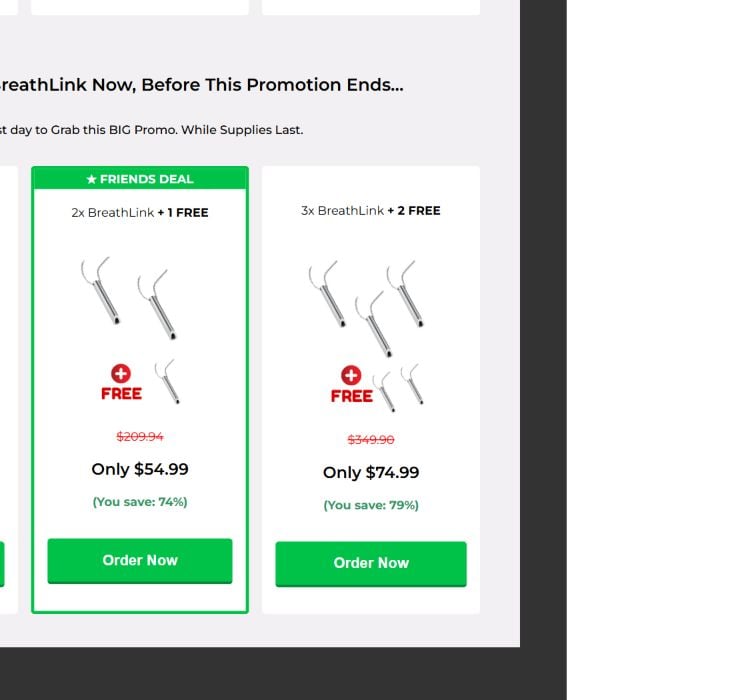
Current BreathLink funnels offer one pendant, then make three-unit and five-unit packages appear substantially cheaper per item.
The bundle logic encourages buyers to purchase gifts or backups before they know whether one device feels helpful.
Large crossed-out prices can make a generic accessory appear premium. Similar necklaces sold elsewhere provide a useful reality check on ordinary market value.
Step 5: A broad guarantee removed hesitation
Marketing pages commonly promise 30-day or 60-day money-back protection. The wording suggests a simple refund if the customer is dissatisfied.
Historical Nuvoula reviewers describe a different experience. Some report repeated emails, partial-refund offers, overseas returns, or delays before receiving instructions.
A written guarantee is only as useful as the process behind it. Buyers need a working address, responsive support, clear deadlines, and affordable return shipping.
Step 6: The brand could disappear while the product continued elsewhere
The old BreathLink domain now appears parked for sale. Meanwhile, other websites continue selling nearly identical pendants using almost identical claims.
This illustrates why consumers should investigate the legal seller, not only the name printed above the checkout button.
If one campaign vanishes, the physical product and advertising script can reappear through another domain, brand, affiliate page, or social-media account.
Why the Product Is Not Equivalent to Proven Cessation Help
Smoking urges have both behavioral and pharmacological components. Replacing the gesture may address one routine while leaving nicotine withdrawal untouched.
Withdrawal can include irritability, anxiety, poor concentration, sleep disruption, increased appetite, and strong cravings. These symptoms vary in severity and duration.
A hollow pendant does not deliver nicotine replacement, block nicotine receptors, or provide individualized counseling. Its likely role is closer to a breathing prompt.
That distinction matters because delayed treatment can prolong smoking. A person may keep buying accessories while avoiding methods supported by stronger evidence.
The safest interpretation is modest. BreathLink may remind someone to pause and breathe, but it should not carry a clinical success percentage without clinical evidence.
People with anxiety, respiratory symptoms, pregnancy, or medication questions should discuss quitting options with a qualified clinician.
The Reviews and Guarantee Need Context
Review pages for Nuvoula contain both positive and negative accounts. The strongest recurring complaints involve shipping, communication, product differences, and returns.
Review platforms do not independently test every order. A complaint describes one customer’s experience, while a favorable review does not validate medical claims.
The pattern still matters when many users describe similar obstacles. It signals that buyers should preserve records and clarify the return destination before ordering.
Nuvoula currently lists a Michigan address and explicitly says it is not a return address. Trustpilot lists a Riga, Latvia contact location.
Different operational, mailing, and return addresses can be legitimate. The seller should clearly identify which entity takes payment and where eligible returns must go.
A partial refund can be practical when international postage costs more than the product. It should remain the customer’s choice, not a substitute for promised rights.
Company, Address, and Fulfillment Checks
The product name did not clearly identify the contracting seller
Noluva appeared as the product branding, while reviewers connected orders with Nuvoula. Current pages do not clearly preserve the original BreathLink contracting information.
A brand can be separate from the legal merchant. The receipt and card descriptor are more useful than a logo when requesting support or disputing a charge.
The visible address is not presented as a returns facility
Nuvoula currently lists 2388 Heronwood Drive, Bloomfield Hills, Michigan, and labels it “no return address.” That warning prevents buyers from safely mailing goods there.
Consumers should obtain written return authorization and the exact destination. Sending a parcel to an unapproved address may jeopardize both delivery and refund eligibility.
Telephone and email support changed across the sales trail
The current Nuvoula site publishes an email address and telephone number. Older reviewers frequently describe email-only contact or slow, repetitive responses.
Support details can change after a campaign ends. Save the information displayed when ordering, including screenshots, timestamps, and the checkout domain.
Fulfillment evidence points to a widely resold item
Comparable hollow pendants appear through many marketplaces and storefronts. That pattern suggests white-label sourcing rather than a unique Noluva invention.
White-label goods are not automatically fraudulent. The risk comes from inflated claims, unclear accountability, inconsistent pricing, and difficult cross-border returns.
What to Check Before Buying Any BreathLink Necklace
Ask for the legal seller’s full name, physical address, support number, return country, and card-statement descriptor before placing an order.
Request the patent number and clinical study supporting any success percentage. A seller making scientific claims should identify evidence that can be independently reviewed.
Compare the item with generic breathing necklaces. Look at materials, diameter, cleaning instructions, chain quality, and the total delivered price.
Read the return policy for hygiene exclusions. A seller may reject an opened mouth-contact product even while advertising a satisfaction guarantee.
Confirm the quantity at checkout. Bundle selectors can change the order from one pendant to several, sometimes with accessories or shipping protection added.
Use a credit card or PayPal when available. Avoid payment methods that make charge disputes difficult.
Build a quit plan around proven support. A breathing tool should remain optional and should not replace counseling or approved medication.
What to Do if You Have Fallen Victim to This Scam
- Save every document. Keep the order confirmation, receipt, advertisement, guarantee, checkout total, tracking, emails, package label, and photographs of the delivered item.
- Identify the merchant. Check the receipt and card statement for the billing descriptor. The merchant may differ from the Noluva name shown in the advertisement.
- Request cancellation immediately. Send one clear message containing the order number, purchase date, requested remedy, and deadline under the advertised policy.
- Demand written return instructions. Ask for the destination, authorization number, eligible refund, postage responsibility, hygiene conditions, and final mailing date.
- Do not mail to an unconfirmed address. A corporate or website address may not process returns. Use tracking and retain the carrier’s acceptance receipt.
- Reject unwanted substitutions politely. If support offers store credit or a partial refund, state whether you accept it. Preserve the original guarantee language.
- Contact the payment provider when justified. Describe non-delivery, wrong goods, unauthorized quantity, or a refund refusal accurately. Submit your documentation promptly.
- Use proven quitting support. Contact a clinician or quitline. Counseling and approved medication can address dependence more comprehensively than a necklace.
- Secure the device used for ordering. Scan it with Malwarebytes. AdGuard can reduce malicious advertisements, trackers, pop-ups, and repeat funnel redirects.
Frequently Asked Questions
Does Noluva BreathLink really help people quit smoking?
It may support a breathing ritual or oral substitute, but no accessible product-specific trial proves that it reliably ends nicotine dependence.
Is BreathLink more than a hollow metal tube?
The visible product functions as a narrow breathing tube. Sellers use branded technology language, but we found no disclosed patent proving a unique mechanism.
Is the advertised 94% success rate credible?
Not without a published method, sample, comparison group, abstinence definition, and follow-up. The sales pages do not provide those essentials.
Was Noluva BreathLink an automatic subscription?
We found bundle marketing and refund complaints, but not reliable evidence proving that every Noluva order enrolled buyers in recurring billing.
Why do so many websites sell the same necklace?
The design appears widely available for resale. Different stores can apply new names, prices, review totals, guarantees, and marketing claims to similar goods.
What should I use instead when trying to quit?
Discuss counseling, quitlines, nicotine replacement, bupropion, or varenicline with a qualified professional. The best option depends on your health and preferences.
The Bottom Line
Noluva BreathLink was a real breathing accessory, but its dramatic quit-smoking claims were not supported by accessible product-specific clinical evidence.
Customer reports about delivery and returns, a vanished product domain, and many lookalike sellers make the commercial offer especially difficult to trust.
Use breathing exercises if they help, but treat the necklace as an optional habit prompt. For nicotine dependence, rely on proven support and documented sellers.

Join the discussion
0 commentsShare your experience or ask a question about this article.
Discussion
Start the conversation
Have a question or something useful to share? Add the first comment.