

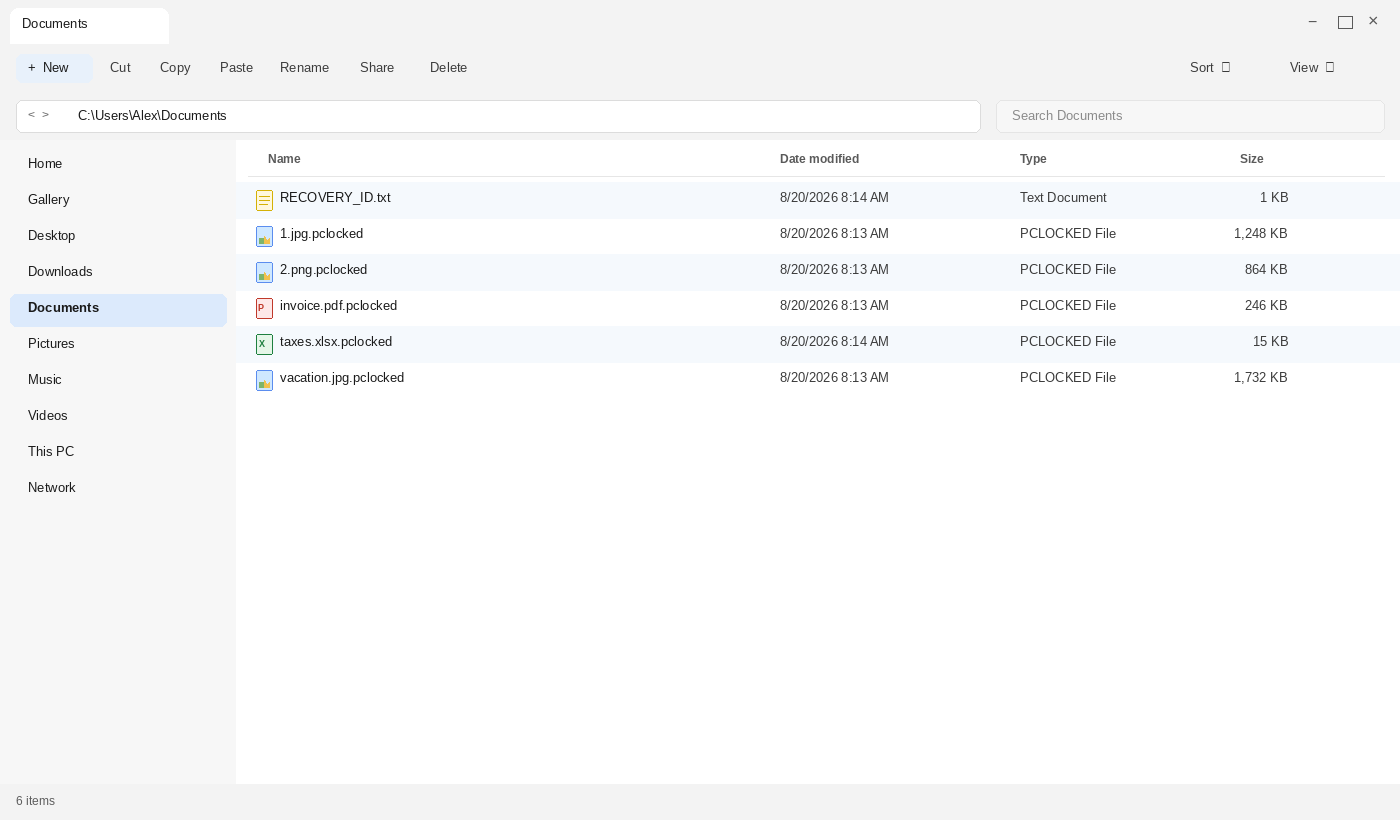
You open Documents the way you did yesterday. The invoice should still be invoice.pdf. The first photo should still be 1.jpg. The snapshot should still be 2.png. The tax sheet should still be taxes.xlsx. Instead every familiar name has a second ending tacked on. invoice.pdf is now invoice.pdf.pclocked. 1.jpg is now 1.jpg.pclocked. 2.png is now 2.png.pclocked. A small text file named RECOVERY_ID.txt is sitting in the same folder, as if it has always belonged there.
That is the trap, not a glitch.
This page is for the hour those names appear. It is not a miracle key. It is a map of the trap, so the note does not become your incident plan.
Overview
PCLocked ransomware locks the files first. Then it keeps the old name and the old type, and hangs .pclocked on the end. Then it drops RECOVERY_ID.txt and talks like a recovery desk that also wants to look like a lab. The note is a storefront. It says all your files are encrypted. It tells you to place a file named DECRYPT_ME.txt with the key on your desktop. It tells you to obtain that key by writing up-coding@proton.me with your Decryption Code. On the sample used for this page, the Decryption Code line is blank. It is printed as a dash. Then the flyer warns that if you lose this Code, the files cannot be decrypted. Then it adds the costume that makes this family feel different from a loud Bitcoin shop: Note: This is a Experiment. If you get compromised by this, please contact up-coding@proton.me to obtain your decryption code for free.
If you are staring at a pile of .pclocked files and that text note, you are in a ransom incident, not a broken disk and not a Windows lock screen. The folder is the evidence. The note is a checkout, even when the checkout pretends the key is free. Stay with the folder, not with the script.
The first tell is the rename. In the sample used for this page, 1.jpg becomes 1.jpg.pclocked. 2.png becomes 2.png.pclocked. invoice.pdf becomes invoice.pdf.pclocked. taxes.xlsx becomes taxes.xlsx.pclocked. vacation.jpg becomes vacation.jpg.pclocked. You can still read what the file used to be. You cannot open it. Windows may call the type a PCLOCKED File and offer a useless “choose an app” box. An app cannot talk locked bytes back into a JPEG or a PDF.
The second tell is the note. After the files are locked, the malware drops RECOVERY_ID.txt into the same folders. RECOVERY sounds like a case number. ID sounds like a ticket. A .txt ending is something Windows already trusts. Put them together and the first English you can still read after the photos break is a sales flyer. The flyer is meant to be opened. It is not meant to be trusted.
The body of that sample is short on purpose. All your files are encrypted. To recover them, place ‘DECRYPT_ME.txt’ with the key on your desktop. To obtain a key, please write an E-Mail to up-coding@proton.me with your Decryption Code. Decryption Code: then a dash. If you lose this Code, your files CANNOT be decrypted anymore. Note: This is a Experiment. If you get compromised by this, please contact up-coding@proton.me to obtain your decryption code for free. That is the whole costume.
There is no $ amount. There is no Bitcoin wallet. There is no onion site. There is no Session ID. This page will not invent them. A missing price is not a puzzle you solve by mailing the inbox. A blank Decryption Code is not a field you are supposed to guess. The note already named the only steps it wants: write up-coding@proton.me, send a code it did not print, then create DECRYPT_ME.txt on the desktop with a key it also did not print. Following those steps is the product.
That is the whole pitch. A locked folder of .pclocked names. A RECOVERY_ID.txt file that talks like a case file. A desktop ritual named DECRYPT_ME.txt. One Proton address. A Decryption Code line left blank on the sample. A warning that losing a code you were never given ruins the files. A line that calls the lock an experiment and offers the code for free. There is no public free decryptor known for this strain. There is no reason to mail that inbox today because a text file called itself a lab. This is not a full-screen “your PC is locked” scare, and it is not a smear of a real company that happens to share similar words. It is file-encrypting ransomware with .pclocked, RECOVERY_ID.txt, and up-coding@proton.me.
The .pclocked name is the first warning
Most lockers pick an extension so you notice the change in seconds. This family uses .pclocked. The extra cruelty is how readable the listing stays. You do not have to decode anything. You can still see invoice.pdf inside invoice.pdf.pclocked. You can still see 1.jpg inside 1.jpg.pclocked. You can still see 2.png inside 2.png.pclocked. The familiar words are still in the folder. The files are not familiar anymore.
Do not treat that readable name as a fix. Do not strip .pclocked off the end and expect Photos or a PDF reader to open the file. Do not run a bulk “extension fixer” you found in an ad. The name is a label. The lock is in the content. Editing the label can make a later trusted tool have a harder time matching the file to what it was. Leave the locked copies as they are until you have a clean machine and a plan that does not start in a criminal inbox.
The extra ending also does advertising. Anyone who sees invoice.pdf.pclocked next to RECOVERY_ID.txt can pretend they already have your case. A later fake helper will quote the extension back to you as if that were expertise. The extension is public. It is sitting in the folder. Quoting it proves nothing except that they can read a listing.
RECOVERY_ID.txt is a sales floor, not a help file
The ransom note is a plain text file with a name that sounds like a ticket. RECOVERY_ID.txt wants the first click after the panic. Plenty of real software drops an ID file. This one uses that habit against you. It is meant to be the first English you can still read when the photos will not open and the invoice will not print.
Double-clicking it opens Notepad. That is why a panicked first click feels like opening the case file. It is not a case file. It is the demand, written so it looks official enough to follow. The filename is built to look like paperwork. RECOVERY. ID. A .txt ending Windows already trusts. Paperwork is easier to obey than a threat. A line that says This is a Experiment makes the rest of the flyer feel like a lab note instead of a shop.
Keep the file on disk. Then close it. Do not treat it as a set of steps you should follow. Do not tidy the filename. Do not shorten it to “the recovery note” when you write the incident down. Copy RECOVERY_ID.txt the way you would copy a serial off a stolen laptop. That string is how a responder matches this locker. It is not a coupon you redeem by mailing up-coding@proton.me.
DECRYPT_ME.txt on the desktop is a ritual, not a repair
The note tells you to recover the files by placing DECRYPT_ME.txt with the key on your desktop. That sentence is a ritual. It gives you a job that feels technical. Create a file. Put a key in it. Drop it on the desktop. Wait. It is the kind of step a panicked person will do because it looks like following instructions. The sample does not print a key. This page will not invent one. Do not create DECRYPT_ME.txt with a pasted “key” from mail, from a comment, or from a stranger who says they already have the experiment code.
A file you are told to create is not evidence that was already on the disk. RECOVERY_ID.txt is evidence. The .pclocked names are evidence. DECRYPT_ME.txt is a prop they want you to build. Building it does not unlock invoice.pdf.pclocked. It only proves you are still following the flyer. If a later message sends a long string and says “put this in DECRYPT_ME.txt,” that is still the same shop, or a copycat standing in the same doorway. Do not paste it. Do not run a helper that watches the desktop for that filename.
If you already created an empty DECRYPT_ME.txt before you found this page, leave it alone until a trusted responder says otherwise. Do not fill it. Do not delete every copy of RECOVERY_ID.txt because you think the desktop file replaced it. The note that asked for the ritual is the artifact. The ritual file is not.
up-coding@proton.me is checkout, not a research desk
The printed contact is up-coding@proton.me. That is the aisle. Proton in the address does not mean a privacy company is on the other end. It does not mean a research group. It does not mean a coding class. It is a mailbox the people who locked the files can delete whenever they like. A private inbox puts you in a room they own, with a thread they can screenshot and reuse. “Write an E-Mail” is how they make that first message feel like the only polite move left.
Do not open a fresh mail account because the note said to. Do not send a test file to prove you are a real victim. Do not paste a folder listing into a new message. Do not attach RECOVERY_ID.txt “so they can match your ID.” They already chose the extension. They already chose the note name. A photo of invoice.pdf.pclocked sitting next to that text file does not make you a verified customer. It makes you a person still following the flyer.
The handle is branding, the same way .pclocked is branding. up-coding sounds like a student project. proton.me sounds like a careful adult. Together they sell the experiment line. Anyone can stand up a lookalike inbox after a wave of locked folders. Writing the first message does not start a warranty. It starts a conversation you cannot enforce. Free is how they get people who think of themselves as too careful to pay a loud Bitcoin shop.
Decryption Code: – is blank on the sample
The note says to write up-coding@proton.me with your Decryption Code. Then it prints Decryption Code: and a dash. On the sample used for this page, that line is blank. This page will not invent a code to finish it. A missing code is not a puzzle. It is how the flyer is printed. If your own copy on disk still shows only a dash, treat the dash as evidence. Do not type a string from a forum into that line “just to complete the form.”
The blank is useful to the shop. It makes you feel unfinished. It makes you feel that the next mail will finally hand you the missing ID. It also gives later helpers a hole to fill. Someone will publish a long code and call it the PCLocked Decryption Code. Someone will ask you to send the dash, a screenshot, and a sample file so they can “look up your ID.” None of that is a reason to finish their sentence. The sample used for this page does not print a code. Do not invent one.
A code string, if a later copy on disk actually shows one, is an identifier for a responder. It is not a password you redeem by mailing up-coding@proton.me. Copy it into the incident record. Then leave it alone. Do not send it. Do not paste it into DECRYPT_ME.txt.
If you lose this Code is a threat printed without a code
The note warns that if you lose this Code, your files cannot be decrypted anymore. That line is meant to make you clutch a thing you were never given. On the sample, the Code field is a dash. The warning still shouts CANNOT in capital letters. You are supposed to feel that waiting overnight is how the key dies. It is a fuse made of missing paper.
Do not start a personal countdown because a comment said the code expires. Do not print the note ten times because you are afraid of losing a dash. Keep one clean copy of RECOVERY_ID.txt as evidence. Losing a photocopy of a blank line does not change the bytes in vacation.jpg.pclocked. Mailing up-coding@proton.me “before the code is lost” is still mailing the people who locked the files.
This is a Experiment is still a locker inbox
The last beat is the one that makes people hesitate to call this ransomware. Note: This is a Experiment. If you get compromised by this, please contact up-coding@proton.me to obtain your decryption code for free. That sentence is on the note. Name the mechanism. Do not treat it as a real research project. Do not treat it as a student lab that accidentally locked a stranger. A locker that encrypts invoice.pdf into invoice.pdf.pclocked and then offers a free key by mail is still a locker. Free is the price that gets the thread started.
A real lab does not drop RECOVERY_ID.txt into every folder and ask you to build DECRYPT_ME.txt on the desktop. A real disclosure desk does not need you to send a Decryption Code that the flyer left blank. “Please contact” is still a hook. “For free” is still a checkout with $0 printed on the tag. $0 does not make up-coding@proton.me safe. It makes the first mail easier to justify at 1 a.m.
Do not write them to “get the free code and be done.” Do not write them to scold a supposed experiment. Do not write them to ask whether your machine was a test. The people who locked the files do not get a customer-service rating. They get silence, a clean copy of the note, and a report through a desk you choose.
This is not a Windows lock-screen scare
Older scares used a full-screen notice that said your PC was locked. Tech-support pop-ups did the same trick with a fake FBI page and a phone number. This family is not that costume. Windows still boots. Explorer still opens. The wallpaper can still be yours. The damage is in the files. 1.jpg.pclocked next to RECOVERY_ID.txt is the tell. If you are looking for a lock screen and you do not see one, that absence is not a clean bill of health.
Do not mix this incident with a brand that happens to sound like “PC locked” in ordinary English. This page is about the file locker that appends .pclocked, drops RECOVERY_ID.txt, and points at up-coding@proton.me. It is not a review of a real company, a real product, or a lock-screen scare from another decade. If a later helper shows you a red full-screen image and calls it PCLocked, they are selling the wrong story. Stay with the folder in front of you.
No $ amount and no wallet is still a checkout
Plenty of lockers print a number so you can panic-convert it at the kitchen table. This one does not. There is no $ figure. There is no Bitcoin line. There is no wallet string. There is no onion chat. There is no Session ID to copy into a portal. The missing numbers are not mercy. They are a shorter path to the inbox. Other families use a price so you feel the purchase is already quoted. This family skips the quote, calls itself an experiment, and sells the conversation. You are supposed to feel that the only remaining step is to write and wait for a free code.
Do not invent a $ amount because a forum post guessed one. Do not invent a Bitcoin address to finish RECOVERY_ID.txt. Do not invent a Session ID because other ransomware families print one. Do not invent an onion link because you expected a dark-web shop. The published flyer has none of those. A stranger who adds a price, a wallet, a timer, or a “pay if the free key fails” discount is rewriting the flyer so they can stand in the aisle. The original shop already named the mail. It did not need a fuse, and it did not need a printed $ tag.
Silence is not rude here. Silence is how you stay out of their queue. A relative, an insurer, or an incident lead can still talk on a phone. The people who locked the files do not get a seat in that call.
How The Attack Works
The shop is simple once you stop reading it as a lab. Lock the files. Brand the names with .pclocked. Drop a recovery-ID note that claims encryption, a desktop ritual, and a blank code. Point the scared person at up-coding@proton.me. Warn that losing a code you were never given ruins the files. Call the whole thing an experiment and offer the code for free. Then wait for someone else to sell a pasted key for DECRYPT_ME.txt.
1. The lock keeps the old name so you recognize the loss
PCLocked encrypts the files it wants as leverage, then appends .pclocked. That is why 1.jpg is still readable as 1.jpg.pclocked, and why invoice.pdf is still readable as invoice.pdf.pclocked. The operators want you to inventory the damage in seconds. They want you to see the invoice, the photos, and the tax sheet in one glance. A coded filename can confuse you. A readable filename makes you feel the theft.
If only one folder looks wrong, do not assume the rest of the disk is safe. Ransomware walks trees. It hits Documents, Desktop, Pictures, Downloads, and any drive letter it can reach, including a USB stick you forgot was plugged in. Unplug extra disks. Do not plug in a copy “just to check.” Checking is how the extra copy gets the same .pclocked ending.
Double-clicking a renamed file does not bring the photo back. The thumbnail may already look broken. A PDF reader may ask for a document that is still sitting in the same folder, only the bytes inside are no longer a document. That broken open is the first proof. The second proof is the extra ending. Together they are enough. You do not need to mail up-coding@proton.me to confirm what you are looking at.
2. RECOVERY_ID.txt turns a break-in into a ticket
Once the names are branded, the malware needs a voice. RECOVERY_ID.txt is that voice. It sits in the same folders as the locked files so the first sort puts help next to harm. On many machines a text file sorts near the top, especially with a name in capitals. You open it because it looks like the only thing that still speaks English.
The body is short enough to finish before a relative walks into the room. All files encrypted. Place DECRYPT_ME.txt on the desktop. Write an E-Mail with your Decryption Code. A dash where the code should be. CANNOT if you lose it. This is a Experiment. Free code if you get compromised. Each beat closes a door. The first line closes “maybe this is a glitch.” The desktop ritual closes “maybe I should wait for IT.” The blank code closes “maybe I already have the ID somewhere.” The experiment line closes “maybe this is not really ransomware” by handing you a finished excuse to write.
Notice what the note does not give you. It does not give you a company, a refund policy, or a way to prove the other side will ever send a key. It does not give you a $ amount. It does not give you a wallet. It does not give you a test decrypt. It does not give you a Session ID. It does not even give you the Decryption Code it told you to send. It gives you a tone that says this is already decided, and that the decision is a favor. That tone is the product. Read the file as a sales flyer. Then close it. Keep it on disk.
3. Place DECRYPT_ME.txt on the desktop is unpaid labor
To recover them, place ‘DECRYPT_ME.txt’ with the key on your desktop, is not a repair procedure. It is a way to keep you busy in their story. You are supposed to feel one step away from a fix. You are supposed to hunt for a key that the same flyer never printed. You are supposed to put a file where they told you to put it, as if the locker were watching the desktop like a real product.
Do not create that file with a pasted key. Do not download a “PCLocked decryptor” that claims it will write the file for you. Do not move RECOVERY_ID.txt to the desktop and rename it. The note asked for a new file with a key. The sample has no key. Leave the ritual unbuilt. If a later mail says “here is the free experiment key, drop it on the desktop,” that is still the checkout. A string in a text file is not invoice.pdf opening again.
4. Write up-coding@proton.me with your Decryption Code is the door
The recovery step in the sample is mail. Write an E-Mail to up-coding@proton.me with your Decryption Code. That is the whole door. It looks like support because support uses email, and because the domain says proton.me. Criminal shops use free webmail too, because a thread is where a blank code becomes a negotiation and a locked photo becomes a sample they asked you to attach.
Do not write that inbox. Do not create a throwaway account “just to see.” Do not send a screenshot of Explorer to prove the lock. They already chose the extension. They already chose the note name. A photo of RECOVERY_ID.txt sitting next to invoice.pdf.pclocked does not make you a verified customer. It makes you a person still following the flyer.
If someone later says they will “talk to the experiment for you” through that same address, that is a broker pitch. Brokers need you in the same funnel. You do not owe them a seat. Report the incident through official desks. Let counsel decide if contact is ever required for a specific legal reason. That decision is not yours to make from the Documents folder at midnight. And it is not Proton support. A privacy company did not lock 1.jpg.pclocked.
5. The blank Decryption Code is meant to make you write anyway
The note tells you to include your Decryption Code, then prints a dash. That pair is not a printer error you should fix. It is how the flyer keeps you incomplete. You are supposed to feel that the ID exists somewhere: in another folder, in a pop-up you closed, in a mail you have not sent yet. Hunting a missing ID is how a person stays in the incident instead of leaving the room and calling someone they trust.
Do not invent a code. Do not send the dash. Do not send “Decryption Code: -” as if a blank form were a ticket. Do not ask a relative to guess what belongs on that line. If a later copy of the note on another machine shows a filled string, keep that file as evidence. Do not copy the string into a public screenshot. Do not mail it to up-coding@proton.me.
6. If you lose this Code is a timer they did not print
Other families print a 48-hour clock or a 7-day key threat. This sample prints a loss warning instead. If you lose this Code, your files CANNOT be decrypted anymore. That is a timer made of fear. You are supposed to feel that stalling is how the key dies. The key was not printed. The warning is still there. It is not a reason to mail up-coding@proton.me “so the code is not lost.”
Do not add a countdown yourself. Do not start a personal fuse because a comment said they only wait two days. The published flyer did not print a fuse. It printed pressure. Leave the fuse uninvented. If you need to report this, report it to a real desk you choose. Do not let the operators volunteer as your messenger to anyone.
7. Free experiment is bait for the first mail
This is a Experiment is not a disclosure. It is a costume. Obtain your decryption code for free is not generosity. It is how they remove the last excuse for delay. You do not have to “ask what it costs.” The tag already says free. The remaining step is the mail. The note has already done the quoting, with $0 where other families print 0.5 BTC.
Low ransoms travel well. A free ask travels even better. It is easy to repeat in a family group. It is easy to treat like a support ticket. It is easy to round into “maybe we can just get this over with, they said it is an experiment.” It is still a message to the people who locked family photos into .pclocked names. It still funds the next copy of the same locker if a later mail invents a price. It still does not produce a warranty. Free is how they get people who think of themselves as too careful to pay a big crew.
Do not treat the experiment line as a real research project. Do not search for a company named PC Locked and leave a review. Do not smear a real business that happens to share ordinary English words. The identifiers for this locker are the extension, the note filename, and the Proton address. Stay with those. The CISA StopRansomware Guide is blunt about this kind of squeeze. Paying does not ensure the files come back, does not ensure the systems are clean, and does not ensure anyone on the other side keeps a promise. A free-code offer does not change that math. Mailing is still contact. Sending the code is still cooperating with the shop.
8. This is file encryption, not a lock-screen pop-up
If you came here because an old scare said “PC locked” in a full-screen banner, look again. This family does not need to freeze the desktop to hurt you. It needs invoice.pdf.pclocked and a note you can still double-click. You can still open Explorer. You can still see the names. That is the point. A lock screen is a fight with the display. This is a fight with the files. Closing a window will not restore 2.png.
Do not run a “PC unlock” tool from an ad because the family name sounds like a freeze. Do not call a number from a pop-up and read RECOVERY_ID.txt to the person who answers. A remote helper who asks you to create DECRYPT_ME.txt while they watch is still in the same market. Stay with the folder. Stay off the phone with strangers who found you.
9. Third parties will sell a PCLocked conversation
After a ransomware incident, search results fill up with companies that say they can decrypt PCLocked or “all .pclocked files.” Some of those shops are ordinary overpriced consultants. Plenty are a second scam. They will quote RECOVERY_ID.txt so they sound close to the case. They will mention the experiment line. They will mention up-coding@proton.me as if they already called the original crew. They will ask for a sample file, a remote-access session, or a deposit. They will offer to write DECRYPT_ME.txt for you.
A demo that “unlocks one file” is not proof they can unlock the invoice. Anyone can open one junk file they control. Anyone can send you a string and tell you to drop it on the desktop. A new text file on the desktop is not Photos opening vacation.jpg again. If a later message skips the original inbox and asks for coin over ordinary mail, that is still the same market, or a copycat standing in the same doorway. Do not answer. Do not help them invent a $ amount the original note left out on purpose.
A real public decryptor, when one exists, shows up on an official project page that already existed before your incident. It does not need a mail to up-coding@proton.me. It does not need you to build DECRYPT_ME.txt. If the pitch is “we can decrypt, pay us first,” you are still in the market the ransomware created. There is no public free decryptor known for this strain. Until a trusted project publishes one, treat any site that says “we already have the PCLocked key” as a second sales pitch. The experiment line on the note is not that project.
10. Payment and mailing that inbox close nothing
Paying a stranger for a private key is not a guarantee. The people who send the note can take the money and disappear. They can send a string that only makes a decryptor show an error. They can come back later and lock the same machine again. A mail thread makes that outcome easier, not harder. You cannot leave a review on a criminal inbox. A free-code promise does not add a warranty. It only removes the $ figure from the first sentence.
Mailing up-coding@proton.me is the free version of the same dead end. There is no public free decryptor known for this strain. Starting a thread does not rebuild a JPEG. It only keeps you in their story while the rest of the disk still needs a real plan. “Obtain your decryption code for free” is not a service-level agreement. It is a hook. Do not send the code. Do not send a dash. Do not send a sample.
If this is a company machine, tell counsel and your incident lead. If this is a home PC, tell the people whose files lived on it. Change passwords from a clean device. Watch bank and email alerts. Opening that Proton address again is not useful work. It is the checkout, even when the flyer printed no $ amount, no wallet, no onion, and a blank Decryption Code.
What To Do If Your Files End in .pclocked
Do not pay. Do not mail up-coding@proton.me. That address is not a research desk and it is not Proton support. Do not create DECRYPT_ME.txt with a pasted “key.” Do not send the Decryption Code. On the sample the Code line is blank. Do not invent a $ amount, a Bitcoin wallet, an onion link, or a Session ID to finish RECOVERY_ID.txt. Do not treat “This is a Experiment” as a real lab. If you already sent a message before you found this page, stop there. Do not pay a deposit to “hold the free key” for anyone who quotes the note.
- STEP 1: Use Rkill to terminate suspicious programs.
- STEP 2: Use Malwarebytes to remove Ransomware and Unwanted Programs
- STEP 3: Use HitmanPro to remove Trojans and other Malware
- STEP 4: Use AdwCleaner to remove Malicious Browser Extensions and Adware
- STEP 5: Perform a final check with ESET Online Scanner
- STEP 6: Restore the files encrypted by ransomware
STEP 1: Use Rkill to terminate suspicious programs.
In this first step, we will download and run Rkill to terminate suspicious programs that may be running on your computer.
RKill is a program that was developed at BleepingComputer.com that attempts to terminate known malware processes so that your normal security software can then run and clean your computer of infections. When RKill runs it will kill malware processes and then removes incorrect executable associations and fixes policies that stop us from using certain tools.
-
Download Rkill.
You can download RKill to your computer from the below link. When at the download page, click on the Download Now button labeled iExplore.exe. We are downloading a renamed version of Rkill (iExplore.exe) because some malware will not allow processes to run unless they have a certain filename.
Download RKillOpens the BleepingComputer download page in a new tab. RKillStops malware processes so other tools can run
 -
Run RKill.
After downloading, double-click the iExplore.exe icon to kill malicious processes. In most cases, downloaded files are saved to the Downloads folder.
The program may take some time to search for and end various malware programs.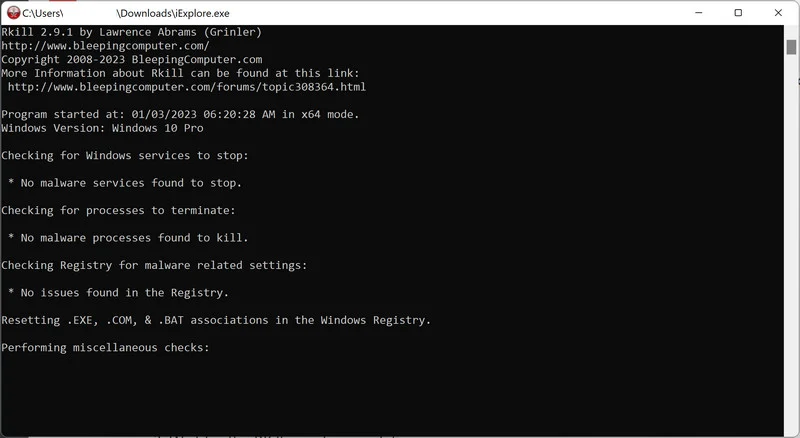
When it is finished, the black window will close automatically and a log file will open. Do not restart your computer. Proceed to the next step in this guide.
STEP 2: Use Malwarebytes to remove Ransomware and Unwanted Programs
In this second step, we will install Malwarebytes to scan and remove any infections, adware, or potentially unwanted programs that may be present on your computer.
Malwarebytes is one of the most popular and trusted anti-malware tools for Windows — and it’s completely free for removing infections. It catches threats that many antivirus programs miss, including adware, browser hijackers, and trojans. Follow the steps below to scan and clean your PC in just a few minutes.
Download Malwarebytes
Click the button below to download the latest version of Malwarebytes for Windows from the official source. The free version is all you need — it will scan your computer and remove adware, browser hijackers, and other malicious software at no cost.
Download MalwarebytesOfficial installer for Windows 11 and 10. Your download starts right away.Want real-time protection? See Malwarebytes Premium Malwarebytes Free for WindowsScans and removes malware at no cost
-
Install Malwarebytes
When the download finishes, open your Downloads folder and double-click the MBSetup file. If Windows shows a User Account Control pop-up, click “Yes” to allow the installation.
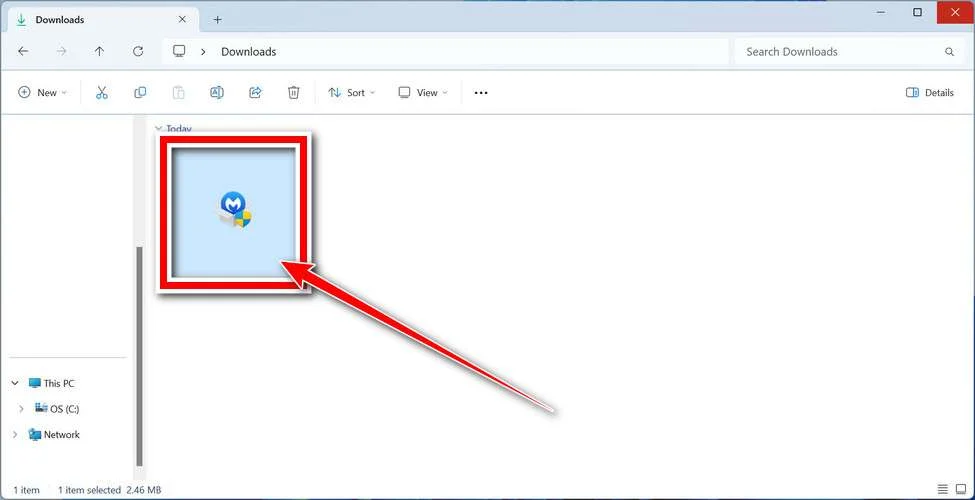
Follow the On-Screen Prompts to Install Malwarebytes
The setup wizard will walk you through a few quick screens:
-
Choose where you’re installing the program — “Personal Computer” or “Work Computer” — then click Next.
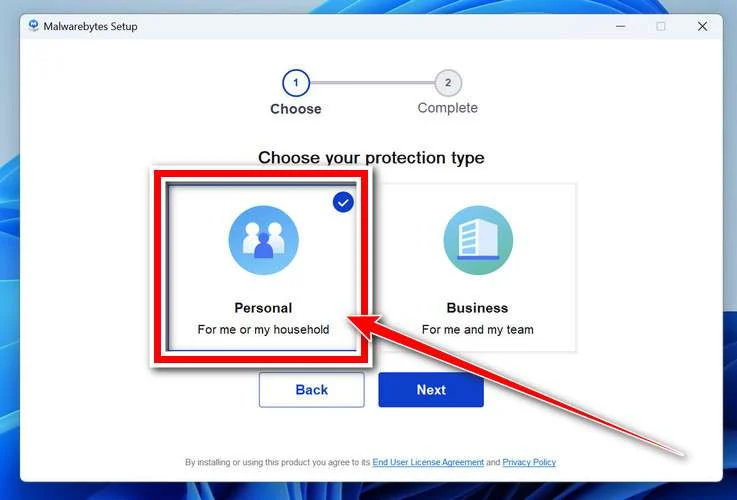
-
Malwarebytes will now install on your device. This usually takes under a minute.

-
When installation is complete, the “Welcome to Malwarebytes” screen will open automatically.
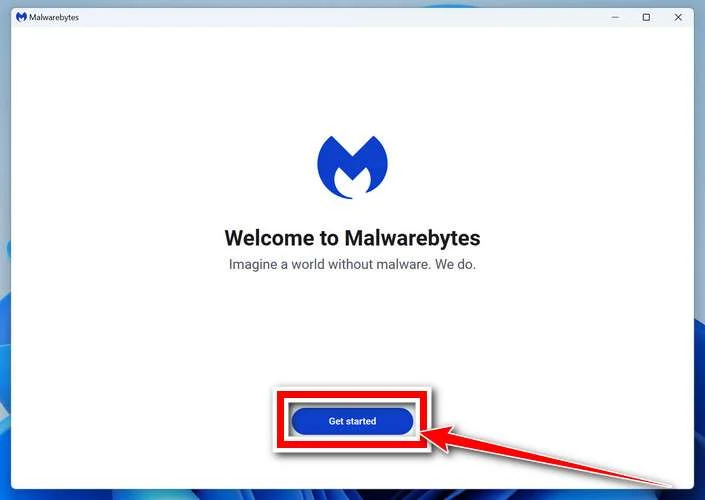
-
On the final screen, click Open Malwarebytes to launch the program.

-
Enable “Scan for Rootkits”
Before scanning, turn on rootkit detection so Malwarebytes can find even the most hidden threats. Click the Settings gear icon on the left side of the screen.
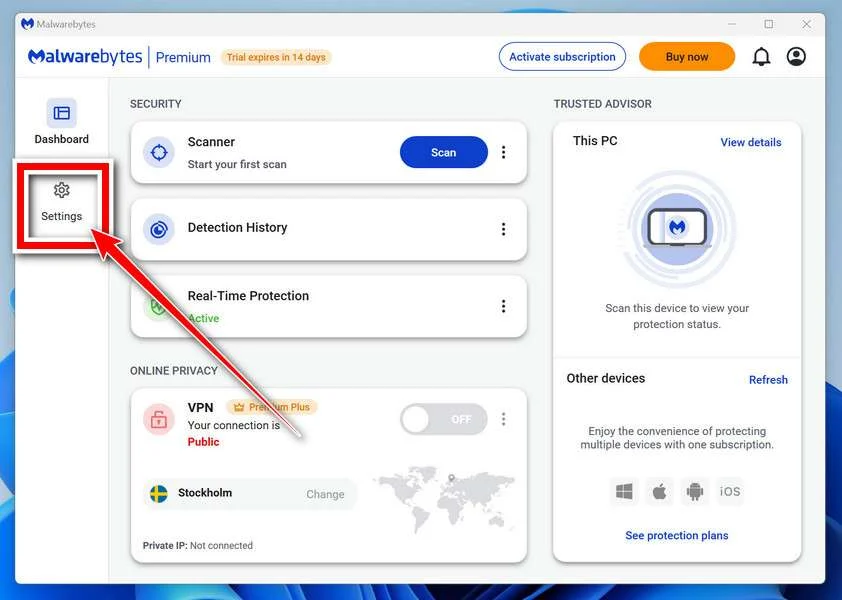
In the settings menu, find “Scan for rootkits” and click the toggle so it turns blue.

Done? Click “Dashboard” in the left pane to return to the main screen.
Start the Scan
Click the blue Scan button. Malwarebytes will automatically update its virus database and start checking your computer for malware.
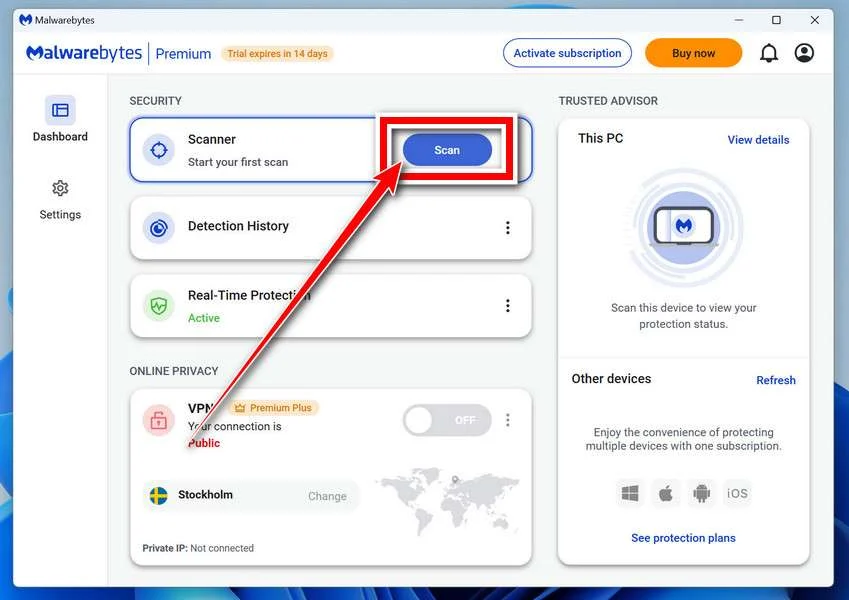
-
Wait for the Scan to Finish
The scan checks your entire system for browser hijackers and other malicious programs, so it can take 5 to 20 minutes depending on your computer. Feel free to do something else — just check back occasionally to see the progress.
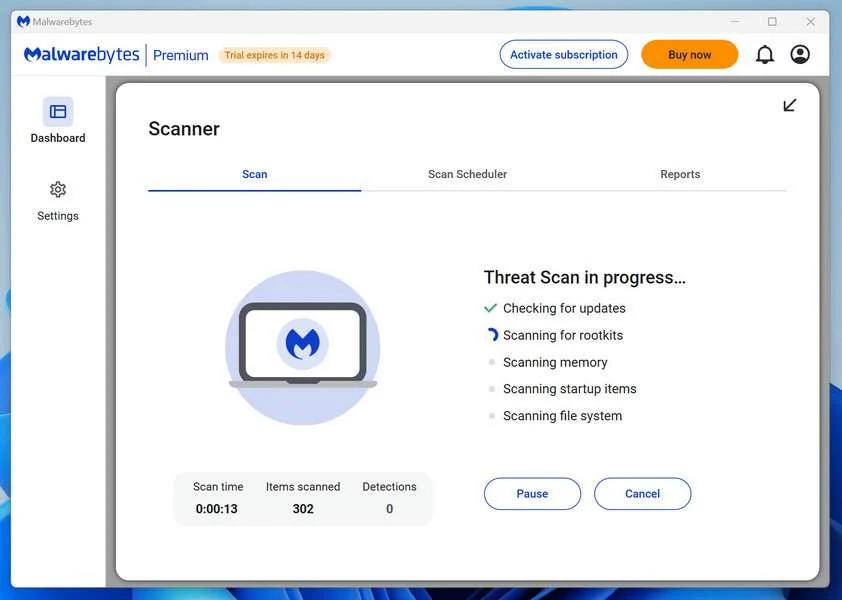
-
Quarantine the Detected Threats
When the scan is done, you’ll see a list of everything Malwarebytes found — malware, adware, and potentially unwanted programs. Click the “Quarantine” button to remove all of them at once.
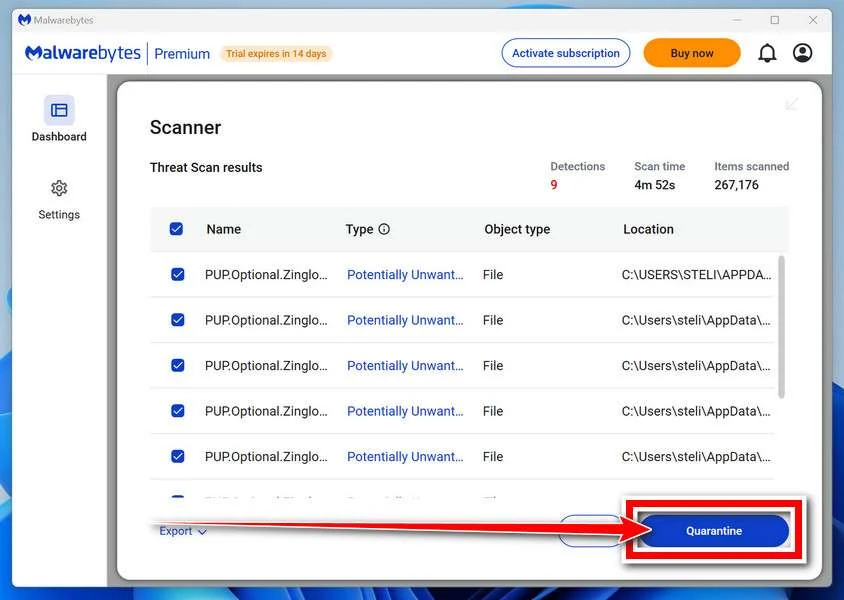
Malwarebytes will now remove the malicious files and registry entries and move them safely into quarantine.
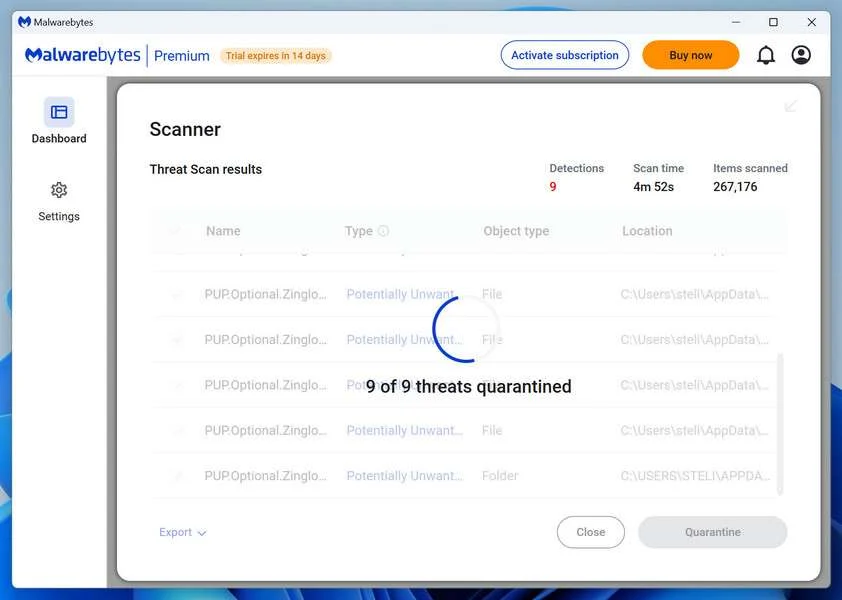
-
Restart Your Computer
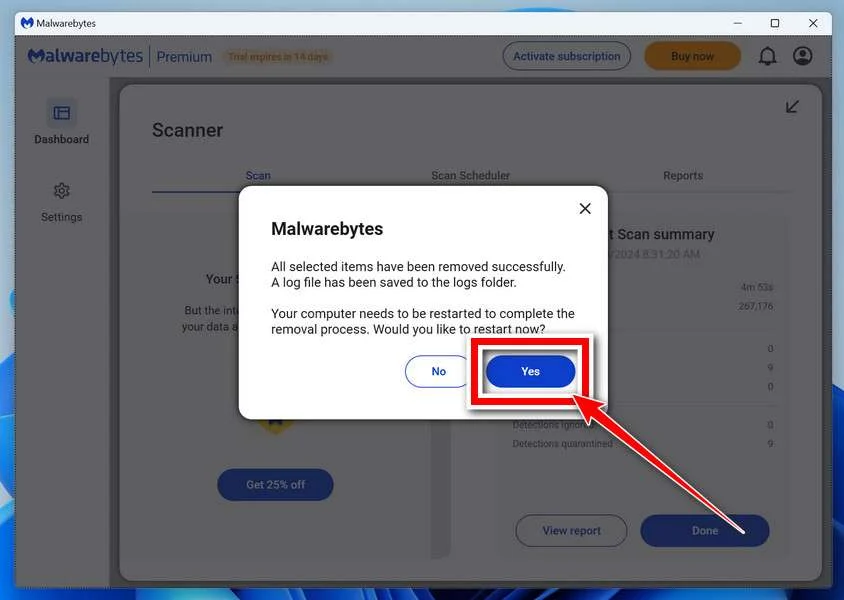
Some threats can only be fully removed after a reboot. If Malwarebytes asks you to restart, click Yes. Once you’re logged back in, Malwarebytes has finished removing the threats it found.
STEP 3: Use HitmanPro to remove Rootkits and other Malware
In this third step, while the computer is in normal back, we will download and run a scan with HitmanPro to remove Trojans, rootkits, and other malicious programs.
HitmanPro is a second-opinion scanner — it’s designed to catch what your main antivirus might have missed. Instead of relying on a single detection engine, it checks the behavior of files in the locations where malware usually hides. Anything suspicious gets sent to the cloud, where it’s analyzed by two of the best antivirus engines available: Bitdefender and Kaspersky.
Good news: scanning is completely free, with no limits. You only need a license when it’s time to remove what was found — and even then, you can activate a free one-time 30-day trial to clean your PC at no cost. (A full license is $24.95 per year for 1 PC.)
-
Download HitmanPro
Click the button below to download HitmanPro. Remember — the scan is free, so you have nothing to lose by checking your PC.
Download HitmanProFree scan. Removing threats needs the free 30-day trial. Opens the official HitmanPro page in a new tab. HitmanProSecond-opinion malware scanner from Sophos
 -
Install HitmanPro
When the download finishes, open your Downloads folder and double-click the file: “hitmanpro.exe” on 32-bit Windows, or “hitmanpro_x64.exe” on 64-bit Windows.
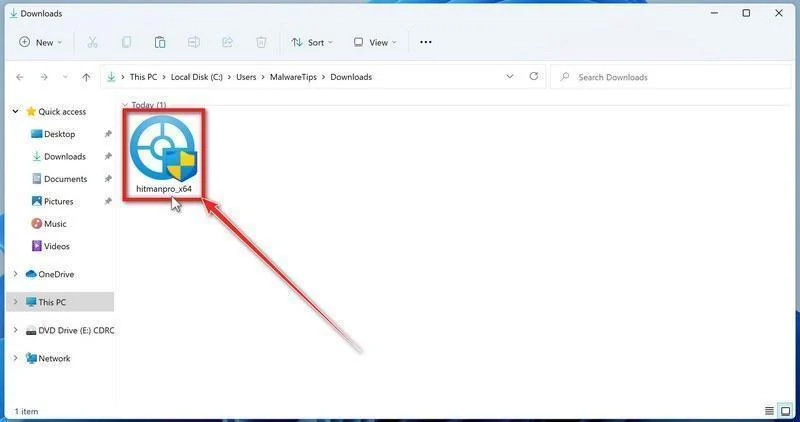
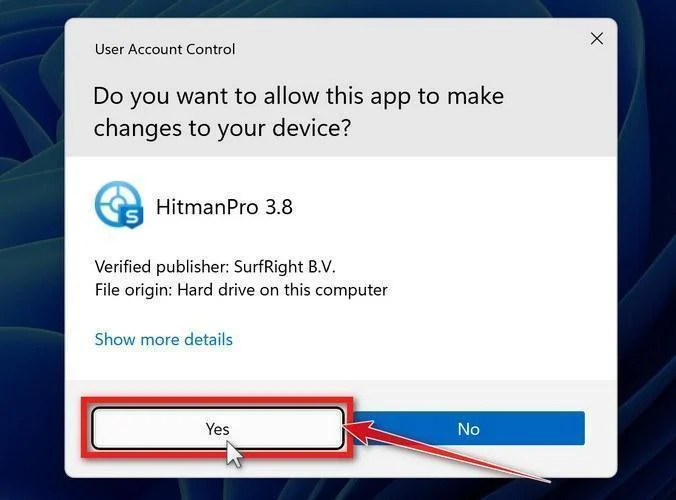
If a User Account Control pop-up asks whether HitmanPro can make changes to your device, click “Yes” to continue.
-
Follow the On-Screen Prompts
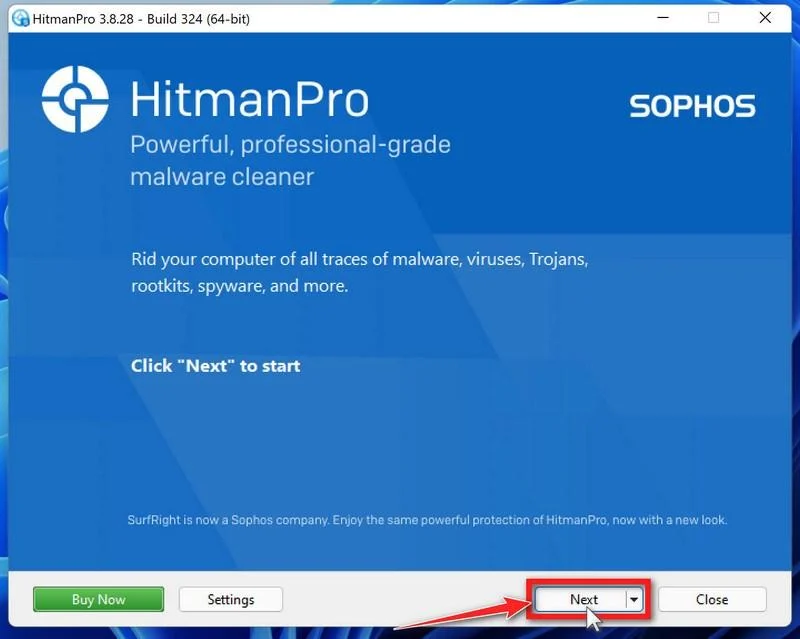
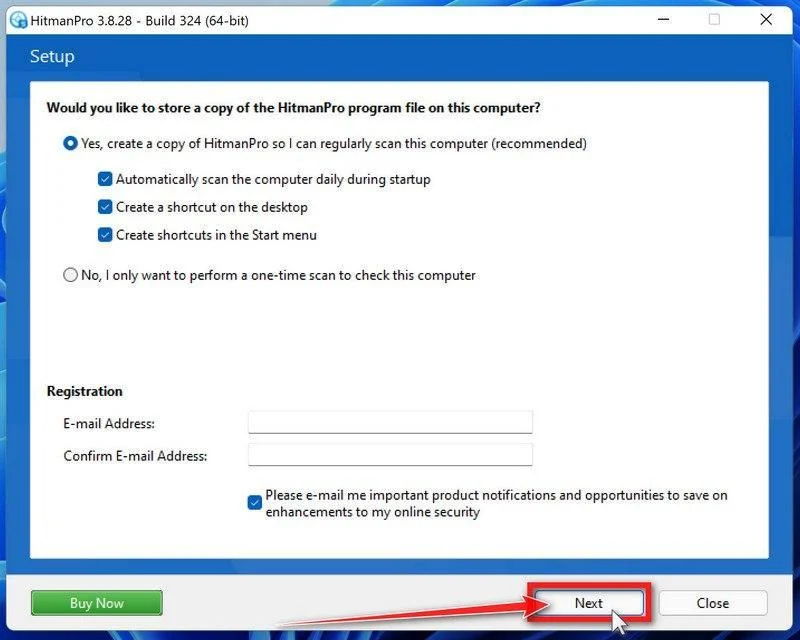
On the HitmanPro start screen, click “Next” to begin the system scan. No lengthy setup required — it goes straight to work.
-
Wait for the Scan to Finish
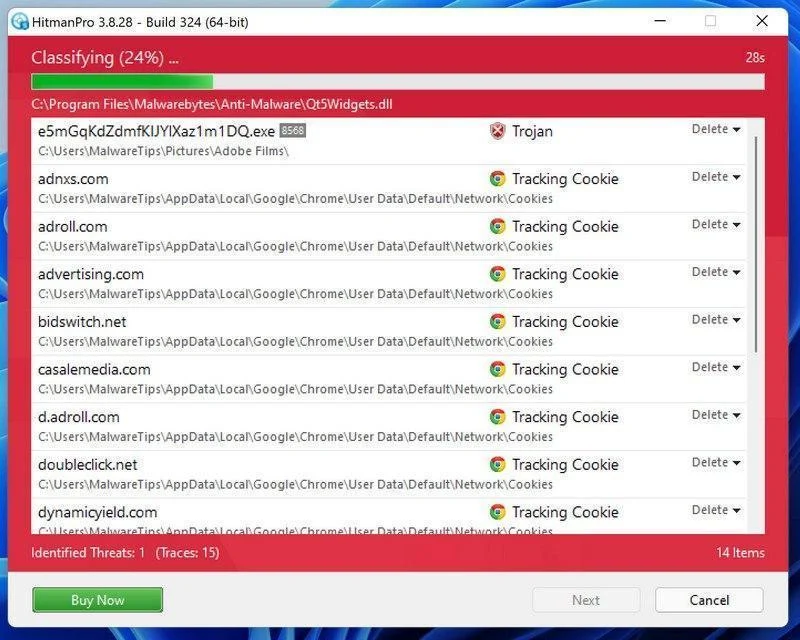
HitmanPro will now check your computer for malicious programs. This usually takes just a few minutes thanks to its cloud-based scanning.
-
Review the Results and Click “Next”
When the scan is done, HitmanPro will show you everything it found. Click “Next” to remove the detected threats.
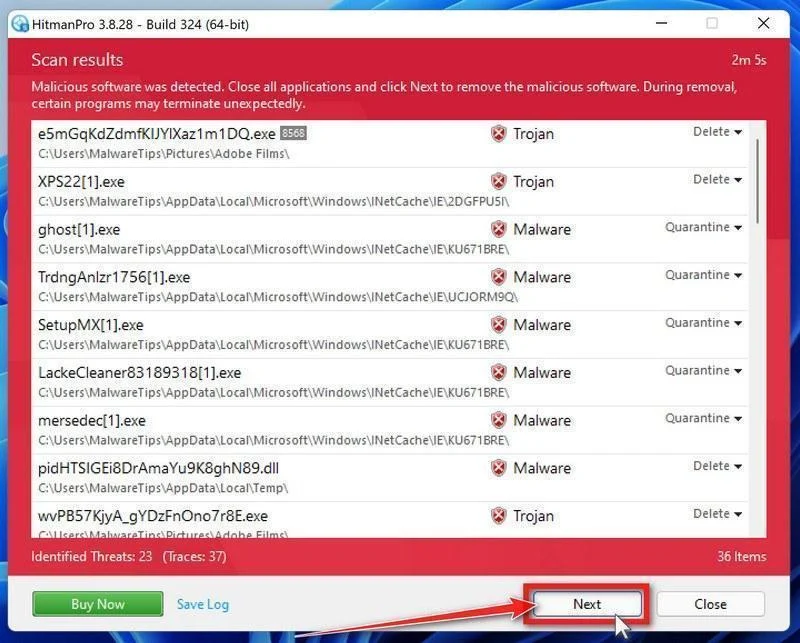
-
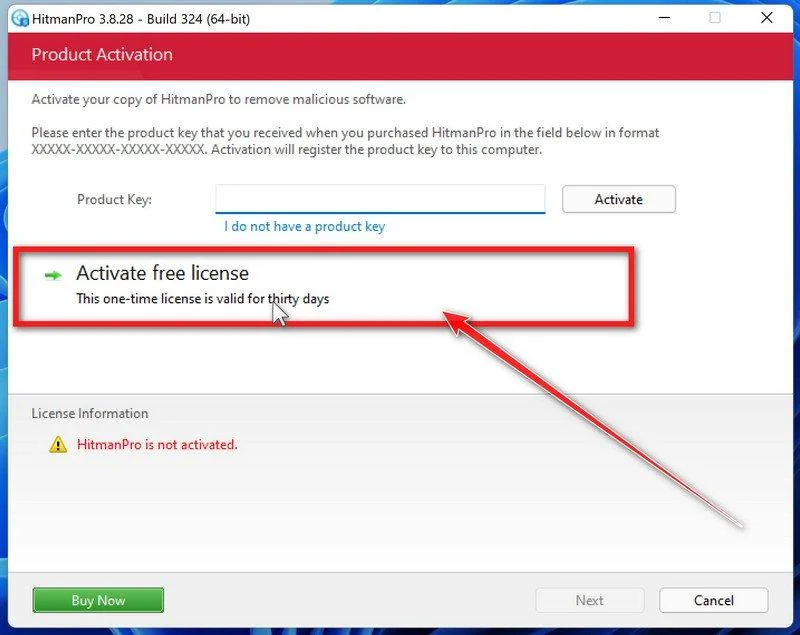
Click “Activate Free License”
To remove the malicious files, click the “Activate free license” button. This starts your free 30-day trial — no payment details needed — and unlocks the full cleanup.
When the removal is complete, HitmanPro will show a summary of everything it cleaned. Click Next, then click Reboot if prompted. If there’s no reboot prompt, just click Close — your PC is clean.
STEP 4: Use AdwCleaner to remove Malicious Browser Extensions and Adware
In this next step, we will use AdwCleaner to remove malicious browser policies and unwanted browser extensions from your computer.
AdwCleaner is a free on-demand scanner that specializes in adware, browser hijackers, and unwanted toolbars — the exact threats that mainstream antivirus programs often miss. It also includes tools that repair the damage malware leaves behind, like hijacked browser settings and malicious policies. It’s a quick scan that’s well worth running.
-
Download AdwCleaner
Click the button below to download AdwCleaner — it’s free, portable, and requires no installation.
Download AdwCleanerOpens the official download page in a new tab. Malwarebytes AdwCleanerRemoves adware and unwanted programs at no cost
 -
Run AdwCleaner
Open your Downloads folder and double-click the file named “adwcleaner.exe“. There’s no installation — the program starts right away.
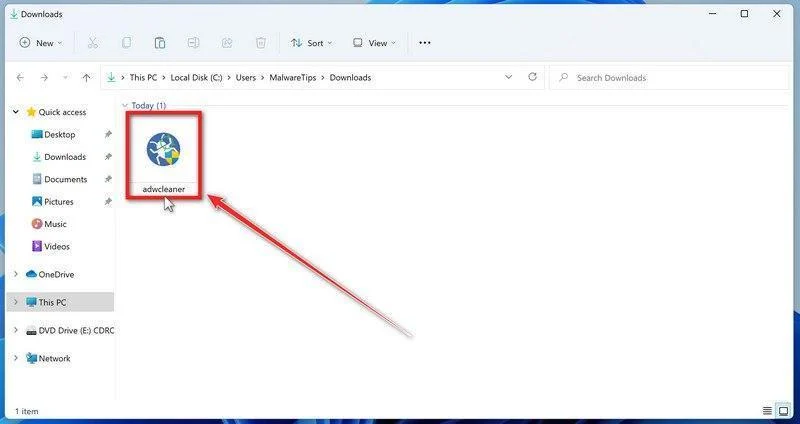
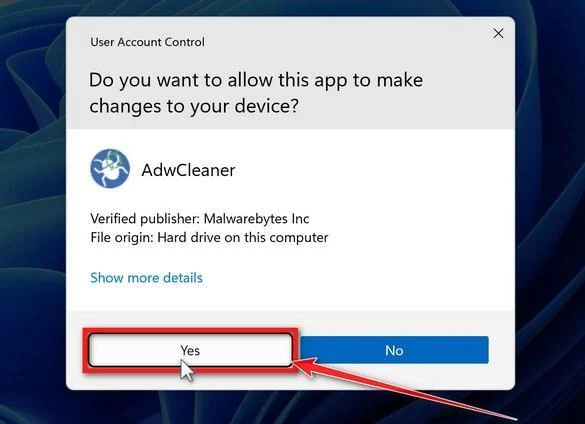
If Windows asks whether you want to allow AdwCleaner to run, click “Yes“. When the license agreement appears, click I agree to continue.
-
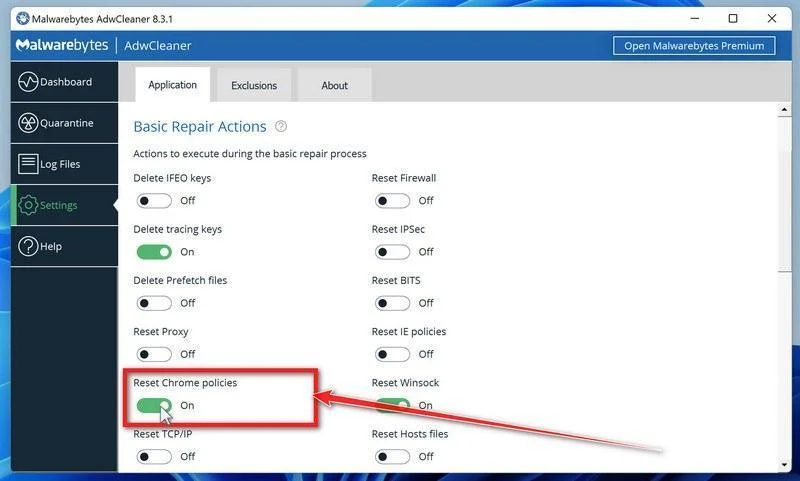
Enable “Reset Chrome policies”
This setting removes malicious browser policies — a trick malware uses to lock your browser settings so you can’t change them back. Click “Settings” on the left side of the window, then turn on “Reset Chrome policies“.
-
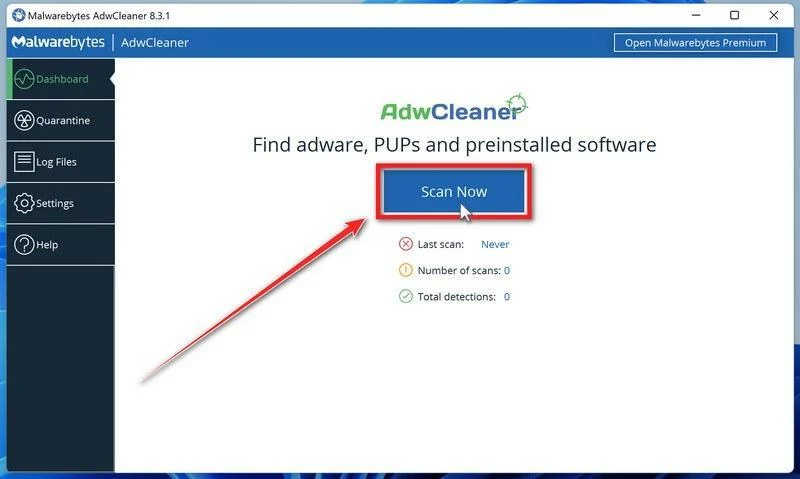
Start the Scan
Click “Dashboard” on the left side of the window, then click the “Scan” button.
-
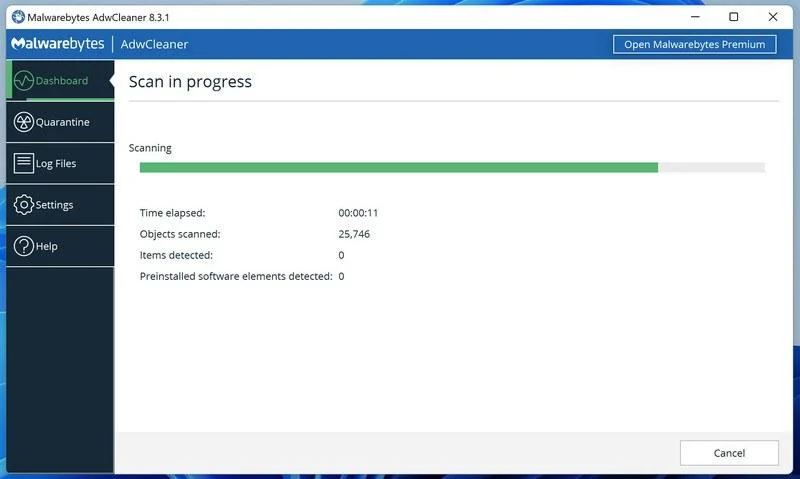
Wait for the Scan to Finish
AdwCleaner will now check your computer for adware and other malware. This usually takes only a few minutes — it’s one of the fastest scanners around.
-
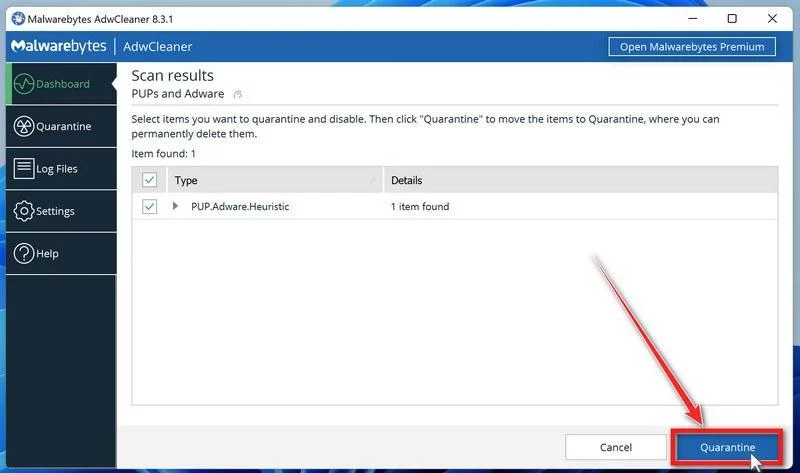
Quarantine the Detected Threats
When the scan finishes, AdwCleaner will list everything it found. Click the “Quarantine” button to remove all the malicious items at once.
-
Click “Continue” to Finish the Cleanup
Save any open work first — AdwCleaner needs to close your open programs before it can clean. When you’re ready, click the “Continue” button.
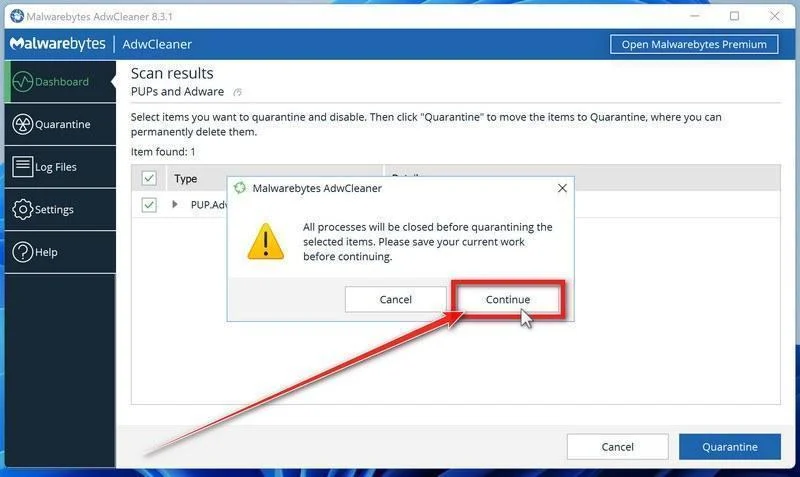
AdwCleaner will now delete all detected malware from your computer. If it asks you to restart your PC, allow it — your computer will be clean when you log back in.
STEP 5: Perform a final check with ESET Online Scanner
This final step involves installing and running a scan with ESET Online Scanner to check for any additional malicious programs that may be installed on the computer..
ESET Online Scanner is a free second-opinion scanner that performs a deep, full-system check for viruses, trojans, rootkits, and other malware. We use it as the final step because it’s thorough — if anything slipped past the previous scans, ESET will find it. A clean result here means your computer is malware-free.
-
Download ESET Online Scanner
Click the button below to download ESET Online Scanner.
Download ESET Online ScannerOpens the official download page in a new tab. ESET Online ScannerFree one-time malware scan from ESET
 -
Run the Installer
When the download finishes, open your Downloads folder and double-click “esetonlinescanner.exe“.
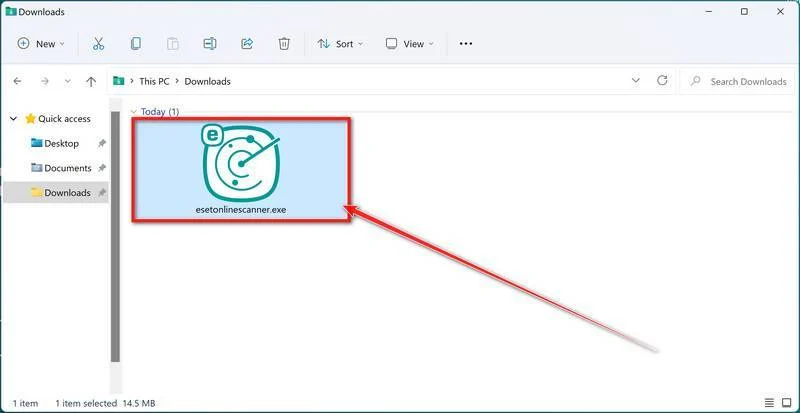
-
Install ESET Online Scanner
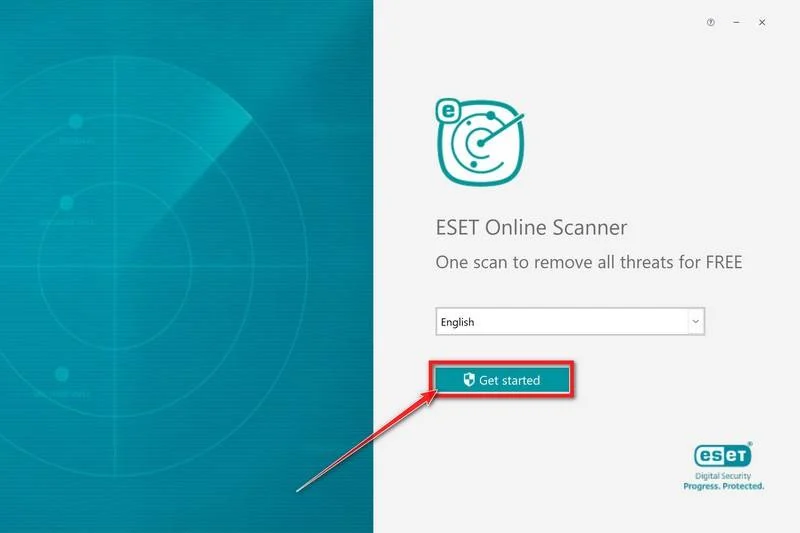
On the start screen, select your language from the drop-down menu and click Get started.
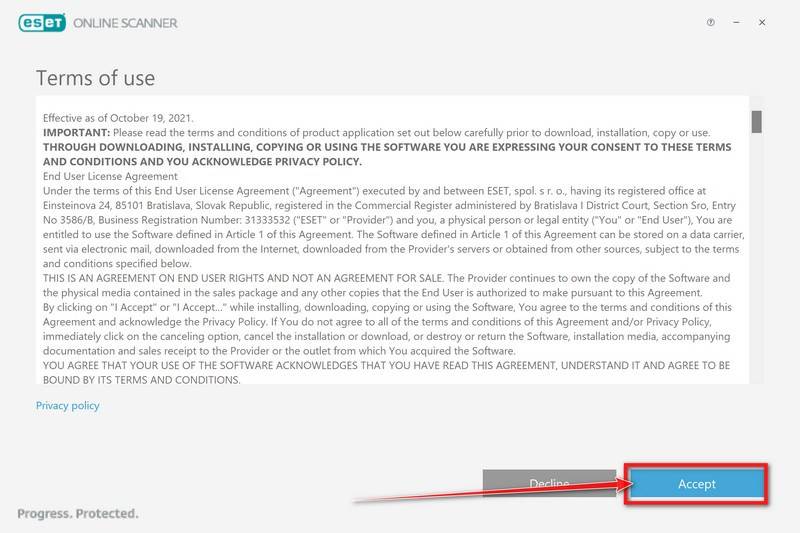
On the Terms of use screen, click Accept.
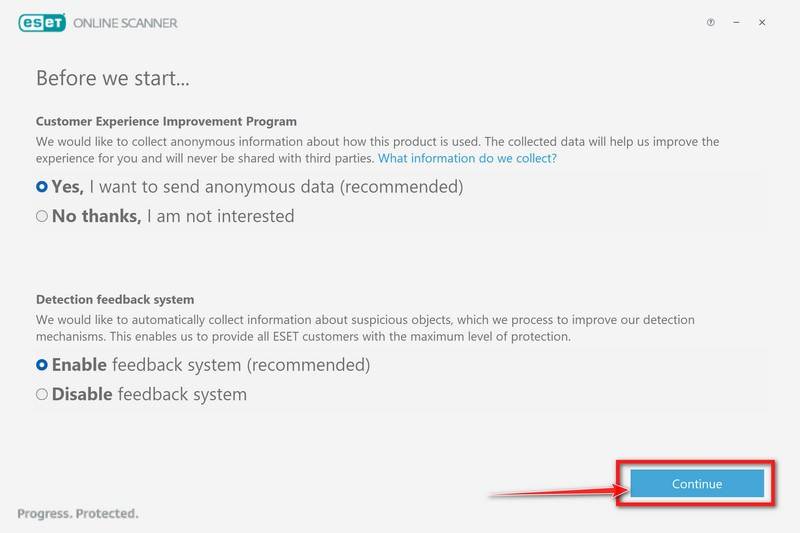
Choose your preferences for the Customer Experience Improvement Program and the Detection feedback system (either choice is fine), then click Continue.
-
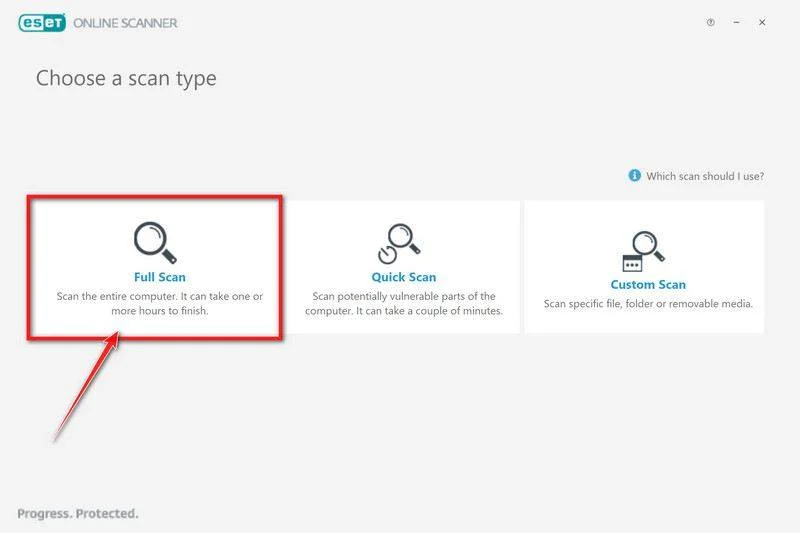
Start a Full Scan
Click Full Scan — this checks your entire computer, not just the common hiding spots.
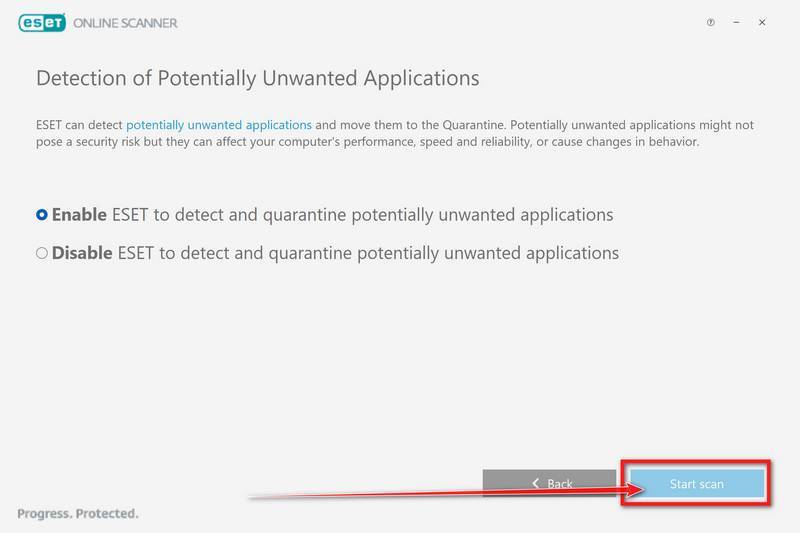
Select Enable for Detection of Potentially Unwanted Applications — this lets ESET catch adware and bundled junk programs, not just viruses. Then click Start scan.
-
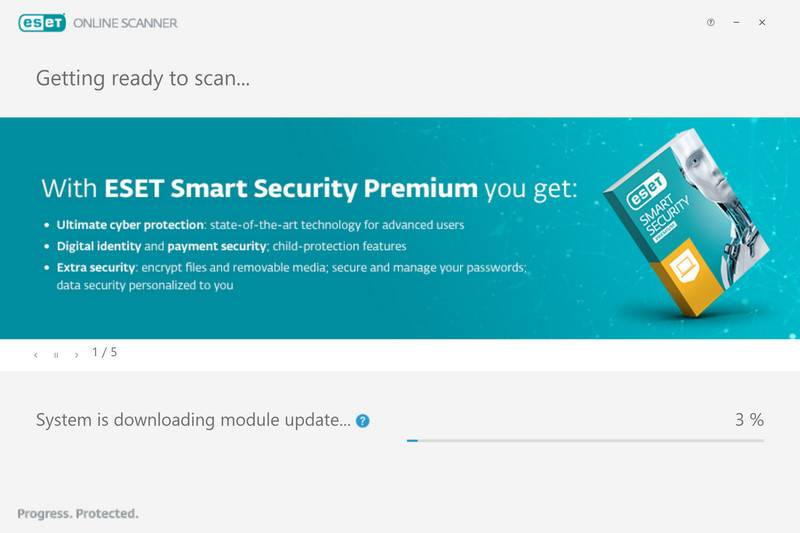
Wait for the Scan to Finish
ESET will now check every file on your computer. Because it’s a full scan, this can take a while — often an hour or more, depending on how much data you have. Leave it running in the background and check on it from time to time.
-
Review the Results
When the scan completes, the Found and resolved detections screen appears. Any threats found were automatically cleaned and quarantined — there’s nothing extra you need to do. Click View detailed results if you want to see exactly what was removed.
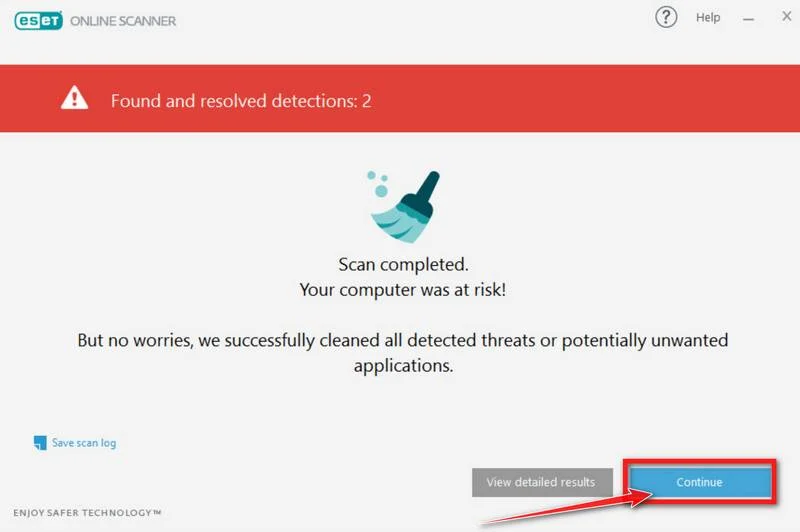
If ESET found nothing — congratulations, your computer has passed the final check and is malware-free.
STEP 6: Restore the files encrypted by ransomware
Unfortunately, in most cases, it’s not possible to recover the files encrypted by this ransomware virus because the private key which is needed to unlock the encrypted files is only available through the attackers. However, below we’ve listed three options you can use to try and recover your files.
Option 1: Search a decryption tool for this ransomware
The cybersecurity community is constantly working to create ransomware decryption tools, so you can try to search these sites for updates:
- https://id-ransomware.malwarehunterteam.com/
- https://decrypter.emsisoft.com/
- https://noransom.kaspersky.com/
- https://www.avast.com/ransomware-decryption-tools
Option 2: Use EaseUS Data Recovery Wizard Free to recover the encrypted files
EaseUS Data Recovery Wizard Free can restore files and repair corrupted files with simple clicks. Its powerful scanning algorithms can identify and retrieve huge file type library, including all of the popular video files, audio files, photos, and document formats.
While the free version only allows you to recover 2 GB of data, this can be helpful to see if the recovery is possible and restore back the most important files from your computer.
-
Download EaseUS Data Recovery Wizard Free.
You can download EaseUS Data Recovery Wizard Free by clicking the link below.
Download EaseUS Data Recovery WizardOpens the download page in a new tab. EaseUS Data Recovery WizardFile recovery tool with a free version
 -
Double-click on the EaseUS Data Recovery Wizard Free setup file.
When EaseUS Data Recovery Wizard Free has finished downloading, double-click on the setup file to install EaseUS Data Recovery Wizard on your computer. In most cases, downloaded files are saved to the Downloads folder.
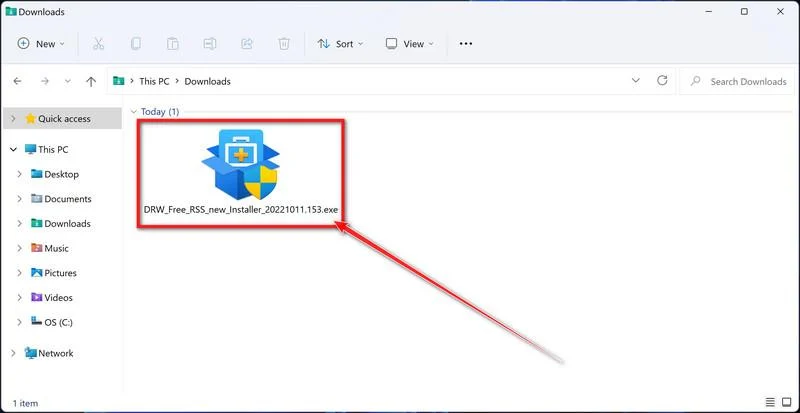
You may be presented with a User Account Control pop-up asking if you want to allow EaseUS to make changes to your device. If this happens, you should click “Yes” to continue with the EaseUS Data Recovery Wizard Free installation.
-
Follow the on-screen prompts to install EaseUS Data Recovery Wizard.
When the EaseUS Data Recovery Wizard installation begins, click on the “Install Now” as seen in the image below.
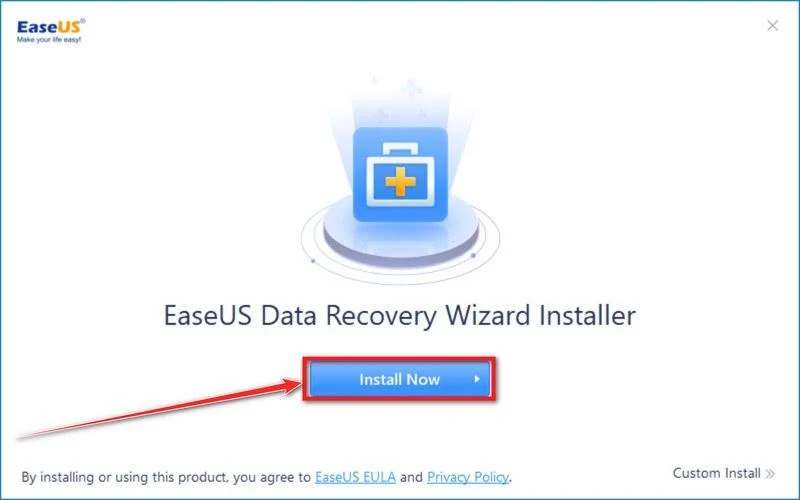
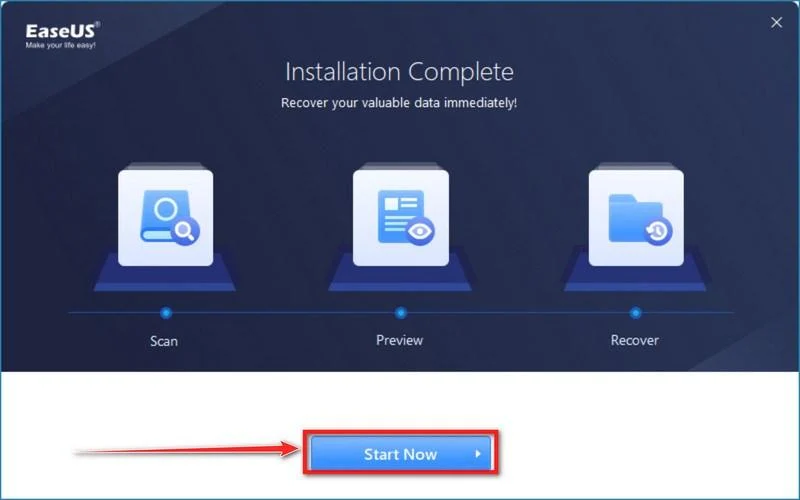
When your EaseUS Data Recovery Wizard installation completes, click the “Start Now” button to start the program.
-
Select a location to start recovering the encrypted files.
Choose the drive or folder where you are the encrypted files that you want to recover and click “Scan“.
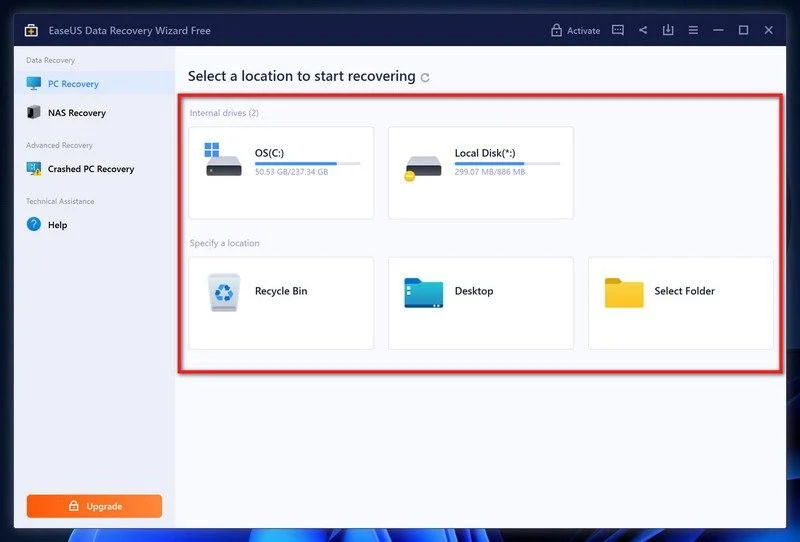
-
Wait for the EaseUS Data Recovery Wizard scan to complete.
EaseUS Data Recovery Wizard will now scan your computer files that can be restored. This process can take a few minutes, so we suggest you do something else and periodically check on the status of the scan to see when it is finished.
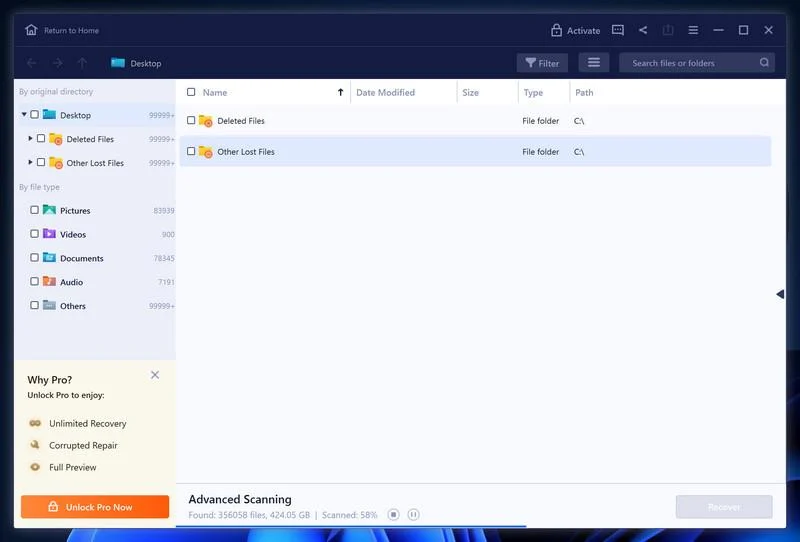
-
Find the files you want to recover.
When the EaseUS Data Recovery Wizard scan is finished scanning it will show a screen that displays the files that can be recovered. This tool can recover a lot of data, use the “Filter” button to quickly filter specific file types and find the files that you want to recover.
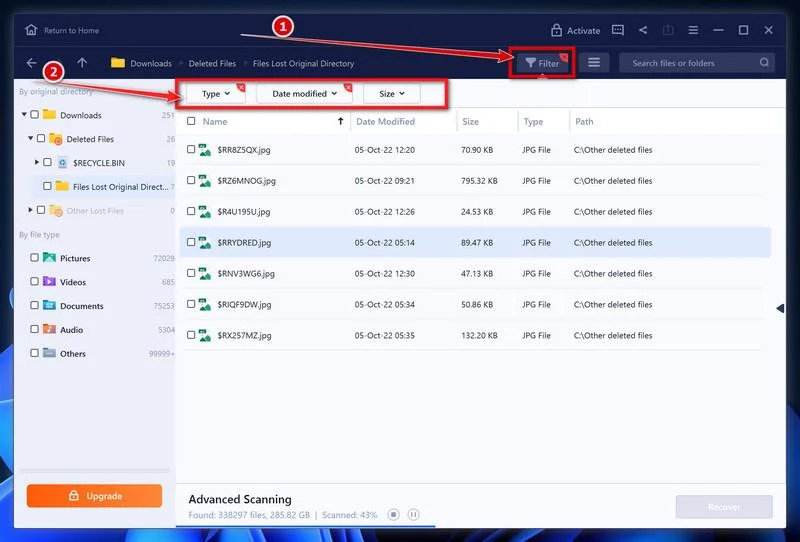
Click the “Preview” button or double-click on a file for a full preview.
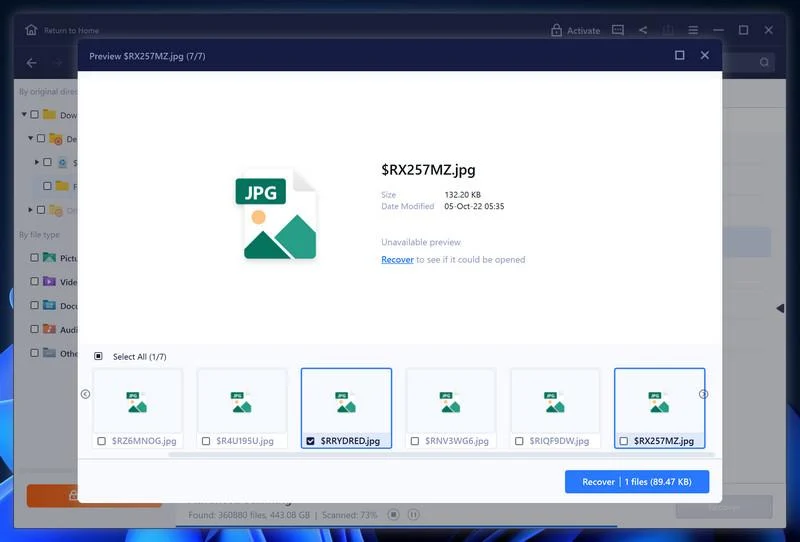
-
Select your files and click “Recover”.
Finally, select the the files you want to recover and click “Recover“.
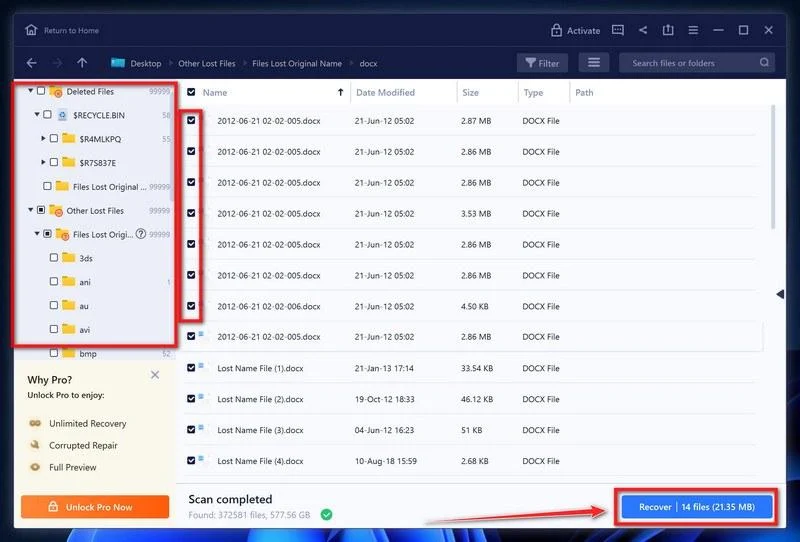
Choose a safe location to save all the files.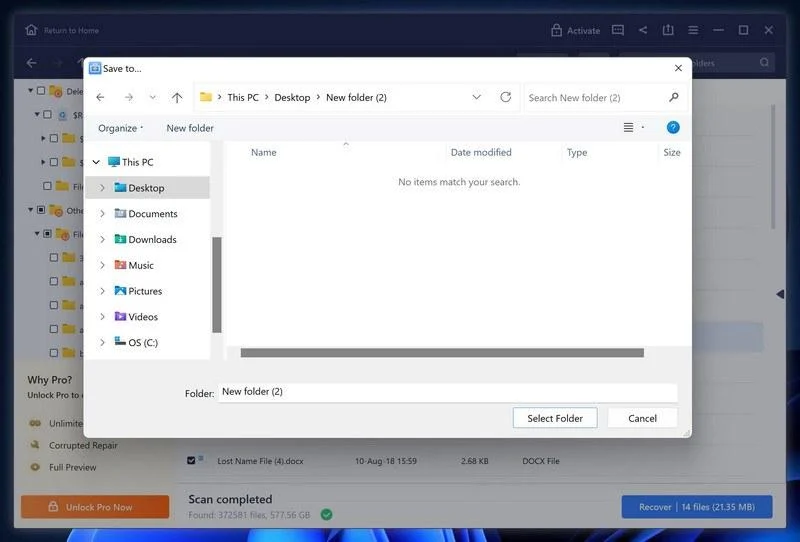
The free version only allow you to recover 2 GB of data, however, this will allow you to recover the most important files and see if EaseUS Data Recovery Wizard can correctly recover them.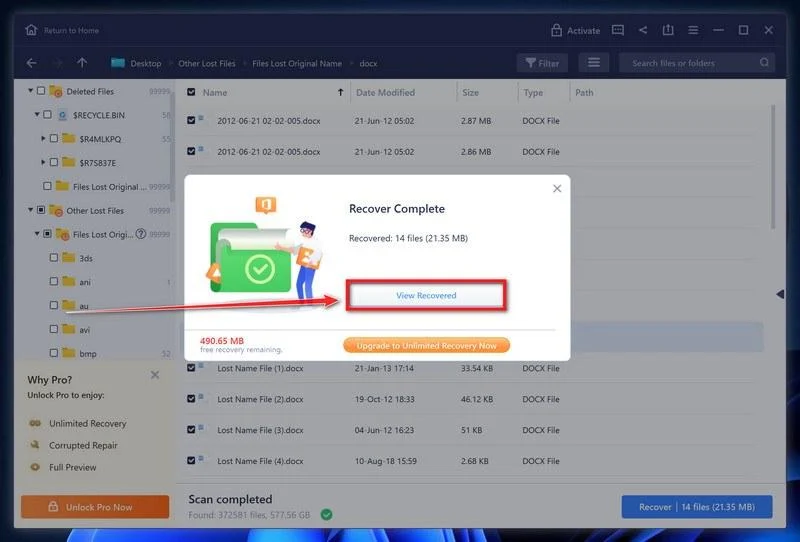
Option 3: Try to restore your files with ShadowExplorer
This ransomware will attempt to delete all shadow copies when you first start any executable on your computer after becoming infected. Thankfully, the infection is not always able to remove the shadow copies, so you should continue to try restoring your files using this method.
-
Download ShadowExplorer.
You can download ShadowExplorer from the below link.
Download ShadowExplorerOpens the official download page in a new tab.ShadowExplorerRestores files from Windows Shadow Volume Copies -
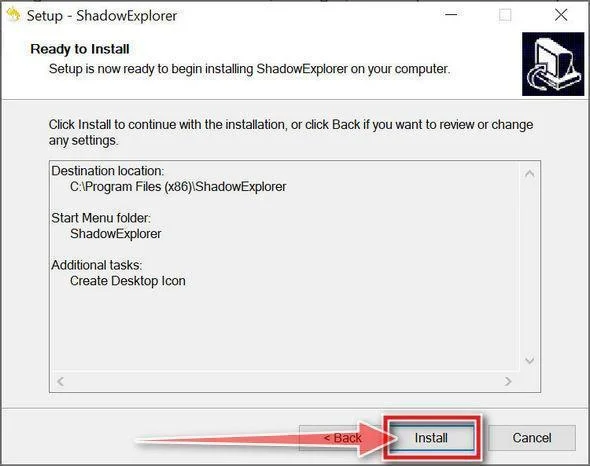
Install ShadowExplorer.
Double-click on the ShadowExplorer-x.x-setup file to start the installation process, then follow the on-screen promts to install this program.
-
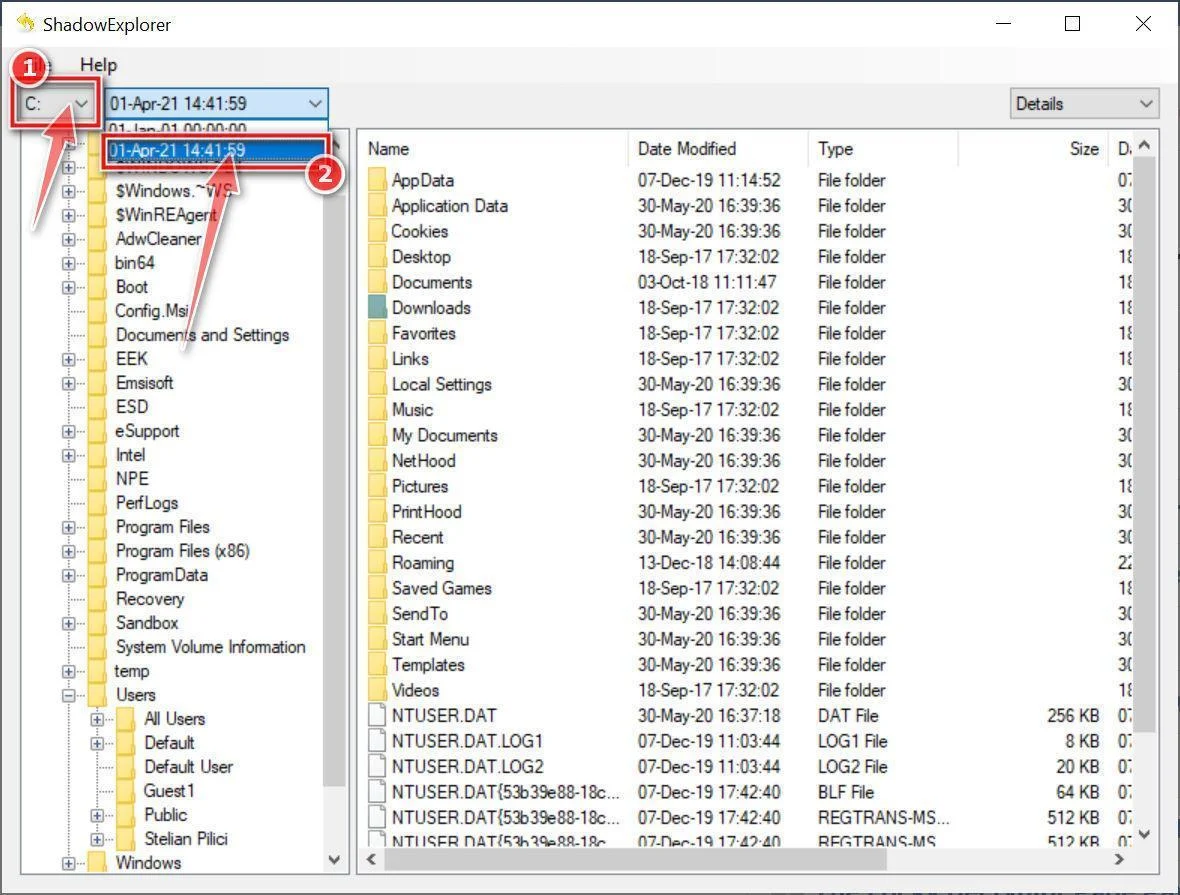
Select snapshot date.
Open ShadowExplorer and then from the top bar select the drive where the files that you want to save are located, then select from the snapshot available one previous to this infection.
-
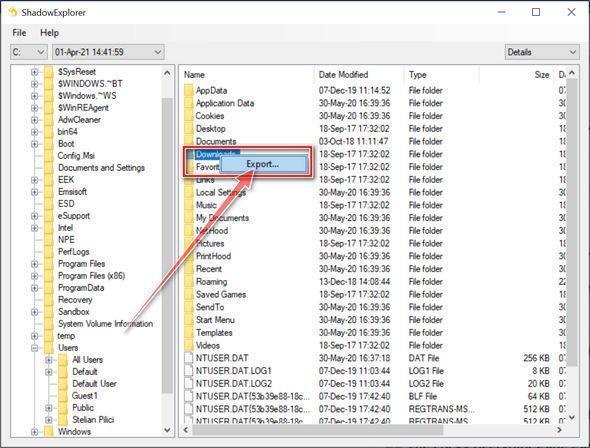
Export the files that you want to recover.
Once you have found a copy of the original file or folder, right-click on it and the select “Export”. A window will prompt you where you want to save the file or folder.
Keep every .pclocked name exactly as it is. Do not bulk-rename 1.jpg.pclocked back to 1.jpg, or 2.png.pclocked back to 2.png, or invoice.pdf.pclocked back to a normal PDF, or taxes.xlsx.pclocked back to a spreadsheet, or vacation.jpg.pclocked back to a photo. Stripping the extra ending is not a repair. It can make a later trusted tool worse, not better. The original name is already sitting in front of .pclocked. You do not need to edit it to know what you lost.
Keep RECOVERY_ID.txt with the locked files. Keep at least one .pclocked sample next to it. Do not “clean up” every copy of the note. Do not fill in a Decryption Code so the flyer looks complete. Do not invent a key file on the desktop so the ritual looks finished. The blank Code line, the missing $ amount, the missing wallet, and the missing onion are part of how you prove this was this strain and not a different locker that only sounds similar. Keep the contact marks as identifiers: up-coding@proton.me, the DECRYPT_ME.txt desktop ask, the blank Decryption Code dash, and the experiment / free-code line. Those artifacts are evidence. They are not instructions you should carry out.
Do not pay. Do not mail that inbox. Do not ask a friend to write them “just to see.” A calm Proton address is still the people who locked the files. It is not a lab. It is not a coding class. If a later message quotes RECOVERY_ID.txt and offers “the real key for DECRYPT_ME.txt,” that is still the same shop. If a later message skips the original inbox and asks for coin over a different address, that is still the same shop, or a copycat standing in the same doorway.
The experiment / free-code line is still a locker inbox. Do not write up-coding@proton.me to collect a favor. Do not create DECRYPT_ME.txt with a pasted string. Do not send the code, and do not send the dash. This is not a Windows lock-screen scare. If someone claims they can already decrypt PCLocked files for a fee because they can recite the experiment sentence and that Proton address, they are selling a report, not a key. They read the same note you did. Do not answer. Do not complete their checkout. Do not help them fix the flyer.
If Windows still offers to pick an app for the .pclocked type, decline it. There is no player for that ending.
The Bottom Line
PCLocked ransomware is a locker with a readable filename, a recovery-ID note, and a checkout that pretends the key is free. It keeps the old name and appends .pclocked. 1.jpg becomes 1.jpg.pclocked. 2.png becomes 2.png.pclocked. invoice.pdf becomes invoice.pdf.pclocked. The note is RECOVERY_ID.txt. It says all files are encrypted. It tells you to place DECRYPT_ME.txt with the key on your desktop. It points you at up-coding@proton.me and tells you to send your Decryption Code. On the sample that Code line is a dash. It warns that losing the Code ruins the files. It calls the lock an experiment and offers the code for free. It does not print a $ amount, a wallet, an onion site, or a Session ID, and this page will not invent them. This is not a full-screen PC-locked scare, and it is not a real company you should review. There is no public free decryptor known for this strain.
Do not pay. Do not mail that inbox. Do not send the code. Do not create DECRYPT_ME.txt with a pasted key. “This is a Experiment” is still a locker inbox. Keep RECOVERY_ID.txt and a .pclocked sample. Do not rename the pile in bulk. If you take one sentence with you, take this. A folder of names ending in .pclocked, plus RECOVERY_ID.txt with a desktop ritual, a blank Decryption Code, a free-key experiment line, and up-coding@proton.me, is ransomware on the first sighting. Treat it that way before anyone offers to fill the missing code.

Join the discussion
0 commentsShare your experience or ask a question about this article.
Discussion
Start the conversation
Have a question or something useful to share? Add the first comment.