

A small tag on your pet’s collar sounds easier than another monthly reminder. Pest-Shield Tag builds its offer around that promise of a simpler routine.
Before replacing anything your pet already uses, look past the convenience. The questions about protection, safety, and the purchase itself need separate answers.
Overview
The promise is much bigger than a collar accessory
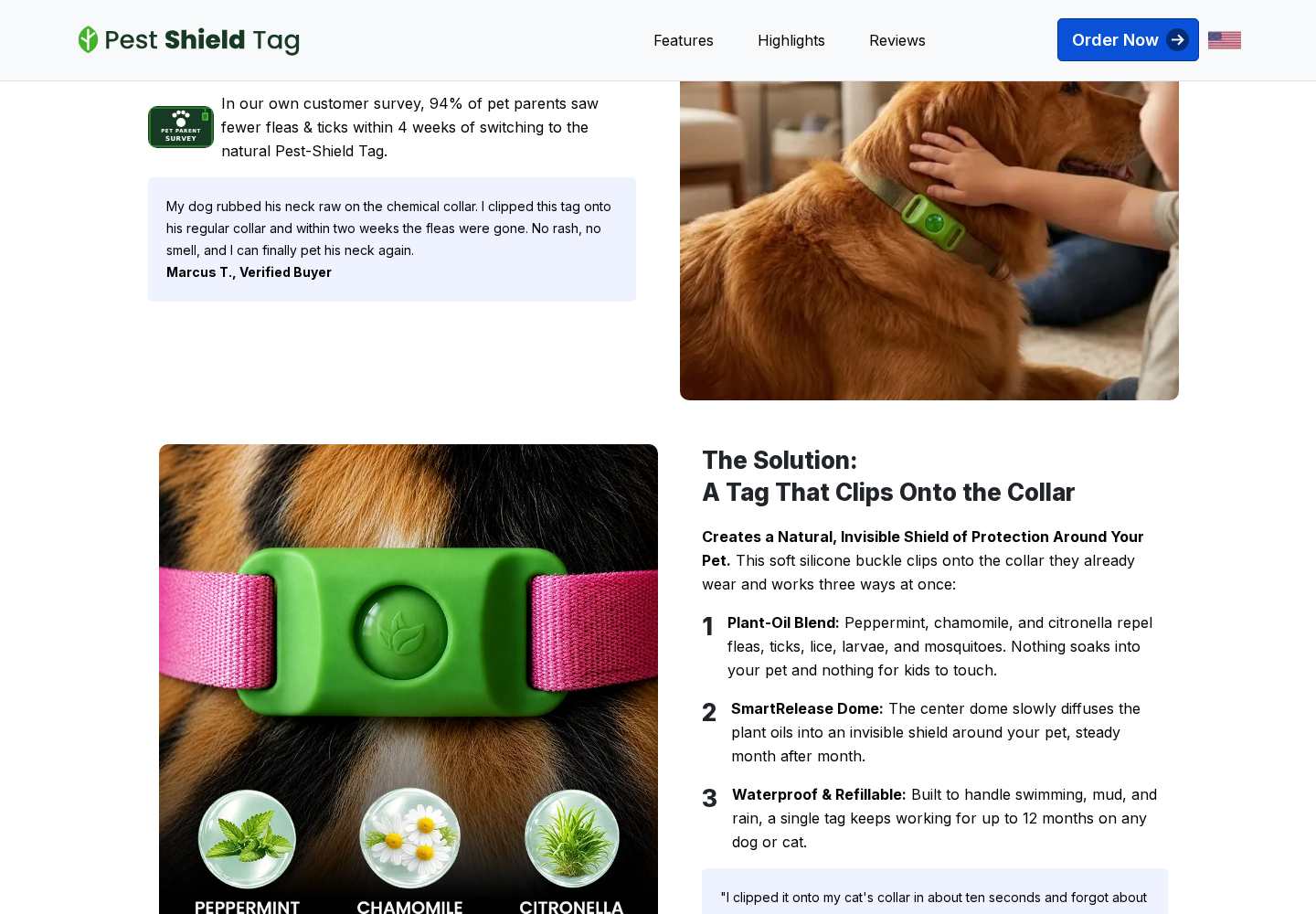
Pest-Shield Tag is marketed through RadPaws as a collar attachment using plant oils. The offer promises protection against several pests for up to 12 months.
Its sales page also makes a comparison with conventional collars. Those performance claims require evidence about the finished tag, not simply familiar ingredient names.
Do not buy this tag as a replacement for veterinary-recommended parasite prevention. The material supplied with the offer does not establish equivalent protection for your pet.
The prominently displayed result comes from customer feedback
The page identifies its 94% figure as coming from its own customer survey. That is different from a controlled study measuring prevention over a full year.
- A reported reduction in pests is not the same outcome as complete protection.
- A plant-oil ingredient list does not establish the exact exposure or safety of a finished product.
- Refillable describes the product’s design, not necessarily a recurring billing agreement.
- A money-back promise needs to be read alongside return conditions and postage deductions.
The buying concerns do not justify invented allegations
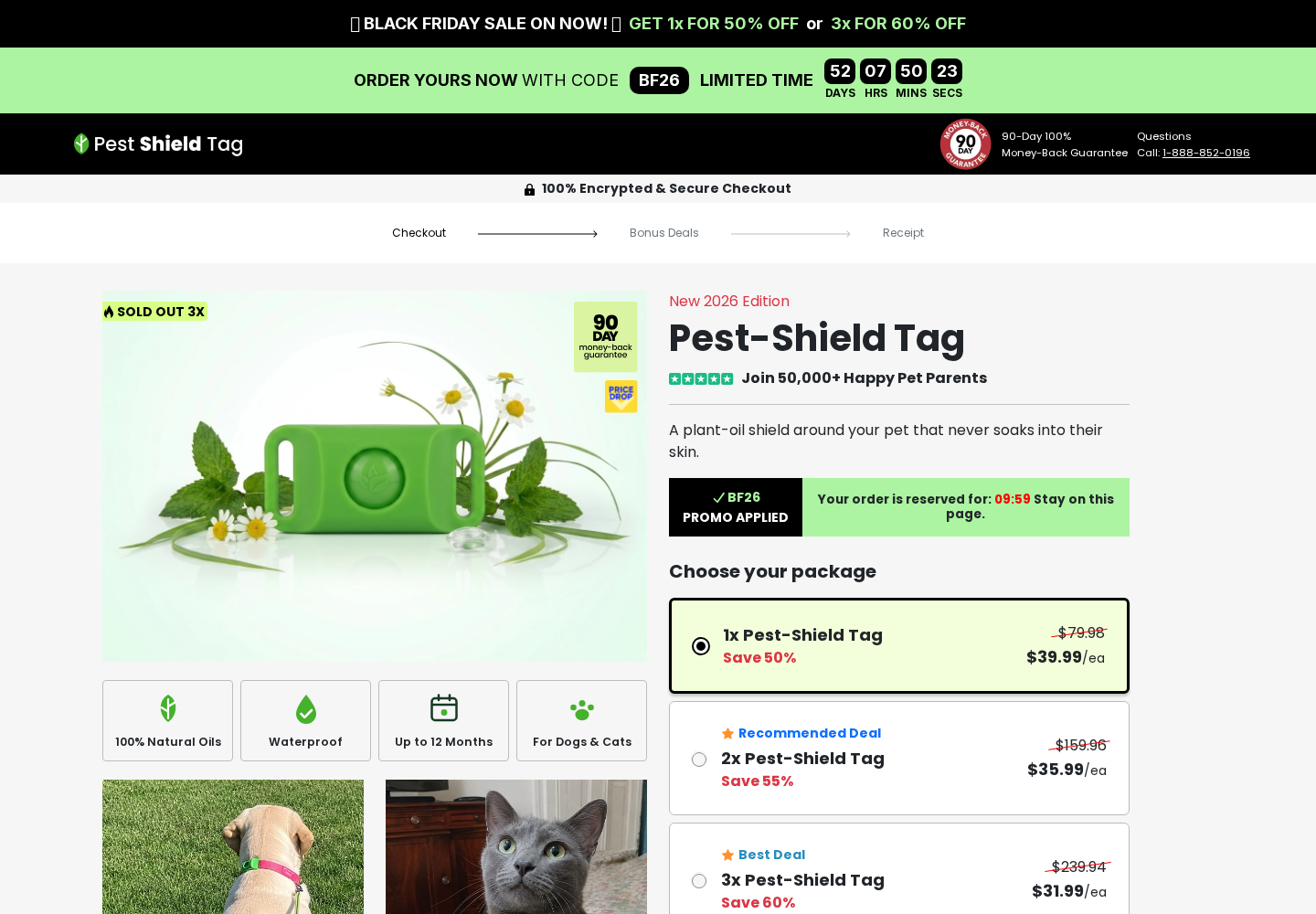
The visible checkout showed a single-tag order at $39.99 before any later shipping or tax calculation. It also offered larger packages.
No automatic subscription was established from that checkout. The warning here concerns unsupported reliance on the promised protection and the practical terms of ordering.
What a Year of Protection Would Need to Show
A long duration claim sounds useful because it removes an administrative burden. But you need to know what continues working throughout that period.
Ask for evidence identifying the exact tag, oil formulation, test conditions, and measured outcome. A demonstration of scent release would answer only part of the question.
The test should distinguish pests and settings. A claim spanning fleas, ticks, lice, larvae, and mosquitoes asks the reader to accept several outcomes at once.
It should also explain the duration. An observation after a few weeks cannot, on its own, establish what happens near the end of twelve months.
A waterproof claim raises another separate question: what happens after the water exposure expected in ordinary use? The appearance of an intact tag isn’t an efficacy measurement.
Likewise, a refillable design doesn’t tell you whether a fresh refill restores a tested protection period. You need directions tied to the actual formulation.
Those are reasonable questions before buying a pest-control product. Your pet bears the consequence if the expected protection does not materialize.
The 94% Survey and the Comparison Claim
The seller’s survey can describe what participating customers say they noticed. It doesn’t automatically explain how participants were selected or what else they used.
Someone may change bedding, clean a home, use another treatment, or encounter fewer pests during a different season. A survey needs to account for those differences.
Without that context, you cannot isolate the tag as the reason for the reported improvement. Satisfaction and measured efficacy are different kinds of information.
The offer’s comparison with chemical collars requires an identifiable comparator and method. Chemical collars are not a single uniform product with one universal performance level.
Ask which product was compared, against which pest, over what period, and under what conditions. A numerical advantage is incomplete without those details.
Don’t convert customer testimonials into a guarantee for your animal. A review about one owner’s experience cannot establish what protection your cat or dog will receive.
The responsible buying decision is to keep the tag’s claims separate from a prevention plan supported for your pet’s needs.
How the Pest-Shield Tag Offer Leads to an Order
Step 1: The page makes the usual routine sound burdensome
The pitch contrasts the tag’s simplicity with the inconvenience of other products. That framing can be persuasive if you’re worried about applying a treatment correctly.
Convenience is worth discussing with your veterinarian. It doesn’t require assuming that every conventional option has the shortcomings described in an advertisement.
Bring up the actual difficulty, whether it’s remembering a dose, handling your pet, or concern about a past reaction. That helps identify a suitable alternative.
Step 2: The collar attachment is presented as a broad solution
The seller describes an enclosed blend and a protective shield. The language makes the product sound passive, continuous, and easy to forget about.
That is precisely why the evidence matters. A product you don’t revisit frequently needs clear directions for checking its condition and continuing suitability.
Don’t confuse the absence of a visible application with the absence of exposure. Ask what leaves the tag and how that formulation was assessed.
Step 3: Package discounts encourage a larger purchase
The checkout offers one through five tags, with lower advertised unit prices for larger packages. Decide how many you need before responding to the discount.
If you’re considering tags for several animals, ask whether the same product is appropriate for each. A multi-pet discount doesn’t answer species-specific safety questions.
Check the complete charge and quantity before confirming. A price followed by per-item wording should not be mistaken for the package total.
Step 4: The guarantee provides reassurance before payment
The checkout emphasizes a 90-day money-back promise. Its wording also says to return items in original packaging, with shipping and handling excluded.
Keep that packaging and read the wider return terms. Ask whether using the tag affects eligibility, rather than assuming a trial and an unopened return are equivalent.
No payment or test order was made for this assessment. The captured form establishes the visible offer, not a measured delivery or refund experience.
Natural Ingredients Still Need Product-Specific Safety Information
The ASPCA explains that concentrated essential oils can harm pets. Formulation, concentration, route of exposure, and the animal all matter.
That does not establish that this particular tag has caused poisoning. It does mean natural branding cannot replace safety information for the actual preparation.
Ask for the complete label, ingredient concentrations, age restrictions, species directions, and precautions. A broad statement about dogs and cats leaves important circumstances unresolved.
Take the product information to your veterinarian, especially for a young, ill, pregnant, or medically treated animal. Explain what parasite prevention the pet already receives.
Don’t refill it with household oils or a mixture suggested in a comment. That would create a different product and exposure from whatever the seller evaluated.
Also consider access to the tag itself. If your pet can chew or damage an accessory, ask how that risk should be managed before attaching it.
If an animal becomes unwell after exposure, contact a veterinarian promptly with the package and ingredient information. Don’t wait for a seller to approve a refund first.
Regulatory Wording Needs a Careful Check
Products marketed to repel pests raise regulatory questions that a customer-review badge cannot answer. Ask the seller which framework applies to this exact formulation.
The EPA describes conditions for minimum-risk pesticide exemptions. An eligible product can be exempt from federal registration, but must meet all relevant conditions.
Those conditions include restrictions on ingredients, labeling, and claims. Absence of an EPA registration number therefore isn’t enough by itself to declare a product illegal.
Equally, a seller should not treat exemption as proof that the EPA tested and approved its particular protection claim. Ask for a clear, applicable explanation.
A registration found under a similar product name could concern an entirely different formulation. Match the label and responsible company before assuming any connection.
The purchase decision does not require you to settle regulatory status alone. When the seller’s explanation remains inadequate, use an established veterinary route instead.
Company, Contact, and Return-Destination Checks
The terms identify the operator behind RadPaws
The linked terms name Stratos Commerce Solutions DBA RadPaws. Compare that identity with the business on your receipt and any payment descriptor.
Keep the product and transaction connected in your records. An order taken through shopradpaws.com links outward to RadPaws policies, which should clearly apply to your purchase.
The operator’s name is a contact lead, not independent proof of efficacy. Registration and product performance answer different questions.
The contact address and return depot are different
The published contact address is 312 W. 2nd St #3658, Casper, Wyoming. The terms direct returns to RadPaws c/o DLX Logistics in North Canton, Ohio.
A logistics return address is not evidence of where the tag was manufactured. Nor should the Wyoming address automatically be treated as the factory.
Use order-specific return instructions before posting a package. A properly addressed return should also have the identifying information the merchant requires.
The listed phone numbers do not establish response quality
The contact page publishes support@radpaws.com and +1 (888) 844-4024. The checkout displays a different questions number, 1-888-852-0196.
Ask which team handles the exact order if that distinction affects a complaint. Different published numbers can serve different purposes without proving fraud.
These contacts were inspected without calling or messaging. Their availability and response quality have not been independently tested here.
The label should identify the finished product
The advertising names a plant-oil blend but doesn’t replace a complete product label. Keep the manufacturer’s details, batch information, directions, and precautions.
A photograph of a green tag doesn’t establish that every similarly shaped accessory contains the same formula. Match the actual unit and packaging.
Ask the seller to connect those details to your specific tag. You need a traceable product and clear directions before relying on it around your pet.
What to Do If You Bought Pest-Shield Tag
-
Keep your pet’s prevention plan intact. Talk to your veterinarian before replacing or combining products. Explain why you considered the tag and what your pet currently uses.
The EPA recommends following species, age, size, and label restrictions. Use the appropriate professional advice for your animal.
-
Inspect the received product and packaging. Photograph the tag, ingredient information, directions, lot details, and anything missing or different from the offer.
Keep the original package while requesting clarification. Don’t add oils or alter the accessory to make it match your expectations.
-
Review the amount and quantity charged. Compare the confirmation with the package you selected. Separate a larger bundle you accepted from an order that differs from your selection.
Refillable is not evidence of automatic billing. Look for an actual recurring agreement or later charge before describing the transaction as a subscription.
-
Request a return in writing if you want to cancel the purchase. Include the order reference and ask for authorization, eligibility, postage responsibility, and refund amount.
The linked terms describe a 90-day window, original packaging, and deductions for shipping and handling. Clarify how they apply to a used tag.
-
Act promptly on a health concern. Remove access to a damaged accessory and contact your veterinarian if your pet seems unwell after exposure.
Provide the product label and timing rather than guessing the cause. Medical assessment and a commercial complaint can proceed separately.
-
Escalate an unresolved transaction through your payment provider. Supply receipts, return requests, tracking, and the specific promise involved. Ask about the available dispute deadline.
Report the issue accurately. An unsupported performance expectation, non-delivery, and unauthorized billing require different evidence and may follow different processes.
Keep Refills, Renewals, and Replacement Apart
A refill is a physical supply for the accessory. A renewal is a billing arrangement. A replacement is another item. Those words should not be used interchangeably.
Before buying a refill, ask which exact cartridge fits, what it contains, and how its directions relate to the tag you received.
If the merchant offers scheduled deliveries later, read the frequency and cancellation terms at that point. The original refillable description cannot substitute for informed billing consent.
For an existing order, preserve what the confirmation actually says. A future charge should be assessed against that agreement and any later authorization you supplied.
This distinction helps you make a stronger complaint when something is wrong. It also prevents an unsupported subscription allegation from distracting from the documented protection concerns.
Take the same care when recommending the product to another pet owner. Share the actual limitations rather than treating your purchase as proof of dependable protection.
Frequently Asked Questions
Is Pest-Shield Tag proven to protect a pet for twelve months?
The material assessed does not supply sufficient finished-product evidence for that reliance. A customer survey over weeks does not establish a full year’s protection.
Can it replace the flea treatment my veterinarian recommended?
Do not make that substitution based on the advertisement. Ask your veterinarian to assess the exact product and an appropriate prevention plan.
Does natural mean safe for every cat or dog?
No. Safety depends on formulation, exposure, and the animal. Obtain the complete label and appropriate veterinary advice rather than relying on the natural claim.
Is this an established subscription trap?
No recurring agreement was established from the captured checkout. The tag being refillable does not itself authorize recurring purchases.
Does the 94% figure represent a clinical trial?
The seller describes its own customer survey. Without a controlled method and appropriate measurements, it should not be treated as a clinical efficacy result.
What should I keep for a refund request?
Retain the original packaging, order confirmation, offer, correspondence, and return tracking. Obtain instructions and confirm deductions before mailing the tag.
The Bottom Line
Do not buy Pest-Shield Tag as a substitute for proven parasite prevention. Its broad protection promises are not adequately established by the material accompanying this offer.
If you already bought it, speak with your veterinarian about protection and request a return if appropriate. Check the order details without assuming an unproved subscription.

Join the discussion
0 commentsShare your experience or ask a question about this article.
Discussion
Start the conversation
Have a question or something useful to share? Add the first comment.