

An email about changed platform terms lands quietly between ordinary work messages. It looks procedural, technical, and just important enough to interrupt whatever you were doing.
The wording is unfamiliar, but the event number and pending status suggest somebody expects a response. That small uncertainty is precisely what makes the message effective.
Overview
A generic platform notice with a specific-looking event number
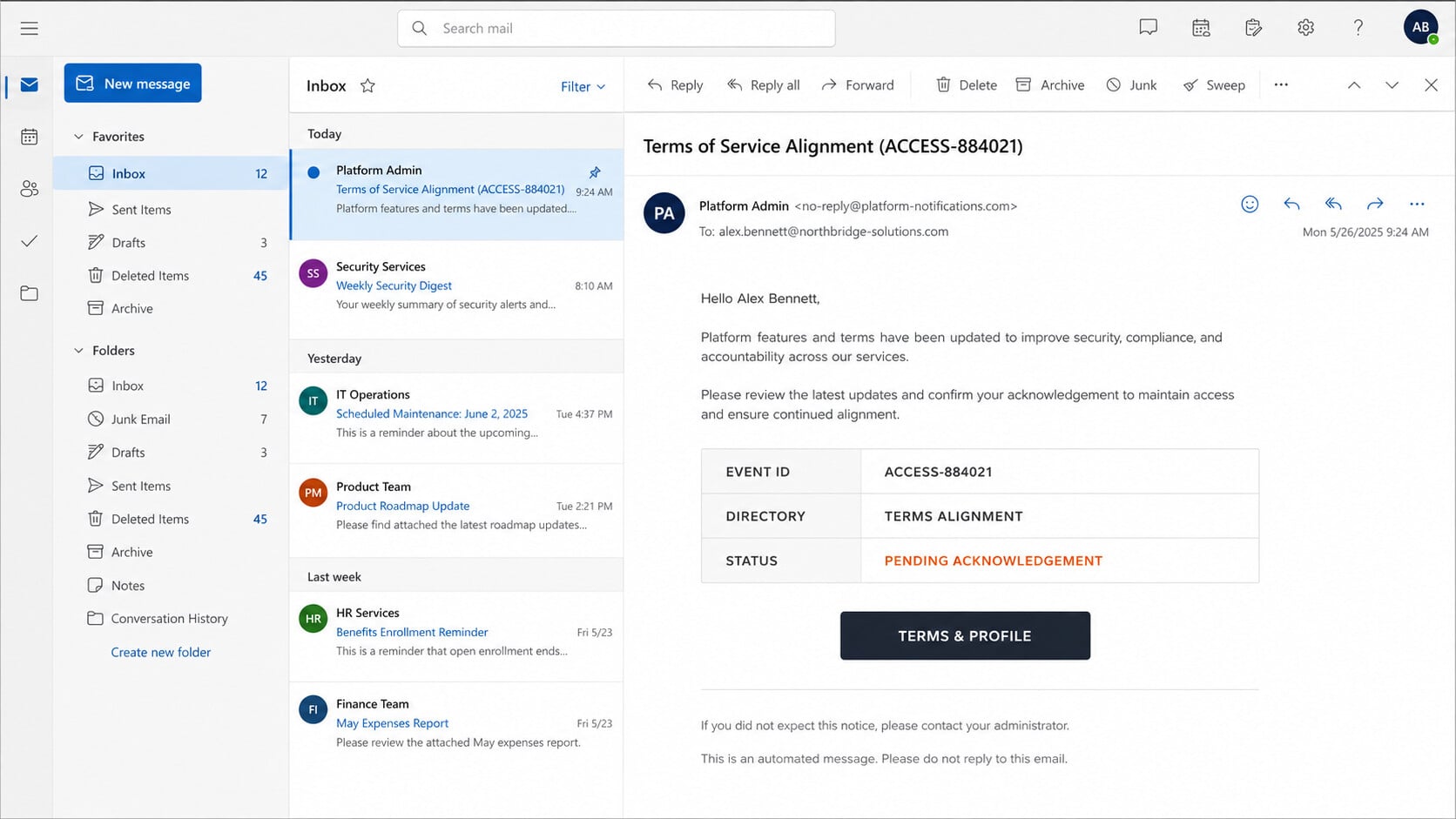
The Platform Features and Terms of Service Updated email presents itself as an automated record notice. Its subject references a “Terms of Service Alignment” event.
The examined message displays event ID ACCESS-884021, redacted user and system fields, and a status marked “Pending Acknowledgement.” Those details imitate an internal administrative console.
Yet the notice never clearly identifies the platform, account owner, policy version, effective date, or organization responsible for the supposed change.
Vague language lets one template target many organizations
Terms such as “directory alignment,” “profile configuration,” and “entry point” sound technical without saying anything verifiable. The sender can reuse them across unrelated companies.
A recipient may assume the email concerns Microsoft 365, Google Workspace, payroll, a customer portal, or an internal identity system. The message relies on that assumption.
The call to action reads “ENTRY POINT: TERMS & PROFILE.” It avoids a familiar service name while encouraging the reader to treat the link as mandatory.
The danger begins at the link, not inside the notice
The destination observed during the investigation was no longer active. That prevents a definitive statement about the exact form shown to every recipient.
However, the campaign’s construction strongly fits credential phishing. A linked page can copy a webmail or single sign-on screen and collect whatever the visitor submits.
- The email claims an administrative update requires attention.
- An event code supplies manufactured specificity.
- The platform remains unnamed, so recipients fill in the gap.
- A prominent link moves the conversation outside the mailbox.
- The likely objective is an email or workplace login.
What the Message Actually Says
The body is unusually short. It claims platform features and terms were updated, then says profile configuration is available for “account alignment.”
No document is attached. No policy changes are summarized. There is no privacy contact, service address, administrator name, or recognizable support channel.
The final process note claims the record will be logged automatically after submission. That sentence makes clicking feel like part of a tracked compliance workflow.
Real organizations sometimes require policy acknowledgements. They normally identify the organization, link to an established portal, and provide context an employee can independently confirm.
This email does the opposite. It removes identifying context while preserving the visual signals of internal administration.
Why the Email Can Feel Convincing
Phishing does not always arrive with misspellings, lottery promises, or obvious threats. A restrained operational message can be more persuasive inside a busy workplace.
The fake event number encourages a reader to believe a real system generated the notice. Redacted fields make it resemble a forwarded security record.
The status “Pending Acknowledgement” quietly creates responsibility. It suggests the recipient’s inaction may remain visible to an administrator or compliance team.
The message also borrows the rhythm of access-management language. Words such as directory, profile, submission, and alignment sound plausible around identity systems.
None of those words proves legitimacy. Authenticity comes from a verified sender, expected workflow, correct destination domain, and confirmation inside the real service.
How the Platform Features and Terms Email Scam Works
Step 1: A mass email imitates a routine administrative notice
The campaign begins with an email that resembles an automated workplace alert. It avoids dramatic claims that might immediately trigger suspicion.
The sender may target corporate addresses collected from public websites, earlier data breaches, marketing databases, or previously compromised mailboxes.
Because the platform is unnamed, the same message can reach people using entirely different services. Each recipient mentally connects it to something familiar.
Step 2: Technical formatting manufactures authority
Event IDs, status labels, system fields, and uppercase process notes imitate a ticketing or identity-management system. These elements are easy for criminals to fabricate.
They also distract from missing basics. A genuine notice should explain who changed the terms, which account is affected, and where the policy can be read safely.
Step 3: Ambiguity makes the reader investigate by clicking
The message does not answer the obvious question: which platform? Curiosity and mild anxiety push the reader toward the only apparent source of clarification.
This is a deliberate reversal. Instead of proving its identity before asking for action, the email makes the recipient visit an unverified destination to learn more.
Step 4: The link opens a counterfeit sign-in page
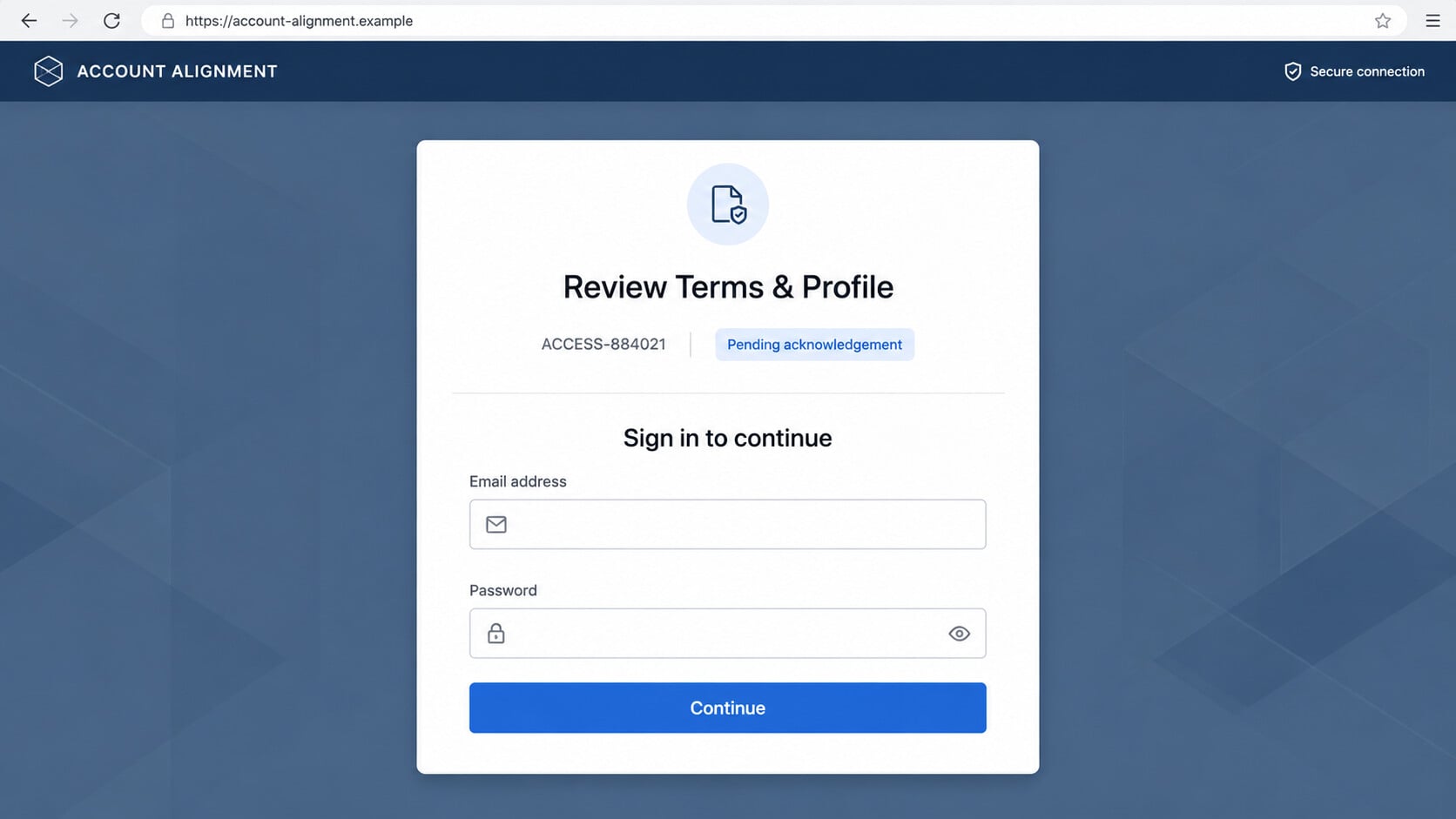
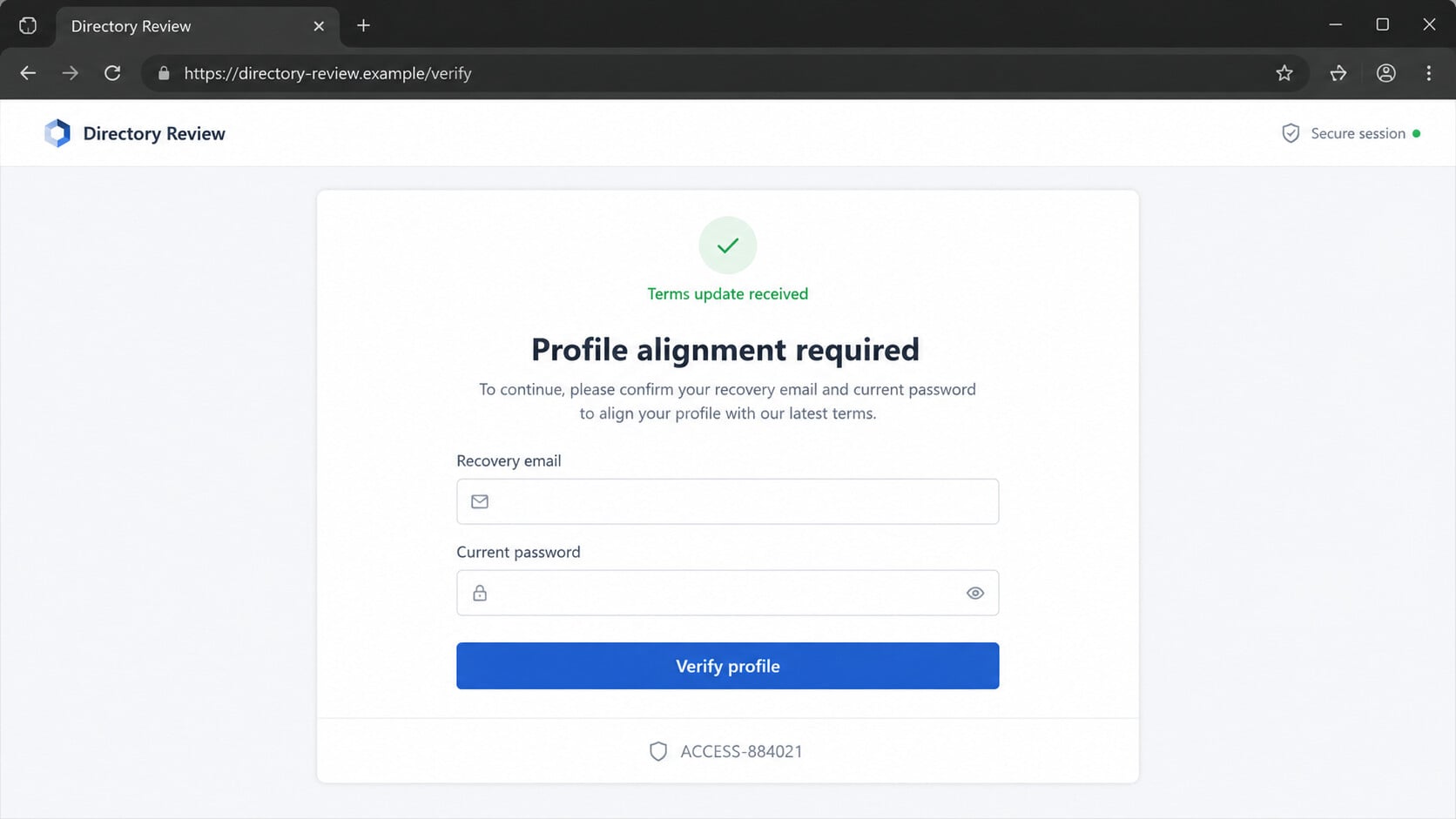
A common version of this attack displays a generic login form. More advanced pages adapt their branding after the visitor enters an email address.
For example, a work address may trigger a page styled like Microsoft, Google, or the organization’s own webmail. The appearance changes, but the collector remains fraudulent.
The browser address bar is more informative than the logo. A familiar design hosted on an unrelated domain is still a phishing site.
Step 5: Submitted credentials are captured immediately
The fake form can send the username and password to an attacker-controlled server the moment the visitor presses Continue, Verify, or Sign In.
Some pages deliberately report an incorrect password and request it again. This helps criminals capture a corrected entry if the first attempt contained a typo.
The site may then redirect to a legitimate service. That smooth handoff can make the victim believe the first page merely expired.
Step 6: The mailbox becomes a gateway to other accounts
Access to email is especially valuable because password-reset links for banking, shopping, cloud storage, and social accounts often arrive there.
An intruder can search invoices, contracts, payroll records, identity documents, and private conversations. Business accounts may expose customer or supplier information.
Attackers also create forwarding rules or hidden filters. Those changes can quietly send future messages to another address after the password is changed.
Step 7: The compromised account is used to reach new victims
A message sent from a real coworker or supplier mailbox carries more trust than ordinary spam. Criminals exploit that trust for invoices, file-sharing lures, and payment changes.
They may insert themselves into an existing conversation and replace legitimate bank details. The language can look natural because they can read the earlier thread.
The original victim may notice only after contacts report strange messages or an expected email disappears.
Sender, Domain, and Infrastructure Checks
The display name proves almost nothing
Email programs prominently show a friendly sender name, but criminals can type any label into that field. Expand the header and inspect the complete address.
A generic platform notice from a free mailbox, unrelated company domain, or recently created look-alike address should not be trusted.
The destination domain matters more than the page design
Hover over the link on a computer, or long-press it on a mobile device, without opening it. Compare the previewed host with the service’s known domain.
Extra words, substituted letters, unrelated subdomains, and public hosting services are common warning signs. HTTPS only encrypts the connection; it does not certify honesty.
A hosting address is not an accountable company
Phishing pages often sit on compromised websites, disposable domains, or legitimate cloud platforms abused by an attacker. Hosting infrastructure does not identify the criminal.
Do not contact addresses or phone numbers presented by the suspicious page. Open the genuine service separately and use support information found there.
Missing policy details expose the imitation
A real terms notice should identify the legal service, policy version, effective date, and a durable place to review the changes without surrendering credentials.
The examined email supplies none of that. Its supposedly formal language functions as scenery around one action: opening an external link.
How to Verify a Terms Update Without Using the Email
Open a new browser tab and type the service address yourself. If a policy acknowledgement is genuinely pending, it should appear after a normal sign-in.
Workplace users should ask their IT team through a known chat channel or directory number. Do not reply to the questionable message for confirmation.
Search the organization’s intranet for the event number and exact notice wording. A fabricated code will usually have no matching ticket or announcement.
Check whether coworkers received the same request. Similar messages do not prove legitimacy, but a security team can inspect headers and destination links centrally.
CISA recommends recognizing, reporting, and deleting phishing. Reporting helps defenders block the same destination for other users.
Warning Signs in This Particular Email
- It never names the platform that supposedly changed its terms.
- The account action is described with unnatural “alignment” language.
- An event number creates authority without offering verifiable context.
- The link is presented as an “entry point,” not a recognizable portal.
- No policy summary, version, effective date, or support contact appears.
- The email encourages external sign-in rather than normal account navigation.
One warning sign can have an innocent explanation. Several signs working together make the message unsafe to trust without independent verification.
The safest decision is not to debate the wording. Treat the link as untrusted and check the claimed update through the normal service.
What to Do if You Have Fallen Victim to This Scam
- Close the page and stop entering information. Do not test another password or follow additional verification prompts. Leave the suspicious site immediately.
- Change the exposed password from a clean, trusted device. Use the genuine service address. Create a unique password you have never used elsewhere.
- Change reused passwords. If the same password protected another account, update every reuse. Begin with email, banking, cloud storage, and workplace access.
- Terminate active sessions. Use the account’s security panel to sign out other devices, revoke unfamiliar applications, and remove unknown recovery methods.
- Enable multi-factor authentication. Prefer an authenticator application or security key when available. Store backup codes somewhere attackers cannot reach through email.
- Inspect mailbox rules and forwarding. Delete filters you did not create. Review sent, deleted, archived, and trash folders for attacker activity.
- Warn your administrator and contacts. A workplace account needs immediate IT review. Tell recent correspondents not to trust unexpected files, invoices, or payment changes.
- Scan the device if anything downloaded or ran. Malwarebytes can detect malicious scripts, stealers, and unwanted software that may accompany a phishing page.
- Reduce repeat exposure. AdGuard can block many malicious advertising routes, tracking links, and known scam pages before they load in the browser.
- Preserve and report the evidence. Save the original email and full headers. Report it to your provider, employer, and ReportFraud.ftc.gov when appropriate.
- Watch for recovery impostors. Nobody needs your password, one-time code, or remote computer access to investigate a phishing incident.
Is Your Device Infected? Run a Free Malware Scan
Slow performance, constant pop-ups, or strange behavior? These are classic signs of a malware infection. The fastest way to find out is to scan your device with Malwarebytes Free — one of the most trusted malware removal tools available.
The free version detects and removes the most common threats, including:
- Adware — the cause of those annoying pop-ups
- Browser hijackers — unwanted redirects and changed homepages
- Trojans and spyware — hidden programs stealing your data
- Potentially unwanted programs (PUPs) — software you never asked for
👉 Select your device below — Windows, Mac, or Android — then follow the simple steps to download Malwarebytes, scan your system, and remove any threats it finds. The scan usually takes 5 to 20 minutes.
Run a Malware Scan with Malwarebytes for Windows
Malwarebytes is one of the most popular and trusted anti-malware tools for Windows — and it’s completely free for removing infections. It catches threats that many antivirus programs miss, including adware, browser hijackers, and trojans. Follow the steps below to scan and clean your PC in just a few minutes.
Download Malwarebytes
Click the button below to download the latest version of Malwarebytes for Windows from the official source. The free version is all you need — it will scan your computer and remove adware, browser hijackers, and other malicious software at no cost.
Download MalwarebytesOfficial installer for Windows 11 and 10. Your download starts right away.Want real-time protection? See Malwarebytes Premium Malwarebytes Free for WindowsScans and removes malware at no cost
-
Install Malwarebytes
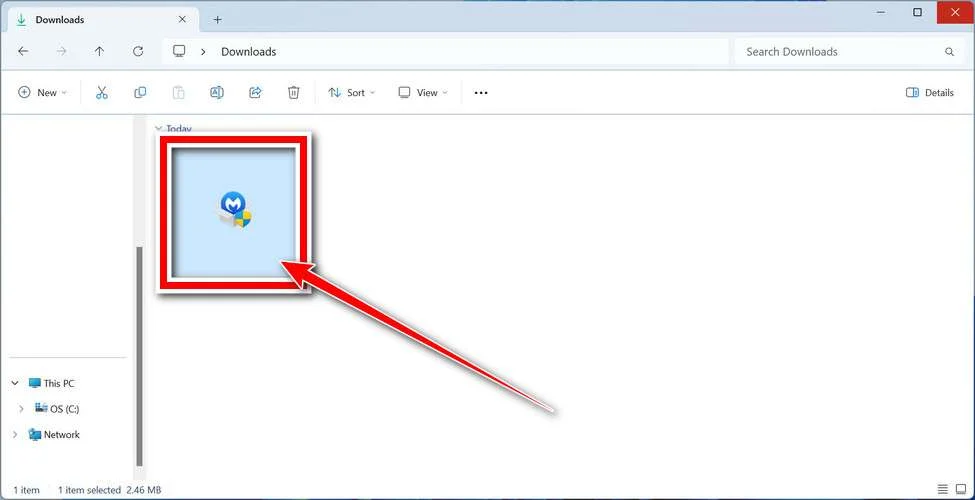
When the download finishes, open your Downloads folder and double-click the MBSetup file. If Windows shows a User Account Control pop-up, click “Yes” to allow the installation.
Follow the On-Screen Prompts to Install Malwarebytes
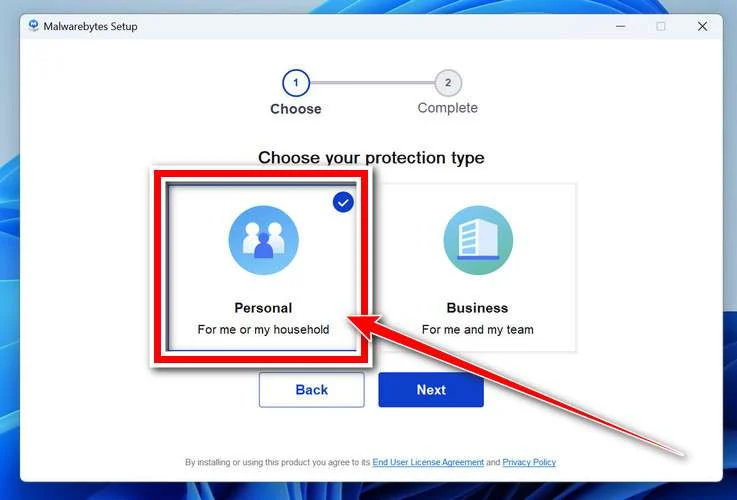
The setup wizard will walk you through a few quick screens:
-
Choose where you’re installing the program — “Personal Computer” or “Work Computer” — then click Next.
-
Malwarebytes will now install on your device. This usually takes under a minute.

-
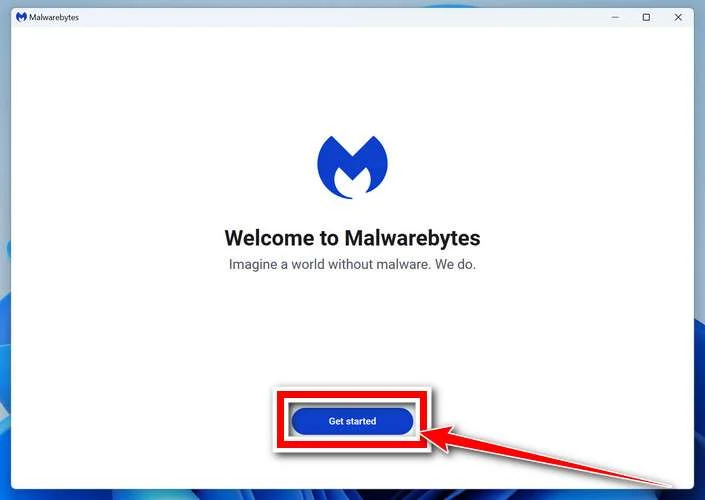
When installation is complete, the “Welcome to Malwarebytes” screen will open automatically.
-
On the final screen, click Open Malwarebytes to launch the program.

-
Enable “Scan for Rootkits”
Before scanning, turn on rootkit detection so Malwarebytes can find even the most hidden threats. Click the Settings gear icon on the left side of the screen.
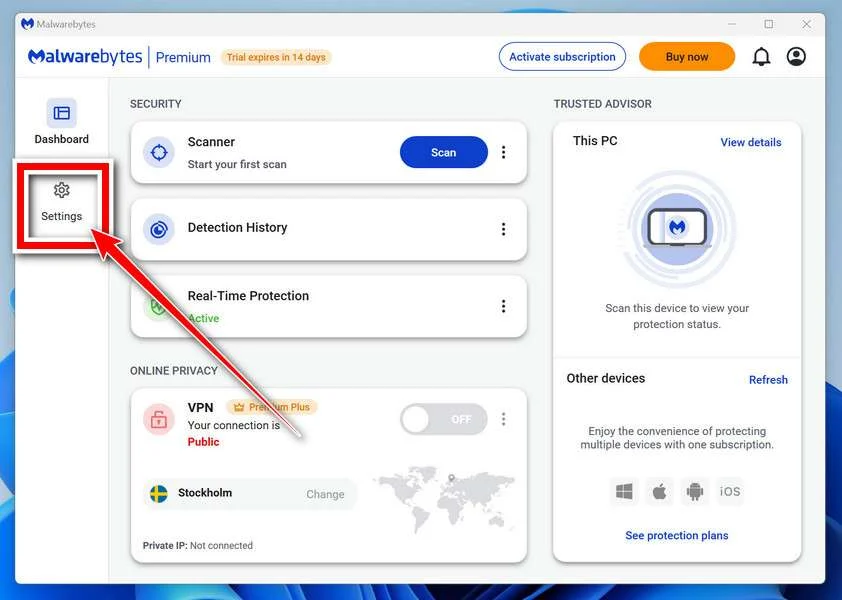
In the settings menu, find “Scan for rootkits” and click the toggle so it turns blue.

Done? Click “Dashboard” in the left pane to return to the main screen.
Start the Scan
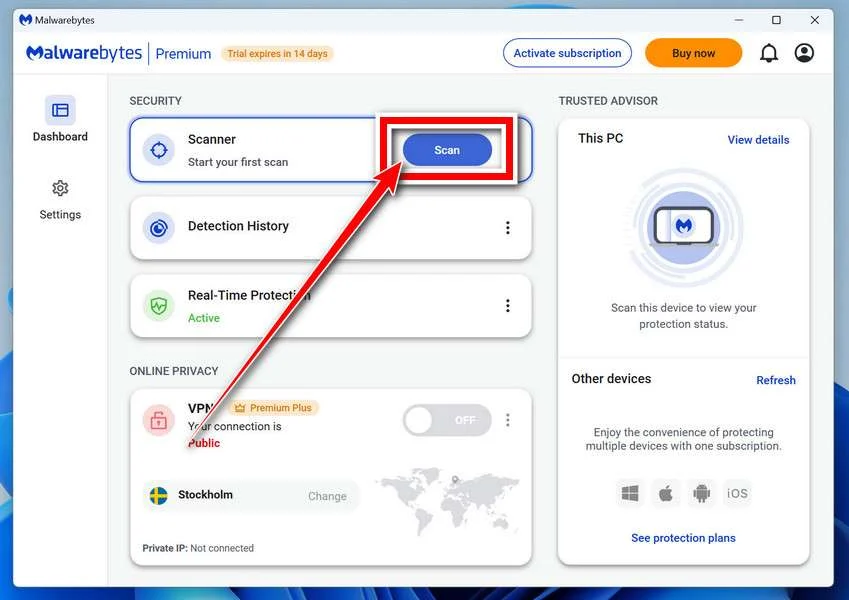
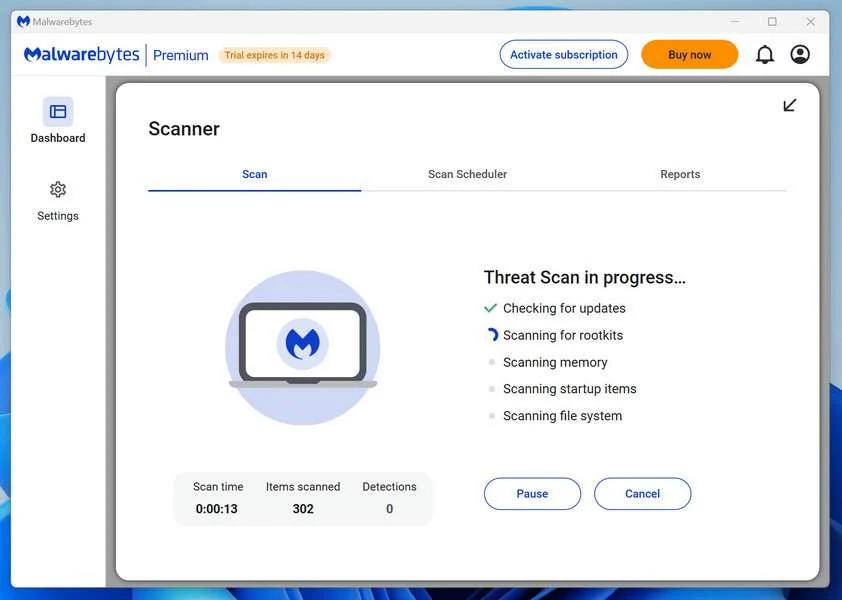
Click the blue Scan button. Malwarebytes will automatically update its virus database and start checking your computer for malware.
-
Wait for the Scan to Finish
The scan checks your entire system for browser hijackers and other malicious programs, so it can take 5 to 20 minutes depending on your computer. Feel free to do something else — just check back occasionally to see the progress.
-
Quarantine the Detected Threats
When the scan is done, you’ll see a list of everything Malwarebytes found — malware, adware, and potentially unwanted programs. Click the “Quarantine” button to remove all of them at once.
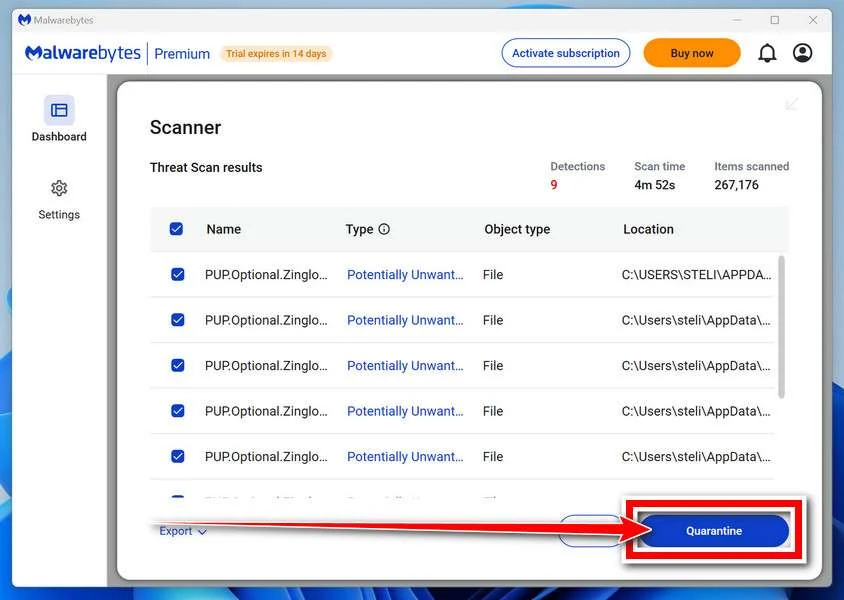
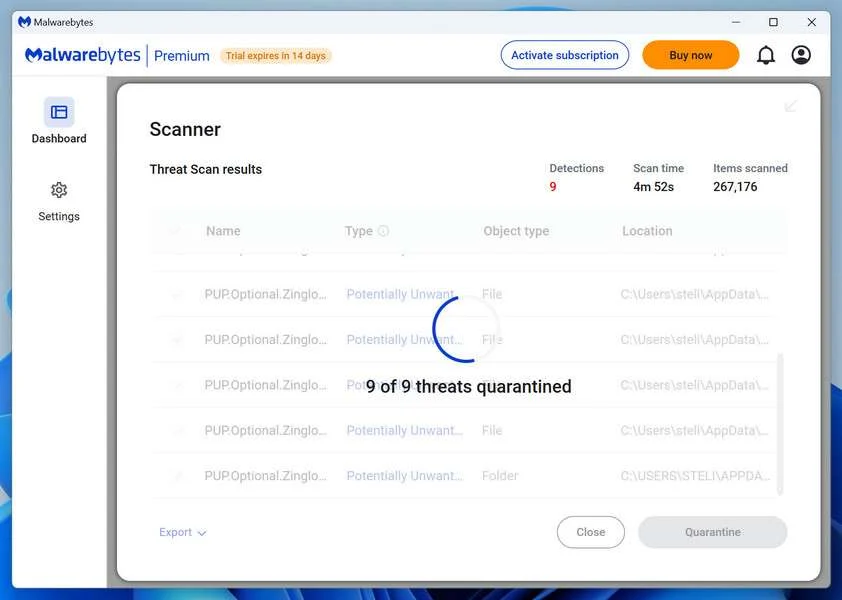
Malwarebytes will now remove the malicious files and registry entries and move them safely into quarantine.
-
Restart Your Computer
Some threats can only be fully removed after a reboot. If Malwarebytes asks you to restart, click Yes. Once you’re logged back in, Malwarebytes has finished removing the threats it found.
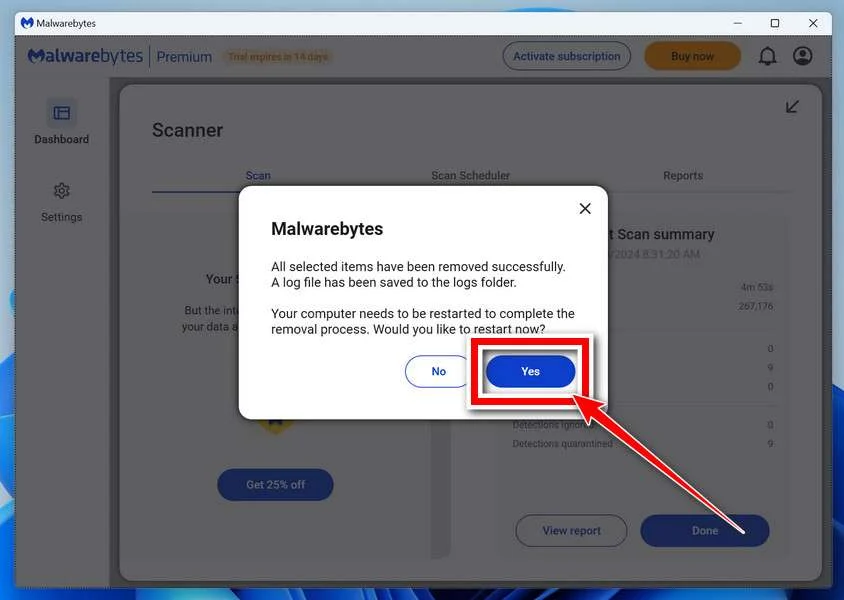
That’s it — your Windows PC is now clean of trojans, adware, and other malware, and should be back to running smoothly.
If you are still having problems with your computer after completing these instructions, then please follow one of the steps:
- Run a computer scan with ESET Online Scanner
- Ask for help in our Windows Malware Removal Help & Support forum.
Run a Malware Scan with Malwarebytes for Mac
Malwarebytes for Mac is a free on-demand scanner that removes the malware other security software tends to miss — adware, browser hijackers, and unwanted programs included. Cleaning an infected Mac with Malwarebytes has always been completely free, and it’s our go-to recommendation. Follow the steps below to scan and clean your Mac in just a few minutes.
-
Download Malwarebytes for Mac
Click the button below to download the latest version of Malwarebytes for Mac.
Download MalwarebytesOfficial installer for macOS. Your download starts right away.Want real-time protection? See Malwarebytes PremiumMalwarebytes Free for MacScans and removes malware at no cost -
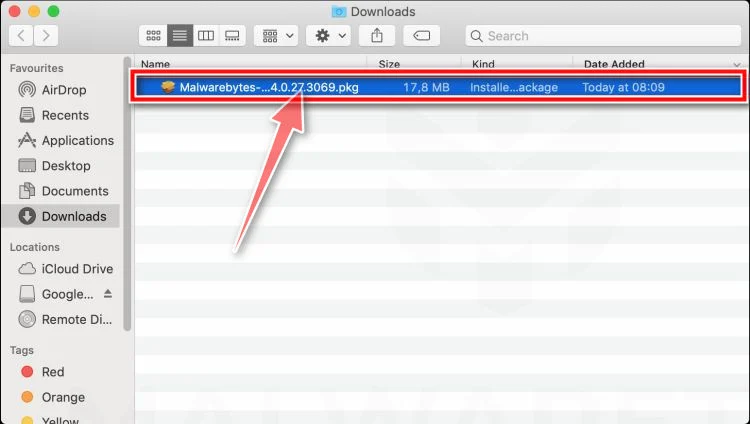
Open the Malwarebytes setup file
When the download finishes, open your Downloads folder and double-click the setup file to begin the installation.
-
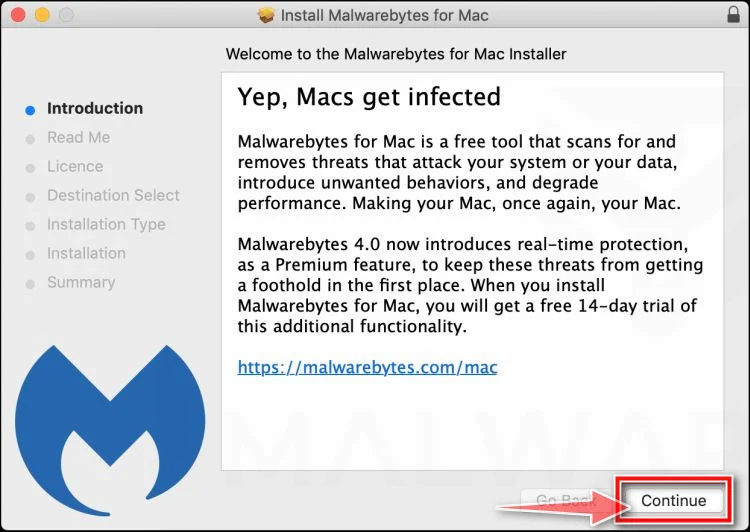
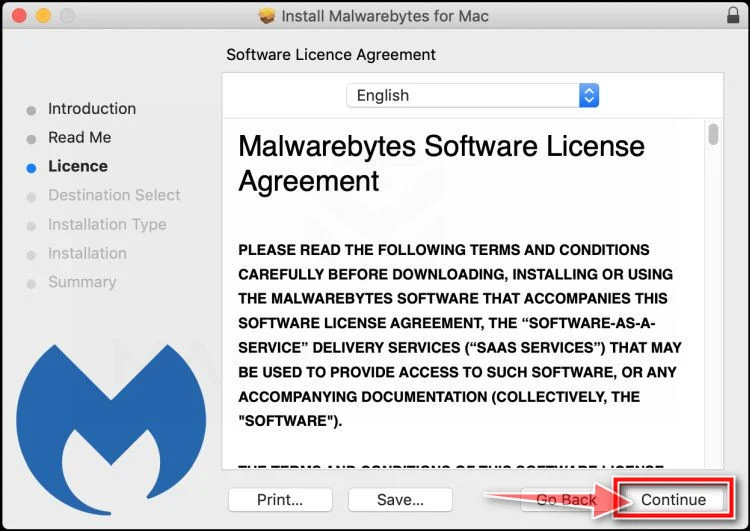
Follow the On-Screen Prompts to Install Malwarebytes
The Malwarebytes for Mac Installer will guide you through a few quick screens. Click “Continue” and keep following the prompts until the installation completes.
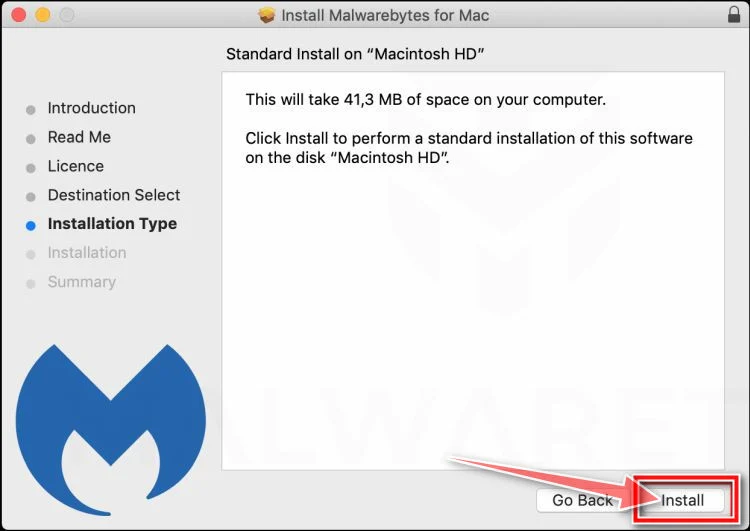
When the installation is complete, Malwarebytes opens to the Welcome to Malwarebytes screen. Click “Get started“.
-
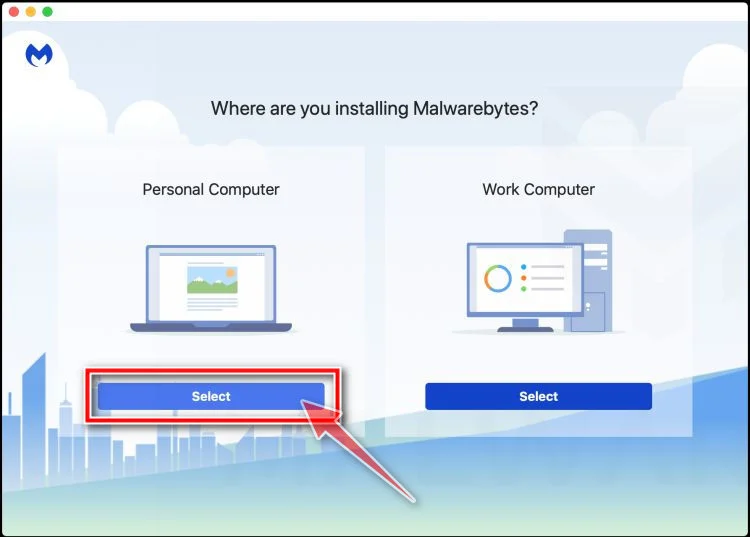
Select “Personal Computer” or “Work Computer”
Malwarebytes will ask what type of computer you’re installing it on. Click either Personal Computer or Work Computer, whichever applies.
-
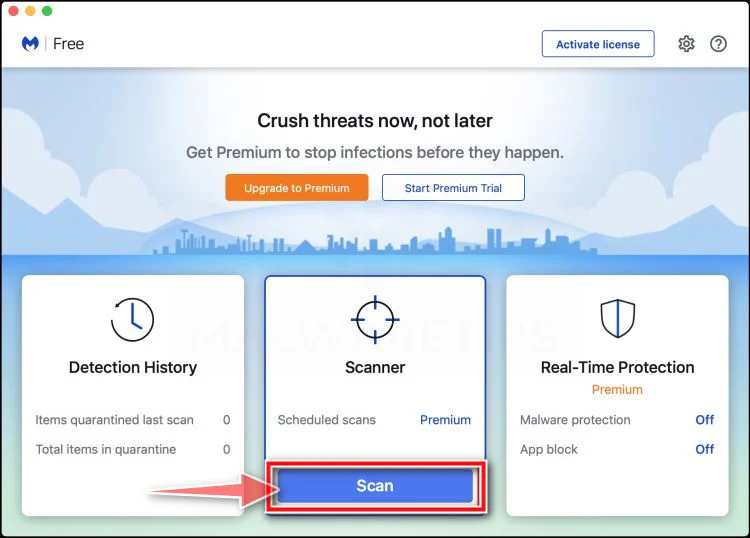
Start the Scan
Click the “Scan” button. Malwarebytes will automatically update its detection database and begin checking your Mac for malware.
-
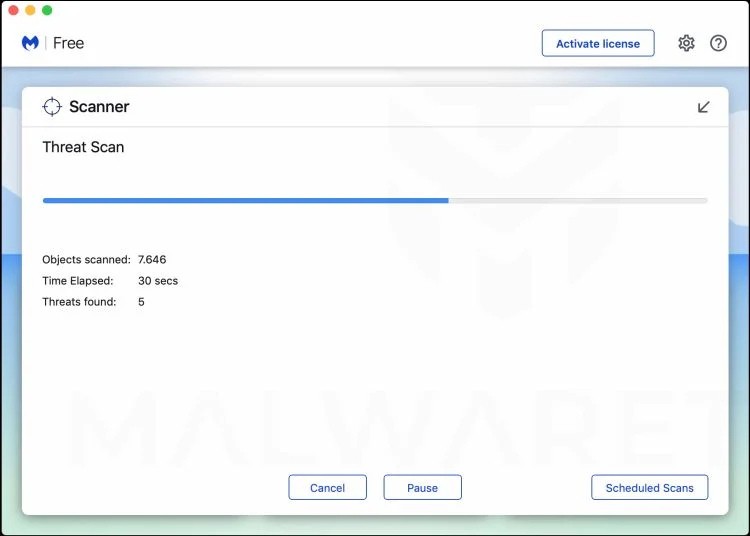
Wait for the Scan to Finish
Malwarebytes will scan your Mac for adware, browser hijackers, and other malicious programs. This can take a few minutes, so feel free to do something else — just check back occasionally to see the progress.
-
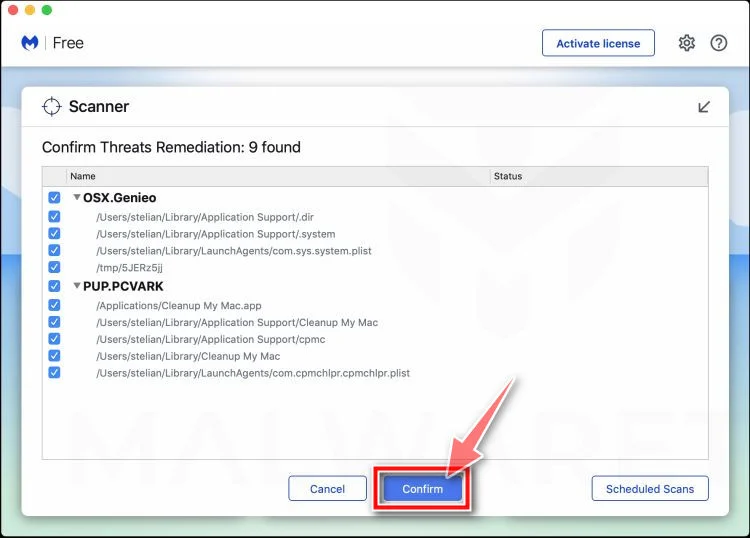
Quarantine the Detected Threats
When the scan is done, you’ll see a list of everything Malwarebytes found. Click the “Quarantine” button to remove all the threats at once.
-
Restart Your Mac
Malwarebytes will now remove all the malicious files it found. Some threats can only be fully removed after a reboot — if Malwarebytes asks you to restart, allow it. Once you’re logged back in, your Mac is clean.
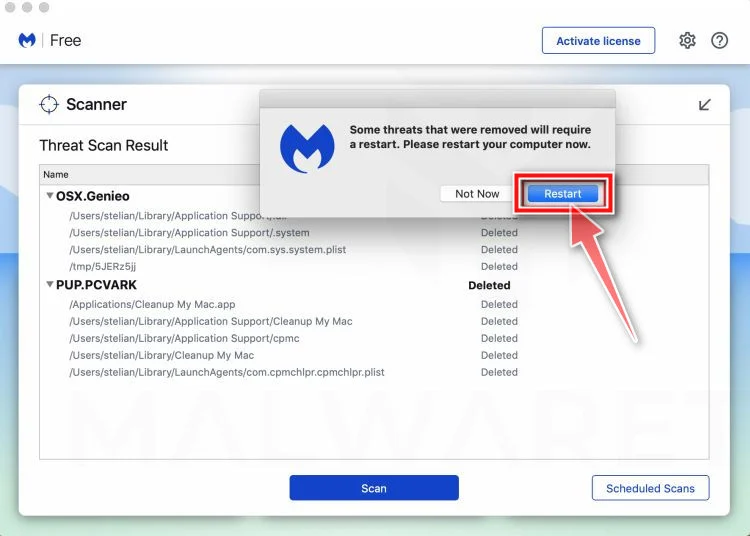
That’s it — your Mac is now free of adware, rogue browser extensions, and other potentially harmful software.
If you are still experiencing problems while trying to remove a malicious program from your computer, please ask for help in our Mac Malware Removal Help & Support forum.
Run a Malware Scan with Malwarebytes for Android
Malwarebytes for Android automatically detects and removes dangerous threats like malware and ransomware so you don’t have to worry about your most-used device being compromised. Aggressive detection of adware and potentially unwanted programs keeps your Android phone or tablet running smooth.
-
Download Malwarebytes for Android.
You can download Malwarebytes for Android by clicking the link below.
Get Malwarebytes for AndroidOpens Google Play in a new tab.Want real-time protection? See Malwarebytes Premium for AndroidMalwarebytes for AndroidScans your phone and removes malware at no cost -
Install Malwarebytes for Android on your phone.
In the Google Play Store, tap “Install” to install Malwarebytes for Android on your device.

When the installation process has finished, tap “Open” to begin using Malwarebytes for Android. You can also open Malwarebytes by tapping on its icon in your phone menu or home screen.

-
Follow the on-screen prompts to complete the setup process
When Malwarebytes will open, you will see the Malwarebytes Setup Wizard which will guide you through a series of permissions and other setup options.
This is the first of two screens that explain the difference between the Premium and Free versions. Swipe this screen to continue.
Tap on “Got it” to proceed to the next step.
Malwarebytes for Android will now ask for a set of permissions that are required to scan your device and protect it from malware. Tap on “Give permission” to continue.
Tap on “Allow” to permit Malwarebytes to access the files on your phone.
-
Update database and run a scan with Malwarebytes for Android
You will now be prompted to update the Malwarebytes database and run a full system scan.

Click on “Update database” to update the Malwarebytes for Android definitions to the latest version, then click on “Run full scan” to perform a system scan.

-
Wait for the Malwarebytes scan to complete.
Malwarebytes will now start scanning your phone for adware and other malicious apps. This process can take a few minutes, so we suggest you do something else and periodically check on the status of the scan to see when it is finished.

-
Click on “Remove Selected”.
When the scan has been completed, you will be presented with a screen showing the malware infections that Malwarebytes for Android has detected. To remove the malicious apps that Malwarebytes has found, tap on the “Remove Selected” button.

-
Restart your phone.
Malwarebytes for Android will now remove all the malicious apps that it has found. To complete the malware removal process, Malwarebytes may ask you to restart your device.
That’s it — your Android phone is now clean — no more malicious apps, adware, or browser redirects.
If you are still having problems with your phone after completing these instructions, then please follow one of the steps:
- Restore your phone to factory settings by going to Settings > General management > Reset > Factory data reset.
- Ask for help in our Mobile Malware Removal Help & Support forum.
Stay Protected: Block Ads and Malicious Sites
Now that your device is clean, keep it that way. Most infections start with a malicious ad or a fake download button — so blocking them at the source is your best defense.
We recommend AdGuard, which blocks malicious ads, phishing pages, and dangerous redirects before they can reach you.
👉 Download AdGuard and browse safely
Why This Campaign Matters Inside a Workplace
A mailbox often contains more than messages
Work email commonly controls password resets, shared documents, calendars, invoices, and cloud invitations. One stolen login can expose several connected business processes.
Criminals can study previous conversations before acting. That history helps them copy writing styles, identify payment routines, and choose believable colleagues to impersonate.
A quiet compromise may be more valuable than an immediate password change. Attackers sometimes create forwarding rules and wait for a useful financial conversation.
Administrators should therefore review sign-in history, active sessions, application permissions, mailbox rules, delegates, recovery settings, and recently registered authentication methods.
The next message may come from a real compromised account
Once criminals control one employee mailbox, they can reply inside genuine conversation threads. Recipients see familiar names, earlier messages, and authentic signatures.
This makes the second stage harder to recognize than the original campaign. A request for a document, payment, or login may arrive from a valid company address.
Warn colleagues and external partners if the mailbox sent unauthorized messages. A brief notice can prevent one compromise from spreading through a trusted relationship.
Recipients should verify unusual instructions through a separate channel. Use a known telephone number or start a new message, rather than replying inside the suspicious thread.
Small inconsistencies deserve investigation, not dismissal
The ACCESS-884021 label may look sophisticated, yet an identifier has no value unless the real platform can confirm it. Scammers can generate unlimited convincing reference numbers.
Similarly, redacted fields do not demonstrate privacy. They prevent the recipient from comparing the notice with actual account details and make one template reusable.
Security awareness works best when employees can report uncertainty without embarrassment. A fast internal check is safer than expecting every person to diagnose technical headers alone.
Organizations can also reduce exposure by placing external-sender warnings on mail and using phishing-resistant authentication for sensitive accounts.
Frequently Asked Questions
Is the Platform Features and Terms of Service Updated email real?
The examined version is a phishing lure. It uses vague administrative language and an unverifiable external link instead of identifying a legitimate platform and policy.
What is ACCESS-884021?
It is the event ID displayed in this campaign. A realistic-looking reference number can be invented and does not prove that any real account record exists.
Can simply opening the email infect my computer?
Reading ordinary email text usually does not install malware. Risk increases if you click links, open attachments, allow downloads, or run files.
What if I clicked but entered nothing?
Close the page and review browser downloads. A scan is sensible if a file arrived, a permission was granted, or the browser behaved unexpectedly.
What if I entered a password but multi-factor authentication is enabled?
Change the password immediately. Do not approve unexpected prompts, review sessions, and revoke unknown applications because attackers may attempt real-time MFA phishing.
How can I check future policy emails safely?
Navigate to the service independently, check its notification center, and contact a known administrator. Never use the questionable email’s link or reply address.
The Bottom Line
The Platform Features and Terms of Service Updated email turns administrative vagueness into a phishing advantage. Its event number and technical labels cannot replace verifiable identity.
Do not use the embedded entry point. Reach the real service separately, confirm the notice there, and secure your account quickly if any credentials were submitted.

Join the discussion
0 commentsShare your experience or ask a question about this article.
Discussion
Start the conversation
Have a question or something useful to share? Add the first comment.