

Provasil has been online longer than many supplement offers that appear overnight, and its pages identify a company behind the product.
That history is useful, but the guarantee and survey language still deserve a careful reading before money changes hands.
Overview
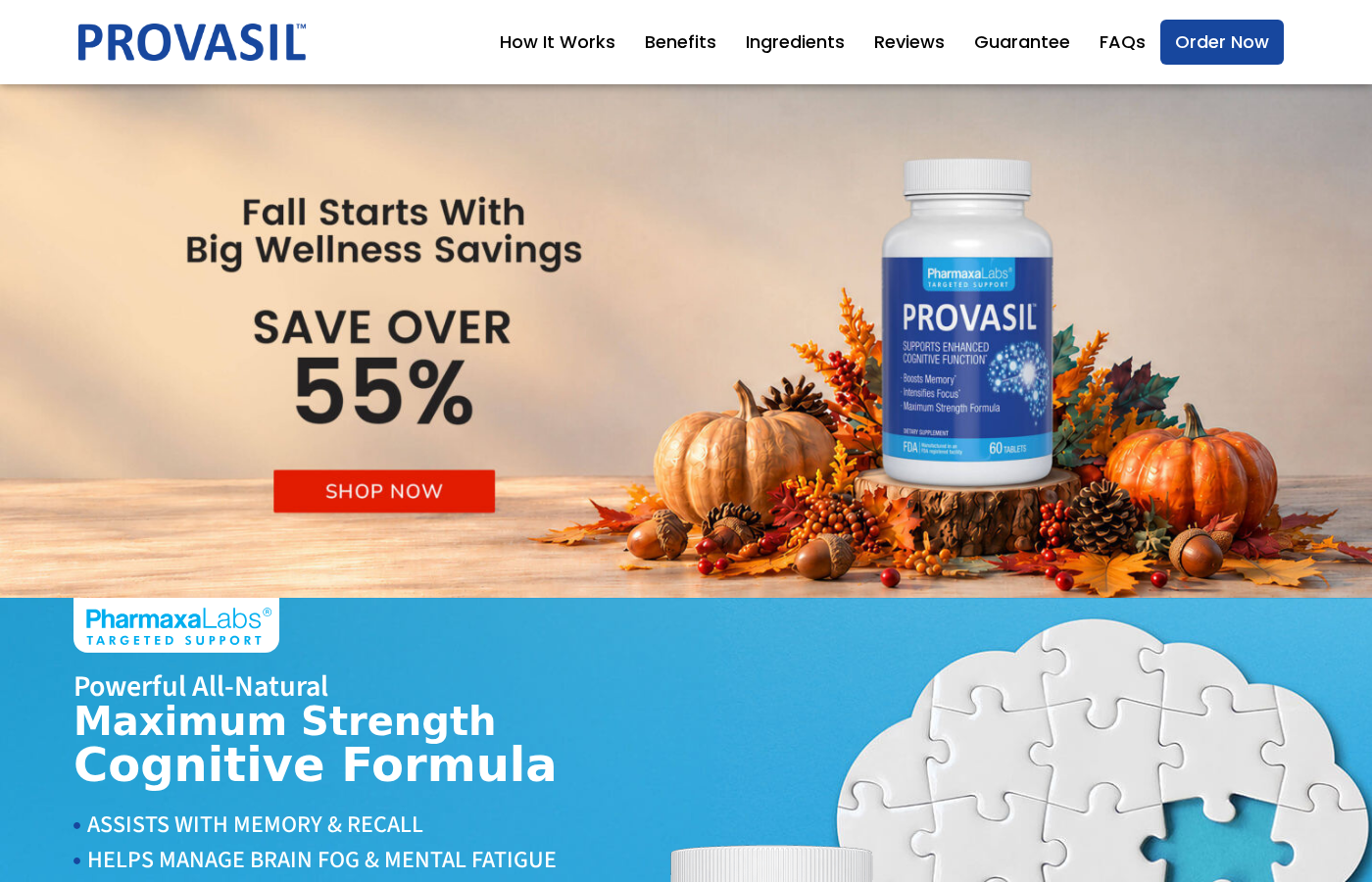
What Provasil is marketed to do
Provasil is presented as a cognitive-support supplement for memory, focus, and everyday mental performance.
The website attributes the product to Pharmaxa Labs and identifies All Web Shopping, LLC in its business information.
Sales copy highlights survey results, including claims that most users noticed improvements after taking the formula.
The current page advertises a price near $49.99 and a 60-day money-back policy.
Why the commercial terms matter
Provasil is not a new anonymous landing page, but its refund pages contain conditions that are easy to miss.
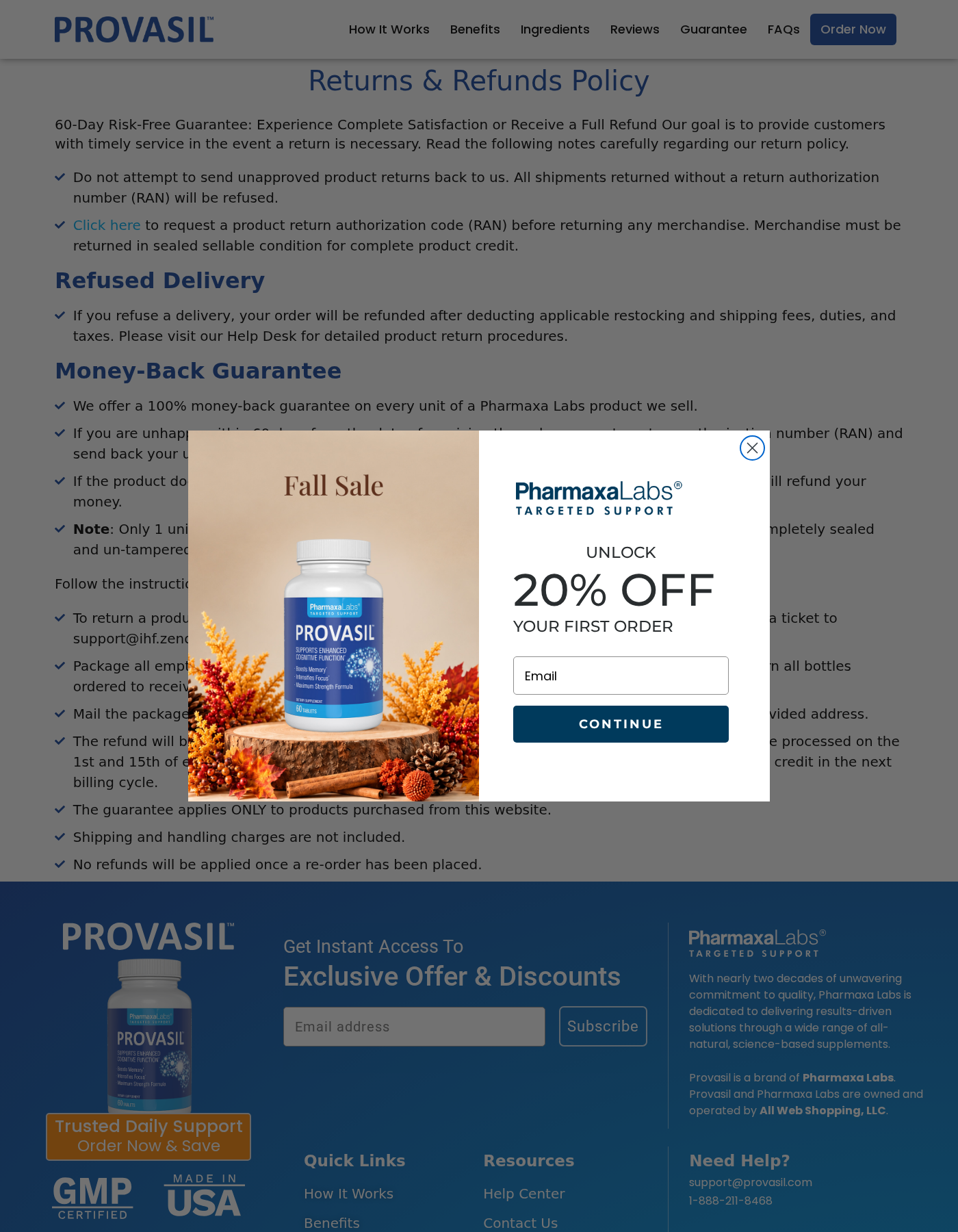
The first-order-only language can limit who qualifies for a refund.
Return authorization, sealed or sellable packaging, shipping deductions, and restocking fees may also affect the final credit.
Those details do not prove a scam, but they make the phrase “no questions asked” less simple than it sounds.
What our investigation found
Our review found a longer domain history and a named business, alongside marketing and policy limitations buyers should understand.
- Myprovasil.com was registered on December 20, 2019.
- The site names Pharmaxa Labs and All Web Shopping, LLC.
- The listed phone number is +1-888-211-8468.
- Business information points to 80 Red Schoolhouse Road, Chestnut Ridge, New York 10977.
- The refund process requires authorization within 60 days.
- Some policy language limits complete credits to a first order.
- The contact page and policy footer use different support email addresses.
These facts point to a commercial offer that should be read carefully, not automatically labeled fraudulent.
The main risk is assuming that a long online history makes every claim or return condition harmless.
Is Provasil Legit or a Scam?
Provasil appears to be an established supplement business rather than a disposable one-page scam.
Its public pages identify a seller, phone number, product information, and a functioning policy system.
We found no basis to call the entire offer fake.
We also found no evidence that the survey percentages prove a clinically meaningful result for every customer.
Buyers should judge the product as a commercial supplement with conditional refund rights and ordinary evidence limitations.
The Improvement Claims Need Context
Survey numbers are not clinical endpoints
Provasil references surveys in which users report better memory, attention, or mental energy.
Survey answers can be useful for understanding satisfaction, but they do not replace a controlled trial.
Participants may remember their expectations differently after receiving a product.
The page does not show the complete study method
Readers are not shown the survey size, recruitment method, questions, timing, or comparison group.
Without those details, percentages can sound more precise than the underlying evidence.
Ask whether the figures measure satisfaction, symptoms, or a validated cognitive test.
Ingredient evidence depends on the formulation
Even when individual ingredients have published research, the finished Provasil formula requires its own dose and quality assessment.
Extract strength, manufacturing controls, and lot consistency influence what a study can actually tell a buyer.
The sales page is not a substitute for a product-specific trial.
A long-running domain is not a medical endorsement
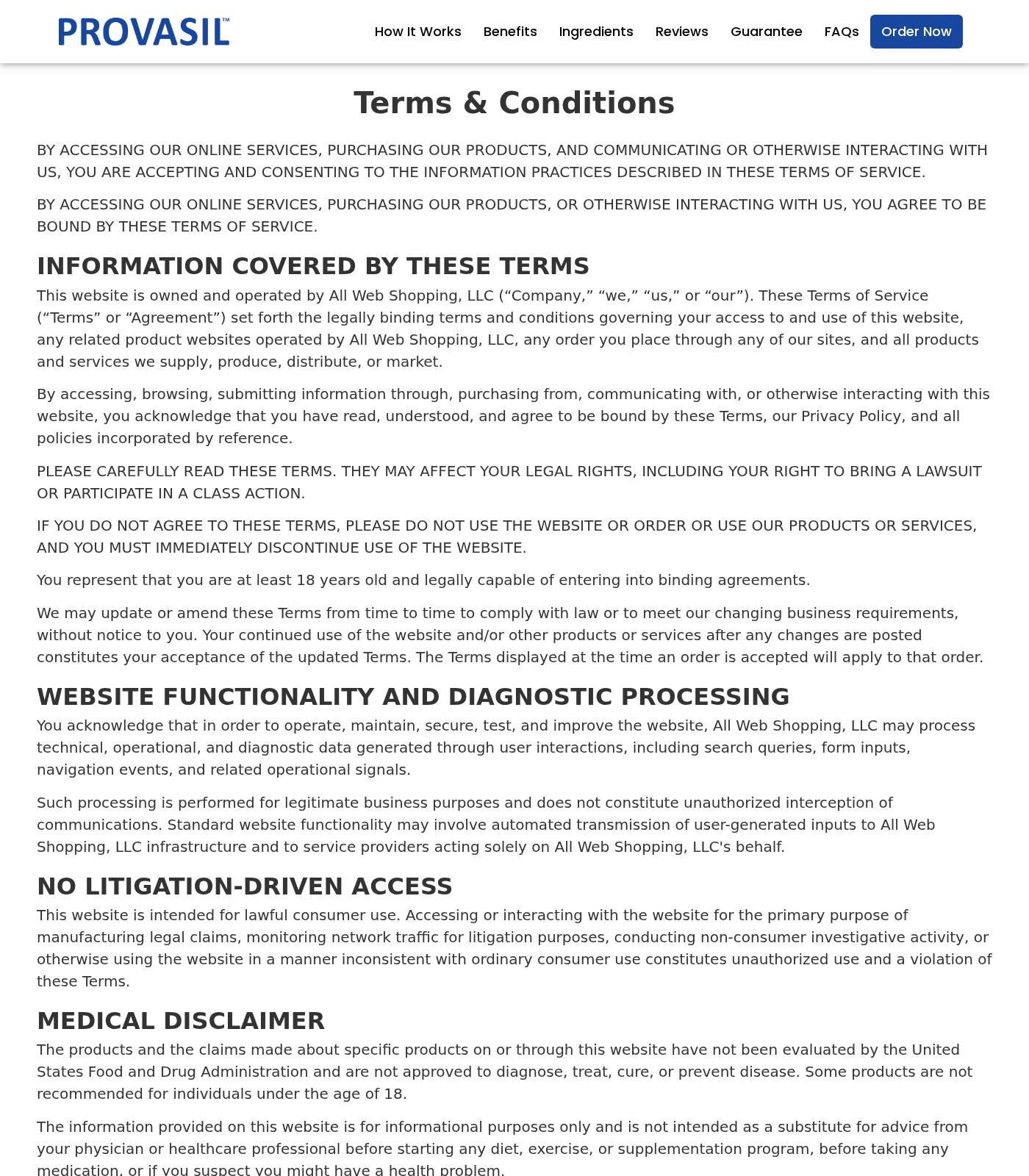
Myprovasil.com dates back to 2019, which is a positive accountability signal compared with a brand-new domain.
Age alone does not prove safety, effectiveness, or fair advertising.
It simply gives consumers more time to examine the business and its policies.
How the Provasil Offer Works
Step 1: The page begins with a familiar performance goal
Visitors are invited to imagine remembering names, staying focused, and handling daily work more easily.
The goals are attractive because they describe improvement without asking the reader to identify a medical diagnosis.
Step 2: Survey percentages add confidence
Reported percentages give the page a research-like appearance.
The customer is not shown the full questionnaire or independent verification, so the figures remain promotional evidence.
Step 3: Benefits are connected to a convenient routine
The product is positioned as an easy addition to daily habits.
Convenience can help adherence, but it should not encourage a buyer to skip medication or health checks.
Step 4: The sale uses seasonal discounts
The website has displayed sale overlays and promotional pricing around the regular offer.
Discounts create urgency while shifting attention away from the conditions attached to a refund.
Step 5: The checkout records a first order
Some policy language says complete credit may apply only to the first order.
A repeat purchase or promotional order may be treated differently.
Step 6: Return authorization becomes essential
Customers must request an authorization code within the stated 60-day window.
Sending a parcel without that approval can create a preventable dispute.
Step 7: The final refund depends on condition and deductions
Some pages require sealed or sellable bottles and allow shipping or restocking deductions.
The word “guarantee” therefore describes a process, not an instant full refund.
Pricing and Refund Conditions
The displayed price can change with the promotion
The page has promoted prices near $49.99 and seasonal discounts.
Save the final total, shipping charge, and product quantity before completing payment.
First-order limits matter
A policy that applies only to the first order is narrower than a universal satisfaction guarantee.
Ask support whether a previous purchase, bundle, or replacement changes eligibility.
Sealed or sellable packaging can decide the outcome
One policy page says returned products must be in a condition suitable for resale.
That condition may conflict with a buyer’s need to open a bottle before deciding whether it works.
Read the exact version shown at checkout.
Shipping and restocking deductions reduce the credit
Original shipping, return postage, or a restocking charge can reduce the amount returned.
Calculate the worst-case cost before treating the guarantee as risk free.
Company, Address, and Fulfillment Checks
The public pages identify a business
All Web Shopping, LLC is named as the website operator, while Pharmaxa Labs is associated with the product.
That separation gives buyers a starting point for checking responsibility.
The listed address is a business location, not proof of a factory
The site gives 80 Red Schoolhouse Road, Chestnut Ridge, New York 10977.
An office or fulfillment address can manage customer service without manufacturing every capsule.
Ask where the finished product is made and tested.
Support emails are not perfectly consistent
The footer uses support@provasil.com, while another contact route points to support@ihf.zendesk.com.
Different addresses can be normal during a helpdesk transition, but buyers should know which one handles returns.
The phone number offers a practical test
The listed number is +1-888-211-8468.
Call before ordering and ask about first-order limits, opened bottles, deductions, and the exact card statement descriptor.
A clear answer is valuable evidence.
What a Careful Provasil Purchase Looks Like
Separate the product question from the refund question
A supplement can have a functioning refund system without proving every health claim.
Likewise, a customer can like a product while another person experiences no measurable benefit.
Evaluate evidence and commercial terms as two separate issues.
That approach prevents a generous-sounding guarantee from becoming medical proof.
Ask for the current label before ordering
Formulas and suppliers can change over time, especially for products sold across several years.
Request a clear photograph of the Supplement Facts panel and warning section.
Compare it with the bottle delivered to your home.
If the label differs, ask support which version the survey claims describe.
Confirm whether opened bottles qualify
“No questions asked” can suggest that customers may try the product and return it.
Sellable-condition wording can point in the opposite direction.
Ask for a direct answer about one opened bottle and any unopened remainder.
Keep that answer with the authorization code.
Measure the final cost, not the discount
A seasonal overlay may emphasize savings while shipping and handling remain outside the headline.
The return process can add postage and a possible restocking deduction.
Calculate what you could lose if the product is unsuitable.
That figure is more useful than the claimed discount percentage.
Use health goals that can be evaluated
Terms such as sharper or clearer are subjective and can change with sleep, stress, and expectations.
Before starting, decide what improvement would actually matter in daily life.
Do not continue indefinitely because the bottle promises a future result.
Persistent memory problems require professional evaluation.
Keep the company’s longer history in perspective
An older domain makes the seller easier to trace than a campaign launched last week.
It does not remove the need for current testing, accurate claims, and fair return handling.
Policies may change even when the domain stays the same.
Save the version that governed your order.
Read the commercial language beside the health language
Product pages often place evidence and refund promises in separate parts of the site.
Reading only the benefits section creates an incomplete picture of the purchase.
Open the terms, return rules, privacy policy, and contact page before using the order button.
Save PDFs or screenshots because seasonal offers can change after payment.
Ask what the survey actually measured
Was the reported improvement a personal impression, a validated memory score, or a simple satisfaction answer?
How many people completed the survey, and how long did they use the product?
Were nonresponders counted, and was there a comparison group?
Without those answers, a percentage should remain a marketing signal.
Check the support system before an issue appears
Send a pre-purchase email asking for the current label and refund conditions.
Record how long the reply takes and whether it answers each question directly.
A helpful support exchange cannot prove efficacy, but a missing or evasive response is useful caution.
Keep the reply in the same folder as your receipt.
Return disputes often turn on small details
Customers should know whether the authorization code expires and whether the parcel must arrive before day sixty.
Ask whether shipping, handling, and restocking deductions are calculated per order or per bottle.
Clarify whether a promotional bundle has a different policy from a standard bottle.
Written answers prevent a later disagreement about what a salesperson said.
Use a realistic standard for improvement
Feeling more alert for a few days does not establish a durable cognitive effect.
Sleep, stress, hydration, caffeine, and expectations can change daily performance.
Do not stop prescribed care because a supplement advertisement describes a natural alternative.
Persistent or worsening memory symptoms deserve medical assessment.
Established does not mean immune to criticism
Provasil’s longer history makes research easier, but it does not excuse unclear or contradictory conditions.
Businesses can improve by publishing one current policy and one support route.
Consumers should reward clarity and pause when the commercial terms become difficult to reconcile.
The goal is a fair transaction, not an automatic accusation.
That balanced standard is especially useful when a product has a real business behind it but imperfectly explained conditions.
Read what is promised, what is documented, and what remains unknown.
The gap between those three categories should guide the final decision.
A documented business deserves specific questions, not automatic trust.
If support answers clearly, save the response and revisit it before opening a package.
What to Do if You Bought Provasil
- Save the exact terms. Keep the order page, sale overlay, total, quantity, and refund version shown before payment.
- Check whether it was your first order. Eligibility may differ for repeat purchases or replacement shipments.
- Call or email support early. Request the authorization code and confirm the return address in writing.
- Protect the product condition. Keep packaging, bottles, seals, and the packing slip until the decision is final.
- Use tracking for a return. Photograph the parcel and retain delivery proof until the refund clears.
- Challenge unexpected deductions. Give your card issuer the policy, receipt, and support history if the credit is incomplete.
- Ask a medical professional about use. Stop if symptoms appear or the formula conflicts with treatment.
- Secure the device used to order. Scan with Malwarebytes after suspicious redirects, and use AdGuard to limit intrusive sales scripts.
Frequently Asked Questions
Is Provasil a confirmed scam?
No. Its longer domain history and named business make it different from an anonymous disposable funnel.
Do the survey percentages prove it works?
No. They are promotional survey claims without the full method or a controlled clinical comparison.
What is the return deadline?
The policy describes a 60-day window, but customers must request authorization within that period.
Can I return an opened bottle?
Some pages emphasize sealed or sellable condition. Confirm the exact rule for your order before opening additional bottles.
Are shipping costs refundable?
Policies may allow shipping, handling, or restocking deductions. Ask support for a written estimate before returning.
Which company handles support?
The site names All Web Shopping, LLC and uses both a Provasil email and a Zendesk helpdesk address.
The Bottom Line
Provasil has stronger business identity signals than many supplements, but its survey claims and guarantee language still require careful reading.
First-order limits, packaging conditions, and possible deductions can make a “money-back” promise narrower than shoppers expect.
Research the terms, ask questions before paying, and treat the product as a commercial supplement rather than a guaranteed cognitive treatment.








