


Netflix is one of the world’s most popular streaming services, with over 220 million worldwide subscribers. As Netflix’s popularity has grown, so too have shady websites and scams trying to take advantage of unsuspecting Netflix fans. One such scam making the rounds recently is the “Netflix Reviewer” scam being promoted by the website Reviewflix.com.
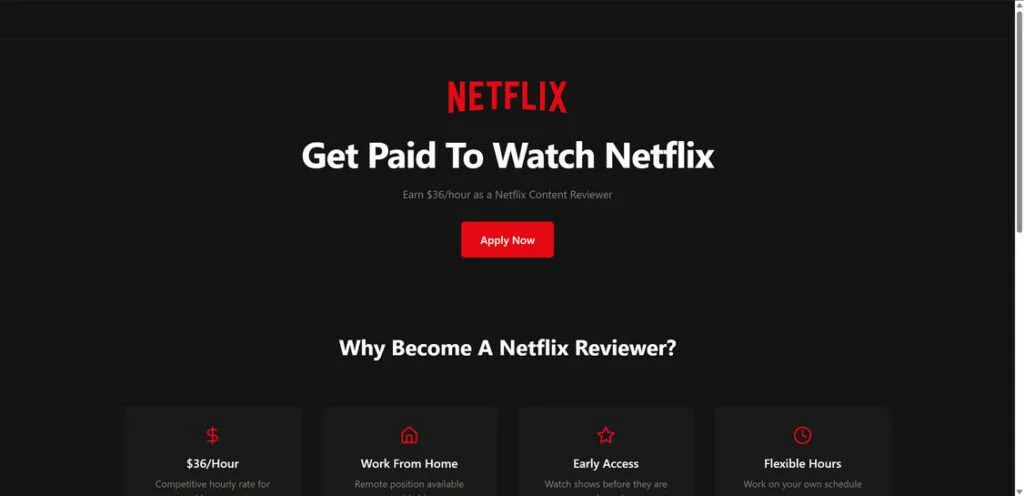
Overview of the Reviewflix.com Scam
The Reviewflix.com scam works by promoting the false promise that Netflix is hiring people to review movies. Scam ads and emails claiming you can “Become a Netflix Movie Reviewer” direct victims to the Reviewflix.com site. However, Netflix does not actually hire random people off the internet to review movies.
The scam site displays the Netflix logo prominently and uses language intended to convince victims they have a chance to land their “dream job” reviewing Netflix movies. In reality, clicking on the site’s “Start Now” button leads to an affiliate funnel designed to get victims to sign up for unwanted paid subscriptions, downloads, and offers.
This scam takes advantage of people’s desire to work for a popular company like Netflix. But the promised reviewer jobs, earnings of “up to $40 per movie”, and claims of “280+ Hired Today” are completely fabricated. Reviewflix.com itself contains no legitimate application process, job postings, or actual connection to Netflix.
How the Reviewflix.com Scam Works
Here is a detailed walkthrough of how the Netflix Movie Reviewer scam operates if you click on the Reviewflix.com site:
1. Scam Ads Lead to Reviewflix.com
The scam begins with ads or emails directing victims to the Reviewflix.com website. Often these scam ads appear as Google ads at the top of search results or on social media sites like Facebook.
Subject lines saying “Netflix Needs Movie Reviewers” or “Earn $40 Per Netflix Movie Review” entice people to click. The scam ads use Netflix’s branding without permission to falsely claim there are reviewer jobs available.
2. Victims Are Promised Easy Reviewer Jobs
The Reviewflix.com site displays the Netflix logo prominently and claims:
“Want to become a Movie Reviewer? Steps to Qualify: Click the START NOW button below, Enter your email and basic information, Answer simple questionnaire, Start reviewing movies and earning up to $40 per movie!”
These claims give the false impression that Netflix is recruiting reviewers and that getting hired simply requires clicking a button and filling out a “simple questionnaire”.
In reality, the site has no job application or any association with Netflix. The promises of easy hire and earnings up to $40 per review are completely fabricated to get victims’ hopes up.
3. Clicking “Start Now” Leads Down an Affiliate Funnel
When victims click the “Start Now” button believing it will let them apply for a Netflix reviewer job, they are instead redirected to an affiliate funnel.
This means victims are sent through a series of shady websites and forced to submit personal information, agree to sign up for unwanted offers, or download suspect apps and software.
Examples of sites victims might be directed to include:
- Captcha.club – Makes victims type in captchas to continue down the funnel
- Unlockrwrd.com – Promises rewards for downloading apps or submitting personal information
- Rewardsgiantusa.com – Another page promising rewards for completing dubious offers
The goal is to collect victim data, get downloads of affiliated apps, and sign people up for anything carrying a commission – not actually hire Netflix reviewers.
4. Signing Up for Offers or Downloading Software
To receive the promised rewards or continue through the affiliate funnel, victims are prompted to sign up for various subscription services, offers, or downloads.
Examples of things victims might end up agreeing to include:
- Subscription services like magazine trials or eBook clubs with recurring monthly fees
- Downloading shady apps, browser add-ons, or PC optimization/cleaning software
- Signing up for “free” trial offers that require credit card info and automatically charge after the trial ends unless the subscription is cancelled
- Submitting personal information like names, email addresses, phone numbers, and physical mailing addresses.
The apps and offers are not official Netflix services. Victims’ personal information is likely sold to other shady parties or scammers. And the recurring monthly fees can be difficult to cancel once signed up.
5. No Netflix Job, Just Credit Card Charges and Junk Offers
After going through the affiliate funnel and signing up for offers, victims do not actually get hired by Netflix or have the opportunity to review movies. The whole premise was a scam.
Instead, victims find:
- Credit cards charged for any paid subscriptions they agreed to
- Email boxes flooded with more spam and junk offers
- Personal info shared with unknown third parties
Meanwhile, the scammers and affiliate networks behind the funnel profit from the commissions earned for each sign-up completed.
The only real purpose of Reviewflix.com is steering victims into this tangled web of deceit – not hiring movie reviewers.
What to Do If You Fell for the Reviewflix.com Netflix Reviewer Scam
If you already clicked on the Reviewflix.com site and went through the affiliate funnel, here are some important steps to take:
1. Scan Devices for Unwanted Apps or Malware
If you downloaded any apps or software, scan your computer or mobile devices for malware or viruses. The downloads prompted by scam sites often include suspicious software that violates privacy or tracks user activity. Run a thorough security scan to remove anything dangerous.
2. Monitor Credit Cards and Bank Accounts
Carefully monitor your credit card statements and bank account activity for any unauthorized or suspicious charges. Report any charges you don’t recognize to your card issuer right away to dispute fraudulent fees.
3. Cancel Recent Subscriptions or Trials
Review any offers you may have recently signed up for and cancel any unwanted subscriptions, memberships, or trials immediately to avoid being charged again. Legitimate free trials still require proactively cancelling before the deadline.
4. Beware Emails or Calls Asking for More Money
Scammers often follow up asking for more payments, claiming you need to pay membership fees or didn’t qualify for the promised offers. Ignore any calls or emails related to the scam offers you signed up for – do not pay them any additional money.
5. Reset Passwords on Accounts with Shared Info
If you gave out any actual passwords or shared sensitive personal info, change those passwords right away to protect your accounts. Enable two-factor authentication if possible.
6. Place a Fraud Alert on Credit Reports
Consider placing a free fraud alert on your credit reports by contacting one of the three credit bureaus. This requires creditors to verify your identity before opening new accounts, making it harder for scammers to exploit your info.
Is Your Device Infected? Run a Free Malware Scan
Slow performance, constant pop-ups, or strange behavior? These are classic signs of a malware infection. A quick way to check is to scan your device with Malwarebytes Free, one of the most trusted malware removal tools available. If you only visited a scam page and didn’t download or install anything, this scan is optional.
The free version detects and removes the most common threats, including:
- Adware — the cause of those annoying pop-ups
- Browser hijackers — unwanted redirects and changed homepages
- Trojans and spyware — hidden programs stealing your data
- Potentially unwanted programs (PUPs) — software you never asked for
👉 Select your device below — Windows, Mac, or Android — then follow the simple steps to download Malwarebytes, scan your system, and remove any threats it finds. The scan usually takes 5 to 20 minutes.
Run a Malware Scan with Malwarebytes for Windows
Malwarebytes is one of the most popular and trusted anti-malware tools for Windows — and it’s completely free for removing infections. It catches threats that many antivirus programs miss, including adware, browser hijackers, and trojans. Follow the steps below to scan your PC and remove what Malwarebytes finds.
Download Malwarebytes
Click the button below to download the latest version of Malwarebytes for Windows from the official source. The free version is all you need — it will scan your computer and remove adware, browser hijackers, and other malicious software at no cost.
Download MalwarebytesOfficial installer for Windows 11 and 10. Your download starts right away.Want real-time protection? See Malwarebytes Premium Malwarebytes Free for WindowsScans and removes malware at no cost
-
Install Malwarebytes
When the download finishes, open your Downloads folder and double-click the MBSetup file. If Windows shows a User Account Control pop-up, click “Yes” to allow the installation.

Follow the On-Screen Prompts to Install Malwarebytes
The setup wizard will walk you through a few quick screens:
-
Choose where you’re installing the program — “Personal Computer” or “Work Computer” — then click Next.

-
Malwarebytes will now install on your device. This usually takes under a minute.

-
When installation is complete, the “Welcome to Malwarebytes” screen will open automatically.

-
On the final screen, click Open Malwarebytes to launch the program.

-
Optional: Check for rootkits with a Custom Scan
You don’t need to change any settings for a normal scan. The standard Threat Scan in the next step is enough for most problems, so you can go straight to it.
If you also want to check for rootkits, use a Custom Scan. In current versions of Malwarebytes, rootkit scanning is only available there:
- On the Scanner tile, click the three-dot menu and select Advanced Scan.
- Choose Custom Scan. In its options, check Scan for rootkits.
- Select your system drive (usually C:\) as the location to scan, then start the scan. It takes longer than a Threat Scan.
- When it finishes, review and quarantine the results as described in the steps below.
Rootkit scanning isn’t available on Windows devices with ARM processors.
Start the Scan
Click the blue Scan button. Malwarebytes will automatically update its virus database and start checking your computer for malware.

-
Wait for the Scan to Finish
The scan checks your entire system for browser hijackers and other malicious programs, so it can take 5 to 20 minutes depending on your computer. Feel free to do something else — just check back occasionally to see the progress.

-
Quarantine the Detected Threats
When the scan is done, you’ll see a list of everything Malwarebytes found — malware, adware, and potentially unwanted programs. Click the “Quarantine” button to remove all of them at once.

Malwarebytes will now remove the malicious files and registry entries and move them safely into quarantine.

-
Restart Your Computer
Some threats can only be fully removed after a reboot. If Malwarebytes asks you to restart, click Yes. Once you’re logged back in, Malwarebytes has finished removing the threats it found.

When the scan is done, check whether the problems you noticed have stopped. If they continue, see the options below.
If you are still having problems with your computer after completing these instructions, then please follow one of the steps:
- Run a computer scan with ESET Online Scanner
- Ask for help in our Windows Malware Removal Help & Support forum.
Run a Malware Scan with Malwarebytes for Mac
Malwarebytes for Mac is a free on-demand scanner that removes the malware other security software tends to miss — adware, browser hijackers, and unwanted programs included. Cleaning an infected Mac with Malwarebytes has always been completely free, and it’s our go-to recommendation. Follow the steps below to scan your Mac and remove what Malwarebytes finds.
-
Download Malwarebytes for Mac
Click the button below to download the latest version of Malwarebytes for Mac.
Download MalwarebytesOfficial installer for macOS. Your download starts right away.Want real-time protection? See Malwarebytes PremiumMalwarebytes Free for MacScans and removes malware at no cost -
Open the Malwarebytes setup file
When the download finishes, open your Downloads folder and double-click the setup file to begin the installation.

-
Follow the On-Screen Prompts to Install Malwarebytes
The Malwarebytes for Mac Installer will guide you through a few quick screens. Click “Continue” and keep following the prompts until the installation completes.



When the installation is complete, Malwarebytes opens to the Welcome to Malwarebytes screen. Click “Get started“.
Malwarebytes needs Full Disk Access to check your whole Mac. When it asks, open System Settings > Privacy & Security > Full Disk Access, turn on Malwarebytes (it may be listed as Malwarebytes Protection), and confirm with your password or Touch ID. Then return to Malwarebytes. On macOS Monterey and earlier, this setting is in System Preferences > Security & Privacy > Privacy.
-
Select “Personal Computer” or “Work Computer”
Malwarebytes will ask what type of computer you’re installing it on. Click either Personal Computer or Work Computer, whichever applies.

-
Start the Scan
Click the “Scan” button. Malwarebytes will automatically update its detection database and begin checking your Mac for malware.

-
Wait for the Scan to Finish
Malwarebytes will scan your Mac for adware, browser hijackers, and other malicious programs. This can take a few minutes, so feel free to do something else — just check back occasionally to see the progress.

-
Quarantine the Detected Threats
When the scan is done, you’ll see a list of everything Malwarebytes found. Click the “Quarantine” button to remove all the threats at once.

-
Restart Your Mac
Malwarebytes will now remove all the malicious files it found. Some threats can only be fully removed after a reboot — if Malwarebytes asks you to restart, allow it. Once you’re logged back in, check whether the problems you noticed have stopped. If they come back, save the scan report and ask for help in our forum.

If the problems you noticed continue after the scan, see the options below.
If you are still experiencing problems while trying to remove a malicious program from your computer, please ask for help in our Mac Malware Removal Help & Support forum.
Run a Malware Scan with Malwarebytes for Android
Malwarebytes for Android scans your phone or tablet for malware, adware, and potentially unwanted apps. The free version scans only when you start a scan. Real-time protection, which checks apps automatically, is part of the paid Premium version.
-
Download Malwarebytes for Android.
You can download Malwarebytes for Android by clicking the link below.
Get Malwarebytes for AndroidOpens Google Play in a new tab.Want real-time protection? See Malwarebytes Premium for AndroidMalwarebytes for AndroidScans your phone and removes malware at no cost -
Install Malwarebytes for Android on your phone.
In the Google Play Store, tap “Install” to install Malwarebytes for Android on your device.

When the installation process has finished, tap “Open” to begin using Malwarebytes for Android. You can also open Malwarebytes by tapping on its icon in your phone menu or home screen.

-
Follow the on-screen prompts to complete the setup process
When Malwarebytes opens, it walks you through a short setup. Tap Get started and follow the prompts. If you see an offer for a trial or a paid plan, read it before you accept. You can skip it and keep using the free scanner.
Malwarebytes will ask for permission to access the files on your phone so it can scan them. Tap Allow, or turn on the permission in the Android screen that opens, then return to Malwarebytes.
-
Run a scan with Malwarebytes for Android
On the main screen, tap Scan now. In some versions, you open the menu, tap Scanner, and then tap Run a scan.
-
Wait for the Malwarebytes scan to complete.
Malwarebytes will now start scanning your phone for adware and other malicious apps. This process can take a few minutes, so we suggest you do something else and periodically check on the status of the scan to see when it is finished.

-
Remove the detected apps.
When the scan has been completed, you will see a list of the threats that Malwarebytes for Android has detected. Next to each detected item, tap the menu icon (three dots), then choose to uninstall the app or delete the file. Android then asks you to confirm. Tap OK or Uninstall to remove the app.
-
Restart your phone.
When the detected apps are removed, restart your phone if Malwarebytes asks you to. Then check whether the problems you noticed have stopped.
If the problems you noticed continue after the scan, see the options below.
If you are still having problems with your phone after completing these instructions, then please follow one of the steps:
- Ask for help in our Mobile Malware Removal Help & Support forum.
- Only as a last resort, reset your phone to factory settings. Read the warning below first.
- Back up your photos, videos, files, and messages, for example to your Google account or a computer.
- Make sure you know your Google account email and password. The phone asks for them after the reset. If you changed the password recently, Google recommends waiting 24 hours before you reset.
- On a Samsung phone, also make sure you know your Samsung account password.
- If you use an authenticator app for two-step verification, move your accounts to another device or save your backup codes first.
Stay Protected: Block Ads and Malicious Sites
No scan can prove a device is completely clean, so it helps to block threats before they reach you. Most infections start with a malicious ad or a fake download button — so blocking them at the source is your best defense.
We recommend AdGuard, which blocks malicious ads, phishing pages, and dangerous redirects before they can reach you.
👉 Download AdGuard and browse safely
Frequently Asked Questions About the Reviewflix.com Scam
1. What is the Netflix Movie Reviewer scam?
The Netflix Movie Reviewer scam is a con claiming Netflix needs people to review movies and is hiring reviewers to earn up to $40 per review. Scam ads and emails direct victims to the website Reviewflix.com, which displays the Netflix logo and promises an easy sign up process to get hired as a reviewer. However, it is completely fake and not associated with Netflix in any way.
2. How does the Netflix reviewer scam work?
The scam begins with spam emails or online ads enticing victims with the false promise of getting paid to review Netflix movies. Clicking on these links takes victims to Reviewflix.com, which promises a simple sign up process to start reviewing and making money. But the “Start Now” button actually redirects to an affiliate funnel, not a job application. Victims are forced to submit personal information and sign up for unwanted offers that carry monthly subscription fees or download shady software. The scammers earn commissions while victims end up with credit card charges for bogus services.
3. What happens when you click the “Start Now” button?
The “Start Now” button does not lead to a Netflix job application. Instead, it sends victims into an affiliate funnel run by scammers and shady affiliate networks. Victims have to complete pages of captcha verifications, download apps, submit personal information, and sign up for “free trial” subscription offers. The goal is to collect data and get victims to sign up for services the scammers get paid commissions on, while charging victims’ credit cards.
4. Will I get hired as a Netflix reviewer through this site?
No, Reviewflix.com has absolutely no association with Netflix. There are no official Netflix movie reviewer jobs being offered. The promises of easy hire and earnings up to $40 per review are completely fabricated to trick victims. Clicking on this site and completing offers will not get you hired by Netflix in any way.
5. Are the offers and downloads legitimate?
No. The offers presented are for illegitimate services, shady software, and subscriptions completely unrelated to Netflix. The free trials often convert to charges without consent. Any apps or downloads prompted by the site are likely malware, spyware or viruses. None of the offers should be trusted.
6. What are signs this is a scam website?
Red flags include the false claims of job opportunities, dubious free trial offers for useless services, requests for personal information, and pressure to download suspicious apps. Netflix would never recruit reviewers through random pop-up ads or emails. And a legitimate application process would never force people to hand over data or download software from unknown publishers.
7. What should I do if I already entered info or signed up for offers?
If you already went through the process on Reviewflix.com, take these steps immediately:
– Cancel any subscriptions or trials to avoid being charged monthly fees
– Scan devices for malware from any downloaded apps or software
– Monitor bank accounts and credit cards for fraudulent charges
– Change passwords on any accounts you may have entered info for
– Place a fraud alert on your credit reports as a precaution
8. How can I avoid these types of scams?
To steer clear of scams:
– Be wary of unsolicited emails or ads promoting easy ways to make money online. Delete suspicious messages.
– Never pay an upfront fee for a promised job opportunity. That’s a huge red flag for a scam.
– Research companies via their official sites before providing personal info.
– Don’t trust ads or emails using branding without permission. Scammers fake legitimacy.
– Always read the fine print before signing up for free trials and understand how to cancel.
9. Where can I report this scam?
You can report this scam to:
– Google Ad Scams Team to get the ads blacklisted
– The FTC Fraud Complaint Assistant at ReportFraud.ftc.gov
– The FBI Internet Crime Complaint Center at ic3.gov
– Netflix directly so they can address the misuse of their branding
Reporting the scam helps warn others and assists authorities in pursuing scammers.
The Bottom Line on the Reviewflix.com Scam
The bottom line is that Reviewflix.com has no actual affiliation with Netflix. There are no job openings to review movies and earn $40 per review.
Clicking on this scam site will only send you down an affiliate funnel aimed at collecting personal information and signing victims up for recurring monthly credit card charges. You will not get hired by Netflix.
To avoid falling for this “Netflix Movie Reviewer” con, remember:
- Real Netflix job openings would be posted on the official Netflix Jobs page – not random third-party sites.
- Ignore unsolicited emails or ads promoting questionable ways to make money online. Delete them.
- Never download apps or software from unfamiliar sites that find you via spammy ads or emails.
- Be wary of “free trial” offers requiring credit card information that convert into paid monthly subscriptions.
- Guard your personal information closely and never enter it on sites you don’t fully recognize and trust.
Stay vigilant against scams claiming you can make easy money or land your dream job. If it sounds too good to be true, it almost always is. Stick to legitimate application processes, be skeptical of hype, and avoid giving out your personal details.
With caution and common sense, you can steer clear of “opportunities” like the fake Netflix Movie Reviewer scam.

Reviews & discussion
0 commentsShare a firsthand experience, or ask a question.
Community reviews
reviewnflix.lovable.app
Moderated reader experiences, not an editorial verdict.
Reviews
Be the first to review
Approved reviews for this site or product will appear here.