

You see an ad: “Share your fashion experience. Earn up to £500 for honest opinions about Primark items.” It looks official, clean, even exciting. But beneath the surface, there’s a hidden danger: ReviewPrim.com is being flagged by multiple sources as a suspicious website, possibly part of a gift‑card trap. Before you click, fill out that form, or enter any personal info, you need to know the truth.
This article will walk you through a detailed overview of the scam, exactly how it works, what to do if you’ve already interacted with it, and how to protect yourself in the future. By the end, you’ll be able to recognize the red flags and avoid falling into this kind of fraud.
Deep Dive into ReviewPrim.com
What ReviewPrim.com Claims
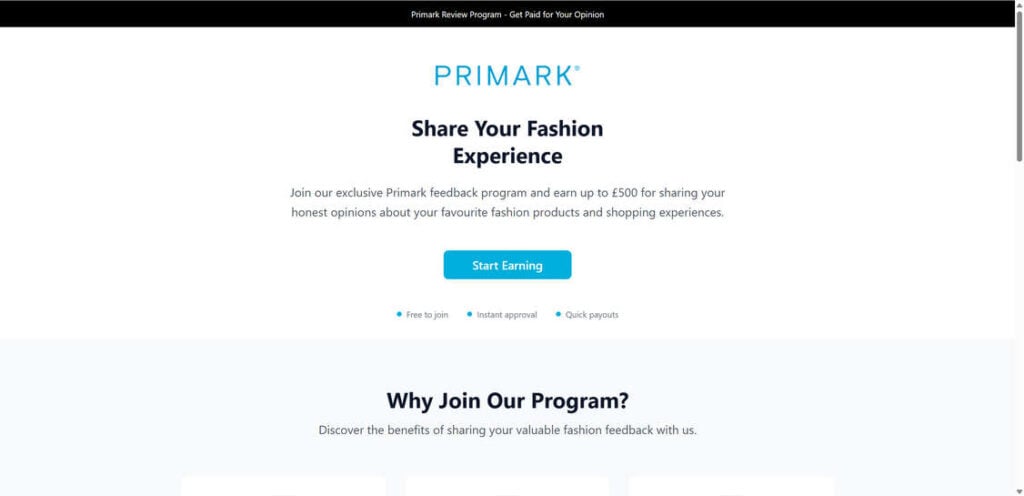
ReviewPrim.com presents itself as a feedback program associated with the well‑known high‑street retailer Primark. The offer promises users a reward of up to £500 for sharing opinions about fashion products, shopping experiences, and reviewing Primark items. The site advertises:
- Free to join
- Instant approval
- Quick payouts
- A short, simple review process
Users are told they will be asked to share their fashion experience, possibly through surveys, short questions, or reviewing recent purchases, and in return earn up to £500.
Evidence Suggesting It’s Not Legitimate
Multiple signals raise serious doubts about ReviewPrim.com:
- According to Gridinsoft, the site has a 1/100 trust score, making it highly suspicious.
- The domain is very new (for example, registered only a few days ago at the time of review). Young domains typically lack reputation.
- ScamMinder (a site that tracks scams) identifies this site specifically for making unrealistic earning claims (i.e. promising large sums like £500 for minimal effort).
- The website’s WHOIS registration shows hidden or private details. Often, fraud sites hide ownership or use domain registrars that allow privacy so they are hard to trace.
Why People Might Be Tempted by the Offer
There are several psychological and practical reasons:
- Brand Recognition
Primark is a well‑known retailer; using its name builds trust. - High Reward, Low Effort
Promise of high payment (up to £500) for something that sounds simple—giving opinions, reviews, feedback—is a big draw. - Limited Time / Urgency Messaging
Though explicit urgency is not always shown, many scam setups use that type of phrasing. The idea of “join now,” “start earning,” “quick payout” all push people to act fast without deep verification. - Minimal Visible Cost or Risk
At first, no payment required, just info. So people are more willing to engage.
Potential Harms & Risks
- Data Harvesting: Your name, email, phone number, address or postcode could be collected and sold or misused. Because the site is flagged as suspicious, this data may be used for phishing or spam campaigns. (Gridinsoft LLC)
- Scams & Hidden Fees: There may be “survey offers”, “trial membership offers”, etc. You might be directed to affiliate deals which require you to subscribe or pay for a trial that converts into a charge.
- Malware Risks: Sometimes, sites like these ask to install an app or software extension. Such software could include trackers, malware, or adware.
- Financial Loss: Through subscription fees, through your data being misused, or through charges you did not agree to.
- Emotional & Time Costs: Even if nothing happens financially, effort is wasted; dealing with spam, phishing and possible identity issues is stressful.
How the Scam Compares to Legitimate Feedback / Reward Programs
To contrast:
- Legitimate programs or customer feedback programs from major brands are usually announced via official channels (Primark’s official site, store receipts, verified emails).
- They generally don’t promise very large sums for simple tasks.
- They require clear terms and are transparent about what the participant must do.
- They have verifiable contact information and identifiable company details.
ReviewPrim.com lacks many of these; its recent domain, hidden registration, and low trust ratings are strong red flags.
How The Scam Works
To understand how ReviewPrim.com appears to work, and where it breaks down, here is a likely step‑by‑step scenario based on similar scams and the publicly available information.
Step 1: Lure with Advertising / Social Media
You might see ads or posts in social media feeds, or possibly via email, claiming something like:
- “Share Your Fashion Experience”
- “Earn up to £500 for your honest Primark review”
- “Exclusive Primark feedback program – quick payment”
These are often designed to look official: using fashion imagery, the Primark logo or color scheme, buttons like “Start Earning”.
Step 2: Landing Page & Info Collection
Clicking the ad brings you to ReviewPrim.com (or a variant URL). On the landing page, you will see:
- A short introduction to the program (“Join our exclusive Primark feedback program…”)
- A “Start Earning” button or similar call‑to‑action
- Promises of free to join, quick payouts, etc.
Then you are asked to provide personal details: name, email, phone number, sometimes address or postal code.
Step 3: Assessment / Survey Phase
After basic info, you might be directed to a small survey or assessment:
- How often you shop at Primark
- What kind of items you buy
- General demographic questions (age group, location, etc.)
This serves to increase your commitment, but more importantly, it validates your email/phone for later outreach or affiliate tasks.
Step 4: “Deal” Offers or Additional Tasks
After passing the survey or showing you are eligible, you are offered “tasks” or “deals” to complete. These often include:
- Downloading an app
- Trying a free trial subscription for some service
- Signing up for an affiliate offer (e.g. credit card or insurance trial, or some product purchase with heavy marketing)
- Watching promotional content or filling out more surveys
Sometimes these tasks are presented as “sponsored deals” or “recommended deals” that are necessary to unlock the full £500 gift card.
Step 5: Progress Indication & False Encouragement
As you complete tasks, you may see progress bars, status messages (“You are 20% done,” “Complete 3 of 5 tasks”), or “Congratulations, you’re eligible” messages. These are designed to:
- Build false trust
- Keep you engaged and going through more tasks
- Make you feel like you’re going to succeed
Step 6: Request for More Sensitive Info
Eventually, after you’ve invested time, the site may ask for more sensitive info:
- Credit card details under the guise of “verifying identity” or “trial activation”
- Postal address, full name, phone number again
- Sometimes screenshot proofs, etc.
This raises the risk significantly.
Step 7: The Trap Deepens—Ongoing Affiliate Funnel
Once you complete some deals or enter credit card info, the funnel continues:
- Additional deals appear as you complete the earlier ones
- You might be asked to refer others, increasing reach of the scam
- You might be told to wait for a gift card, but nothing materializes
Step 8: No Delivery & Possible Hidden Costs
After all this, you never receive the promised £500 gift card. Instead, the potential impacts include:
- Being charged for free trials you forgot to cancel
- Being placed on mailing lists and spam lists
- Possible phishing calls or texts
- If credit card info was given, unauthorized charges
Step 9: Abandonment or Shutdown
Eventually, either the site might shut down, disappear, or simply stop responding. You are left without the promised payment, possibly with compromised data or financial loss.
What to Do If You Have Fallen Victim
If you believe you have interacted with ReviewPrim.com, shared information, or completed tasks, here are detailed steps to protect yourself and reduce the damage.
- Stop Further Interaction Immediately
- Do not fill out more forms, click more links, or provide any additional personal or financial details.
- Close browser tabs related to ReviewPrim.com.
- Change Your Credentials
- For any account using the email you provided, change the password.
- Use strong, unique passwords.
- If you reused passwords, change those too.
- Enable two‑factor authentication where possible.
- Check Bank & Payment Accounts
- Review all recent transactions carefully for anything you do not recognize.
- If you entered credit card details, contact the bank/card issuer to explain the situation and request they monitor or block unauthorized charges.
- If charges accrue from free trials, request cancellation and refunds as appropriate.
- Monitor Email & Phone for Spam / Phishing
- Expect spam emails, possibly phishing attempts.
- Block numbers or sources of texts or calls that seem suspect.
- Don’t click any attachments or links in suspicious messages claiming to be from “Primark”, ReviewPrim, or associated “feedback program”.
- Run Malware / Antivirus Scans
- Use reputable antivirus and anti‑malware software to scan your device (PC, phone, tablet).
- Remove unwanted or unknown browser extensions or apps.
- Check for tracking software or suspicious permissions for apps you installed recently.
- Report the Scam
- Report to official consumer protection agencies in your country (for UK, for example, Action Fraud).
- Inform your bank or credit card provider.
- If possible, report to Primark or the brand whose name is misused. They often have a fraud or brand misuse department.
- Use scam report websites or forums (e.g. ScamMinder, Gridinsoft, etc.) to share your experience.
- Document Everything
- Save screenshots of the site, emails, messages, survey confirmations, and any suspicious correspondences.
- Keep copies of transactions or trial confirmations. These documents are useful in disputing charges or reporting the incident.
- Consider Identity Protection Measures
- If you shared your name, address, or other personal info, be alert for identity theft.
- Monitor credit reports or use identity‑theft protection services.
- Notify credit bureaus if you suspect someone might attempt to open accounts using your identity.
- Warn Others
- Share what happened on social media, community groups, or forums.
- Leave reviews or warnings about the site to help others avoid it.
- Tell family or friends so they don’t fall victim.
- Stay Informed and Skeptical Going Forward
- Be cautious of offers that promise big rewards for little effort.
- Always verify promotions via official brand channels.
- Research the site using trust‑score tools, domain age, scam reports.
Is Your Device Infected? Run a Free Malware Scan
Slow performance, constant pop-ups, or strange behavior? These are classic signs of a malware infection. The fastest way to find out is to scan your device with Malwarebytes Free — one of the most trusted malware removal tools available.
The free version detects and removes the most common threats, including:
- Adware — the cause of those annoying pop-ups
- Browser hijackers — unwanted redirects and changed homepages
- Trojans and spyware — hidden programs stealing your data
- Potentially unwanted programs (PUPs) — software you never asked for
👉 Select your device below — Windows, Mac, or Android — then follow the simple steps to download Malwarebytes, scan your system, and remove any threats it finds. The scan usually takes 5 to 20 minutes.
Run a Malware Scan with Malwarebytes for Windows
Malwarebytes is one of the most popular and trusted anti-malware tools for Windows — and it’s completely free for removing infections. It catches threats that many antivirus programs miss, including adware, browser hijackers, and trojans. Follow the steps below to scan and clean your PC in just a few minutes.
Download Malwarebytes
Click the button below to download the latest version of Malwarebytes for Windows from the official source. The free version is all you need — it will scan your computer and remove adware, browser hijackers, and other malicious software at no cost.
Download MalwarebytesOfficial installer for Windows 11 and 10. Your download starts right away.Want real-time protection? See Malwarebytes Premium Malwarebytes Free for WindowsScans and removes malware at no cost
-
Install Malwarebytes
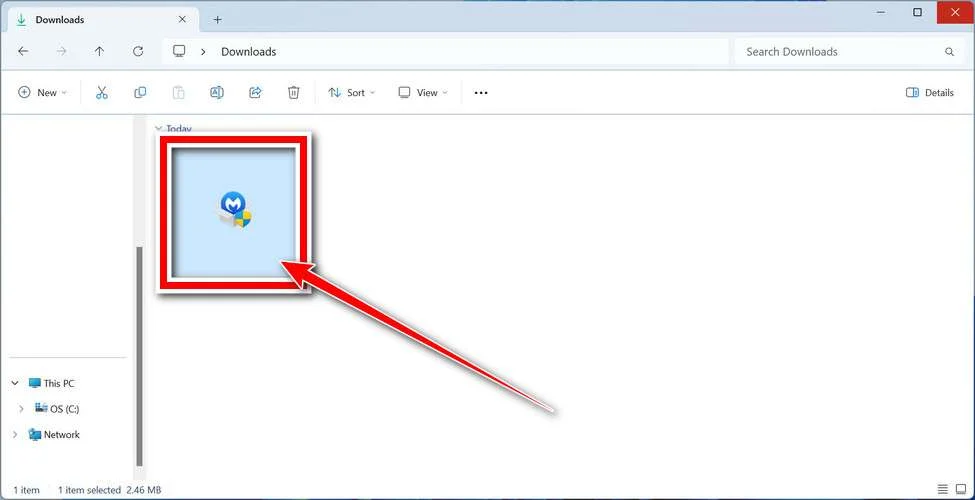
When the download finishes, open your Downloads folder and double-click the MBSetup file. If Windows shows a User Account Control pop-up, click “Yes” to allow the installation.
Follow the On-Screen Prompts to Install Malwarebytes
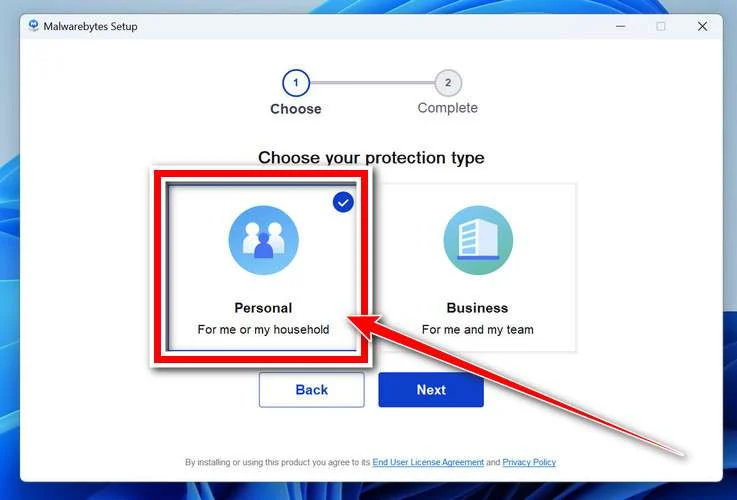
The setup wizard will walk you through a few quick screens:
-
Choose where you’re installing the program — “Personal Computer” or “Work Computer” — then click Next.
-
Malwarebytes will now install on your device. This usually takes under a minute.

-
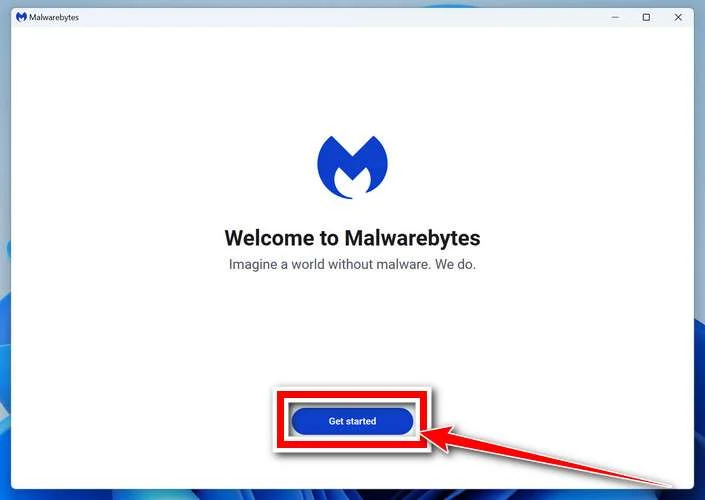
When installation is complete, the “Welcome to Malwarebytes” screen will open automatically.
-
On the final screen, click Open Malwarebytes to launch the program.

-
Enable “Scan for Rootkits”
Before scanning, turn on rootkit detection so Malwarebytes can find even the most hidden threats. Click the Settings gear icon on the left side of the screen.
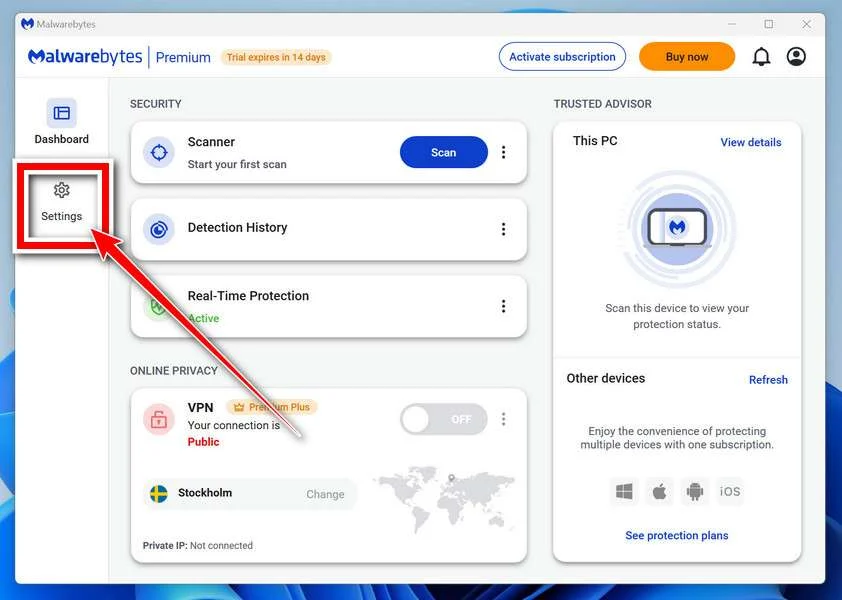
In the settings menu, find “Scan for rootkits” and click the toggle so it turns blue.

Done? Click “Dashboard” in the left pane to return to the main screen.
Start the Scan
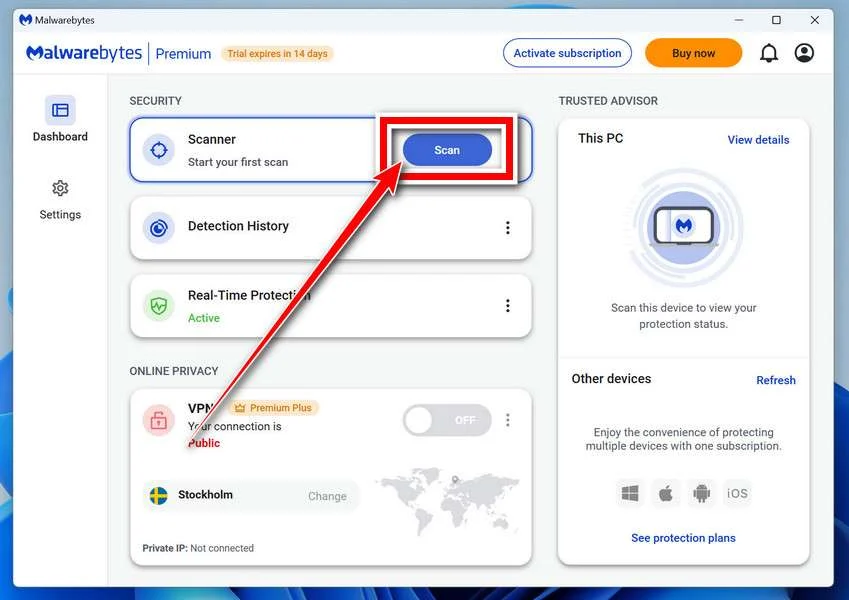
Click the blue Scan button. Malwarebytes will automatically update its virus database and start checking your computer for malware.
-
Wait for the Scan to Finish
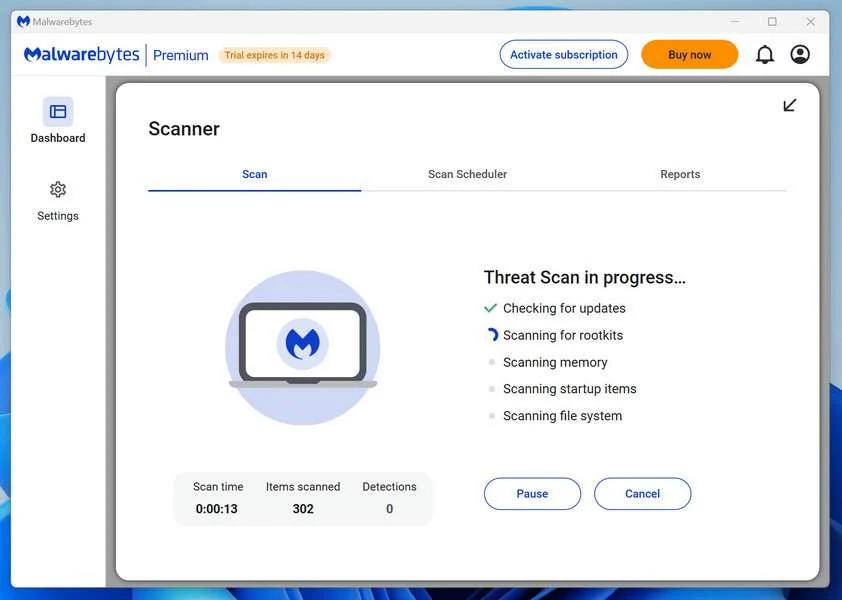
The scan checks your entire system for browser hijackers and other malicious programs, so it can take 5 to 20 minutes depending on your computer. Feel free to do something else — just check back occasionally to see the progress.
-
Quarantine the Detected Threats
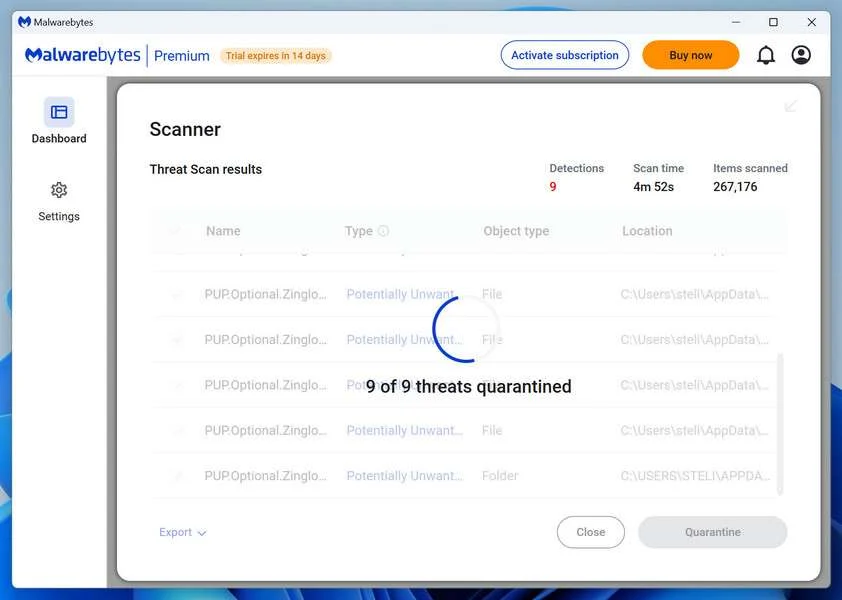
When the scan is done, you’ll see a list of everything Malwarebytes found — malware, adware, and potentially unwanted programs. Click the “Quarantine” button to remove all of them at once.
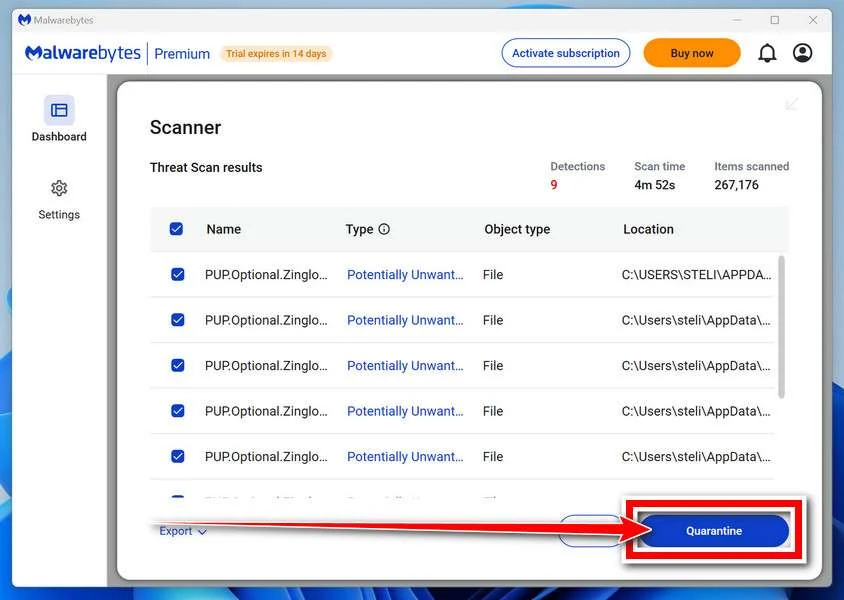
Malwarebytes will now remove the malicious files and registry entries and move them safely into quarantine.
-
Restart Your Computer
Some threats can only be fully removed after a reboot. If Malwarebytes asks you to restart, click Yes. Once you’re logged back in, Malwarebytes has finished removing the threats it found.
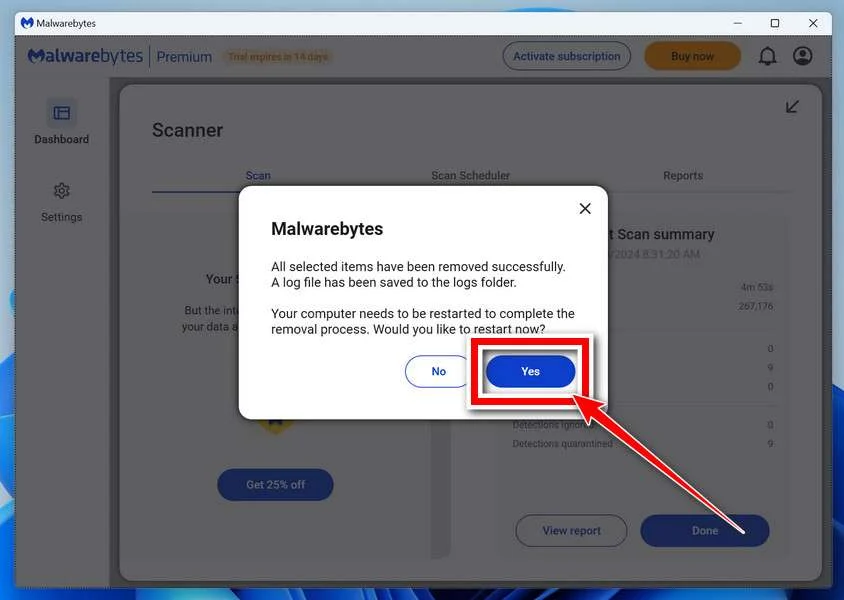
That’s it — your Windows PC is now clean of trojans, adware, and other malware, and should be back to running smoothly.
If you are still having problems with your computer after completing these instructions, then please follow one of the steps:
- Run a computer scan with ESET Online Scanner
- Ask for help in our Windows Malware Removal Help & Support forum.
Run a Malware Scan with Malwarebytes for Mac
Malwarebytes for Mac is a free on-demand scanner that removes the malware other security software tends to miss — adware, browser hijackers, and unwanted programs included. Cleaning an infected Mac with Malwarebytes has always been completely free, and it’s our go-to recommendation. Follow the steps below to scan and clean your Mac in just a few minutes.
-
Download Malwarebytes for Mac
Click the button below to download the latest version of Malwarebytes for Mac.
Download MalwarebytesOfficial installer for macOS. Your download starts right away.Want real-time protection? See Malwarebytes PremiumMalwarebytes Free for MacScans and removes malware at no cost -
Open the Malwarebytes setup file
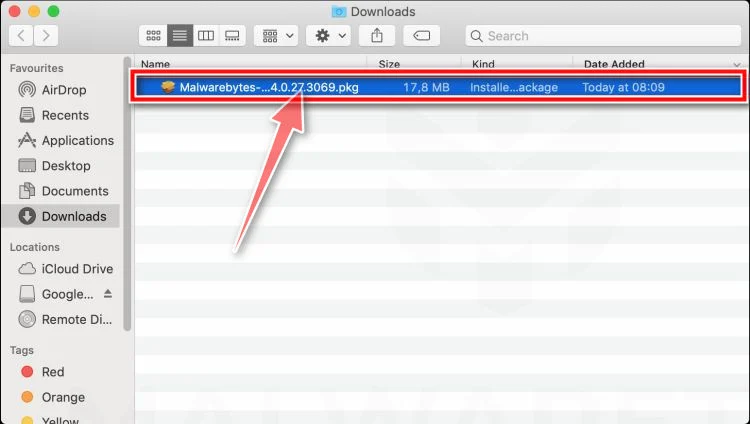
When the download finishes, open your Downloads folder and double-click the setup file to begin the installation.
-
Follow the On-Screen Prompts to Install Malwarebytes
The Malwarebytes for Mac Installer will guide you through a few quick screens. Click “Continue” and keep following the prompts until the installation completes.
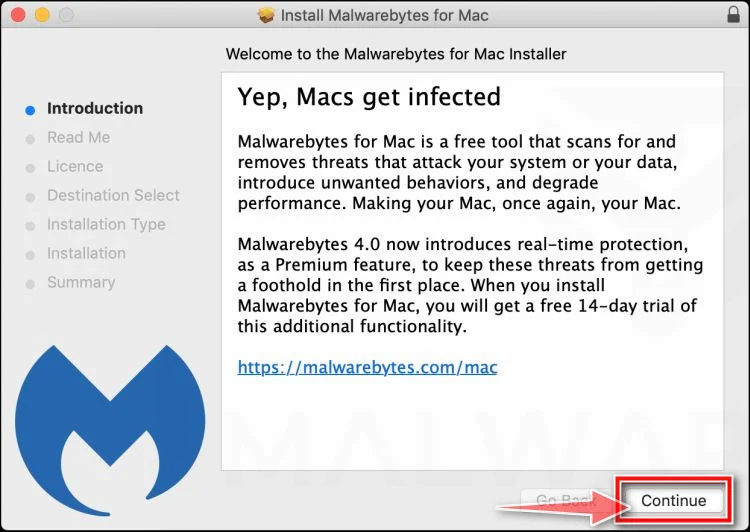
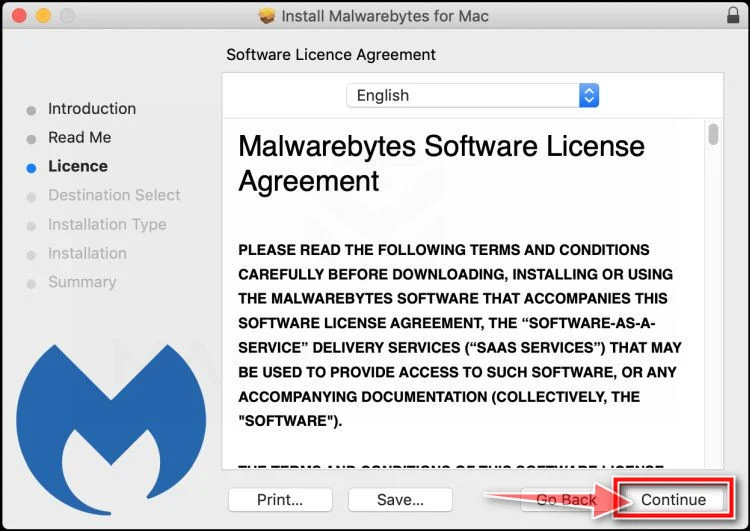
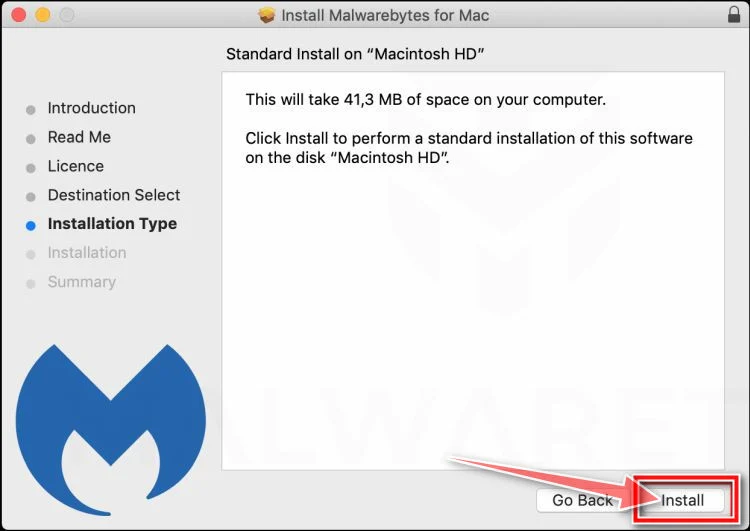
When the installation is complete, Malwarebytes opens to the Welcome to Malwarebytes screen. Click “Get started“.
-
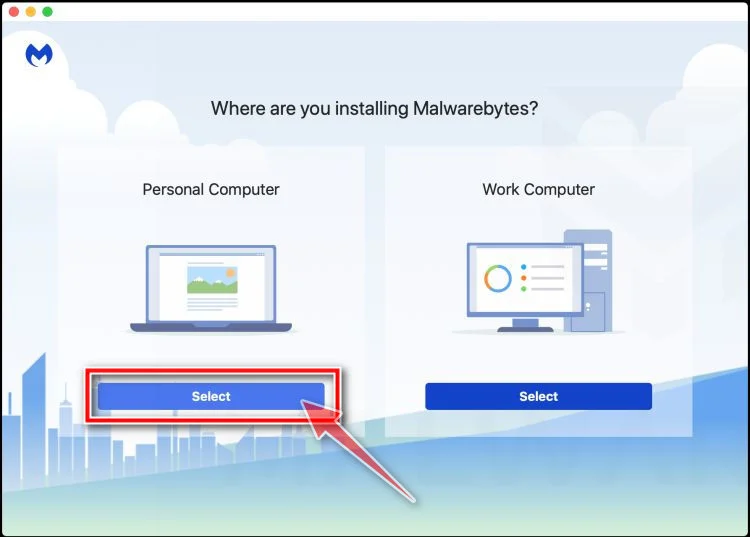
Select “Personal Computer” or “Work Computer”
Malwarebytes will ask what type of computer you’re installing it on. Click either Personal Computer or Work Computer, whichever applies.
-
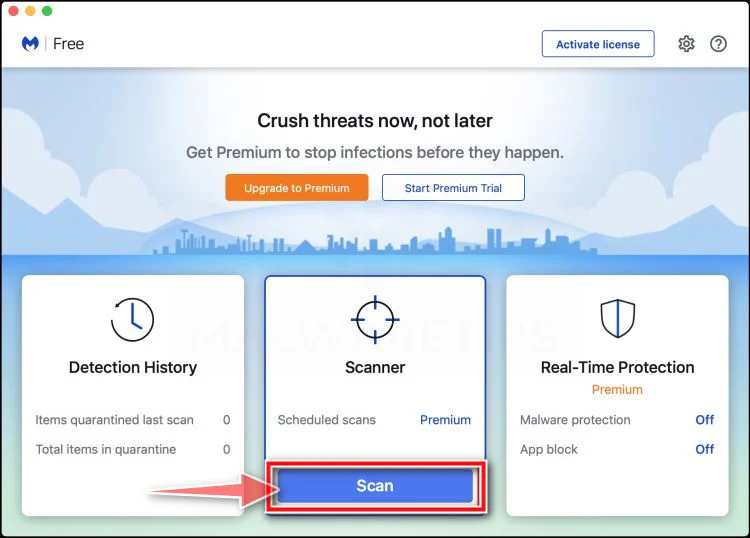
Start the Scan
Click the “Scan” button. Malwarebytes will automatically update its detection database and begin checking your Mac for malware.
-
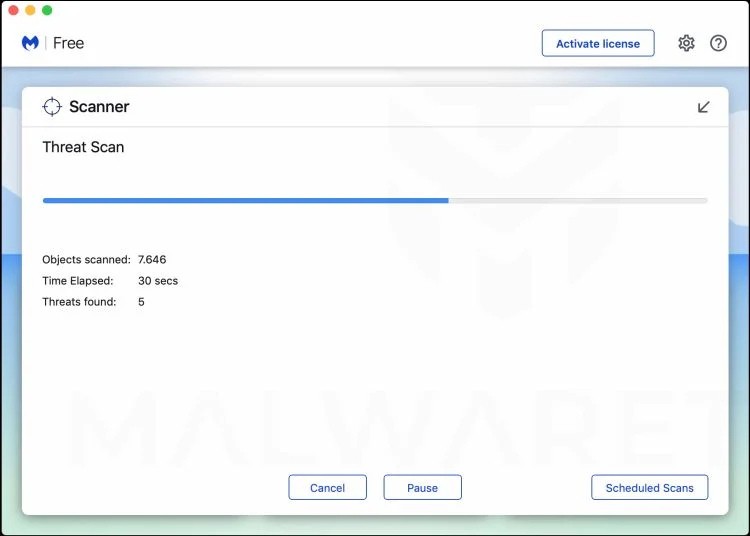
Wait for the Scan to Finish
Malwarebytes will scan your Mac for adware, browser hijackers, and other malicious programs. This can take a few minutes, so feel free to do something else — just check back occasionally to see the progress.
-
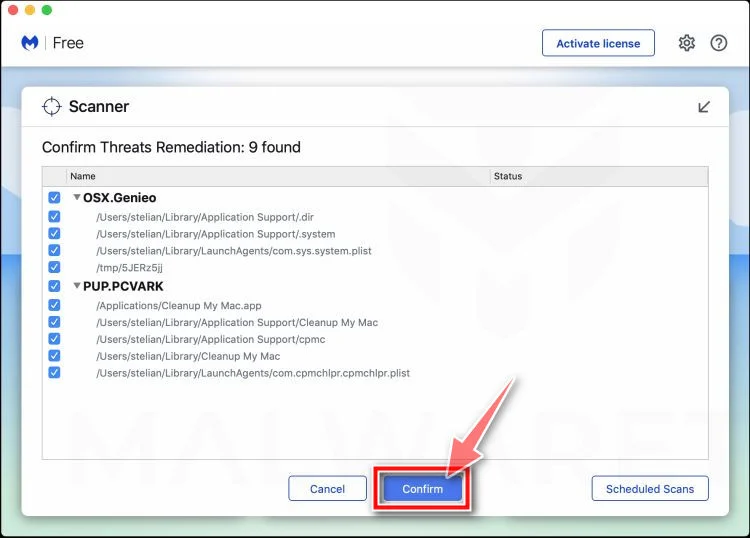
Quarantine the Detected Threats
When the scan is done, you’ll see a list of everything Malwarebytes found. Click the “Quarantine” button to remove all the threats at once.
-
Restart Your Mac
Malwarebytes will now remove all the malicious files it found. Some threats can only be fully removed after a reboot — if Malwarebytes asks you to restart, allow it. Once you’re logged back in, your Mac is clean.
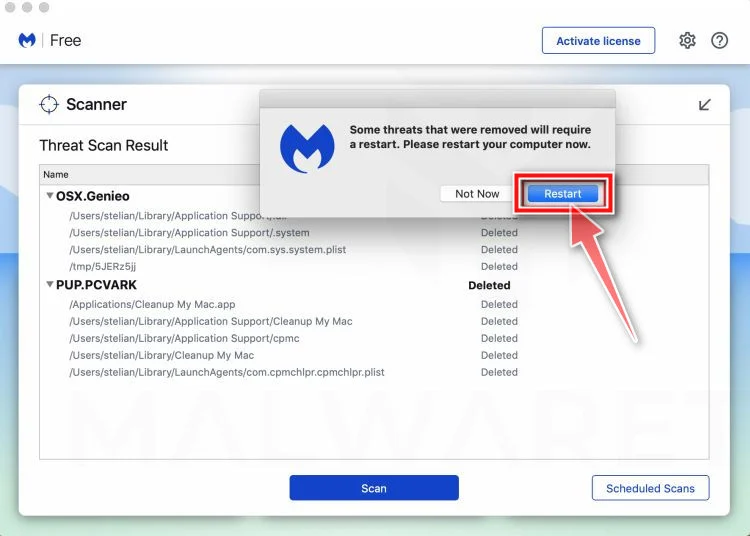
That’s it — your Mac is now free of adware, rogue browser extensions, and other potentially harmful software.
If you are still experiencing problems while trying to remove a malicious program from your computer, please ask for help in our Mac Malware Removal Help & Support forum.
Run a Malware Scan with Malwarebytes for Android
Malwarebytes for Android automatically detects and removes dangerous threats like malware and ransomware so you don’t have to worry about your most-used device being compromised. Aggressive detection of adware and potentially unwanted programs keeps your Android phone or tablet running smooth.
-
Download Malwarebytes for Android.
You can download Malwarebytes for Android by clicking the link below.
Get Malwarebytes for AndroidOpens Google Play in a new tab.Want real-time protection? See Malwarebytes Premium for AndroidMalwarebytes for AndroidScans your phone and removes malware at no cost -
Install Malwarebytes for Android on your phone.
In the Google Play Store, tap “Install” to install Malwarebytes for Android on your device.

When the installation process has finished, tap “Open” to begin using Malwarebytes for Android. You can also open Malwarebytes by tapping on its icon in your phone menu or home screen.

-
Follow the on-screen prompts to complete the setup process
When Malwarebytes will open, you will see the Malwarebytes Setup Wizard which will guide you through a series of permissions and other setup options.
This is the first of two screens that explain the difference between the Premium and Free versions. Swipe this screen to continue.
Tap on “Got it” to proceed to the next step.
Malwarebytes for Android will now ask for a set of permissions that are required to scan your device and protect it from malware. Tap on “Give permission” to continue.
Tap on “Allow” to permit Malwarebytes to access the files on your phone.
-
Update database and run a scan with Malwarebytes for Android
You will now be prompted to update the Malwarebytes database and run a full system scan.

Click on “Update database” to update the Malwarebytes for Android definitions to the latest version, then click on “Run full scan” to perform a system scan.

-
Wait for the Malwarebytes scan to complete.
Malwarebytes will now start scanning your phone for adware and other malicious apps. This process can take a few minutes, so we suggest you do something else and periodically check on the status of the scan to see when it is finished.

-
Click on “Remove Selected”.
When the scan has been completed, you will be presented with a screen showing the malware infections that Malwarebytes for Android has detected. To remove the malicious apps that Malwarebytes has found, tap on the “Remove Selected” button.

-
Restart your phone.
Malwarebytes for Android will now remove all the malicious apps that it has found. To complete the malware removal process, Malwarebytes may ask you to restart your device.
That’s it — your Android phone is now clean — no more malicious apps, adware, or browser redirects.
If you are still having problems with your phone after completing these instructions, then please follow one of the steps:
- Restore your phone to factory settings by going to Settings > General management > Reset > Factory data reset.
- Ask for help in our Mobile Malware Removal Help & Support forum.
Stay Protected: Block Ads and Malicious Sites
Now that your device is clean, keep it that way. Most infections start with a malicious ad or a fake download button — so blocking them at the source is your best defense.
We recommend AdGuard, which blocks malicious ads, phishing pages, and dangerous redirects before they can reach you.
👉 Download AdGuard and browse safely
The Bottom Line
ReviewPrim.com offers what seems like a generous opportunity: share your fashion opinions, fill some simple tasks, and earn up to £500 Primark gift card. But credible safety checks (Gridinsoft, ScamMinder, domain age, hidden ownership) strongly suggest this is a scam.
If you see a reward that sounds too good to be true, it probably is. The cost of falling victim is not only losing time, but possibly exposing your data, credit card, and identity to misuse.
Protect yourself: don’t click unverified links, always check ownership/trustworthiness, use strong passwords, monitor accounts, and when in doubt, avoid.
Frequently Asked Questions About the ReviewPrim.com £500 Primark Gift Card Scam
1. Is ReviewPrim.com an official Primark program?
No. ReviewPrim.com is not affiliated with Primark in any official capacity. It is a scam site that falsely uses Primark’s name and branding to appear legitimate. Primark has publicly warned customers about fake giveaways and vouchers that use its name.
2. Will I actually receive a £500 Primark gift card if I complete the steps they ask?
No. There is no evidence that anyone has successfully obtained a £500 Primark gift card from ReviewPrim.com simply by completing the survey or tasks specified. The promise of such a large gift card is a lure to get you to provide personal information and engage with affiliate offers. This kind of offer is a common feature in online scams.
3. What kinds of information do they ask for?
Typically, these scams ask for:
- Your full name
- Email address
- Phone number
- Country or postal address
They may also ask you to complete small tasks or “deals” (surveys, trial offers) that require additional personal or financial information. Once you give that information, it can be misused or sold.
4. What are the “tasks” or “deals” they talk about?
“Deals” or “tasks” in this context usually refer to offers from third parties such as:
- Free trial subscriptions which require a credit card
- Downloading apps or software
- Signing up for promotional offers from affiliate companies
- Completing multiple surveys
These tasks are designed primarily to generate affiliate commission for the scammer, not to deliver any real reward to you.
5. Are these deals safe to complete?
No. Many of these deals carry risk. They may:
- Require your credit card and initiate recurring charges
- Lead to malware or adware being installed on your device
- Ask for sensitive personal data that could be used for phishing or identity theft
It’s safer to assume risk and avoid completing such tasks from unverified or fraudulent websites.
6. How do scammers benefit from ReviewPrim.com?
They benefit by:
- Collecting personal data to sell or use for further scam attempts
- Earning affiliate commissions when users complete “deals” or trials
- Potentially getting credit card numbers to charge recurring fees
Even though you do all the work, the payment promised (the gift card) almost never materializes.
7. What are the red flags to watch for?
Some of the warning signs include:
- Unsolicited messages or ads promising large rewards (like £500) for minimal effort
- Use of well-known brand names without official verification
- Pressure to act quickly, often with “limited time” or “only a few gift cards left” language
- Websites that ask for financial or personal data upfront
- Offers that seem too good to be true
8. What should I do if I have already given my details to ReviewPrim.com?
If you have already shared personal or financial information, do the following:
- Stop interacting with the site immediately.
- Change your passwords for your email and any other accounts using that email.
- Monitor your bank statements to check for unauthorized transactions.
- Cancel any subscriptions you did not explicitly sign up for.
- Run a full antivirus and anti‑malware scan on your device.
- Enable spam filters on your email and block suspicious calls.
- Report the scam to your consumer protection agency, the police if needed, and to Primark (so they are aware of the misuse of their brand).
9. How can I verify if a promotion from Primark is real?
To verify legitimacy:
- Check Primark’s official website or social media pages for any announcements about gift card giveaways or feedback programs.
- Avoid clicking links from unsolicited emails or messages.
- Look for reviews or reports from other users (for example on forums, Reddit, or Trustpilot).
- Make sure the website domain matches Primark’s known domains. No unrelated domains should be hosting official Primark offers.
10. Where can I report this scam or get help?
If you’ve been targeted by the ReviewPrim.com scam, you can report it to:
- The consumer protection agency in your country
- Primark’s customer service reporting brand misuse
- Your bank or credit card provider if financial details were shared
- Online platforms that track and warn about scams (forums, social media) to alert others

Reviews & discussion
0 commentsShare a firsthand experience, or ask a question.
Community reviews
reviewprim.com
Moderated reader experiences, not an editorial verdict.
Start the conversation
Have a question or something useful to share? Add the first comment.