


A letter says a company called RevSpring handled the bill pay system for one of your healthcare providers. You may not recognize the name, even if you’ve used the system.
It also mentions free identity monitoring. Before you decide whether to enroll or worry about an old medical bill, separate what the letter says from what it doesn’t.
Overview
The breach notice describes a real incident
RevSpring provides technology that can sit behind online payments to healthcare providers. A patient may remember the name of a clinic or hospital without remembering the vendor behind the bill.
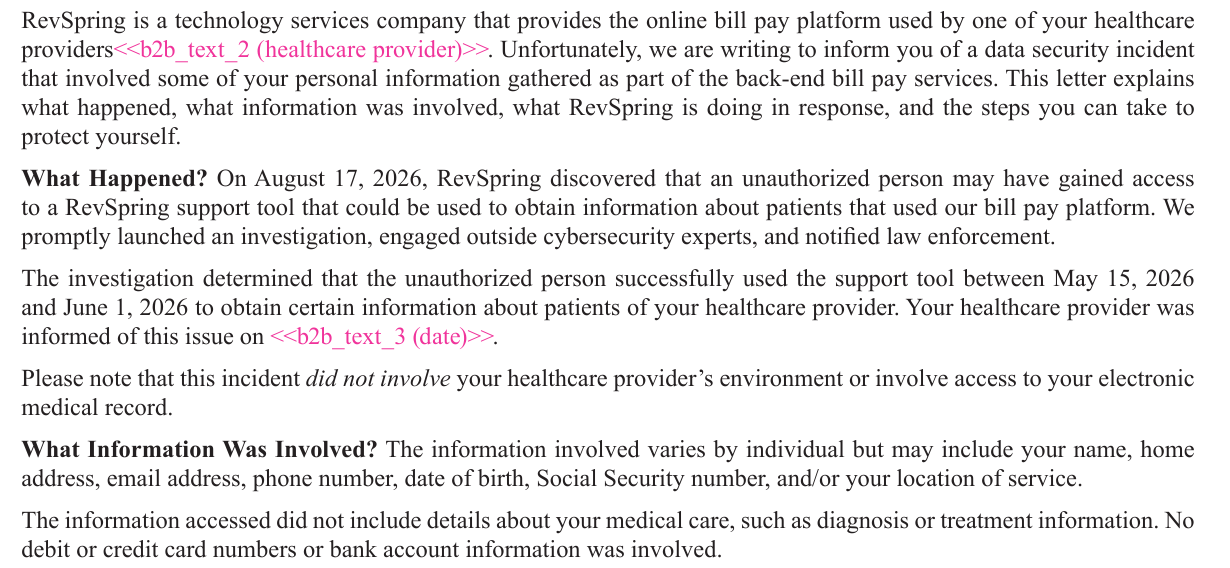
The sample notice filed with Massachusetts describes unauthorized use of a RevSpring support tool. The excerpt above comes from that public filing, not from a patient’s personal letter.
RevSpring says the tool was used from May 15 through June 1, 2026, to obtain information about some patients. It discovered possible unauthorized access on August 17.
The affected information wasn’t the same for everybody
The notice lists possible exposure of names, home addresses, email addresses, phone numbers, dates of birth, Social Security numbers and service locations. It says the information varies by individual.
RevSpring says it didn’t involve electronic medical records, diagnosis or treatment details, card numbers or bank account information. It also excludes the healthcare provider’s own systems.
Being told that card numbers weren’t involved is useful. It doesn’t remove identity risk if a Social Security number or other information used to open accounts was affected.
A breach notice, a real bill and an unexpected message aren’t interchangeable
- The public copy establishes a genuine notification, but it can’t authenticate a message sent to you.
- The offer of identity monitoring comes from the notice, not from a supposed settlement agent.
- A medical balance should be checked in the provider’s usual billing system.
- Don’t send a code or pay an activation fee to someone who contacts you out of the blue.
This guide explains the notice and the risks of later impersonation. It does not establish that a particular phishing text was sent to any individual named in the incident.
Why RevSpring Appears on a Letter About Your Care
A healthcare office can outsource payments and statements. You might see the clinic’s name on a bill without noticing the company that operates the payment system.
That’s why “I’ve never dealt with RevSpring” is a reasonable first reaction, not a reason by itself to throw the notice away. Ask the provider whether it uses the service.
Use contact information you already have from an appointment, a previous genuine statement or the provider’s official site. Say you’re trying to verify a notice about its billing vendor.
The support-tool dates refer to when the tool was misused, not when you paid a bill. You can’t determine your exposure from a receipt date alone.
The filing date doesn’t tell you when someone first accessed the tool. Keep the incident dates separate from the enrollment deadline on your verified letter.
The copy in a public registry is a template. It can show what the company reported but won’t tell you which particular fields were involved in your case.
How to Read the Monitoring Offer Without Falling for a Lookalike
Match the company and purpose before using a code
The sample names Kroll as the provider of free monitoring. It describes an activation code, verification ID and deadline that appear in the individual notice.
Confirm the route by starting with the authentic filing or the provider’s verified support. A matching logo, a real vendor name or a code quoted by a caller isn’t enough.
Enroll only through the service you’ve verified. Don’t give an activation code to someone who offers to register you through a text or social media conversation.
Monitoring is different from blocking a new account
Monitoring can notify you about certain activity. A credit freeze is a separate control that limits access to your credit report for many new credit applications.
In the United States, request a freeze with each of the three nationwide credit bureaus if you want that protection. The FTC’s freeze and fraud alert guide explains the differences.
If you expect to apply for credit, plan for temporarily lifting the relevant freeze yourself. A freeze doesn’t stop every form of identity theft or reverse payments on existing accounts.
A settlement and a monitoring notice are different things
The letter describes identity monitoring, not a promise that someone will pay you cash. Don’t treat a message advertising a cash payout as an extension of the real letter.
If a website says it can reserve a share for you, find the court or approved administrator independently before providing personal details. A company’s name in a headline proves nothing.
Don’t pay a supposed processing fee to activate monitoring or reserve a payment. If you can’t identify who runs the offer and what document authorizes it, leave it alone.
What to Do If You Received a RevSpring Notice
-
Keep the notice somewhere private: Save the letter, envelope and any incident reference. Don’t post a photo that exposes your name, address, activation code or verification ID.
Record the provider named, if any. Those details help you ask a precise question without handing an incoming caller everything needed to repeat it back to you.
-
Confirm the billing relationship: Call the provider through a number you independently trust, or use its established portal. Ask whether it uses RevSpring and how it handles inquiries.
If the person answering hasn’t heard of the incident, ask for billing or privacy support. The first desk may know your appointment history without knowing which statement vendor was involved.
-
Consider enrollment after confirming the route: Review the free monitoring described in the genuine notice and the deadline printed on your letter. Keep a record of when you enroll.
Don’t give a caller your letter’s code so they can check your eligibility. An unexpected follow-up message doesn’t become trustworthy because your underlying letter is genuine.
-
Decide how to protect your credit: If a Social Security number may be involved, consider a freeze and check credit reports for inquiries or accounts you don’t recognize.
Use the authorized credit report site linked in the FTC’s guide rather than a promotional link promising a free report. Keep copies of unfamiliar entries for reporting and disputes.
-
Check bills with the provider: Use prior statements and known account access to check patient balances. Ask where insurance adjustments and your own past payments appear.
Don’t pay through a new link just because the message names a clinic you visited. Ask whether the amount and account match the actual billing record.
-
Respond to confirmed misuse: If you find an account opened in your name, use IdentityTheft.gov for a recovery plan and contact the affected company.
If you entered card details or authorized a transfer on a lookalike site, contact your payment provider promptly. That exposure is separate from the information described in the breach notice.
What a Follow-Up Impersonation Could Look Like
Imagine a caller who knows where you went for care and says an overdue bill needs payment before the account can be secured. The real location makes the pitch familiar.
The caller’s knowledge doesn’t show that they represent the clinic or that the bill is yours. A service location is not the same thing as a current verified balance.
Think about what the caller claims to do. Confirming a breach notice, collecting a bill and protecting your credit are separate jobs with different organizations responsible.
If a single person insists they can do all three after you read a code or pay a small fee, end the call. Handle each issue through its actual owner.
A genuine billing notice may include a date and amount. Compare them with your provider’s statement instead of counting how many details the incoming message gets right.
Describe a suspicious follow-up as a separate event when you report it. Record how you received it, what it asked for and whether you shared anything with the sender.
Medical Records and the Billing File Are Different
A place of service can tell someone where you received care without showing why. That can still be sensitive, and it’s different from confirmed access to your medical chart.
When reviewing an insurance statement, look for visits or services you don’t recognize. Keep copies of any questionable entries and contact the provider or insurer that actually issued the record.
Don’t stop treatment or postpone an appointment because a stranger says your file has been frozen. Check such a claim with the clinic rather than the person asking for information.
Take the incident seriously without turning it into a conclusion about every part of your record. The strongest next action depends on what was involved in your own verified notice.
Keep a Short List of Records You Can Check Yourself
Start with the provider named in your letter. Gather the most recent statements you already trust, and note which ones you recognize as paid, pending with insurance or still open.
Your bank and the provider answer different questions. The bank can show an actual payment, while the provider can confirm which patient balance it was applied to.
If you see two messages about the same bill, don’t pay twice while you wait for them to agree. Confirm the balance through the provider’s usual route first.
Keep the genuine notice handy when asking about the exposure. You can describe the referenced vendor and dates without reading out your full Social Security number or publishing the letter.
Credit reports help you look for accounts that weren’t yours. Provider and insurance records help you see unexpected activity connected to medical services. Neither type of record replaces the other.
Check dates and issuer names before assuming an unfamiliar entry is fraudulent. A company name can differ from a name you see on a card or medical statement.
If You Want a Freeze, Set It Up Using Your Own Route
The FTC lists the nationwide credit bureaus and their official contact options in its guide. Start there, not from a new message about paying to lock your credit.
A freeze placed with one bureau doesn’t automatically freeze all three. Use each bureau’s own procedure and keep a private record of the confirmation and access method.
If you’re already applying for a loan, ask which bureau is involved before lifting a freeze. When possible, set a limited period rather than removing the freeze indefinitely.
A fraud alert asks lenders to verify identity more carefully. It doesn’t restrict access to a credit file the way a freeze does.
If you see a new account you didn’t open, write down which report lists it and when it appeared. Contact that company and keep copies of your fraud reports.
Don’t use a recovery agent’s link to check the freeze. Revisit the bureau through the same genuine route you used when you put it in place.
How to Help a Relative Who Got a Letter
Don’t ask them to send a photograph of the complete notice. Ask for the vendor name and general issue, then help them find a verified number for their provider.
Let them keep control of their own account, documents and enrollment information. If you’re authorized to assist, use the provider’s normal process rather than sending sensitive details by text.
Write down which actions are already complete. This helps when the same person later receives a real reminder, a legitimate bill or a fake call offering to handle both.
Reassure them that the notice isn’t itself a request to settle a medical bill. An actual patient balance can be verified separately without clicking anything in a follow-up message.
Frequently Asked Questions
Is the RevSpring breach letter a scam?
RevSpring submitted a genuine incident notice. An individual letter or message still needs verification, especially if it sends you to a new payment or enrollment route.
Was my credit card number exposed in this incident?
The notice says card and bank account details weren’t involved. If you gave them to somebody impersonating support later, report that separate exposure to the issuer.
Did the incident expose my appointments or medical chart?
The notice lists location of service among possible data, but says electronic medical records, diagnosis and treatment information weren’t involved. Ask the provider about the notice you received.
Is Kroll part of the real notice?
RevSpring identifies Kroll as its identity monitoring provider in the sample notice. Verify the enrollment route independently and use your own activation information privately.
Will credit monitoring stop somebody opening an account?
Monitoring alerts you to certain activity. A freeze limits access to your credit file for many new applications. Neither replaces checking existing accounts and medical statements.
Do I need to pay a medical bill that arrived after the notice?
Check whether it is a real balance with your provider. Don’t pay from the message until you have established that the bill and payment route are both genuine.
The Bottom Line
Don’t ignore a verified RevSpring notice, but don’t trust an unexpected caller or payment link just because the breach is real. Confirm the notice and bills through the appropriate provider.
If personal identifiers were involved, consider credit protection and review your records. If you find misuse or shared information with a stranger, report it to the organization affected.

Join the discussion
0 commentsShare your experience or ask a question about this article.
Community experiences
Did this happen to you?
Your experience could help someone recognize the same scam. Submit a private report for our team to review.
I experienced this tooReports are reviewed before publication. Sharing publicly is always your choice.
Discussion
Start the conversation
Have a question or something useful to share? Add the first comment.