

Cockroach infestations can be incredibly difficult to tackle, leading many homeowners to seek out powerful pest control products that promise fast and permanent solutions. RoachBane Gel Bait has recently flooded social media with dramatic claims that it can swiftly eliminate roach populations. But does this mysterious gel live up to its lofty promises? Let’s analyze the facts behind the hype.
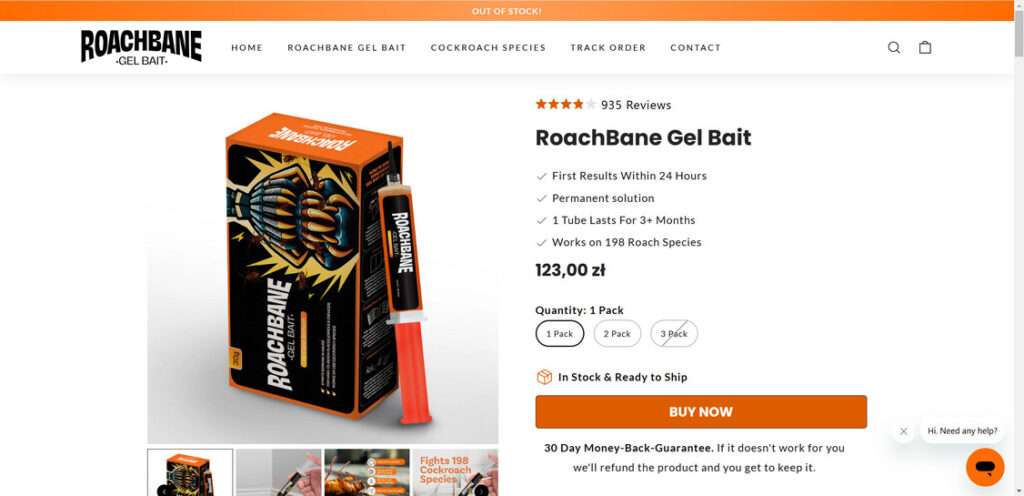
RoachBane’s Bold Claims
At first glance, RoachBane checks all the right boxes. Slick social media ads showcase supposed “before and after” photos of astonished customers successfully banishing cockroaches for good.
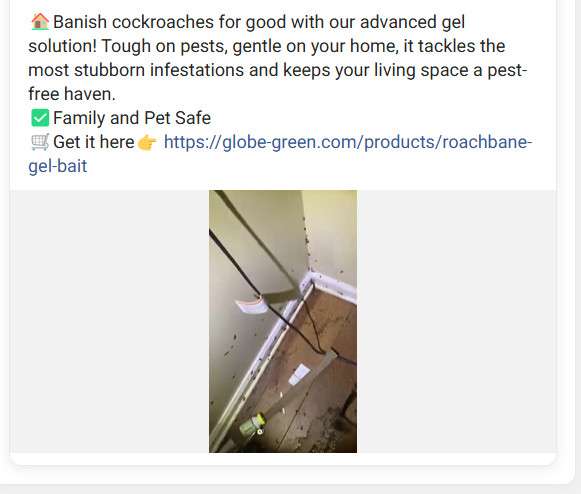
RoachBane is touted as a revolutionary formula that gets rid of roaches in 24 hours. The bait’s enhanced matrix supposedly attracts roaches rapidly then spreads to the entire colony for a complete infestation wipe-out. According to the ads, just one tube can yield permanent results for months.
For homeowners dealing with relentless roaches, these compelling claims likely spark tremendous hope. But we must scrutinize whether RoachBane truly lives up to this hype in real world conditions.
Questionable Ingredients
The website and packaging list enticing active ingredients like Fipronil and Indoxacarb, which are proven to effectively combat roaches. However, investigation reveals that numerous customers have received shipments where the ingredients list drastically differs.
Many users report their tubes featured weak repellents like cinnamon oil and citronella instead of the advertised pest-killing agents. This alarming inconsistency means buyers cannot trust they are getting a legitimately effective formula.
Suspicious Lack of Results
Perhaps most concerning are the droves of customers reporting RoachBane simply does not work. Numerous accounts detail diligently applying the gel as directed with no discernible reduction in roaches.
In fact, some have even experienced worsening infestations after using RoachBane, a shocking failure for a product that promises permanent elimination. Clearly, real world results contradict its lofty marketing claims.
Nonexistent Customer Service
Seeking refunds or support also proved a nightmare for unsatisfied RoachBane buyers. Customers faced excruciatingly long wait times for responses, confusing return policies, and vague answers from customer service reps.
Several individuals reported being charged unexpected extra fees when trying to return RoachBane. Others had negative reviews deleted from the company’s social media, likely to suppress criticism and maintain a false image.
Opaque Company Origins
RoachBane appears completely anonymous, with no clear company behind it. The website and packaging list no address, phone number, or legitimate point of customer contact beyond an email.
This lack of transparency surrounding RoachBane’s origins and production raises instant red flags. Why does a supposedly remarkable roach bait hide where it comes from?
The Bottom Line: A Dropshipping Operation
In closing, RoachBane Gel Bait merits significant skepticism rather than blind trust. The dramatic marketing claims remain unsubstantiated, while real-world experiences reveal product inconsistencies and lack of efficacy.
Numerous customer accounts also expose frustrating realities surrounding refunds, support, and the company itself. RoachBane exhibits multiple characteristics of a deceptive dropshipping scheme.
However, without definitive proof of an outright scam, buyers should still exercise some caution. There is a possibility, however slim, that the product performs for some users as advertised. Feedback contains a minority of positive testimonials amongst the overwhelming negative response.
For those willing to accept the multiple risks involved, proceed with extreme care. Start with a minimal order to test results in your specific circumstances before any larger purchase. Be prepared for potential issues getting assistance or returns if the product under-delivers.
Ideally, consult pest control professionals first and explore proven effective options before resorting to obscure online finds. If choosing to experiment with RoachBane regardless, manage expectations and safeguard yourself as a consumer. Avoid assuming you will achieve the dramatic advertised outcomes.
With realistic precautions, one can potentially determine if this formula works in a limited capacity or is definitively just an over-hyped dud. But given the abundance of red flags, RoachBane is best avoided by the wise consumer.
This article is for educational purposes only and does not constitute professional, financial or legal advice. The content is intended for general information and should not be construed as definitive guidance. Information contained herein is subject to change without notice.  For concerns, please contact us via the provided form.
If you are the owner of the website or product in question and wish to offer clarifications regarding your business or website, please reach out to us through the provided Contact Form.

Join the discussion
0 commentsShare your experience or ask a question about this article.
Discussion
Start the conversation
Have a question or something useful to share? Add the first comment.