

Hearing loss affects millions of people worldwide, and with that comes a booming market for affordable hearing aids. One of the names making rounds online is Amplihear Hearing Aids, advertised as an advanced solution for mild to moderate hearing loss. They promise crystal-clear sound, wireless charging, and up to 20 hours of battery life — all at a fraction of the price of traditional hearing aids.
But are these claims too good to be true? In this detailed article, we’ll break down exactly what Amplihear promises, the red flags we found, how this operation works, and what you should do if you’ve already purchased.
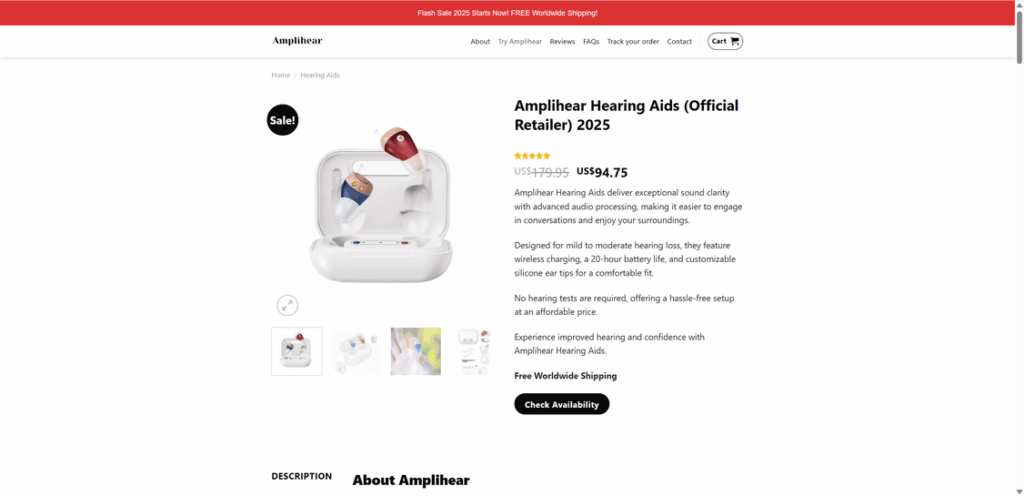
Amplihear Hearing Aids Overview
Amplihear markets itself as a cutting-edge hearing aid brand offering advanced audio processing at an accessible price point. Their website highlights:
- Crystal-clear sound quality powered by “advanced audio processing”
- Wireless charging case for convenience
- 20-hour battery life on a single charge
- Comfort-fit silicone ear tips for customizable wear
- No hearing tests required – designed for easy self-setup
They also claim that their hearing aids are highly recommended by thousands of users, featured in major outlets like NBC, CBS, Fox News, USA Today, and Benzinga, and backed by “hundreds of 5-star reviews.”
On paper, this sounds impressive. Compared to traditional hearing aids that can cost $1,000 – $3,000 per ear, a $94.75 solution looks like a breakthrough.
However, a deeper investigation reveals serious issues with credibility, authenticity, and transparency.
Red Flags We Found
While Amplihear tries to present itself as a premium hearing aid solution, several warning signs suggest otherwise:
- Fake Media Mentions
- The website claims Amplihear has been featured on NBC, CBS, and USA Today.
- No official coverage exists. These are unverified claims meant to build false trust.
- Stock Product Images
- The product photos are identical to hearing aids sold on Alibaba and AliExpress for as little as $26 per unit.
- A legitimate brand would invest in unique product photography.
- No Clinical Studies or Audiologist Backing
- Reputable hearing aid brands usually present clinical research or endorsements from audiologists.
- Amplihear provides no medical certifications or professional validation.
- Over-the-Top Marketing Claims
- Terms like “unrivaled sound excellence” and “recommended by thousands” appear throughout the site.
- Yet no independent reviews, testing, or certifications back these claims.
- Suspicious Reviews
- The website displays a 4.93-star rating from 800+ reviews.
- On trusted review sites like Trustpilot and Reddit, there are zero authentic reviews.
- This suggests the glowing testimonials are fabricated or heavily filtered.
How This Operation Works
Amplihear fits the classic dropshipping scam pattern seen in other “too good to be true” gadget ads. Here’s how the model works:
Step 1: Import Cheap Hearing Aids
- The same hearing aids are available from Chinese wholesalers on Alibaba for $25 – $30 each.
- Sellers buy them in bulk or dropship them directly from suppliers.
Step 2: Create a “Premium” Brand Website
- A Shopify-powered website is launched with a sleek design.
- The brand name (Amplihear) is made to sound trustworthy and medical.
- Fake urgency banners are added: “Flash Sale 2025 – Only 4 left in stock!”
Step 3: Inflate the Price & Add Discounts
- Wholesale cost: $26 – $30
- Retail markup: $179 MSRP
- “Discounted” price: $94.75
- This creates the illusion of a big bargain, even though the product is generic.
Step 4: Use Fake Authority & Reviews
- Claiming mentions in NBC, CBS, Fox (with no proof).
- Placing fake 5-star reviews on the site, while deleting any negative feedback.
- Using stock images and videos to present the product as professional-grade.
Step 5: Hard-to-Use Refunds & Support
- Refund policies are restrictive and vague.
- Customers must ship returns to China, which costs more than the product itself.
- Many report emails go unanswered, leaving them with no support.
Step 6: Repeat the Scam Under New Names
- Once complaints pile up, the brand name is rebranded (similar products have been sold under different names like Bondi Curls or Sorose Beauty).
- This allows the sellers to dodge negative press and start fresh.
What to Do If You Bought Amplihear Hearing Aids
If you’ve already purchased from Amplihear and suspect you’ve been scammed, here’s what you can do:
- Stop Using the Device
- Generic, uncertified hearing aids may not meet safety standards.
- Poor sound processing can damage hearing further instead of improving it.
- Request a Refund Immediately
- Contact Amplihear customer support through their email form.
- Document all correspondence and keep records of your purchase.
- File a Dispute with Your Bank or PayPal
- If you paid by credit card or PayPal, request a chargeback for “non-receipt” or “item not as described.”
- This is often the only way to recover funds from shady dropshipping sites.
- Report the Website
- Report to FTC (if in the US) or your local consumer protection agency.
- File a complaint with Better Business Bureau (BBB) if applicable.
- Leave Honest Reviews
- Share your experience on Trustpilot, Reddit, or hearing aid forums.
- This helps warn others about potential scams.
- Consult a Licensed Audiologist
- If you genuinely need hearing support, see a professional.
- They can recommend FDA-approved, safe, and medically effective devices.
The Bottom Line
Amplihear Hearing Aids make bold promises of crystal-clear sound, wireless charging, and long-lasting battery life at an “affordable” price. However, our investigation shows multiple red flags:
- Fake media mentions
- Stock product images
- No clinical or professional backing
- Suspiciously perfect reviews
- Questionable refund and support policies
In reality, Amplihear appears to be a generic dropshipping product resold under a flashy brand name. While you might receive a device, it’s unlikely to deliver the sound quality or safety of genuine, clinically-tested hearing aids.
If your hearing health matters to you, avoid Amplihear and invest in a trusted, medically-certified hearing aid brand instead.

Join the discussion
0 commentsShare your experience or ask a question about this article.
Discussion
Start the conversation
Have a question or something useful to share? Add the first comment.