

The Solara Safety Edge Razor has exploded in popularity recently through viral social media campaigns. But does this shaver live up to its bold claims of solving all shaving issues? This investigative article takes an unbiased look at the facts.
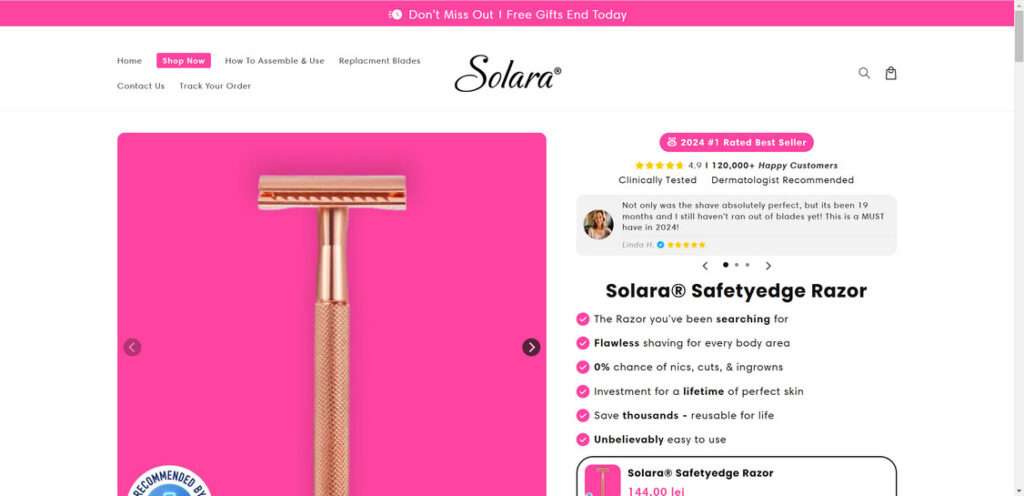
Overview of Solara Safety Edge Razor
The Solara Safety Edge Razor is an innovative safety razor advertised to prevent razor burn, ingrown hairs, nicks, and cuts. Its edge is designed to cut each hair above the skin’s surface for an irritation-free shave.
The razor is marketed as a reusable, eco-friendly solution for the ultimate smooth shave. Features highlighted include:
- Clinically tested and dermatologist recommended
- Suitable for full-body shaving
- Tackles ingrown hairs and skin irritation
- 30-day “smooth shave guarantee”
The Solara Razor costs $39.99 for one handle and 10 cartridges. Additional cartridge sets can be purchased for replacement.
Investigation of Marketing Claims
Solara Razor’s advertisements make bold claims about its performance and technology. But how much of this can customers actually trust? A deeper analysis follows:
Claim: Dermatologist Recommended and Clinically Tested
The Solara website states its razor is clinically tested and dermatologist recommended. However, no studies, certifications, or recommendations are provided.
Without evidence, this appears to be a baseless claim intended to seem credible to customers.
Claim: Eliminates Ingrown Hairs, Nicks, Cuts
The razor promises a 0% chance of nicks, cuts, or ingrown hairs which seems highly improbable. Everyone’s skin and hair differs. It’s unrealistic to guarantee zero irritation for all users.
This claim is likely an exaggerated sales tactic. Independent customer reviews would help validate if it holds any truth.
Claim: Suitable for Full Body Shaving
While technically possible to shave any area with it, the Solara razor lacks details on what makes it ideal for sensitive regions.
Shaving the face versus the body requires different handling. Promising perfect full body shaves without caveats comes across as questionable.
Claim: 30-Day Money Back Guarantee
A 30-day return policy is highlighted, but the fine print reveals you must pay return shipping and a restocking fee. This diminishes the appeal of the “guarantee” by adding hidden costs.
Many customers report simply never receiving a refund after submitting returns too, voiding the guarantee.
Investigation of Customer Reviews
Solara’ website showcases almost exclusively 5-star rave reviews. But all reviews seem to be unverified testimonials hosted on their own site. A few issues stand out:
- Vague claims of achieving the “closest shave ever” without details.
- Multiple reviews just saying it’s a “game changer” or “will change your life”.
The suspicious vague reviews indicate a lack of authentic customer input. This raises doubts about whether the razor performs as described.
Analysis of the Website
A close look at the Solara website reveals additional problems with transparency.
- No company details – Only an email and support chat are provided, with zero background on the makers of Solara Razor.
- “Urgent” sales tactics – The site uses high-pressure tactics like one-day sales, exaggerated discounts, and “only X left” claims to prompt panic buying.
- Fake scarcity – Despite claiming limited inventory, the site has allowed unlimited orders since launching. This contradicts claims of low supply.
Multiple unethical marketing approaches are deployed which hurts trust in the Solara brand.
Investigating the Solara Razor’s True Origins
The final investigation looks into where the Solara Safety Edge Razor comes from. Using search tools reveals:
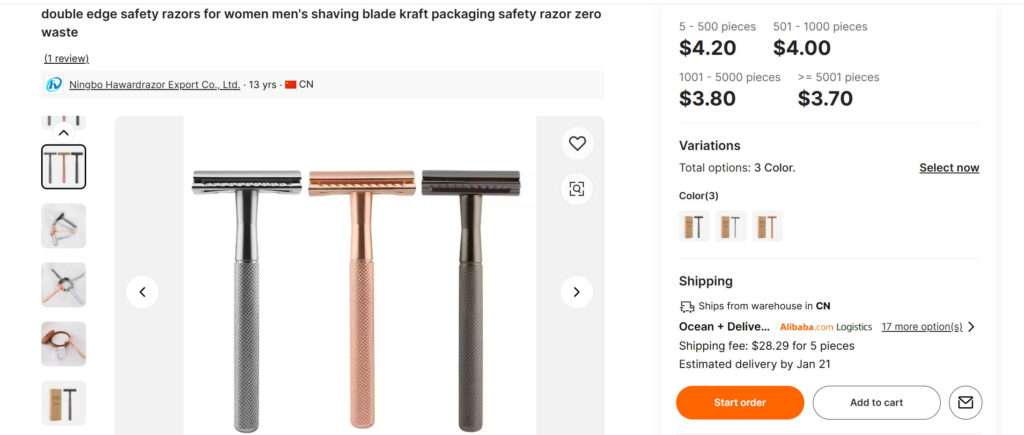
- Identical razors are widely available under different branding on sites like Alibaba.
- These generic razors cost under $4 per unit when purchased wholesale direct from Chinese factories.
- No custom branding, molding, or design exists on the Solara razor.
- Multiple resellers use the same product images as Solara.
This evidence indicates the Solara razor is an unbranded mass-produced product available to anyone online. It can then be resold at extreme markups.
Final Verdict: Solara Is Likely A Dropshipping Operation
Given the misleading marketing claims, suspicious reviews, lack of transparency, shady business tactics, and true wholesale origins – the verdict is clear:
The Solara Safety Edge Razor shows multiple signs of being a dropshipping operation cashing in on viral marketing of a cheap generic import.
While not completely fraudulent, the lack of genuineness surrounding their promises and razor itself makes Solara a highly risky purchase. The razor itself is real but unlikely to deliver the miraculous results claimed.
In summary, the Solara Safety Edge Razor is better avoided given its pattern of exaggerated claims and lack of authenticity. Seeking traditional trusted razor brands remains the safest bet for the closest, irritation-free shave.
This article is for educational purposes only and does not constitute professional, financial or legal advice. The content is intended for general information and should not be construed as definitive guidance. Information contained herein is subject to change without notice.  For concerns, please contact us via the provided form.
If you are the owner of the website or product in question and wish to offer clarifications regarding your business or website, please reach out to us through the provided Contact Form.








