

The “Some-one Try To Login Into Your Mailbox Address” email email is designed to trick unsuspecting recipients into providing their login credentials or other sensitive information under the guise of a security alert. But make no mistake – this email is 100% fake and falling for it can lead to compromised accounts, identity theft, and other headaches.
In this comprehensive guide, we’ll break down exactly how the “Some-one Try To Login Into Your Mailbox Address” scam works, provide tips on how to recognize it, explain what to do if you receive it, and outline steps to take if you unfortunately fell victim.
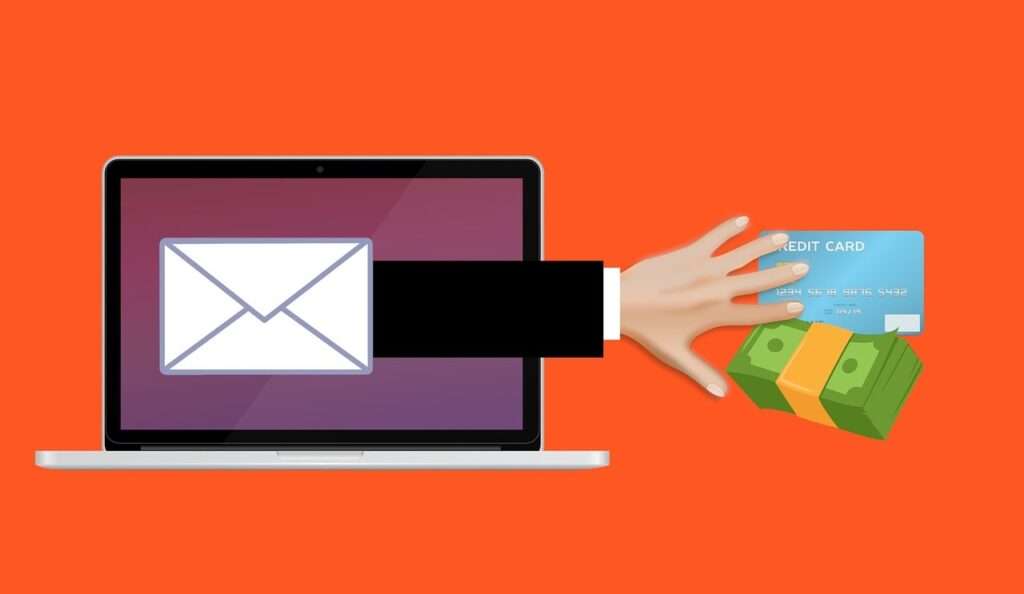
Scam Overview
The “Some-one Try To Login Into Your Mailbox Address” phishing scam messages are specifically designed to appear as if they are official security alerts from email providers such as Gmail, Yahoo, Outlook, or others. The goal is to scare recipients into thinking their account is at risk and trick them into providing sensitive information or clicking on malicious links.
The email subject line usually contains the recipient’s actual email address, followed by text like “Please confirm to continue”. This personalized information is intended to add legitimacy so that recipients believe the alert is real.
The body of the email normally states that “some-one” (intentionally spelled as two words) tried to log into the recipient’s email account. It provides an urgent call to action, telling the victim they must “verify” their account information or risk losing access.
A “Verify email address” button is prominently displayed, which when clicked will redirect the recipient to a fake phishing site designed to mimic a real login page for their email provider. If login credentials are entered, they are harvested by the scammers behind the attack.
In addition, the email includes convincing details like a “Help center” contact and claims the recipient must take action to avoid deactivation of their email address. All of this is intended to scare the victim into thinking their account is being hacked in real-time.
Here is how this email scam might look:
Subject: [email]: Please confirm to continue.
Dear email
SOME-ONE try to login into your Mailbox Address
To continue using this email address Kindly verify this is your mail account.
Verify email address
If you have recieve this request, please do not disregard this email.
Otherwise, take required action to prevent loss or deactivation of your domain and email address.
Some versions of the scam may not include a malicious link, but instead direct the recipient to contact the “Help center” via phone or email. This cunning social engineering technique can trick victims into willingly handing over login details and other information if they call or reply.
Overall, the “Some-one Try To Login Into Your Mailbox Address” scam is painstakingly designed to take advantage of people’s fear of being hacked and desire to protect their online accounts. The personalized details and urgent language prey on these vulnerabilities in an attempt to steal credentials and data.
How the Scam Works
Now that we’ve covered the overview, let’s break down step-by-step how scammers leverage the “Some-one Try To Login Into Your Mailbox Address” phishing scam:
1. Scammers Obtain Email Addresses
The first step for attackers is gathering a large number of target email addresses. These are often compiled from past data breaches, malware infections, botnets, dark web sources, and other nefarious means. The more real email accounts the scammers have access to, the wider they can cast their phishing net.
2. Messages are Personalized
Once email addresses are compiled, the scammers plug each one into personalized scam messages. As we know, the subject line will contain the recipient’s actual email address. Templates are used to customize each message to match the intended target.
3. Messages Sent En Masse
Using spoofing techniques, the scammers are able to mass distribute the faked security alert emails. The messages are made to look like they come from the email providers themselves, often via forged sender addresses. Mass blasts of thousands or even millions of messages are rapidly fired off.
4. Recipients Check Email
Over the next hours, days, and weeks, the sent messages will start arriving in the inboxes of the intended recipients. Upon seeing what looks like an urgent security notice from their own email provider, most people will be inclined to open and read it.
5. Fear/Curiosity Triggered
Once opened, the customized scam message is designed to immediately trigger feelings of fear, uncertainty, or curiosity for the recipient. The idea their account is being “hacked right now” scares them into wanting to take swift action as directed.
6. Malicious Links Clicked
Urged to “verify” their account, many recipients will unfortunately click on the prominent “Verify email address” button or link embedded in the message. As warned, this redirects them to a fraudulent phishing site disguising itself as the real login page for the victim’s email provider.
7. Credentials Entered on Phishing Site
Trusting the legitimacy of the phishing site, victims will follow the normal login process by entering their email address and password credentials. Sometimes 2-factor authentication codes or other account details are also harvested on the fake page.
8. Account Credentials Stolen
With the victim’s legitimate login credentials in hand, the scammers can now easily access their real email account and take over control. Depending on motives, this account access can be leveraged for spreading more scams, monetary theft, identity fraud, or distributing malware.
9. Further Damage Possible
Beyond just email account access, the scammers may use password reuse to compromise other online accounts linked to the same credentials. Or malicious links in the phishing site can infect the victim’s device with trojans, spyware, keyloggers, or other nasty programs designed to cause further issues down the road.
As you can see, the “Some-one Try To Login Into Your Mailbox Address” scam can have wide ranging consequences beyond just the compromise of an email account. That’s why it’s critical not to fall victim in the first place.
What To Do If You Receive This Scam Email
If this scam lands in your inbox, stay calm and avoid clicking on any links or contacting the provided “Help center”. Here are the steps to take:
- Hover over links – Without clicking, hover your mouse over any buttons or links in the email. Check the bottom left of your browser to preview the actual URL. If it’s not your actual email provider’s domain, it’s definitely fraudulent.
- Mark as spam – Open your email settings and make sure the message is marked as spam or junk. Configure your account to automatically filter future emails from the same sender to spam.
- Forward to security teams – Forward the scam email to your email provider’s cybersecurity or abuse team so they are aware of the phishing attempt. Also consider forwarding to the FTC at spam@uce.gov.
- Ignore help contact – Do not respond to the “Help center” number or email mentioned in the scam message. This will only lead to you getting scammed or compromised by the attackers.
- Enable added account security – Log into your actual email account and enable any available extra security features like two-factor authentication for added protection.
- Change passwords – As a precaution, go ahead and change the password for your email and any other important accounts. Make sure the new passwords are strong and unique.
- Watch for suspicious activity – Be vigilant in monitoring your email account over the next weeks for any suspicious activity, new emails from the scammers, or notifications about attempted logins.
Following these steps can help protect yourself and limit the damage attempted via this scam. But if you unfortunately did fall for it and provided your account credentials, don’t panic. There are still ways to secure your accounts and limit the fallout.
What To Do If You Fell Victim to This Scam
If you did fall for the “Some-one Try To Login Into Your Mailbox Address” phishing scam and entered your credentials, take the following steps right away:
- Email provider support – Contact your email provider’s customer support via phone and explain you were tricked into providing your login information on a phishing site. They may be able to lock the account before major damage occurs.
- Password reset – If you’re still able to access your email account, immediately change your password again. Make sure it’s completely new and complex. Turn on two-factor authentication if available for additional security.
- Remove suspicious emails – Check your sent folder and trash or remove any suspicious emails the scammers may have sent from your account already. This limits the spread of the attack.
- Contact financial institutions – If you used the compromised email for financial accounts, contact those institutions immediately. Alert them to the situation and have them watch for fraudulent activity.
- Scan devices – Run complete antivirus scans on any computers or devices you accessed the phishing site from. Quarantine or delete any detected malware, spyware or other infections found.
- Enable login approvals – For other accounts accessed by the compromised email, enable login approval requirements and notify contacts of the potential scam spread.
- Change reused passwords – Scammers will leverage password reuse, so change credentials anywhere you utilized the same password as your email. Prioritize financial accounts and sites housing sensitive info.
- Place fraud alerts – Consider placing initial 90 day fraud alerts with the three major credit bureaus of Equifax, Experian and TransUnion to help protect your identity.
- Monitor credit reports – Keep a close eye on your credit reports with the bureaus for any suspicious new activity, accounts or inquiries. Some providers allow free credit monitoring.
- FTC identity theft report – If accounts have been tampered with or opened fraudulently, file an official identity theft report with the FTC at IdentityTheft.gov. Provide this to disputed providers.
- Local authorities – Depending on extent of the fraud, you may need to file a police report about the scam with your local authorities. This also documents the crime.
- Learn from the mistake – In the future, remember to never click links or provide sensitive info in unsolicited emails. Use unique complex passwords for each account and enable two-factor authentication wherever available.
Being tricked by a phishing scam is unfortunate but common. By taking quick action and learning from the experience, you can contain the damage and regain control of your accounts. Remain vigilant for further scam attempts via email or other means.
Is Your Device Infected? Run a Free Malware Scan
Slow performance, constant pop-ups, or strange behavior? These are classic signs of a malware infection. The fastest way to find out is to scan your device with Malwarebytes Free — one of the most trusted malware removal tools available.
The free version detects and removes the most common threats, including:
- Adware — the cause of those annoying pop-ups
- Browser hijackers — unwanted redirects and changed homepages
- Trojans and spyware — hidden programs stealing your data
- Potentially unwanted programs (PUPs) — software you never asked for
👉 Select your device below — Windows, Mac, or Android — then follow the simple steps to download Malwarebytes, scan your system, and remove any threats it finds. The scan usually takes 5 to 20 minutes.
Run a Malware Scan with Malwarebytes for Windows
Malwarebytes is one of the most popular and trusted anti-malware tools for Windows — and it’s completely free for removing infections. It catches threats that many antivirus programs miss, including adware, browser hijackers, and trojans. Follow the steps below to scan and clean your PC in just a few minutes.
Download Malwarebytes
Click the button below to download the latest version of Malwarebytes for Windows from the official source. The free version is all you need — it will scan your computer and remove adware, browser hijackers, and other malicious software at no cost.
Download MalwarebytesOfficial installer for Windows 11 and 10. Your download starts right away.Want real-time protection? See Malwarebytes Premium Malwarebytes Free for WindowsScans and removes malware at no cost
-
Install Malwarebytes
When the download finishes, open your Downloads folder and double-click the MBSetup file. If Windows shows a User Account Control pop-up, click “Yes” to allow the installation.
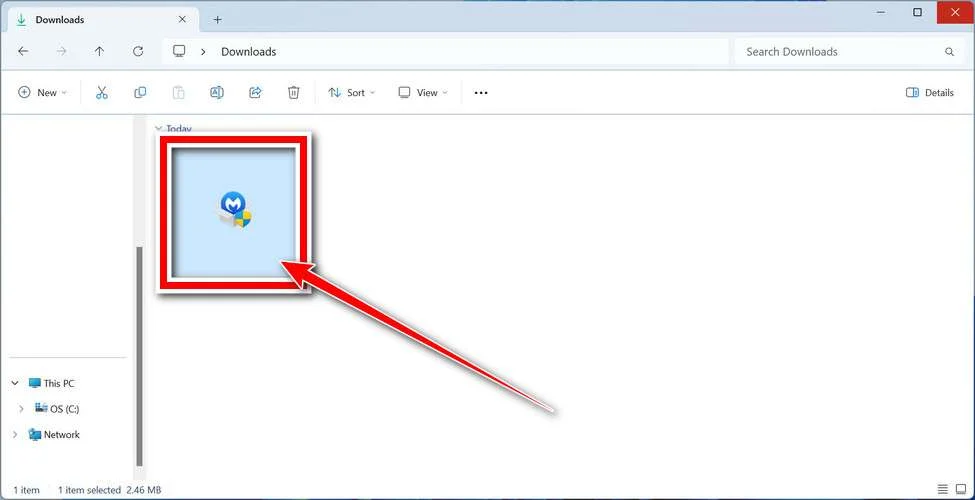
Follow the On-Screen Prompts to Install Malwarebytes
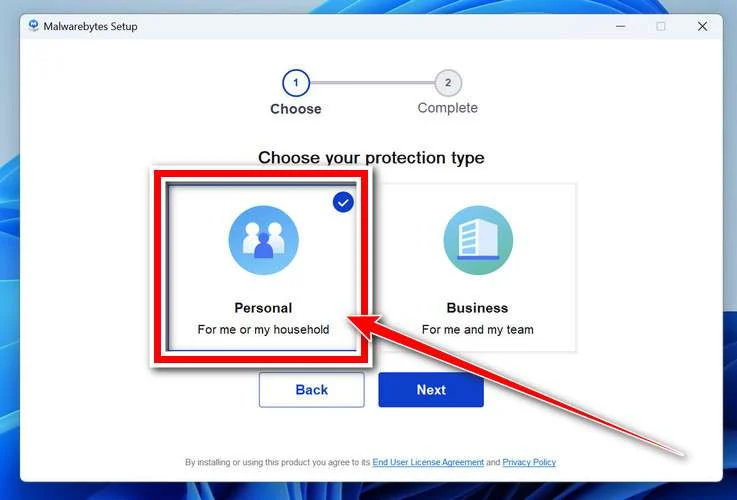
The setup wizard will walk you through a few quick screens:
-
Choose where you’re installing the program — “Personal Computer” or “Work Computer” — then click Next.
-
Malwarebytes will now install on your device. This usually takes under a minute.

-
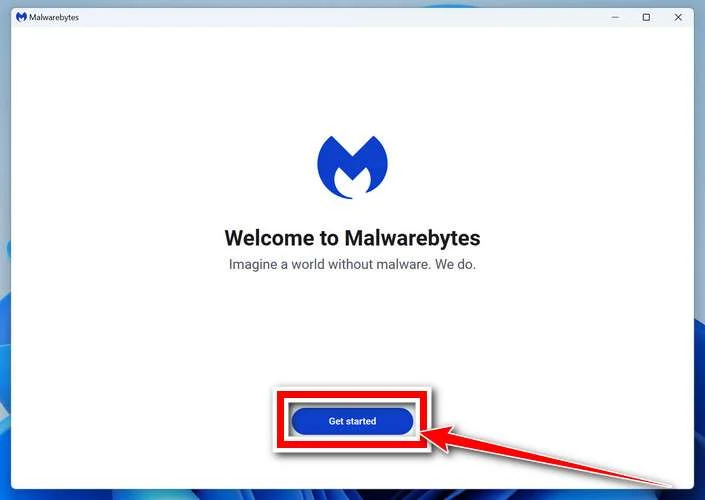
When installation is complete, the “Welcome to Malwarebytes” screen will open automatically.
-
On the final screen, click Open Malwarebytes to launch the program.

-
Enable “Scan for Rootkits”
Before scanning, turn on rootkit detection so Malwarebytes can find even the most hidden threats. Click the Settings gear icon on the left side of the screen.
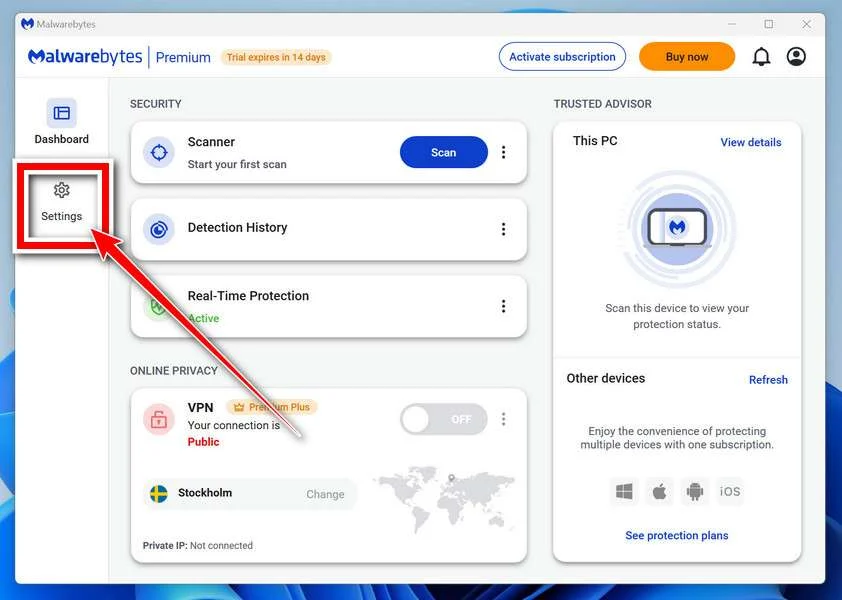
In the settings menu, find “Scan for rootkits” and click the toggle so it turns blue.

Done? Click “Dashboard” in the left pane to return to the main screen.
Start the Scan
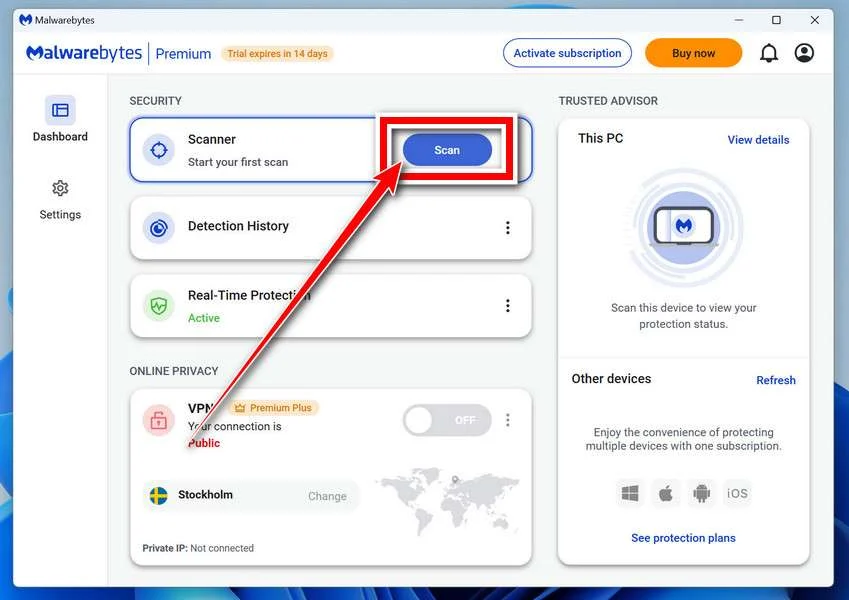
Click the blue Scan button. Malwarebytes will automatically update its virus database and start checking your computer for malware.
-
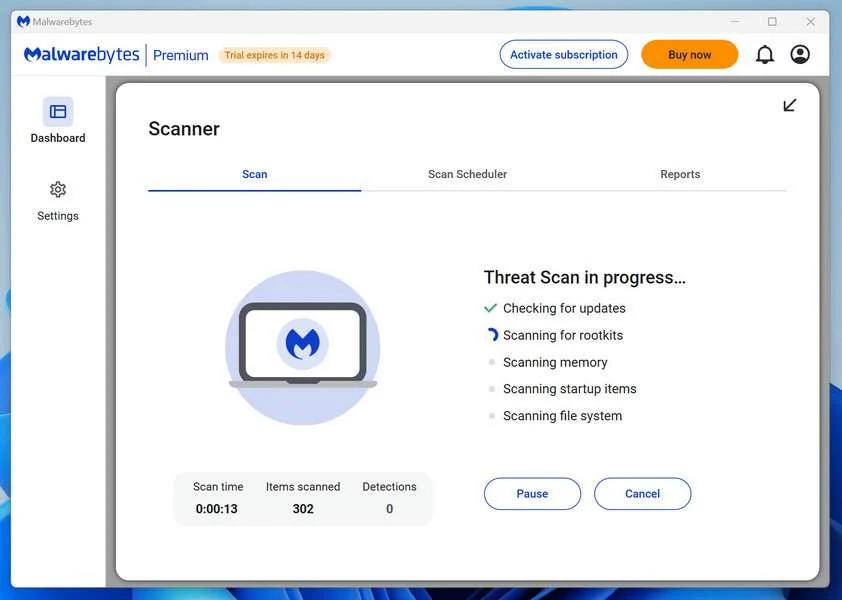
Wait for the Scan to Finish
The scan checks your entire system for browser hijackers and other malicious programs, so it can take 5 to 20 minutes depending on your computer. Feel free to do something else — just check back occasionally to see the progress.
-
Quarantine the Detected Threats
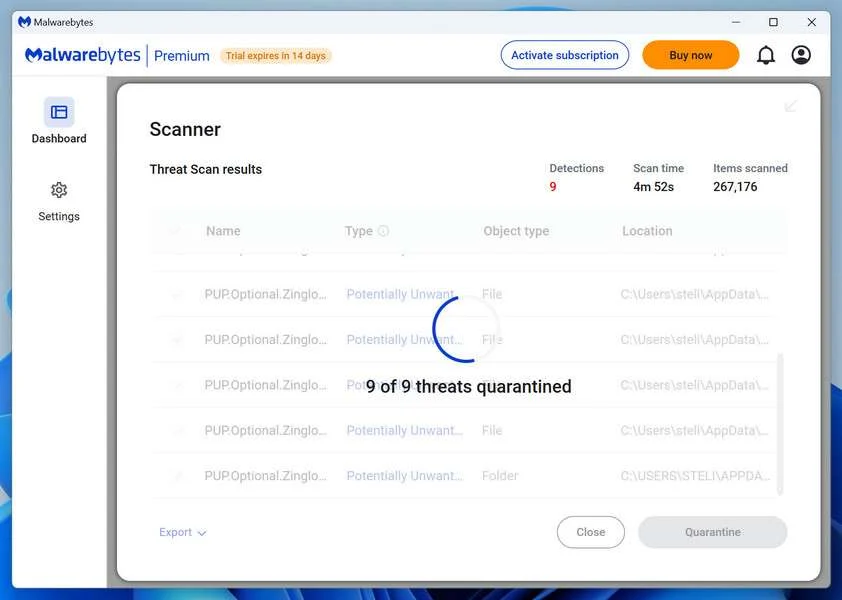
When the scan is done, you’ll see a list of everything Malwarebytes found — malware, adware, and potentially unwanted programs. Click the “Quarantine” button to remove all of them at once.
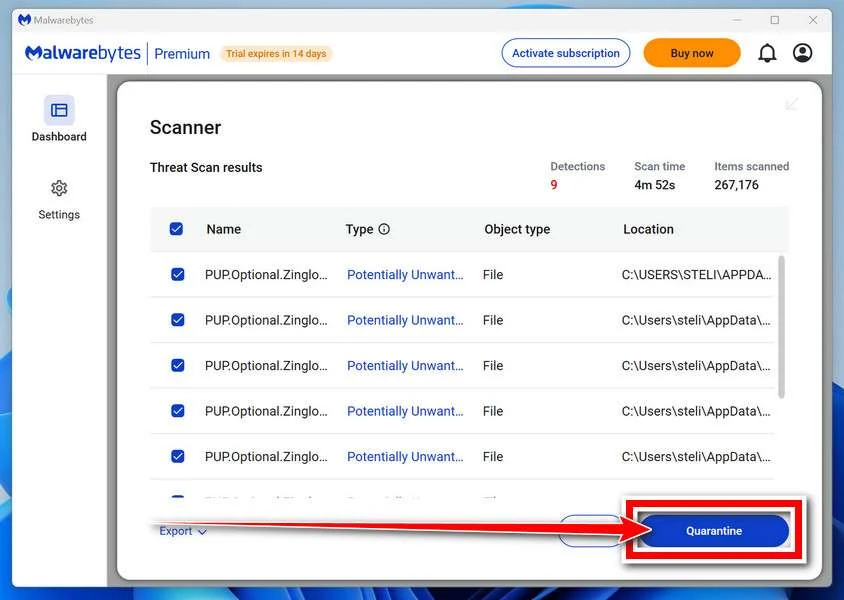
Malwarebytes will now remove the malicious files and registry entries and move them safely into quarantine.
-
Restart Your Computer
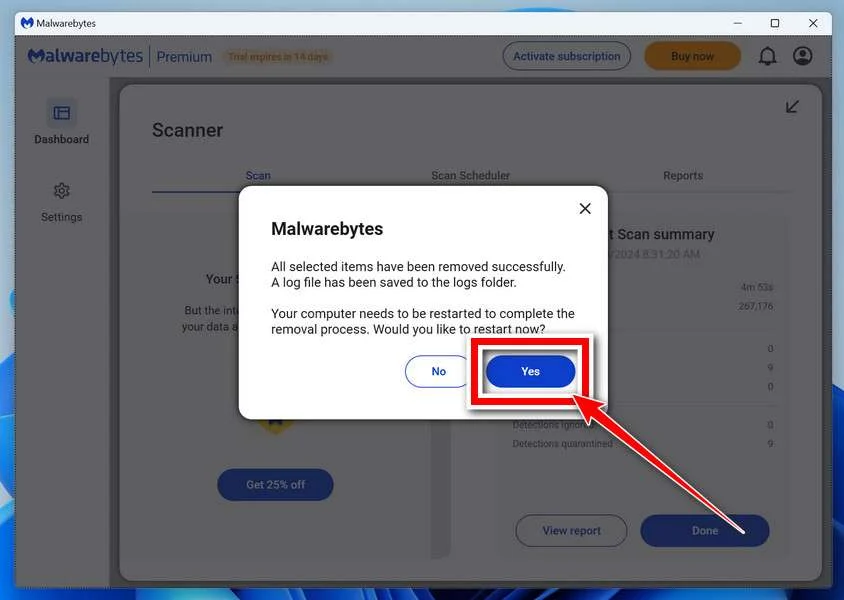
Some threats can only be fully removed after a reboot. If Malwarebytes asks you to restart, click Yes. Once you’re logged back in, Malwarebytes has finished removing the threats it found.
That’s it — your Windows PC is now clean of trojans, adware, and other malware, and should be back to running smoothly.
If you are still having problems with your computer after completing these instructions, then please follow one of the steps:
- Run a computer scan with ESET Online Scanner
- Ask for help in our Windows Malware Removal Help & Support forum.
Run a Malware Scan with Malwarebytes for Mac
Malwarebytes for Mac is a free on-demand scanner that removes the malware other security software tends to miss — adware, browser hijackers, and unwanted programs included. Cleaning an infected Mac with Malwarebytes has always been completely free, and it’s our go-to recommendation. Follow the steps below to scan and clean your Mac in just a few minutes.
-
Download Malwarebytes for Mac
Click the button below to download the latest version of Malwarebytes for Mac.
Download MalwarebytesOfficial installer for macOS. Your download starts right away.Want real-time protection? See Malwarebytes PremiumMalwarebytes Free for MacScans and removes malware at no cost -
Open the Malwarebytes setup file
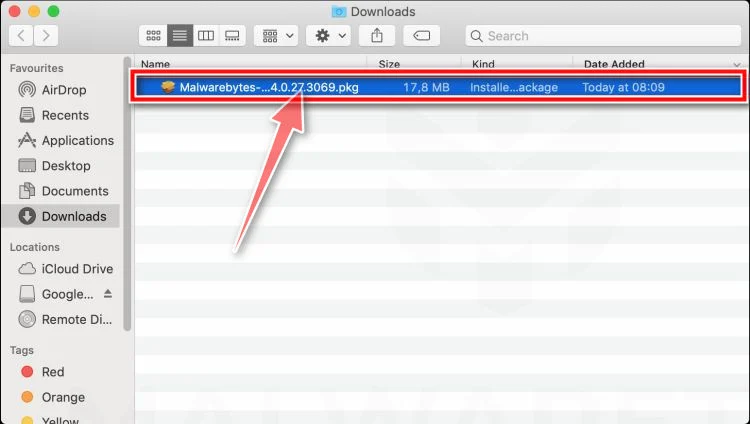
When the download finishes, open your Downloads folder and double-click the setup file to begin the installation.
-
Follow the On-Screen Prompts to Install Malwarebytes
The Malwarebytes for Mac Installer will guide you through a few quick screens. Click “Continue” and keep following the prompts until the installation completes.
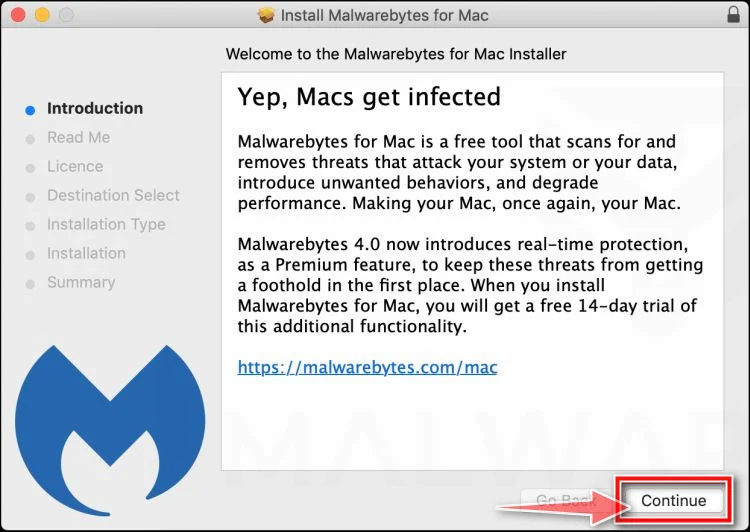
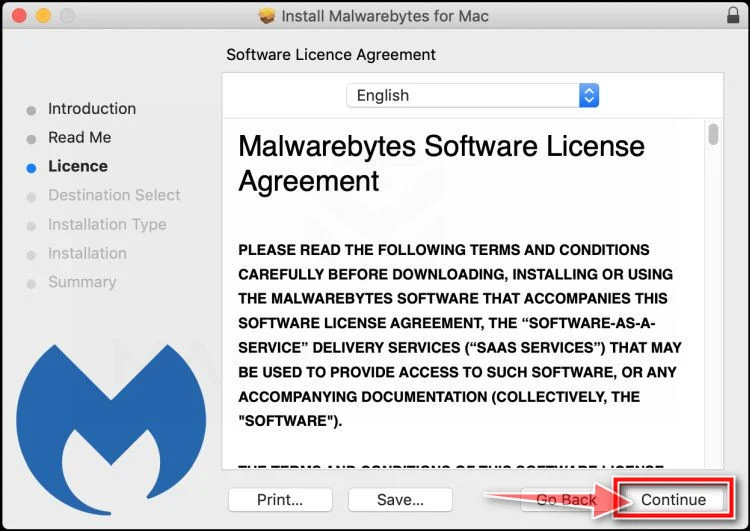
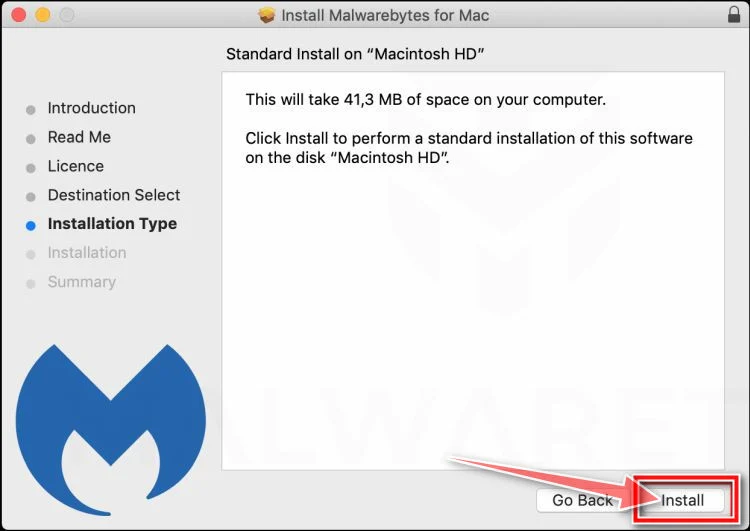
When the installation is complete, Malwarebytes opens to the Welcome to Malwarebytes screen. Click “Get started“.
-
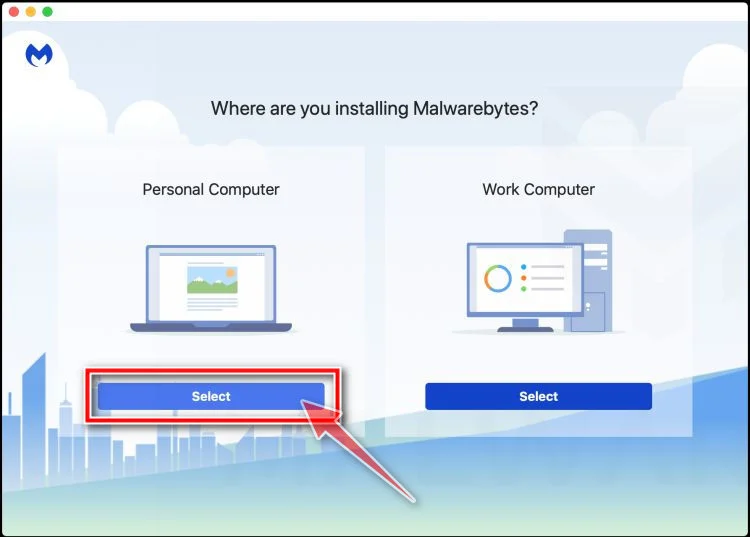
Select “Personal Computer” or “Work Computer”
Malwarebytes will ask what type of computer you’re installing it on. Click either Personal Computer or Work Computer, whichever applies.
-
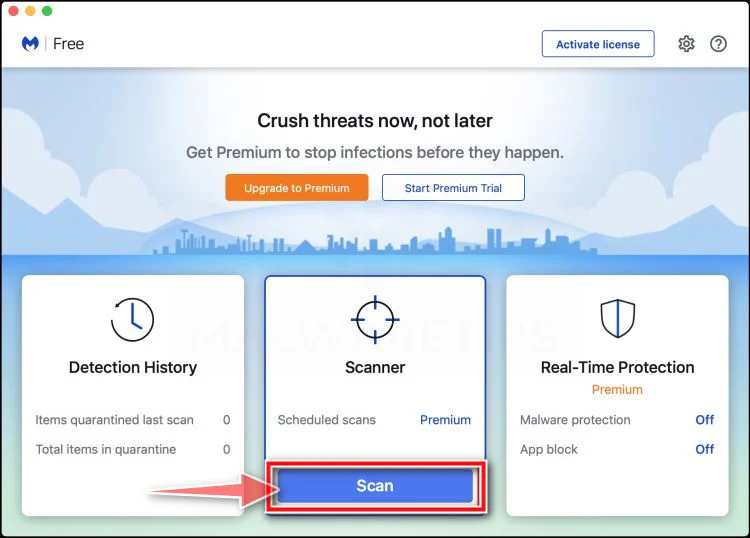
Start the Scan
Click the “Scan” button. Malwarebytes will automatically update its detection database and begin checking your Mac for malware.
-
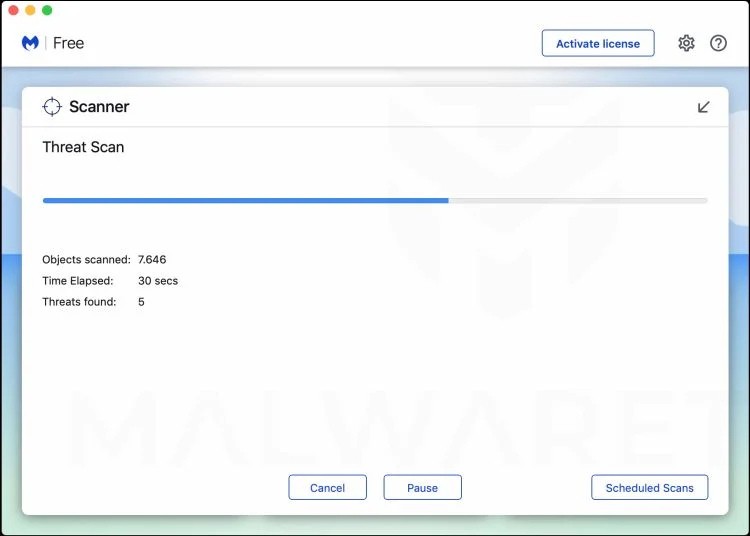
Wait for the Scan to Finish
Malwarebytes will scan your Mac for adware, browser hijackers, and other malicious programs. This can take a few minutes, so feel free to do something else — just check back occasionally to see the progress.
-
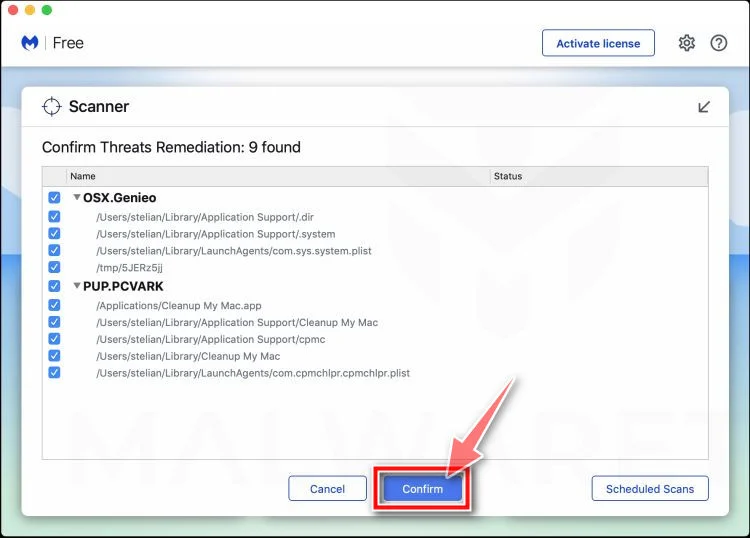
Quarantine the Detected Threats
When the scan is done, you’ll see a list of everything Malwarebytes found. Click the “Quarantine” button to remove all the threats at once.
-
Restart Your Mac
Malwarebytes will now remove all the malicious files it found. Some threats can only be fully removed after a reboot — if Malwarebytes asks you to restart, allow it. Once you’re logged back in, your Mac is clean.
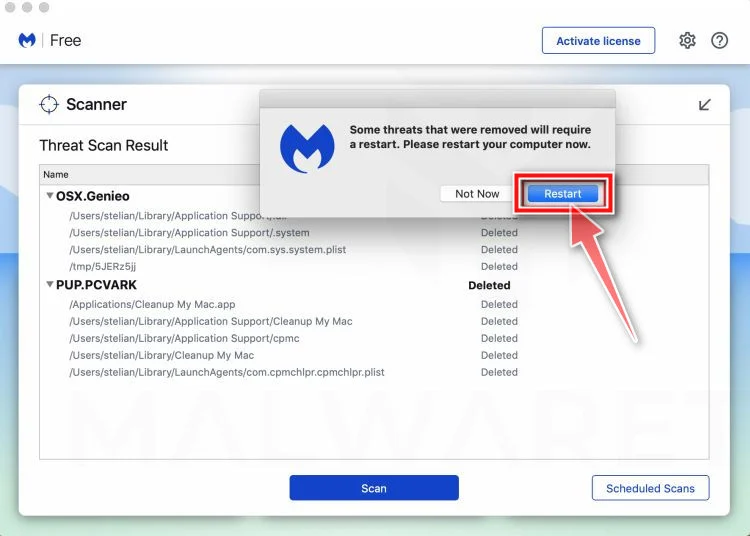
That’s it — your Mac is now free of adware, rogue browser extensions, and other potentially harmful software.
If you are still experiencing problems while trying to remove a malicious program from your computer, please ask for help in our Mac Malware Removal Help & Support forum.
Run a Malware Scan with Malwarebytes for Android
Malwarebytes for Android automatically detects and removes dangerous threats like malware and ransomware so you don’t have to worry about your most-used device being compromised. Aggressive detection of adware and potentially unwanted programs keeps your Android phone or tablet running smooth.
-
Download Malwarebytes for Android.
You can download Malwarebytes for Android by clicking the link below.
Get Malwarebytes for AndroidOpens Google Play in a new tab.Want real-time protection? See Malwarebytes Premium for AndroidMalwarebytes for AndroidScans your phone and removes malware at no cost -
Install Malwarebytes for Android on your phone.
In the Google Play Store, tap “Install” to install Malwarebytes for Android on your device.

When the installation process has finished, tap “Open” to begin using Malwarebytes for Android. You can also open Malwarebytes by tapping on its icon in your phone menu or home screen.

-
Follow the on-screen prompts to complete the setup process
When Malwarebytes will open, you will see the Malwarebytes Setup Wizard which will guide you through a series of permissions and other setup options.
This is the first of two screens that explain the difference between the Premium and Free versions. Swipe this screen to continue.
Tap on “Got it” to proceed to the next step.
Malwarebytes for Android will now ask for a set of permissions that are required to scan your device and protect it from malware. Tap on “Give permission” to continue.
Tap on “Allow” to permit Malwarebytes to access the files on your phone.
-
Update database and run a scan with Malwarebytes for Android
You will now be prompted to update the Malwarebytes database and run a full system scan.

Click on “Update database” to update the Malwarebytes for Android definitions to the latest version, then click on “Run full scan” to perform a system scan.

-
Wait for the Malwarebytes scan to complete.
Malwarebytes will now start scanning your phone for adware and other malicious apps. This process can take a few minutes, so we suggest you do something else and periodically check on the status of the scan to see when it is finished.

-
Click on “Remove Selected”.
When the scan has been completed, you will be presented with a screen showing the malware infections that Malwarebytes for Android has detected. To remove the malicious apps that Malwarebytes has found, tap on the “Remove Selected” button.

-
Restart your phone.
Malwarebytes for Android will now remove all the malicious apps that it has found. To complete the malware removal process, Malwarebytes may ask you to restart your device.
That’s it — your Android phone is now clean — no more malicious apps, adware, or browser redirects.
If you are still having problems with your phone after completing these instructions, then please follow one of the steps:
- Restore your phone to factory settings by going to Settings > General management > Reset > Factory data reset.
- Ask for help in our Mobile Malware Removal Help & Support forum.
Stay Protected: Block Ads and Malicious Sites
Now that your device is clean, keep it that way. Most infections start with a malicious ad or a fake download button — so blocking them at the source is your best defense.
We recommend AdGuard, which blocks malicious ads, phishing pages, and dangerous redirects before they can reach you.
👉 Download AdGuard and browse safely
Frequently Asked Questions About the “Some-one Try To Login Into Your Mailbox Address” Scam
1. What is the “Some-one Try To Login Into Your Mailbox Address” scam?
This is a phishing scam where recipients receive an email claiming that someone tried to login to their email account. The goal is to trick victims into clicking on a fake “Verify Email Address” button which leads to a phishing site designed to steal login credentials. The scam message is made to look like a security alert from your email provider.
2. How do I recognize the “Some-one Try To Login Into Your Mailbox Address” scam email?
Warning signs include an urgent subject line like “Please Confirm to Continue”, poor grammar/spelling, impersonal greeting, request to verify account to avoid deactivation, presence of a “Verify Email Address” button, and contact info for a suspicious “Help Center”. Your email address in the subject line is a giveaway.
3. What should I do if I receive the “Some-one Try To Login Into Your Mailbox Address” email scam?
Do not click any links or call phone numbers provided. Check that the sender address is forged. Forward the email to your email provider’s abuse team. Mark the message as spam. Never provide your password or sensitive details. Change your email password if concerned.
4. What happens if I click the link in the “Some-one Try To Login Into Your Mailbox Address” scam email?
The link goes to a fake phishing site impersonating your email provider’s login page. If you enter your email and password, the scam operators will gain full access to your email account and can further exploit you.
5. Can the “Some-one Try To Login Into Your Mailbox Address” scam infect my computer?
Possibly. The phishing site may attempt to download malware onto your device. At minimum run a full antivirus scan. Better yet, restore your device to a earlier restore point before visiting the scam site.
6. How can I protect myself from the “Some-one Try To Login Into Your Mailbox Address” scam?
Never click unverified links, use unique complex passwords, enable two-factor authentication on accounts, keep software updated, and be wary of urgent security email warnings. Updates your settings to filter suspected phishing.
7. What should I do if I already provided my login details to the scam website?
Immediately contact your email provider and reset your password. Remove any suspicious emails sent from your account during the scam. Enable login approvals going forward. Check credit reports for signs of identity theft.
8. Who is behind the “Some-one Try To Login Into Your Mailbox Address” scam?
Cybercriminals and scammers operate these phishing campaigns, often using botnets and compromised computers to distribute the fake login emails en masse. Their location and actual identities are obscured.
9. How can I report the “Some-one Try To Login Into Your Mailbox Address” phishing email?
Forward the scam email to your email provider, the FTC at spam@uce.gov, and file an online complaint about the scam email address and links at FTC.gov. This helps shut down the scam.
10. How common is the “Some-one Try To Login Into Your Mailbox Address” scam?
Very common. Millions of these fake login emails are sent daily across the globe. Phishing scams in general are rapidly rising due to email being low cost and high reward for scammers. Be on guard.
The Bottom Line
The “Some-one Try To Login Into Your Mailbox Address” phishing scam demonstrates how convincing and cunning email fraud techniques have become. By preying on a recipient’s fear of account compromise, scammers can con even savvy internet users into handing over login credentials or exposing themselves to account takeovers and further fraud.
The best protection is learning the common signs of phishing emails, thinking twice before clicking links or providing info, and using strong unique passwords with two-factor authentication enabled. If you do fall victim, act swiftly to lock down accounts before major damage occurs. Being vigilant and security-minded is key to avoiding these criminal scams.
In closing, remain skeptical of every unsolicited email, no matter how legitimate it may seem at first glance. Always hover over links to check actual destinations, watch for spoofed sender addresses, and confirm urgent requests through known official channels. If ever in doubt, do not hesitate to delete the message or connect with the company directly via their official website or customer service line. Being cautious and proactive is the best way to arm yourself against the endless barrage of phishing scams and email fraud. Stay safe!

Join the discussion
0 commentsShare your experience or ask a question about this article.
Discussion
Start the conversation
Have a question or something useful to share? Add the first comment.