

Could SpaceX and Elon Musk really be giving away millions in free Bitcoin, Ethereum, and other cryptocurrencies? At first glance, the tantalizing SpaceX crypto giveaway promoted at SpaceX-Elon.net appears official and generous. But behind this elaborate ruse hides a cold-hearted scam aimed solely at stealing digital assets from unwitting victims.
This in-depth exposé will uncover how scammers fabricated an elaborate fake SpaceX domain to deceive cryptocurrency owners. Learn exactly how this crypto theft scheme works step-by-step so you can protect your hard-earned assets and avoid becoming the next victim.
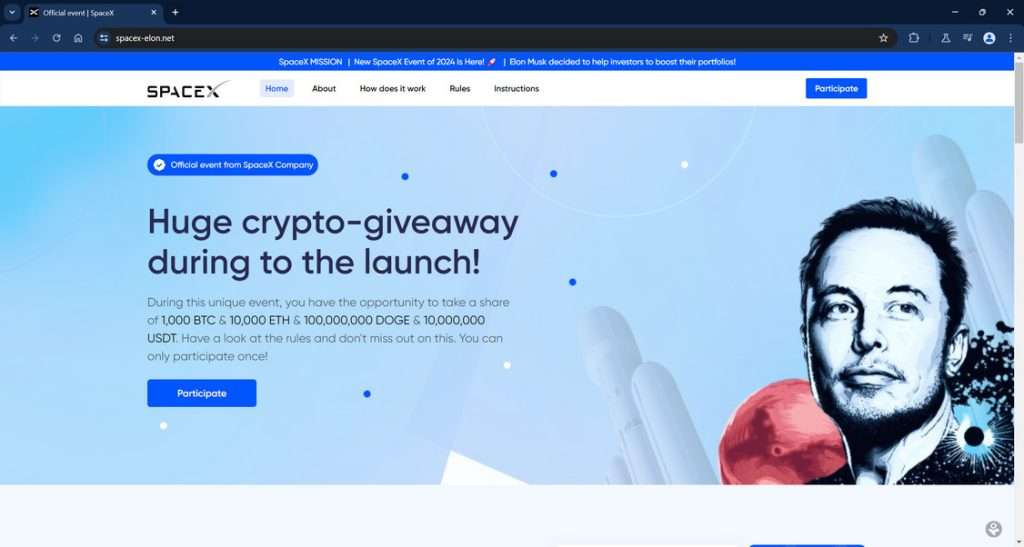
An In-Depth Overview of the Convincing But Fake SpaceX Crypto Giveaway Scam
The SpaceX-Elon.net crypto giveaway scam is an intricately crafted fraud perpetrated by devious cybercriminals skilled in the art of deception. The operators behind this scheme have managed to pilfer millions in Bitcoin, Ethereum, and other digital currencies by impersonating the SpaceX brand and fabricating an utterly fictitious cryptocurrency giveaway promotion.
It begins with the registration of the domain SpaceX-Elon.net, designed specifically to instill credibility by incorporating the SpaceX name. The scam website hosted at this domain features official SpaceX logos, images of spacecraft, and profiles of Elon Musk. To the untrained eye, it appears totally legitimate and affiliated with the aerospace company.
Of course, the reality is that scammers simply cloned the likeness of SpaceX without permission to intentionally confuse and mislead victims. SpaceX has no involvement whatsoever with this fake crypto giveaway or the SpaceX-Elon.net website.
The site falsely claims that to commemorate SpaceX milestones, the company will double any cryptocurrency sent to provided wallet addresses as part of a limited-time giveaway promotion. For example, send 0.5 BTC and receive 1 full BTC in return. Unique addresses are displayed for sending ETH, DOGE, USDT, BTC specifically.
After deposits are sent, the website displays fake pending transactions showing the “doubled” crypto rewards being transferred back to the victim’s wallet. But these are completely fabricated – the scammers pocket the deposits, and victims receive nothing back.
This brazen scam manages to deceive numerous victims by exploiting public excitement regarding SpaceX’s legitimate achievements. The operators disappear after collecting deposits, leaving victims with no recourse.
By learning their deceptive tactics, we can expose this scam and prevent more cryptocurrency owners from losing hard-earned assets.
Breakdown of How the SpaceX Crypto Scam Operates
Here is a comprehensive, step-by-step explanation of exactly how the criminals behind SpaceX-Elon.net ensnare unsuspecting victims:
Step 1: Promoting the Fake Crypto Giveaway
The scammers aggressively promote the fake crypto giveaway through:
- YouTube ads with SpaceX footage
- Posts and bots across social media platforms
- Comments on SpaceX fan channels and Elon Musk profiles
- Referral links and scam compilations on shady forums
These promotions tout the major cryptocurrencies being given away and urge viewers to participate before time runs out.
Step 2: Directing Victims to the Fraudulent Site
The hype content redirects victims to the elaborate SpaceX-Elon.net website set up specifically to scam users.
The site’s strategic use of SpaceX’s branding and imagery of Elon Musk instills a false sense of legitimacy. The average victim is unlikely to discern that the site is illegitimate.
Step 3: Describing the Fictional Giveaway
The SpaceX-Elon.net site provides details on the supposed crypto giveaway in progress tied to celebrating SpaceX milestones. Completely fabricated details are shared, such as the number of giveaway participants and the amount of crypto rewards remaining.
Timed countdowns create false urgency to compel visitors to participate without deeper scrutiny.
Step 4: Instructing Users to Send Crypto
The site displays unique wallet addresses associated with BTC, ETH, DOGE, and USDT. Victims are instructed to send cryptocurrency to these addresses in order to receive the promised doubled rewards.
For example, the site states “Send 0.5 BTC to the BTC address below and receive 1 full BTC!”
These addresses are controlled by the scammers who operate the fake SpaceX domain.
Step 5: Collecting Victims’ Crypto Deposits
Eager users transfer cryptocurrency from their wallets or exchanges to the scam site’s wallet addresses, believing they are participating in SpaceX’s giveaway.
In reality, they are simply transferring funds directly into the coffers of cybercriminals.
Step 6: Displaying Fake Pending Transactions
After receiving crypto deposits, the SpaceX-Elon.net site displays fake pending transactions showing the “doubled” giveaway rewards being sent back to victims’ wallets.
These are fabricated to trick victims into thinking their funds are being returned as promised. In truth, the scammers have no intent to return any cryptocurrency.
Step 7: Disabling the Scam Site
Once enough victims’ funds have been collected, the scammers ultimately disable the fake SpaceX-Elon.net website and disappear.
Attempts to return to the site are met with domain suspension and access errors.
The cryptocurrency deposited is gone forever, securely in the wallets of bad actors who have no intent to deliver any giveaway.
What To Do If You Lost Crypto in the SpaceX-Elon.net Scam
If you unfortunately fell victim and transferred cryptocurrency to this scam giveaway, take these steps immediately:
- Contact authorities – Report the incident to the FTC, IC3, and other relevant authorities. Provide domain and wallet details.
- Inform exchanges – If you sent funds from an exchange, contact them regarding the scam transfer. Freeze connected accounts if possible.
- Get the word out – Expose the scam publicly by reporting the YouTube videos, social posts, and site to get them taken down.
- Monitor the scammers – Watch the scam wallet addresses using blockchain explorers to see if funds are moved.
- Consult recovery experts – Speak with professionals to determine if fund recovery is viable through any legal or technical means.
- Educate yourself – Learn how to identify the warning signs of giveaway scams to avoid being victimized again.
- Warn others – Share details on the scam tactics to prevent someone else from falling prey.
Although extremely difficult, some victims have succeeded in recovering portions of their lost funds through persistence and expert assistance. Don’t hesitate to seek help.
Frequently Asked Questions About The Fake SpaceX Crypto Giveaway Scam
1. Is the SpaceX cryptocurrency giveaway at SpaceX-Elon.net legitimate?
No, the Spacex-Elon.net giveaway is completely fake. SpaceX and Elon Musk have no involvement with the website or crypto giveaway promotion.
2. How does the Spacex-Elon.net crypto scam operate?
Scammers promote a fake giveaway, direct victims to an elaborate scam site mimicking SpaceX, provide wallet addresses and steal deposited crypto funds.
3. What cryptocurrencies do the scammers request for the fake giveaway?
The SpaceX-Elon.net scam site requests deposits in BTC, ETH, DOGE and USDT specifically to seemingly legit crypto wallet addresses.
4. How can I recognize warning signs of the SpaceX cryptocurrency scam?
Red flags include unbelievable giveaway claims, urgency tactics, flashy videos, new social accounts, and an inability to directly confirm the promotion with SpaceX.
5. Has SpaceX or Elon Musk endorsed any cryptocurrency giveaways?
No, neither SpaceX nor Elon Musk have ever endorsed or promoted any cryptocurrency giveaways asking for deposits.
6. What should I do if I already sent crypto to the fake SpaceX giveaway?
Immediately contact relevant authorities, freeze connected accounts, monitor scam wallet addresses, and consult recovery experts on potential options.
7. Who is responsible for orchestrating this cryptocurrency fraud?
Sophisticated cybercriminal networks skilled at executing deceptive scams operate this to steal crypto at scale. The perpetrators remain anonymous.
8. How much cryptocurrency have victims lost to the SpaceX crypto scam?
While difficult to quantify precisely, losses are estimated to be well into the millions in terms of USD value stolen collectively.
9. How can I avoid cryptocurrency giveaway scams in the future?
Always independently verify offers, analyze giveaways critically, identify warning signs, check official company channels, and don’t send unsolicited crypto deposits.
10. Where can I report the fake SpaceX giveaway scam?
You can report all instances to the FTC, FBI, IC3, social networks, domain registrars, and other relevant authorities to get fraudulent accounts taken down.
Stay vigilant – with caution and education we can overcome even complex crypto scams seeking to deceive us. Protect your hard-earned assets.
The Bottom Line on the SpaceX Crypto Scam Epidemic
In conclusion, the viral SpaceX cryptocurrency giveaway promoted across YouTube and social media tied to SpaceX-Elon.net is an outright scam operation. This brazen fraud has managed to steal millions in digital currency by impersonating SpaceX to deceive victims.
Remember – legitimate companies will never solicit upfront deposits in giveaways or promotions. The tactic of requesting cryptocurrency is a fundamental attribute of crypto scams. When assessing offers, always verify directly with official brand channels.
With knowledge of how these schemes operate and the warning signs to watch for, we can work together to unmask scammers and prevent more victims. Stay vigilant and cautious when encountering unsolicited crypto giveaways.

Join the discussion
0 commentsShare your experience or ask a question about this article.
Discussion
Start the conversation
Have a question or something useful to share? Add the first comment.