

It claims to cool and heat a room in 5 seconds, runs on just pennies a day, and ships fast — all without any installation. If you’ve seen the ads for the Split Max Air Conditioner, you’re probably wondering if it’s a genius breakthrough or a cleverly disguised scam. As we peel back the layers behind this so-called innovation, you’ll discover what Split Max really is and why thousands are regretting their purchase.
Overview of the Split Max Air Conditioner
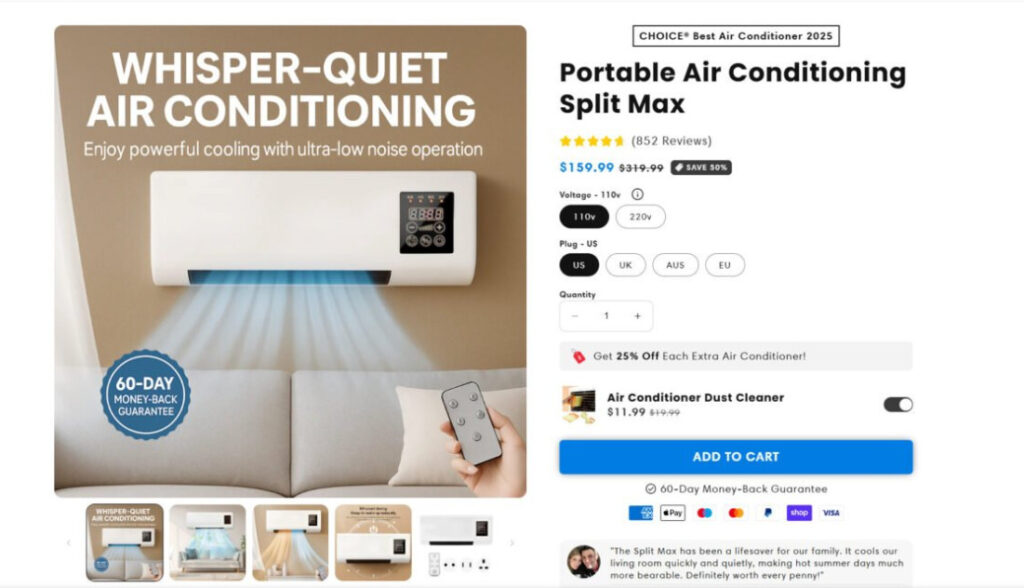
The Split Max is advertised as a compact, wall-mounted air conditioning unit that also works as a heater. Its product pages and social media ads boast specs like 3,500W power, instant climate control, whisper-quiet operation, energy efficiency, and hassle-free plug-and-play setup. On paper, it sounds revolutionary.
But the truth is far from it.
What’s being sold as the Split Max Air Conditioner is actually a basic electric fan heater with a wall mount bracket. It contains no compressor, refrigerant, or venting mechanism—meaning it cannot cool a room. It’s not an air conditioner at all.
Manufacturers list the actual wattage of these devices between 200W and 400W. This is consistent with low-end electric space heaters, not air conditioners. The claim of 3,500W power is not only misleading but technically dangerous—it would require a dedicated 240V line, which this device does not use.
The product is also marketed under names like Climafy Split Max, CoolWave AC, and other disposable brand identities. On platforms like Alibaba, the same item is available for $10–$15. These sellers use white labeling and high-markup pricing to resell it for over $100 in the U.S. and Europe.
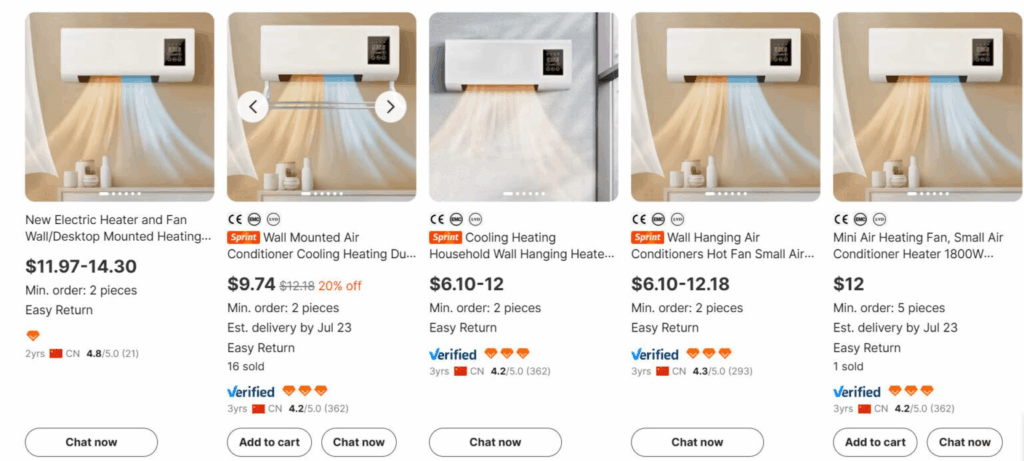
S
plit Max is heavily promoted via dropshipping sites that vanish or rebrand once complaints start rolling in. It uses the same playbook: fake reviews, urgency-driven discounts, and fabricated testimonials, including HVAC “experts” who never existed.
The images and specs are reused across multiple clone sites. Stock photos of air movement or staged temperature readings create the illusion of powerful climate control. In reality, buyers receive a weak fan heater that does little more than circulate warm air.
The most damning signs? No physical store address, no phone support, a generic email for contact, and vague return policies requiring customers to ship returns back to China. In short, it’s a scam disguised in tech lingo.
How the Split Max Scam Works
Step 1: Find a Generic Product
Marketers identify low-cost wall-mount fan heaters on platforms like Alibaba. These devices are mass produced with generic specs, no brand identity, and minimal performance.
Step 2: Rebrand with Fake Features
The seller creates a fake brand like “Split Max,” adding exaggerated features: instant heating/cooling, ultra-high wattage, silent operation, and smart energy use. Graphics are designed to mimic legitimate AC units.
Step 3: Launch a Flashy Website
Using Shopify or WooCommerce, they launch professional-looking e-commerce pages with limited-time discounts, fake “expert” reviews, and logos of media outlets they were never featured in. These sites are SEO-optimized to rank high during seasonal searches like “best portable AC summer.”
Step 4: Promote on Social Media
Ads are launched on TikTok, Facebook, Instagram, and YouTube. These show unrealistic demonstrations—blasting ice fog or instantly warming a room—with upbeat music and urgent captions: “Only 7 Left in Stock!”
Step 5: Price Gouge with a Fake Discount
The device is sold at $129–$159 with a “limited-time” 50% discount off a fake MSRP. The real cost? About $10 wholesale. Buyers think they’re getting cutting-edge tech but are actually paying a massive markup for a repackaged fan.
Step 6: Delay Shipping and Obstruct Refunds
Once purchased, shipping takes 2–4 weeks from overseas. Tracking is minimal or inaccurate. When buyers attempt refunds, they are told to ship the product back to China at their own expense. Emails go unanswered or are stalled with template replies.
Step 7: Relaunch Under New Name
As complaints mount and the domain gets flagged, the same marketers rebrand the product with a new name and URL—continuing the same scam under fresh branding.
What to Do If You’ve Been Scammed by Split Max AC
- Collect Evidence: Save your order number, confirmation email, screenshots of the product page, and any communication with the seller.
- Initiate a Chargeback: Contact your credit card company or bank and file a chargeback under “item not as described.” Mention misleading advertising and failed delivery promises.
- Report the Seller:
- U.S.: Federal Trade Commission (reportfraud.ftc.gov)
- UK: Action Fraud (actionfraud.police.uk)
- Canada: Competition Bureau
- EU: ECC-Net
- Warn Others: Leave detailed reviews on Reddit, TrustPilot, Facebook, and forums. Share the real product photos and describe your experience honestly.
- Avoid Returning the Item to China: Unless required by your bank for a chargeback, don’t waste time and money shipping the product internationally—it’s often a dead end.
- Protect Your Information: If you shared personal info or used the same password elsewhere, consider changing your login credentials and monitoring your bank for any suspicious activity.
- Stay Alert for Future Scams: Watch for similar ads using different product names but identical claims. These are usually the same operation in disguise.
The Bottom Line
The Split Max Air Conditioner is not a real AC unit. It’s a low-end electric heater dressed up with fake specs, flashy marketing, and deceptive pricing. The operation behind it is a textbook drop-shipping scam: find a cheap product, slap on a new name, create false urgency, and disappear once buyers catch on.
If you’ve already fallen victim, take action now—file for a refund, report the fraud, and share your experience. By staying informed and skeptical of products with impossible claims, you can avoid falling into the same trap in the future.
Don’t be fooled by tech-sounding names and flashy ads. If a product claims to instantly cool or heat a room while saving you hundreds, yet it costs less than dinner to make, it’s not a miracle. It’s marketing. And often, it’s a scam.
Frequently Asked Questions About the Split Max Air Conditioner Scam
Is the Split Max a real air conditioner?
No. The Split Max is not a true air conditioner. It lacks essential components such as a compressor, refrigerant, and exhaust system. It is actually a low-powered electric fan heater, falsely advertised as an advanced climate control device.
Can the Split Max really cool or heat a room in 5 seconds?
No. The claim that it can cool or heat a room in just 5 seconds is scientifically and physically impossible. Effective heating or cooling of a space takes time and requires equipment with proper heat exchange systems, which the Split Max does not have.
Why does the Split Max say it has 3,500W power but also low energy use?
This is one of the biggest red flags. A 3,500W device would consume a large amount of electricity and require a high-capacity electrical outlet. The Split Max runs on standard voltage and typically draws less than 400W, proving that the claimed wattage is false and misleading.
Is Split Max sold by a legitimate company?
No. Most websites selling Split Max provide no physical address, phone number, or legitimate business credentials. Contact is limited to a generic email address, and customer support is often unresponsive or evasive.
Where is the Split Max air conditioner actually made?
The device is sourced from generic manufacturers in China and is sold wholesale on platforms like Alibaba and AliExpress for as little as $10. It is then rebranded and sold at inflated prices under names like Split Max, Climafy, and CoolWave.
Why are there so many positive reviews on the website?
Most of the positive reviews shown on Split Max product pages are either fabricated or cherry-picked. Many use stock photos, fake names, and generic testimonials. Independent review platforms often tell a very different story, filled with complaints and refund issues.
What happens after you order the Split Max?
Shipping usually takes 2 to 4 weeks. The product often arrives in plain packaging, with no branding, poor instructions, and lower build quality than expected. Customers frequently report that the device does not perform as advertised.
Can I return the Split Max for a refund?
Returns are technically possible but intentionally made difficult. Most buyers are told to ship the product back to China at their own expense, which often costs more than the product itself. Refunds are rare, and communication with the seller is slow or unhelpful.
How can I get my money back if I was scammed?
Your best option is to file a chargeback through your credit card provider or bank, citing “item not as described” or “fraudulent transaction.” Be sure to act quickly, as most chargebacks have a limited filing window.
How do I avoid similar scams in the future?
- Be cautious of products that promise too much for too little.
- Avoid websites with no verifiable business information.
- Look for independent reviews outside of the brand’s website.
- Be skeptical of countdown timers, fake discounts, and “only X left” messages.
- Research the product name alongside terms like “scam,” “review,” or “complaints.”








