

If you are looking for a bargain on various products, you may have come across strictlymot.com, an online store that claims to offer discounts on items such as power tools, dishwashers, ride-on cars, and more. But before you place an order, you should be aware of the red flags that indicate that this site is not trustworthy.
In this article, we will review Strictlymot.com and reveal why you should avoid shopping from this site.
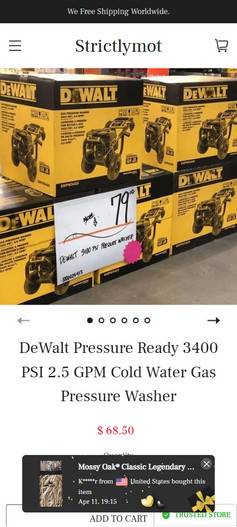
Is it safe to buy from Strictlymot.com?
The short answer is no. Strictlymot.com is a fake online store that is designed to scam unsuspecting customers. According to various sources, Strictlymot.com is not a legitimate business, but a fraudulent website that uses deceptive tactics to lure people into giving away their personal and financial information.
Some of the red flags that indicate that Strictlymot.com is a scam are:
- The Strictlymot.com site does not provide any information about its owner, location, contact details, or policies. The only way to reach them is through an email address that does not match the domain name. The physical address given on the site belongs to a different business that has no affiliation with strictlymot.com. The phone number is also invalid and does not answer calls.
- Strictlymot.com offers products at unrealistically low prices that are too good to be true. For example, a Makita cordless power tool that normally costs around $500 is sold for only $68.50 on strictlymot.com. This is a common tactic used by scammers to lure unsuspecting customers into paying for items that they will never receive.
- Strictlymot.com has received numerous complaints from customers who have either received nothing after paying for their orders, or received fake tracking numbers that show the delivery of packages that weigh much less than the actual products. Some customers have also reported that their debit cards were used for unauthorized purchases after ordering from strictlymot.com.
- Strictlymot.com has a very low trust score and rating on various scam detection platforms and review sites. For example, on Trustpilot, it has a rating of 1.2 out of 5 based on 79 reviews, most of which are negative, and warn others to avoid this site. On Scam Detector, it has a trust score of 1% out of 100%, which means it is very risky and unsafe to use.
Based on these red flags, we can conclude that strictlymot.com is a scam site that should be avoided at all costs. It is not a legitimate online store and it does not deliver the products it advertises. If you have already ordered from this site, you should contact your bank or PayPal and try to get a refund as soon as possible. You should also report this site to the authorities and warn others about it.
What should you do if you have shopped from Strictlymot.com?
If you have already shopped from Strictlymot.com, you might be wondering what you can do to get your money back or receive your order. Unfortunately, the chances of getting either are very slim. However, here are some steps you can take to minimize your losses and prevent further damage:
- Contact your bank or financial institution: If you have paid with your credit card or debit card, you should contact your bank or financial institution as soon as possible and request them to cancel the transaction and refund your money. You should also report the website as a fraudulent site and ask them to block any future charges from it.
- Change your passwords: If you have created an account on Strictlymot.com or used the same password for other online accounts, you should change your passwords immediately. You should also enable two-factor authentication for your accounts if possible. This will prevent hackers from accessing your accounts and stealing your personal information.
- Beware of phishing emails: You might receive emails from Strictlymot.com or other sources claiming to be related to your order or offering you discounts or refunds. These emails are likely to be phishing attempts that aim to trick you into clicking on malicious links or downloading attachments that can infect your device with malware or steal your information. You should delete these emails and do not open any links or attachments from them.
- Use a browser-based content blocker, like AdGuard : Content blockers help stop malicious ads, Trojans, phishing, and other undesirable content that an antivirus product alone may not stop.
- Scan your device for malware. If you have downloaded any attachments or installed any programs from Strictlymot.com run a scan with Malwarebytes Anti-Malware Free.
Strictlymot.com Final Thoughts
Strictlymot.com is a scam website that sells fake or non-existent products at very low prices. The website does not provide any contact information, security measures, or customer service. The website also displays fake reviews and uses poor website design. Customers who have shopped from this site are advised to contact their bank or financial institution and change their passwords. Customers should also avoid clicking on any emails or links related to this site.

Reviews & discussion
0 commentsShare a firsthand experience, or ask a question.
Community reviews
strictlymot.com
Moderated reader experiences, not an editorial verdict.
Start the conversation
Have a question or something useful to share? Add the first comment.