

A honey recipe appears beside The Rock, and suddenly a familiar fitness image is attached to a promise about male performance. The connection is designed to grab attention.
If you stopped to hear the explanation, look beyond the recognizable name. A few details can change how you understand the entire invitation.
Overview
The Rock is being falsely attached to the gummy campaign
The Rock honey recipe scam uses Dwayne Johnson’s identity in fabricated male-performance advertising. His apparent involvement in the documented campaign is not a genuine commercial endorsement.
HoneyFil for Men appears in that promotion, alongside invented depictions of other public figures. The recipe serves as the introduction to a bottle sale.
Do not read the advertisement as information about Johnson’s health or supplement routine. A falsely attributed recommendation establishes neither personal use nor participation in the business.
A fitness association is doing work the product has not earned
A recognizable muscular celebrity can make a vitality pitch feel intuitively credible. That impression is not clinical evidence for a gummy, a hormone claim, or a promised improvement.
The accessible HoneyFil page describes general wellness and explicitly rules out treating erectile dysfunction or low testosterone. Its buying route then reaches a JellyFil-branded offer.
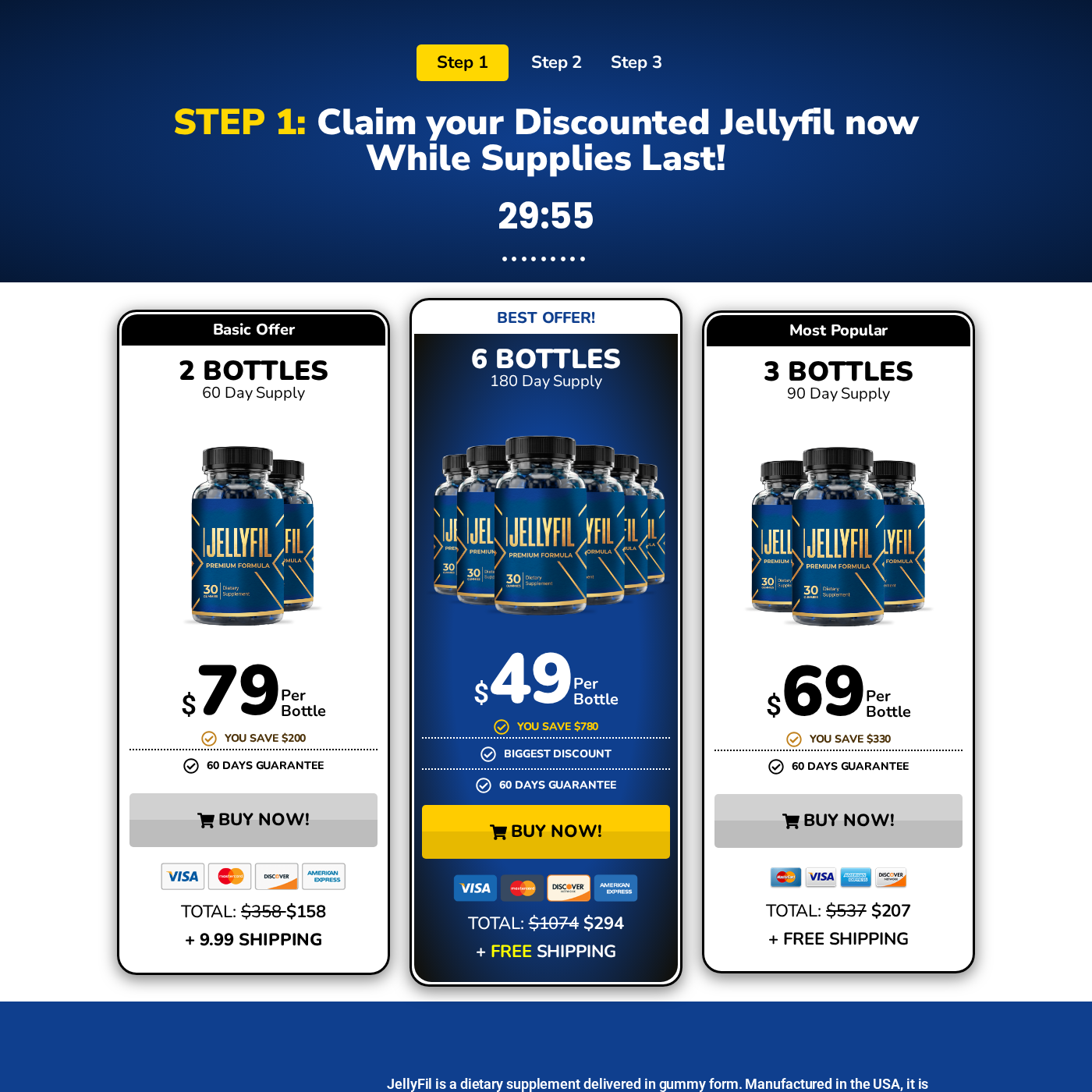
The original destination screenshot shows the package decision. It records actual sales material, not a test of effectiveness or proof that Johnson approved anything shown.
- A public figure’s appearance cannot establish the cause of a viewer’s symptoms.
- Muscularity is not a product study or a hormone test.
- A honey nickname does not describe every ingredient in a gummy.
- The name on the order needs to match what you intend to buy.
- A discount rate is different from the amount charged for a package.
Refuse the false recommendation, then address any actual order
Do not buy because an advertisement suggests The Rock revealed a honey performance secret. The association is fabricated and cannot justify the purchase.
If you already paid, focus on the merchant, package, and accepted agreement. If a health concern motivated you, a private clinical discussion is the more useful next step.
Why a Fitness Image Can Make a Weak Claim Feel Strong
The advertisement does not need to explain every biological detail. It can encourage a simpler mental shortcut: someone who looks exceptionally fit must know an exceptional formula.
That shortcut joins two things that have not been demonstrated to belong together. A person’s visible appearance and a supplement’s effect are separate questions.
A photograph cannot show what someone consumed, how they trained, whether it was edited, or which factors produced the appearance. It cannot establish the formula’s contribution.
It certainly cannot measure the viewer’s hormones or diagnose a performance problem. Those questions do not become answerable merely because a famous physique appears nearby.
The pitch can also make ordinary changes feel like a failure to keep up. That comparison is useful to the seller, but it is a poor basis for choosing care.
You do not need to compare your body with a promotional image to deserve advice. A professional can help with the actual concern you want addressed.
Nor should you infer anything about Johnson’s private medical decisions from the fabricated material. The relevant issue is what the advertiser falsely attributes to him.
The useful response is to break the association apart. First authenticate the endorsement, then evaluate any product independently. Here, the supposed endorsement already fails.
How The Rock Honey Recipe Scam Works
Step 1: A famous identity gives an intimate health promise instant attention
The campaign connects a familiar celebrity with a honey-based idea about male performance. That combination reaches both curiosity about the person and concern about a private problem.
Honey sounds approachable. A viewer can imagine a small routine rather than a complex treatment choice, so continuing to watch feels relatively harmless.
The important missing details are what the preparation contains and what evidence supports the promised outcome. A recognizable face cannot fill those gaps.
Notice whether the video supplies an actual preparation or keeps postponing it. A string of hints can hold attention without delivering useful information.
You may have arrived for a tip rather than a product. Keep that original purpose in mind when the presentation begins directing you toward an order.
Step 2: Fabricated participation turns recognition into apparent approval
The documented promotion falsely invokes Johnson, also known as The Rock. It uses his identity as commercial reassurance rather than presenting an authenticated recommendation.
The same campaign includes other famous personalities. Their apparent agreement creates an impression of consensus without supplying independent verification.
A video can look natural while carrying an invented statement. Synthetic speech, misleading editing, and repurposed footage can all separate a familiar person from the message attributed to them.
Do not rely exclusively on visual glitches as your test. Their absence would not identify an original endorsement or demonstrate permission to advertise a formula.
Use established public channels to locate the complete statement. A second advertisement repeating the first does not establish where the recommendation actually came from.
A genuine conversation about fitness would still need context. It would not automatically endorse every jar placed beside it by an unrelated promoter.
Step 3: The recipe promise becomes a product whose name can change
The sales narrative moves toward HoneyFil gummies. That is no longer simply a request to learn about a food preparation.
The accessible landing page discusses daily energy, stamina, and vitality. It also excludes diagnosed conditions such as erectile dysfunction and low testosterone from its intended treatment claims.
A reader should not silently replace those limitations with the video’s stronger implication. The page and the opening promise are not saying the same thing.
The HoneyFil purchase link passes through mynewsera.com and opens a JellyFil destination. The package labels therefore use another product name before the transaction is complete.
Ask what exact formulation would be supplied. Similar names, shared colors, or related benefit language cannot establish that two products are interchangeable.
The redirect shows where that link goes. It does not, by itself, identify who paid for every false celebrity advertisement using the product name.
If another label appears in a later version, apply the same test. A changed jar cannot authenticate the underlying Johnson recommendation.
Step 4: A discounted package converts the story into a substantial payment
The JellyFil destination places its six-bottle package prominently and advertises a $49 bottle rate. The corresponding package costs $294.
A smaller displayed choice contains two bottles at $158, with $9.99 shipping added. Three bottles are offered for $207 with free shipping shown.
Those figures answer different budget questions. The lowest bottle rate is not the smallest amount you can spend on the displayed options.
The page also uses a countdown and pressure about supplies. Those cues encourage speed, but they do not establish that the product is appropriate for you.
Read the actual payment agreement for extras and continuing deliveries. An order was not completed here, so a universal automatic-refill claim would be unsupported.
A 60-day guarantee appears on the destination. Before relying on it, establish the applicable conditions and how the return clock is calculated.
Save the agreement associated with your purchase. The fact that another page later uses the same bottle name cannot recreate the terms you accepted.
Separate the Symptom From the Promise
Men’s wellness advertising can move rapidly between energy, confidence, desire, erections, circulation, and testosterone. These are not simply different names for one problem.
A person feeling tired may need a different conversation from someone experiencing persistent erection difficulties. A video selling one package to everyone cannot make that distinction.
Physical conditions, medication effects, and emotional factors can influence sexual health. Appropriate care considers the person rather than an implied comparison with a celebrity.
Write down what changed, when it started, and what medicines or supplements you use. Those observations make a professional discussion more concrete.
Do not stop prescribed treatment because a gummy advertisement presents itself as natural. Bring your concerns to the prescriber instead of making an unsupported substitution.
The word natural also does not establish that a combination is suitable for you. The ingredient amounts, formulation, warnings, and individual circumstances still matter.
A private appointment is not an admission of failure. It is a way to obtain advice that does not depend on buying whichever package a promoter prefers.
If a reaction or worsening symptom concerns you, seek appropriate medical advice. Do not wait for a customer-service representative to decide whether it fits the marketing promise.
What Seller Testimonials Can and Cannot Establish
A story about restored confidence can be emotionally persuasive without answering whether a product caused the change. Other treatments, expectations, and circumstances may have played a role.
A testimonial also may not describe the same formula or package you are considering. That becomes especially important when the purchase route changes product names.
Verified-looking badges inside a sales page are not a substitute for knowing how the review was collected. A graphic does not independently verify its own claim.
A popularity statement has the same limitation. Even a genuine count of orders would show purchasing behavior, not establish a benefit for the next customer.
Clinical research asks different questions, including what was taken, in what amount, by whom, and compared with what. A seller-controlled success story cannot answer all of them.
You can therefore reject the celebrity pitch without reaching a sweeping verdict about every possible ingredient. The false recommendation is already sufficient reason to avoid that route.
Make the Complaint About Facts That Can Be Followed
Describe the starting promise and the eventual order as a sequence. For example, explain that you followed a honey promotion and reached a differently named gummy package.
Record the actual amount and quantity rather than relying on what you remember from a large unit-price headline. The confirmation should show the commitment made.
If the parcel or charge differs, keep the evidence of that difference. A selected bundle and a post-payment alteration are not the same allegation.
Do not send a package to an address copied from an unrelated complaint. Obtain instructions associated with your own merchant and order.
Keep medical information out of public posts unless there is a compelling reason to disclose it. A factual commercial complaint rarely requires broadcasting intimate symptoms.
A calm, specific record is more useful than a collection of insults. It gives the merchant or payment provider a clear issue to examine.
What to Do If You Bought Through The Rock Honey Ad
-
Collect the advertising link, product names, order confirmation, and payment entry. Identify which merchant actually accepted the money rather than chasing a celebrity account.
Save any quantity selection and the full total. Retain a copy of the particular claim that made the apparent endorsement persuasive.
-
Request a clear written remedy from that merchant. Ask about cancellation before shipment or the authorized procedure and deadline for returning the delivered order.
Check any future-delivery terms separately. If you want a continuing arrangement stopped, request explicit confirmation rather than assuming a return covers every charge.
-
Contact the payment provider about an unresolved discrepancy or deceptive purchase. Explain the authorized transaction accurately and include the seller’s response.
Ask how long you have to raise the issue. Repeated promises from a merchant do not necessarily extend a payment service’s dispute deadline.
-
Take health questions to a qualified professional with the delivered ingredient panel. Explain any medicine changes or symptoms that influenced the purchase.
Do not use the celebrity image as a benchmark for treatment. Your care needs to address your actual circumstances rather than a promotional comparison.
-
Check unfamiliar software with Malwarebytes if the funnel prompted an installation. AdGuard may help reduce contact with similarly intrusive advertising.
Protect affected accounts if you disclosed credentials. A scan is not a refund service, and merely watching a clip does not prove a device infection.
-
Report the fabricated endorsement to the advertising platform with its destination. Share redacted records where needed, not a public copy of private payment information.
Decline unsolicited recovery offers that demand another fee or access to your computer. A second sales approach is not a necessary step toward resolving the first.
Frequently Asked Questions
Did Dwayne Johnson endorse the advertised honey gummies?
The recorded HoneyFil campaign fabricates his commercial involvement. It is not an authenticated recommendation from Johnson or a reliable account of his product use.
Does The Rock’s appearance establish a testosterone benefit?
No. An image cannot measure hormones, identify what caused someone’s physique, or demonstrate a treatment effect from a particular formula.
Is the destination named HoneyFil or JellyFil?
The accessible route begins with HoneyFil and reaches a JellyFil sales page. Clarify which exact product and merchant would appear on your confirmation.
What does the $49 amount actually cover?
It is the displayed per-bottle rate for purchasing six together. That offer totals $294 rather than providing a one-bottle trial for $49.
Are automatic refills confirmed for every purchase?
No. The accepted payment terms for an individual order are needed to determine whether continuing shipments were proposed and authorized.
What should I do about a persistent performance concern?
Arrange individualized professional advice and bring your medicine and supplement information. A familiar celebrity in a sales video cannot assess the cause or appropriate response.
The Bottom Line
Do not buy on the strength of The Rock honey recipe campaign. It uses an invented Dwayne Johnson endorsement to turn recognition into a gummy purchase.
Existing buyers should identify the actual merchant, preserve the package and charge details, request a timely remedy, and obtain appropriate private advice about the concern that brought them there.

Join the discussion
0 commentsShare your experience or ask a question about this article.
Discussion
Start the conversation
Have a question or something useful to share? Add the first comment.