Curious about ThinkRemote.org and whether it’s a reliable way to earn money from home—or just another scam? At first glance, it promises quick rewards—take surveys, review products, and even get a sign-up bonus. Sounds tempting, but also suspicious. In this article, we’ll dive deeply into how ThinkRemote.org operates, uncover red flags, and equip you with clear steps to protect yourself—whether you’ve already shared your info or are only considering it.
ThinkRemote.org presents itself as a platform where members get paid to review products and take surveys. The homepage highlights incentives like a “sign-up bonus today only,” encouraging urgency. However, a deeper examination raises serious concerns. Below, we explore key warning signs.
A Newly Registered Domain
Domain Age: Scam-detection tools like Scam Detector rate ThinkRemote.org very low—around 9.5 out of 100, marking it as “Untrustworthy. Risky. Danger.” The domain was registered in April 2025, making it very new. Sites with little history are inherently riskier when personal data is involved.
ScamAdviser Trust Analysis: A related domain, thinkremote.clickfunnels.com, has been flagged as suspicious, with a low trust score. It uses generic platforms like Clickfunnels and includes structures like iframes—common in affiliate-heavy sites.
Redirect and Platform Behavior
Redirection Issues: When interacting with similar affiliate-based schemes, users often get redirected to unknown or unverified sites. Although we don’t have a full audit of ThinkRemote.org’s workflow, based on parallels with other scams, this is a red flag.
Lack of Original Privacy and Terms: The site may lack custom privacy or terms pages, or it reuses generic ones—as seen with other scams. Without a clear policy, you have no guarantee how your data is handled.
Fabricated Testimonials
Fake-Looking Reviews: The site features member feedback and photos, but often these are stock images or copied visuals without verification—creating a false sense of legitimacy.
No Independent Feedback: There are zero user reviews on platforms like Trustpilot, Reddit, or other communities. Independent reviews are key in verifying authenticity—and the absence of any is worrying.
Summary of Concerns
Feature
Concern
Brand-new domain (Apr 2025)
No track record, risky handling of personal data
Low trust ratings
Scam detection tools flag it as high-risk
Suspicious infrastructure
Use of generic platforms, iframes, unclear redirects
Fake or stock testimonials
Misleading portrayal of user experience
No independent oversight
Lack of reviews on Trustpilot, Reddit, etc.—no community validation
Misleading branding
Similar name to legitimate site may be intentionally confusing
These signs together suggest that ThinkRemote.org is likely not a legitimate opportunity—and leaning toward a well-disguised affiliate or phishing scheme.
How The Operation Works (Step-by-Step)
Here’s how a typical scheme like ThinkRemote.org might operate:
Attractive Landing Page Users land on a polished webpage promising quick earnings by reviewing products or completing surveys, often with a bonus just for confirming your email.
Email Confirmation Prompt You’re asked to sign up with an email. This both captures your contact info and entices you with promises of direct payouts—or a “PR package”—creating early trust.
Affiliate Redirection Begins After signup or clicking “start,” you’re redirected to external sites with affiliate links. These may prompt you to:
Download unknown apps or browser extensions
Subscribe to trial services (with hidden recurring fees)
Respond to surveys that gather personal or financial info
Affiliate Commissions Rewarded to Scammers Every click, download, or subscription initiated earns scammers a commission—while victims gain nothing of value. No actual product reviews or payouts ever occur.
Data Harvesting Without Consent Personal information—email, IP, possibly phone numbers or names—can be used later for spam, phishing, or sold to third parties.
Fake Social Proof Reinforces Trust Testimonials, star ratings, and generic photos reassure new visitors—creating a loop of trust, redirection, and monetization.
No Follow-Up Support, No Payments Victims remain in the dark—no PR hauls, no surveys, no payouts. Even unsubscribing or requesting information goes nowhere.
Scam Site is Often Short-Lived After harvesting enough data or making commissions, the site may disappear or change domains—making future tracking or reporting more challenging.
Cycle Repeats Under New Brand Scammers often create new sites with similar promises—ThinkRemote.org, Zara testers, or other “free product reviewer” scams.
What To Do If You’ve Fallen Victim
If you’ve interacted with ThinkRemote.org—or a similar platform—take these steps immediately:
Stop All Further Contact Unsubscribe and cease communication. Do not provide additional info.
Secure Your Email Change your password and enable two-factor authentication (2FA) to prevent misuse.
Watch for Spam or Phishing Be alert to emails, calls, or messages asking for more info, money, or credentials.
Check for Unauthorized Charges If you shared payment info or subscribed to services, monitor your bank/credit card statements and dispute suspicious charges.
Run Malware/Antivirus Scans If you installed anything, scan your device for malware and remove suspect software.
Report the Scam
Use tools like ScamAdviser or Scam Detector to flag the site.
File a report with your local consumer protection agency or the FTC (if in the U.S.), or similar authorities in your country.
Warn Others Share your experience on forums like Reddit or Trustpilot to help others avoid the trap.
Review Your Privacy If any sensitive data is at risk, consider changing usernames/passwords and notify relevant services (banks, employers) if exposure is a concern.
Consider Identity Monitoring If you shared detailed personal data, monitoring services can alert you to misuse.
Is Your Device Infected? Scan for Malware
If your computer or phone is slow, showing unwanted pop-ups, or acting strangely, malware could be the cause. Running a scan with Malwarebytes Anti-Malware Free is one of the most reliable ways to detect and remove harmful software. The free version can identify and clean common infections such as adware, browser hijackers, trojans, and other unwanted programs.
Malwarebytes works on Windows, Mac, and Android devices. Choose your operating system below and follow the steps to scan your device and remove any malware that might be slowing it down.
Malwarebytes for WindowsMalwarebytes for MacMalwarebytes for Android
Run a Malware Scan with Malwarebytes for Windows
Malwarebytes stands out as one of the leading and widely-used anti-malware solutions for Windows, and for good reason. It effectively eradicates various types of malware that other programs often overlook, all at no cost to you. When it comes to disinfecting an infected device, Malwarebytes has consistently been a free and indispensable tool in the battle against malware. We highly recommend it for maintaining a clean and secure system.
Download Malwarebytes
Download the latest version of Malwarebytes for Windows using the official link below. Malwarebytes will scan your computer and remove adware, browser hijackers, and other malicious software for free.
(The above link will open a new page from where you can download Malwarebytes)
Install Malwarebytes
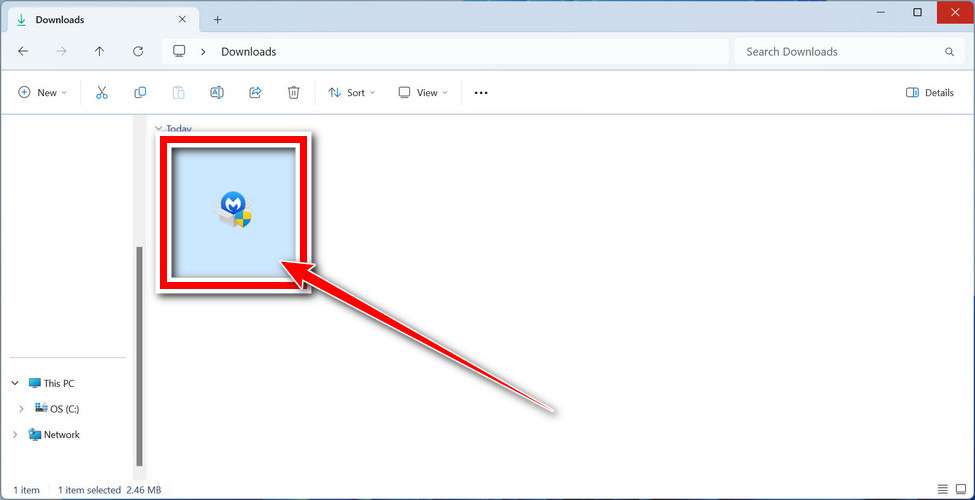
After the download is complete, locate the MBSetup file, typically found in your Downloads folder. Double-click on the MBSetup file to begin the installation of Malwarebytes on your computer. If a User Account Control pop-up appears, click “Yes” to continue the Malwarebytes installation.
Follow the On-Screen Prompts to Install Malwarebytes
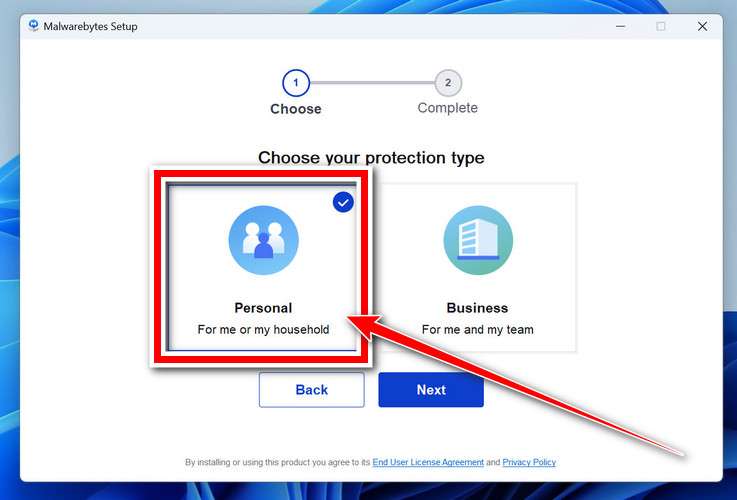
When the Malwarebytes installation begins, the setup wizard will guide you through the process.
You’ll first be prompted to choose the type of computer you’re installing the program on—select either “Personal Computer” or “Work Computer” as appropriate, then click on Next.
Malwarebytes will now begin the installation process on your device.
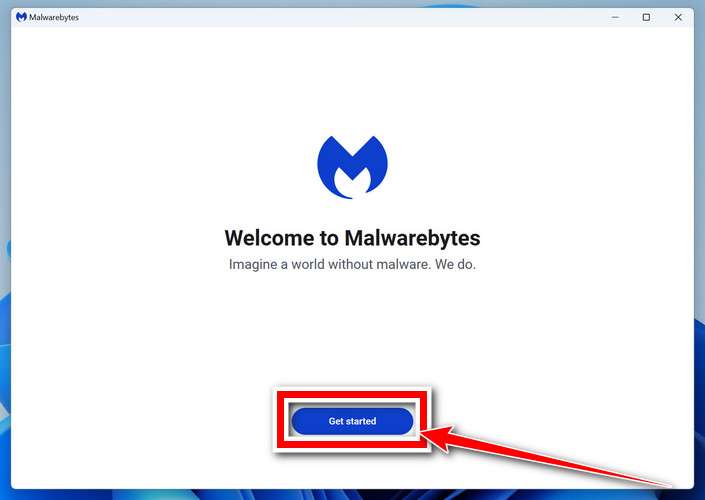
When the Malwarebytes installation is complete, the program will automatically open to the “Welcome to Malwarebytes” screen.
On the final screen, simply click on the Open Malwarebytes option to start the program.
Enable “Rootkit scanning”.
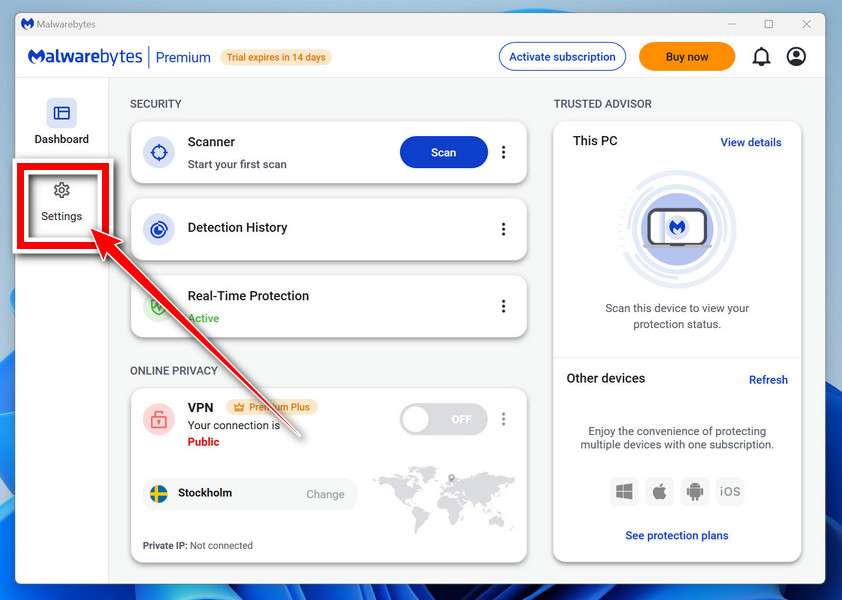
Malwarebytes Anti-Malware will now start, and you will see the main screen as shown below. To maximize Malwarebytes’ ability to detect malware and unwanted programs, we need to enable rootkit scanning. Click on the “Settings” gear icon located on the left of the screen to access the general settings section.
In the settings menu, enable the “Scan for rootkits” option by clicking the toggle switch until it turns blue.
Now that you have enabled rootkit scanning, click on the “Dashboard” button in the left pane to get back to the main screen.
Perform a Scan with Malwarebytes.
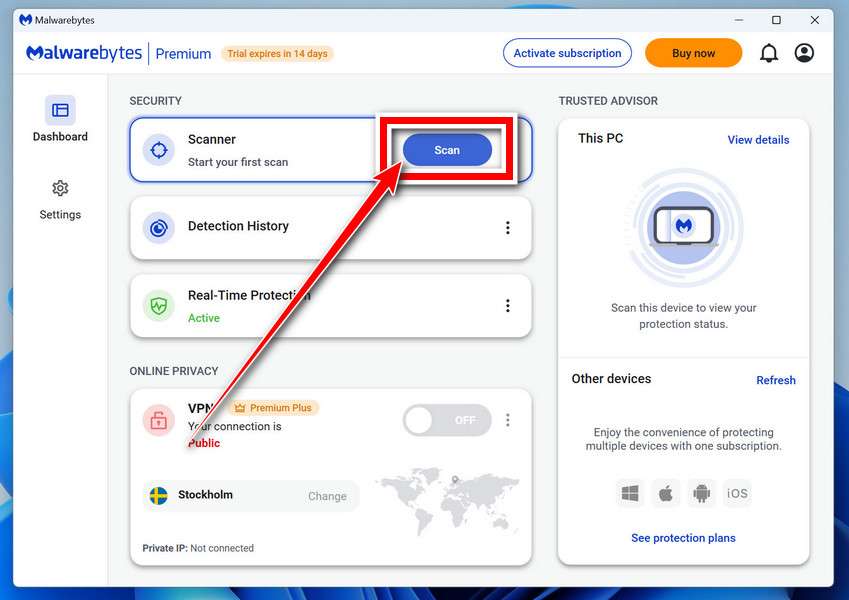
To start a scan, click the Scan button. Malwarebytes will automatically update its antivirus database and begin scanning your computer for malicious programs.
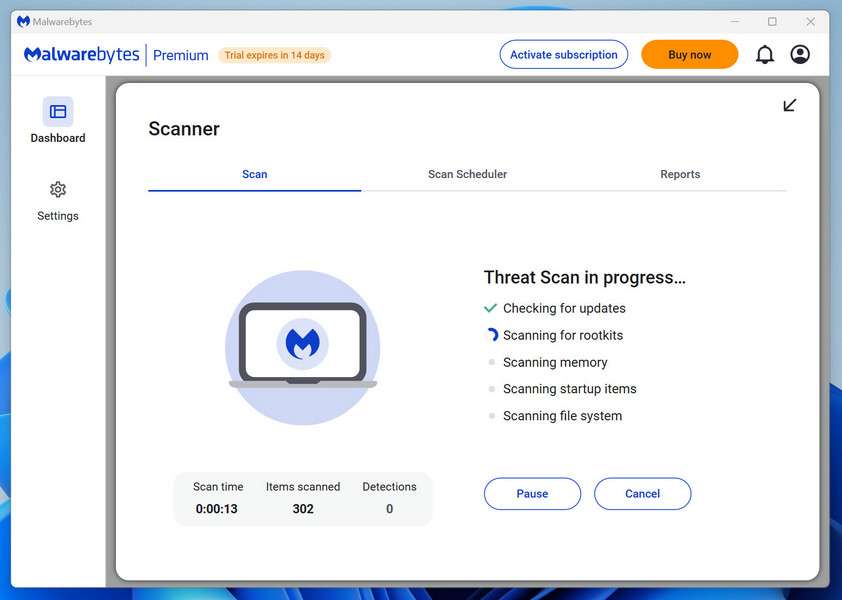
Wait for the Malwarebytes scan to complete.
Malwarebytes will now scan your computer for browser hijackers and other malicious programs. This process can take a few minutes, so we suggest you do something else and periodically check the status of the scan to see when it is finished.
Quarantine detected malware
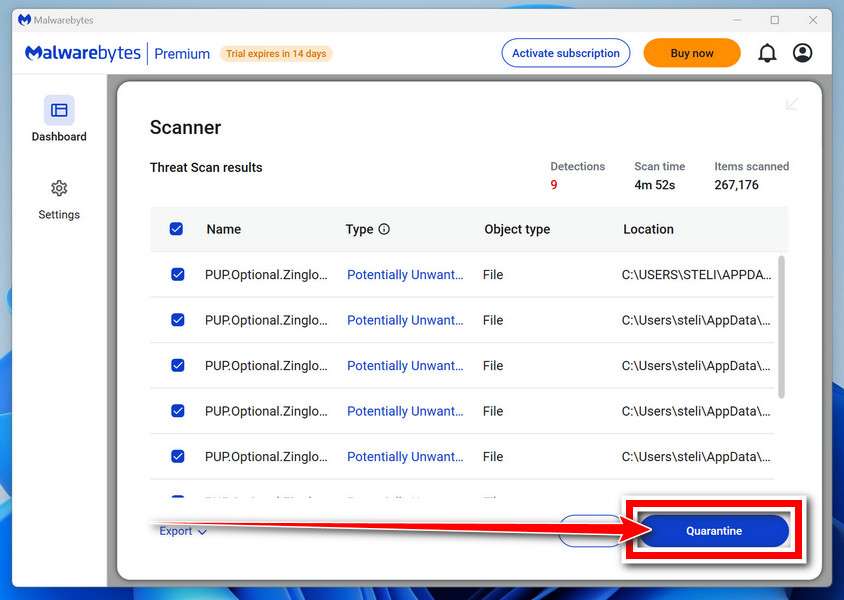
Once the Malwarebytes scan is complete, it will display a list of detected malware, adware, and potentially unwanted programs. To effectively remove these threats, click the “Quarantine” button.
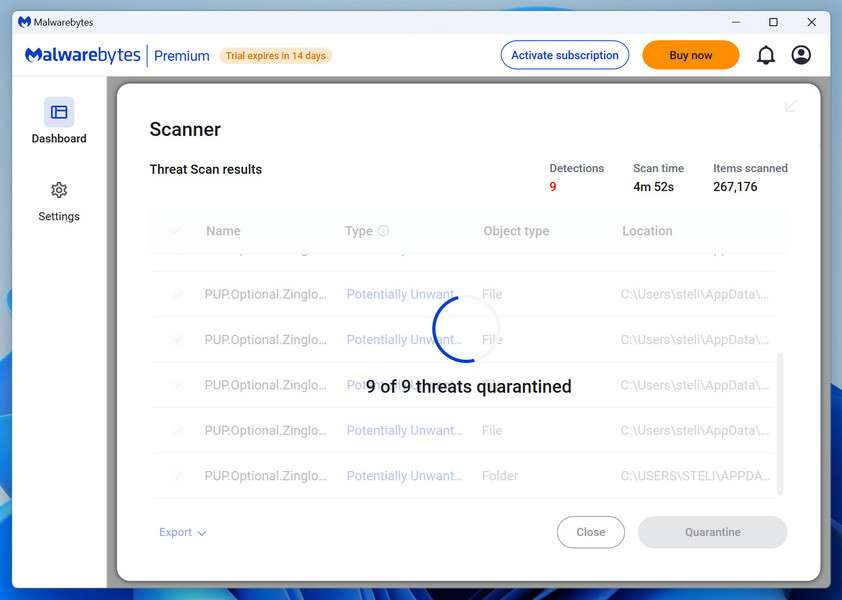
Malwarebytes will now delete all of the files and registry keys and add them to the program’s quarantine.
Restart your computer.
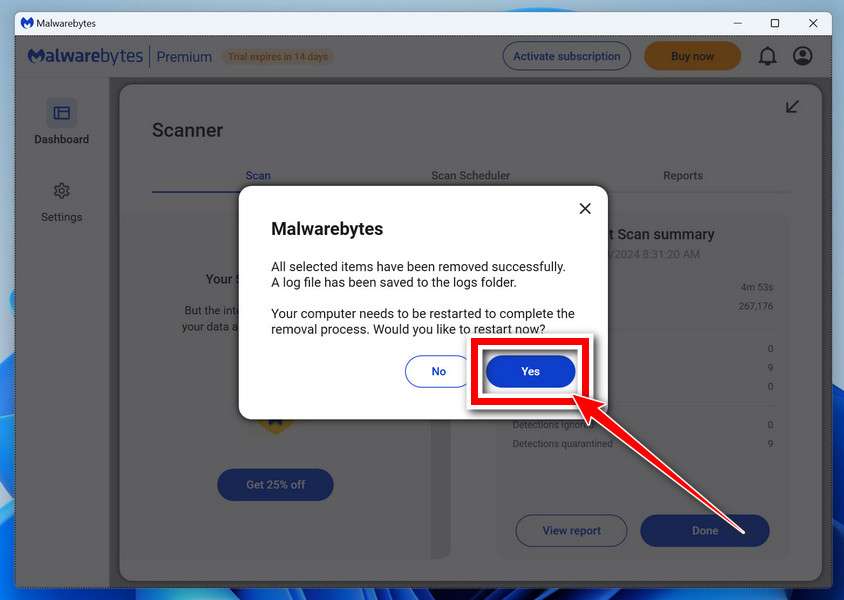
When removing files, Malwarebytes may require a reboot to fully eliminate some threats. If you see a message indicating that a reboot is needed, please allow it. Once your computer has restarted and you are logged back in, you can continue with the remaining steps.
Once the scan completes, remove all detected threats. Your Windows computer should now be clean and running smoothly again, free of trojans, adware, and other malware.
If your current antivirus allowed this malicious program on your computer, you may want to consider purchasing Malwarebytes Premium to protect against these types of threats in the future. If you are still having problems with your computer after completing these instructions, then please follow one of the steps:
Malwarebytes for Mac is an on-demand scanner that can destroy many types of malware that other software tends to miss without costing you absolutely anything. When it comes to cleaning up an infected device, Malwarebytes has always been free, and we recommend it as an essential tool in the fight against malware.
Download Malwarebytes for Mac.
You can download Malwarebytes for Mac by clicking the link below.
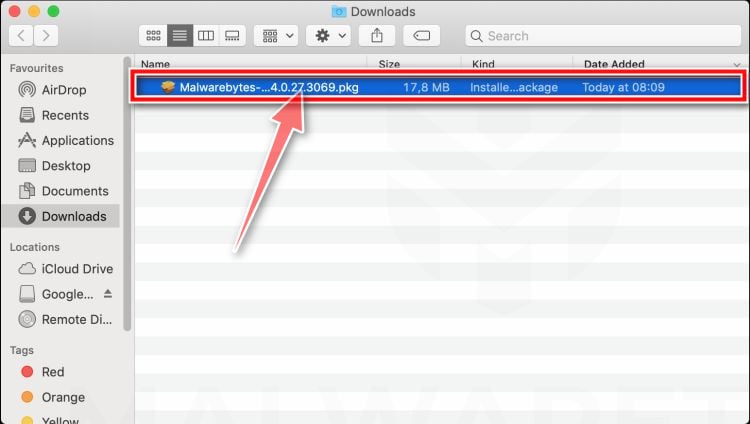
When Malwarebytes has finished downloading, double-click on the setup file to install Malwarebytes on your computer. In most cases, downloaded files are saved to the Downloads folder.
Follow the on-screen prompts to install Malwarebytes.
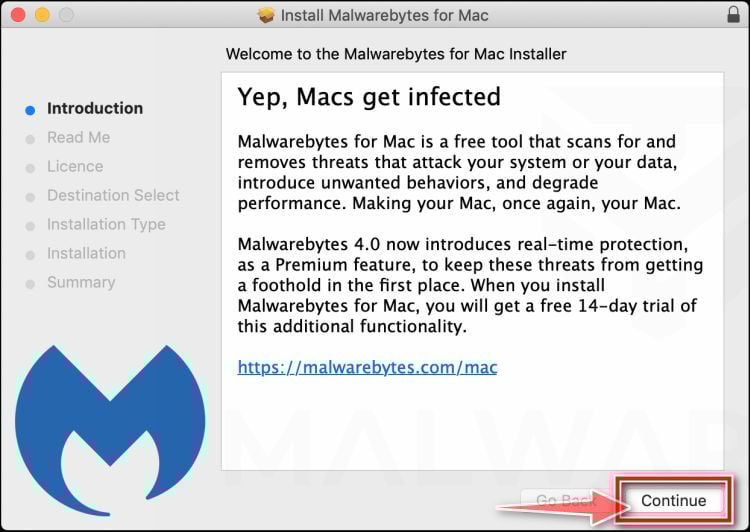
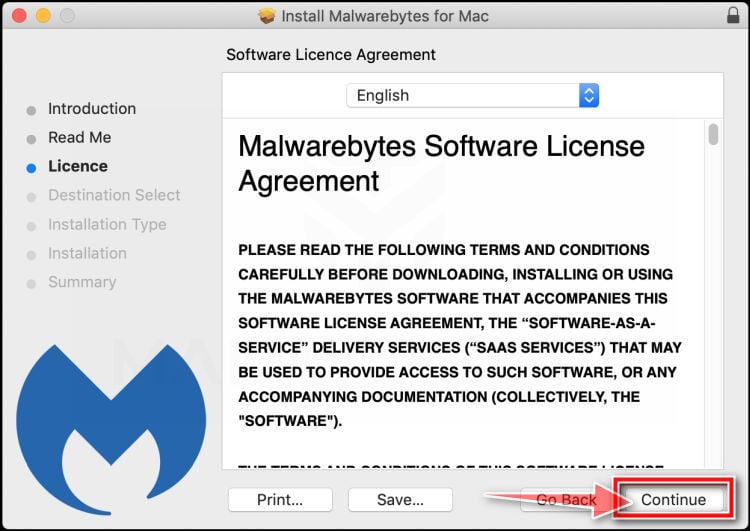
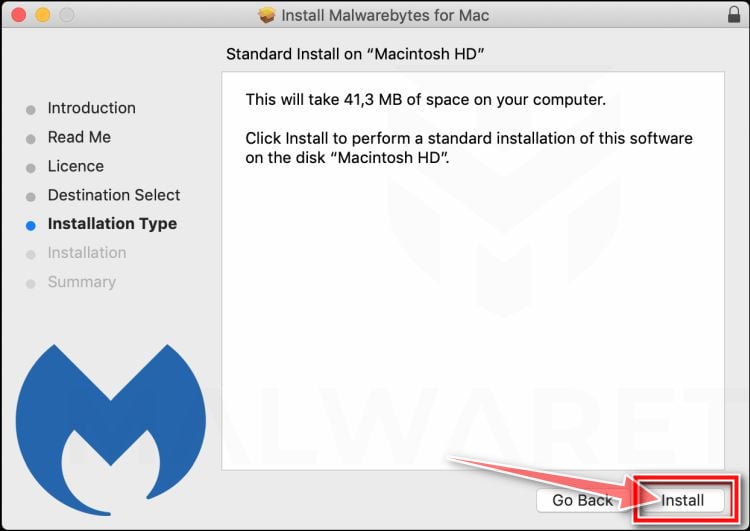
When the Malwarebytes installation begins, you will see the Malwarebytes for Mac Installer which will guide you through the installation process. Click “Continue“, then keep following the prompts to continue with the installation process.
When your Malwarebytes installation completes, the program opens to the Welcome to Malwarebytes screen. Click the “Get started” button.
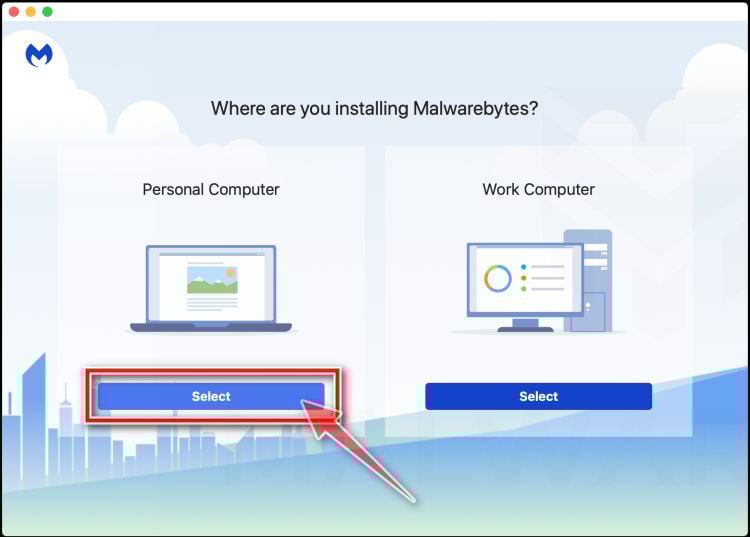
Select “Personal Computer” or “Work Computer”.
The Malwarebytes Welcome screen will first ask you what type of computer are you installing this program, click either Personal Computer or Work Computer.
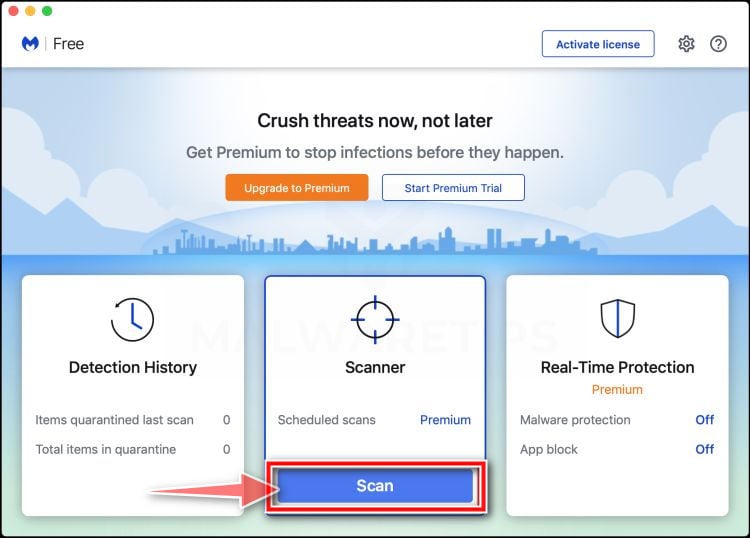
Click on “Scan”.
To scan your computer with Malwarebytes, click on the “Scan” button. Malwarebytes for Mac will automatically update the antivirus database and start scanning your computer for malware.
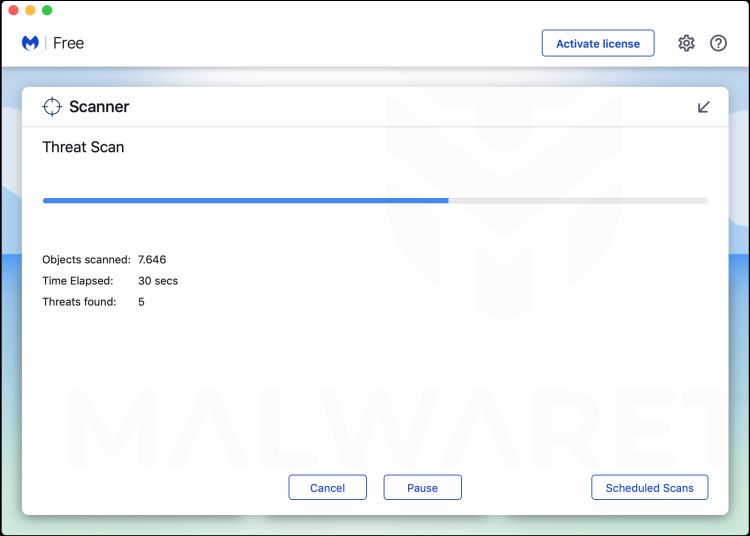
Wait for the Malwarebytes scan to complete.
Malwarebytes will scan your computer for adware, browser hijackers, and other malicious programs. This process can take a few minutes, so we suggest you do something else and periodically check on the status of the scan to see when it is finished.
Click on “Quarantine”.
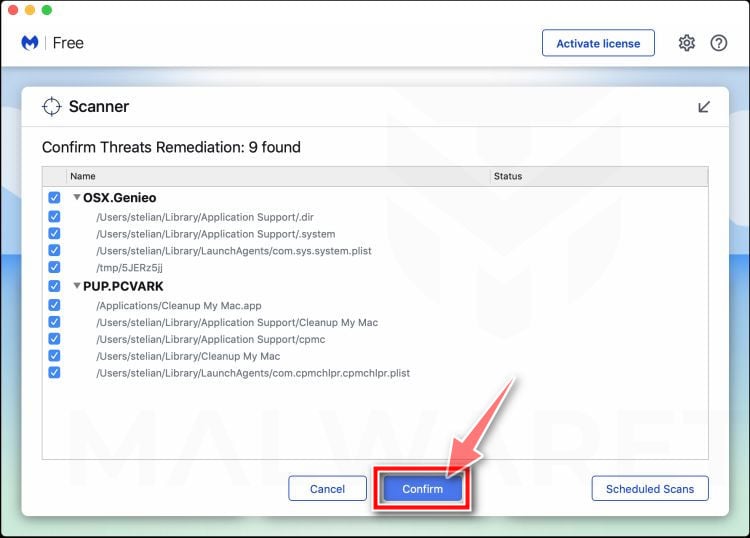
When the scan has been completed, you will be presented with a screen showing the malware infections that Malwarebytes has detected. To remove the malware that Malwarebytes has found, click on the “Quarantine” button.
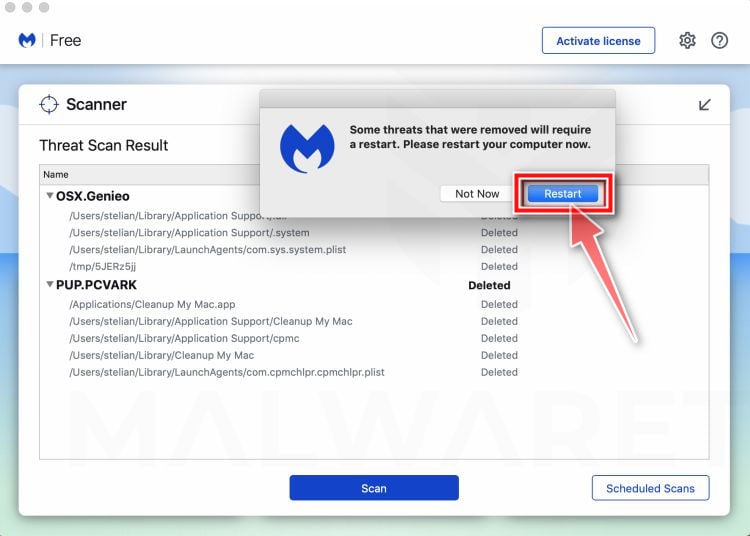
Restart computer.
Malwarebytes will now remove all the malicious files that it has found. To complete the malware removal process, Malwarebytes may ask you to restart your computer.
After scanning, delete any detected threats. Your Mac should now be free from adware, unwanted extensions, and other potentially harmful software.
If your current antivirus allowed a malicious program on your computer, you might want to consider purchasing the full-featured version of Malwarebytes Anti-Malware to protect against these types of threats in the future. If you are still experiencing problems while trying to remove a malicious program from your computer, please ask for help in our Mac Malware Removal Help & Support forum.
Run a Malware Scan with Malwarebytes for Android
Malwarebytes for Android automatically detects and removes dangerous threats like malware and ransomware so you don’t have to worry about your most-used device being compromised. Aggressive detection of adware and potentially unwanted programs keeps your Android phone or tablet running smooth.
Download Malwarebytes for Android.
You can download Malwarebytes for Android by clicking the link below.
In the Google Play Store, tap “Install” to install Malwarebytes for Android on your device.
When the installation process has finished, tap “Open” to begin using Malwarebytes for Android. You can also open Malwarebytes by tapping on its icon in your phone menu or home screen.
Follow the on-screen prompts to complete the setup process
When Malwarebytes will open, you will see the Malwarebytes Setup Wizard which will guide you through a series of permissions and other setup options. This is the first of two screens that explain the difference between the Premium and Free versions. Swipe this screen to continue. Tap on “Got it” to proceed to the next step. Malwarebytes for Android will now ask for a set of permissions that are required to scan your device and protect it from malware. Tap on “Give permission” to continue. Tap on “Allow” to permit Malwarebytes to access the files on your phone.
Update database and run a scan with Malwarebytes for Android
You will now be prompted to update the Malwarebytes database and run a full system scan.
Click on “Update database” to update the Malwarebytes for Android definitions to the latest version, then click on “Run full scan” to perform a system scan.
Wait for the Malwarebytes scan to complete.
Malwarebytes will now start scanning your phone for adware and other malicious apps. This process can take a few minutes, so we suggest you do something else and periodically check on the status of the scan to see when it is finished.
Click on “Remove Selected”.
When the scan has been completed, you will be presented with a screen showing the malware infections that Malwarebytes for Android has detected. To remove the malicious apps that Malwarebytes has found, tap on the “Remove Selected” button.
Restart your phone.
Malwarebytes for Android will now remove all the malicious apps that it has found. To complete the malware removal process, Malwarebytes may ask you to restart your device.
When the scan is finished, remove all detected threats. Your Android phone should now be free of malicious apps, adware, and unwanted browser redirects.
If your current antivirus allowed a malicious app on your phone, you may want to consider purchasing the full-featured version of Malwarebytes to protect against these types of threats in the future. If you are still having problems with your phone after completing these instructions, then please follow one of the steps:
Restore your phone to factory settings by going to Settings > General management > Reset > Factory data reset.
After cleaning your device, it’s important to protect it from future infections and annoying pop-ups. We recommend installing an ad blocker such as AdGuard. AdGuard blocks malicious ads, prevents phishing attempts, and stops dangerous redirects, helping you stay safe while browsing online.
The Bottom Line
ThinkRemote.org is highly suspicious—with multiple warning signs pointing toward an affiliate-driven scam masquerading as a legitimate side hustle. The site’s brand-new status, low trust ratings, embedded affiliate infrastructure, fake-looking reviews, and lack of independent validation all strongly indicate it is not trustworthy.
If you’ve already interacted with it, act quickly: secure your accounts, check for unwanted charges or malware, and report the site. Above all, be cautious of any offer that promises easy income in exchange for personal information. Reliable platforms won’t require redirection to third-party services or hide their operations behind vague terms.
Hello! I'm Lapain Epuran, your go-to source for detailed and honest product reviews. From tech gadgets to miracle cures, I provide insights to help you make informed choices. Join me as we discover what's truly worth your time and money.