

It looks sleek. It sounds promising. And it drops a name everyone trusts: Sephora. The TrySheReview.com website invites beauty lovers to earn up to $50 an hour as a Sephora Beauty Reviewer, promising free products and flexible work-from-home pay. But beneath the polished design and persuasive language lies a manipulative scam that’s leaving victims frustrated, exposed, and sometimes out of money.
This article uncovers exactly how the TrySheReview.com scam works, how to identify it, and what to do if you’ve already submitted your information. If you or someone you know has come across this offer, read on before clicking anything else.
Scam Overview: The Illusion of a Sephora Beauty Reviewer Job
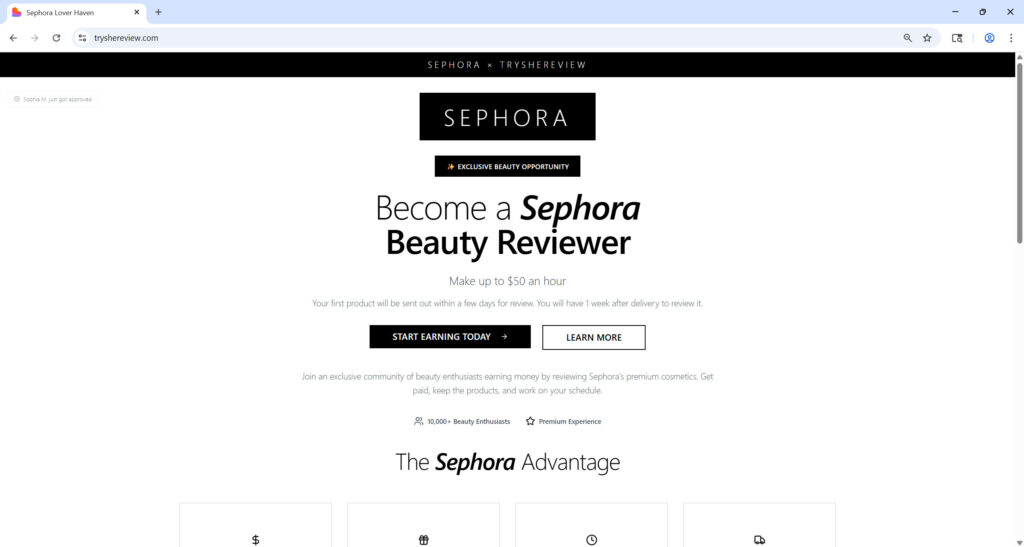
The website TrySheReview.com claims to be affiliated with Sephora, offering an opportunity for users to earn money by reviewing beauty products. It markets itself as an “exclusive beauty opportunity,” suggesting users can get started immediately by simply applying online.
The promises include:
- Up to $50 per hour for writing product reviews
- Free premium beauty products shipped to your door
- Flexible scheduling
- Immediate start with no prior experience
Users are encouraged to:
- Click “Start Earning Today”
- Submit their name and email
- Wait for a product to arrive
- Review it and get paid
Why People Fall for It
The page design looks modern and official, mimicking Sephora’s actual branding. It includes:
- A logo identical to Sephora’s
- Fake testimonials
- Professionally written copy
- A structured “How It Works” section
The language used preys on common desires: remote income, free beauty products, and exclusive access. The site builds trust by showing fake names of new applicants being “approved” in real-time, similar to the tactics used in fake cryptocurrency and dropshipping scams.
But there’s no job.
There are no real products being sent.
There’s no payment waiting for you after a review.
Instead, users are being manipulated through an elaborate funnel that benefits only the scam operators.
How the TrySheReview.com Scam Works
Understanding how scams like this operate is essential to recognizing red flags early and protecting yourself. While TrySheReview.com presents itself as a job platform offering paid opportunities to review Sephora products, it is, in reality, a funnel that drives users through affiliate marketing traps, data collection forms, and misleading offers. Let’s break down how the scam unfolds in detail.
Step 1: Targeting the Right Audience
The scam starts by targeting a specific demographic: beauty lovers, stay-at-home parents, students, or people looking for remote side income. These users often come across TrySheReview.com via:
- Sponsored posts on Instagram or Facebook
- TikTok “influencer” videos pushing the fake offer
- Google ads using keywords like “get paid to review makeup”
- Pop-ups and banner ads on unrelated websites
Once clicked, the ad redirects to the TrySheReview.com homepage, which is designed to imitate a legitimate opportunity with Sephora.
Step 2: Establishing Credibility and Urgency
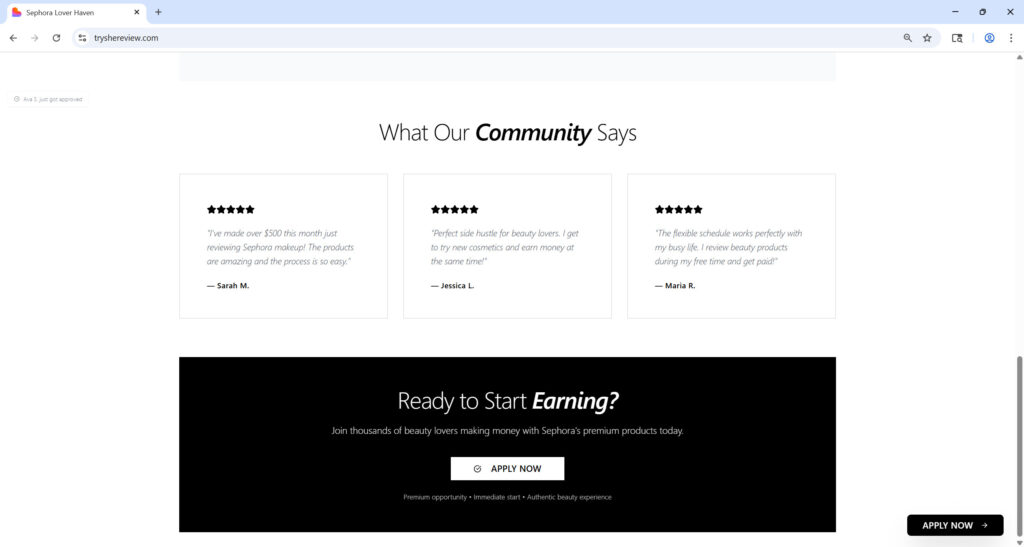
The homepage instantly creates a false sense of trust by:
- Displaying the Sephora logo prominently
- Using sleek, professional design that mimics Sephora’s branding
- Highlighting supposed user testimonials claiming earnings of hundreds of dollars
- Showing fake approval pop-ups like “Sophia M. just got approved!”
These design choices reduce skepticism and increase the chances that users will take the next step.
Step 3: The Hook – Apply to Become a Reviewer
The site prompts users to “Apply Now” or “Start Earning Today.” Clicking either button leads to a basic form asking for:
- Name
- Email address
- Demographic details (age, gender, etc.)
This form isn’t a job application — it’s a data collection tool. Submitting your information allows the scam operator to:
- Add you to email marketing databases
- Sell your data to third parties
- Target you with more fraudulent or misleading offers
Step 4: Affiliate Redirection – The Real Goal
After “applying,” users are not taken to any reviewer portal or training page. Instead, they’re redirected through a chain of affiliate links. These links eventually land users on:
- Task-based reward platforms like DropShop (e.g., “complete 20 tasks to receive an iPhone”)
- Fake survey websites
- Subscription-based trial services that ask for credit card details
- App download offers that require access to your phone’s data
Each offer is part of an affiliate program, meaning every time you complete one, the scammer gets paid — and you get nothing
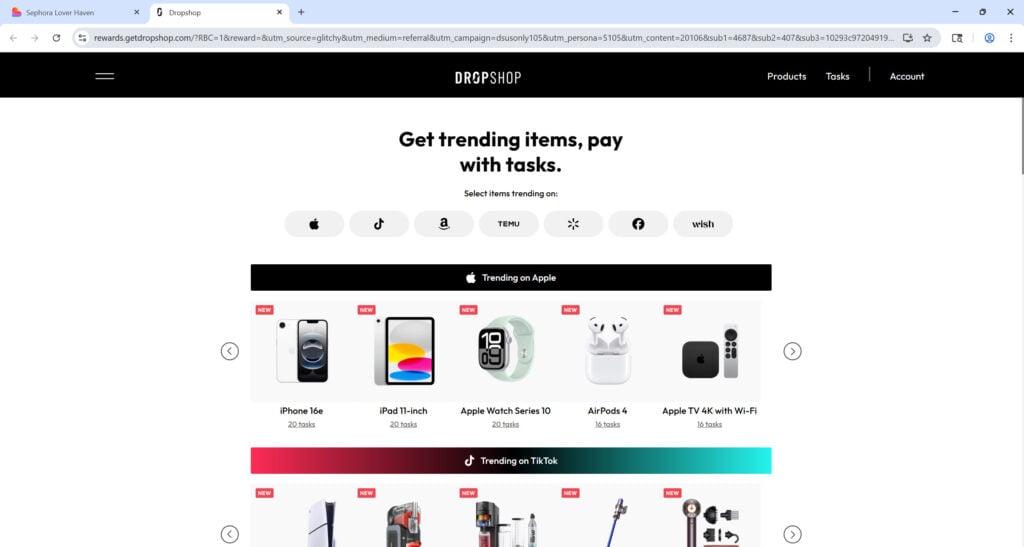
These steps are structured to look like “reviewer onboarding tasks,” but they have no connection to any job or payment.
Step 5: No Real End, No Real Reward
Even if you complete all the steps, sign up for all the deals, and download all the apps, one thing never arrives: the promised Sephora product.
There is no system tracking your “reviewer progress.” No confirmation email. No follow-up from any Sephora representative. Victims often end up:
- Subscribed to monthly services they forgot to cancel
- Spammed with endless emails and robocalls
- Frustrated with wasted time and effort
- Compromised if they entered credit card or personal info
At this stage, most users realize they’ve been scammed. But by then, the operators have already made money off their activity.
What to Do If You Have Fallen Victim to the TrySheReview.com Scam
If you interacted with TrySheReview.com or submitted any personal details through their platform or related offers, it’s important to act quickly. Here’s a step-by-step list of what to do to protect yourself and limit any potential damage.
1. Stop Engaging With the Site
Immediately exit TrySheReview.com and any websites it redirected you to. Don’t click on any more links, download apps, or complete further offers. If you created any accounts through third-party sites as part of the scam, log out and avoid using them.
2. Change Your Passwords
If you submitted an email and password combination, especially one you use on other sites, change it now. Start with:
- Your email account
- Online banking or payment accounts
- E-commerce platforms (Amazon, eBay, etc.)
Use strong, unique passwords and enable two-factor authentication wherever possible.
3. Scan Your Device for Malware
Some redirected sites may prompt users to install malicious apps, browser extensions, or files. To stay safe:
- Run a full malware and antivirus scan
- Uninstall any suspicious apps or extensions
- Use tools like Malwarebytes, Bitdefender, or Norton Security
4. Monitor Your Financial Accounts
If you entered any credit card or banking information into the offers linked through TrySheReview.com:
- Review recent transactions carefully
- Cancel subscriptions you don’t recognize
- Contact your bank or card issuer to block future charges
- Request a new card if necessary
Some offers hide recurring charges in their fine print, so monitor your statements closely over the next few weeks.
5. Block and Report Spam
After providing your email or phone number, you may be added to spam lists. Be proactive by:
- Blocking robocalls and texts using apps like Hiya or RoboKiller
- Marking suspicious emails as spam
- Unsubscribing from unknown mailing lists
Avoid clicking unsubscribe links in shady-looking emails — that can confirm your address is active.
6. Report the Scam to Authorities
Reporting scams helps protect others and gives consumer protection agencies more data to take legal action. File a report with:
- FTC (Federal Trade Commission): reportfraud.ftc.gov
- IC3 (Internet Crime Complaint Center): www.ic3.gov
- Better Business Bureau (BBB Scam Tracker): www.bbb.org/scamtracker
If your local consumer protection agency has a hotline or website, report it there as well.
7. Warn Others and Raise Awareness
Help prevent future victims by sharing your experience:
- Post in online forums like Reddit’s r/scams
- Share the story on social media
- Leave a comment on scam reporting websites
- Alert friends and family who might also fall for it
The more people are aware of these tactics, the harder it becomes for scammers to succeed.
Is Your Device Infected? Run a Free Malware Scan
Slow performance, constant pop-ups, or strange behavior? These are classic signs of a malware infection. The fastest way to find out is to scan your device with Malwarebytes Free — one of the most trusted malware removal tools available.
The free version detects and removes the most common threats, including:
- Adware — the cause of those annoying pop-ups
- Browser hijackers — unwanted redirects and changed homepages
- Trojans and spyware — hidden programs stealing your data
- Potentially unwanted programs (PUPs) — software you never asked for
👉 Select your device below — Windows, Mac, or Android — then follow the simple steps to download Malwarebytes, scan your system, and remove any threats it finds. The scan usually takes 5 to 20 minutes.
Run a Malware Scan with Malwarebytes for Windows
Malwarebytes is one of the most popular and trusted anti-malware tools for Windows — and it’s completely free for removing infections. It catches threats that many antivirus programs miss, including adware, browser hijackers, and trojans. Follow the steps below to scan and clean your PC in just a few minutes.
Download Malwarebytes
Click the button below to download the latest version of Malwarebytes for Windows from the official source. The free version is all you need — it will scan your computer and remove adware, browser hijackers, and other malicious software at no cost.
Download MalwarebytesOfficial installer for Windows 11 and 10. Your download starts right away.Want real-time protection? See Malwarebytes Premium Malwarebytes Free for WindowsScans and removes malware at no cost
-
Install Malwarebytes
When the download finishes, open your Downloads folder and double-click the MBSetup file. If Windows shows a User Account Control pop-up, click “Yes” to allow the installation.
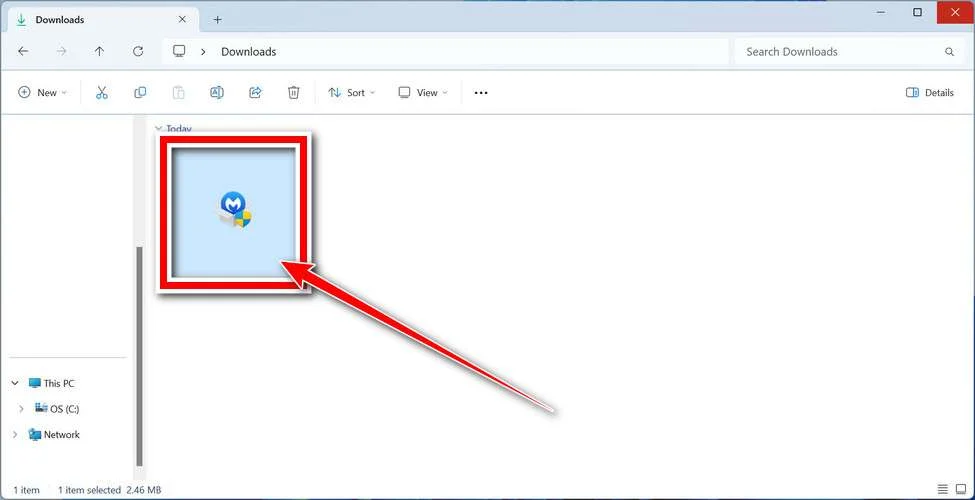
Follow the On-Screen Prompts to Install Malwarebytes
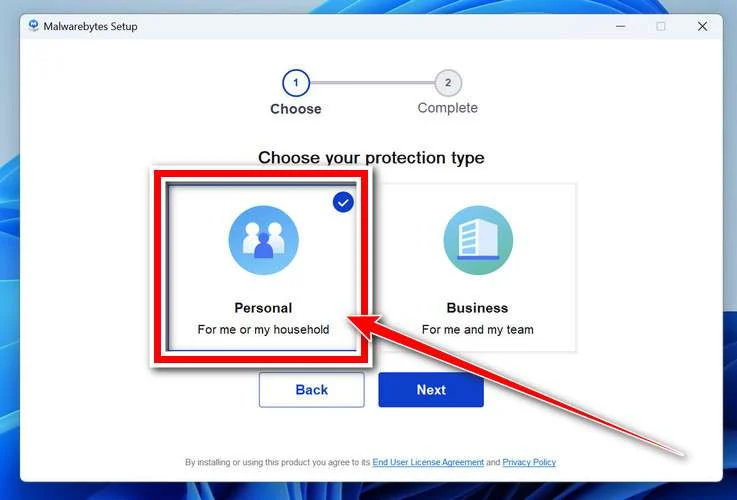
The setup wizard will walk you through a few quick screens:
-
Choose where you’re installing the program — “Personal Computer” or “Work Computer” — then click Next.
-
Malwarebytes will now install on your device. This usually takes under a minute.

-
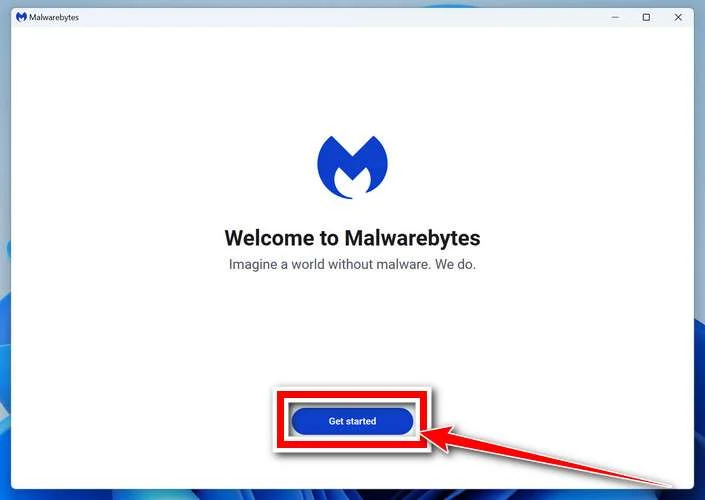
When installation is complete, the “Welcome to Malwarebytes” screen will open automatically.
-
On the final screen, click Open Malwarebytes to launch the program.

-
Enable “Scan for Rootkits”
Before scanning, turn on rootkit detection so Malwarebytes can find even the most hidden threats. Click the Settings gear icon on the left side of the screen.
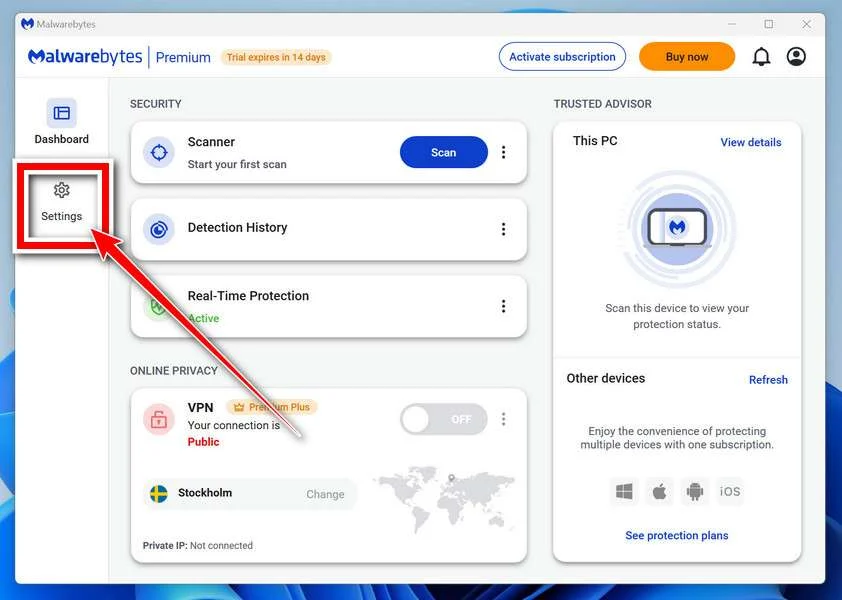
In the settings menu, find “Scan for rootkits” and click the toggle so it turns blue.

Done? Click “Dashboard” in the left pane to return to the main screen.
Start the Scan
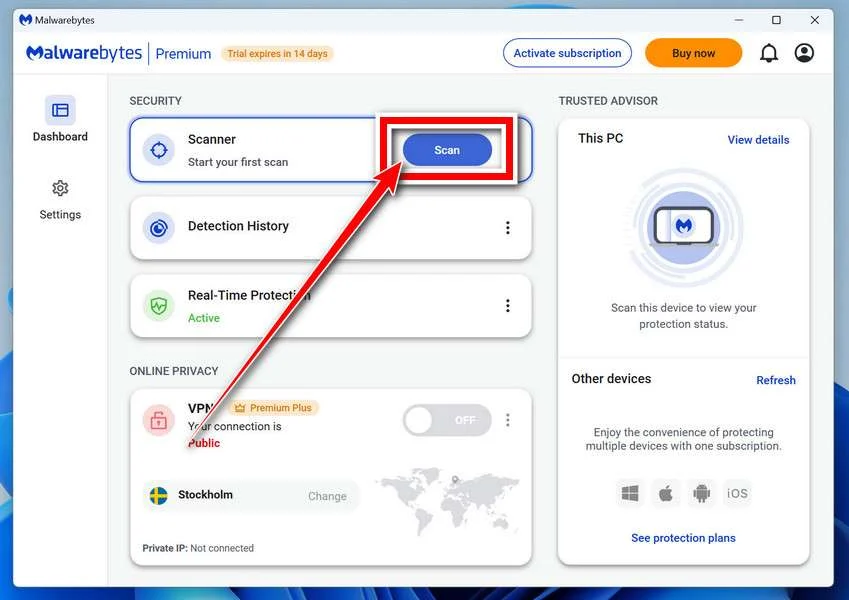
Click the blue Scan button. Malwarebytes will automatically update its virus database and start checking your computer for malware.
-
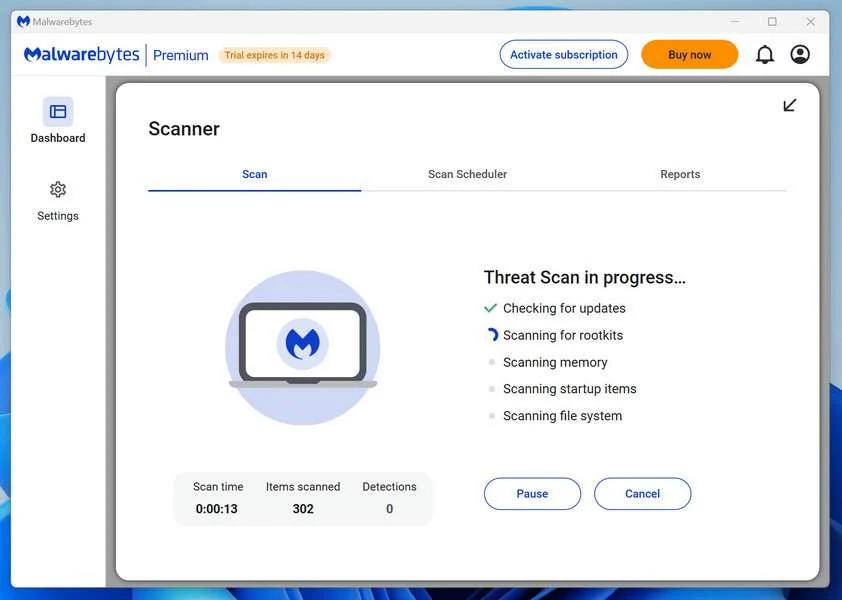
Wait for the Scan to Finish
The scan checks your entire system for browser hijackers and other malicious programs, so it can take 5 to 20 minutes depending on your computer. Feel free to do something else — just check back occasionally to see the progress.
-
Quarantine the Detected Threats
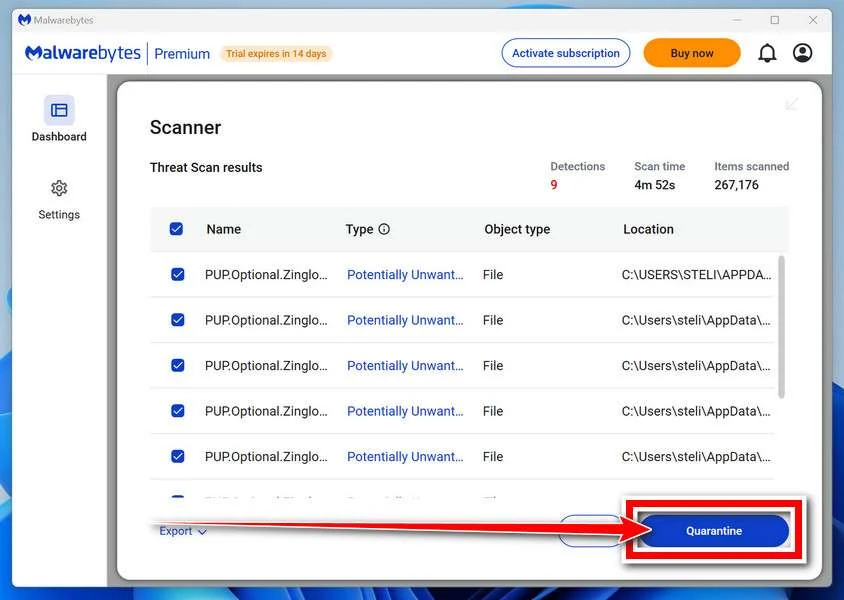
When the scan is done, you’ll see a list of everything Malwarebytes found — malware, adware, and potentially unwanted programs. Click the “Quarantine” button to remove all of them at once.
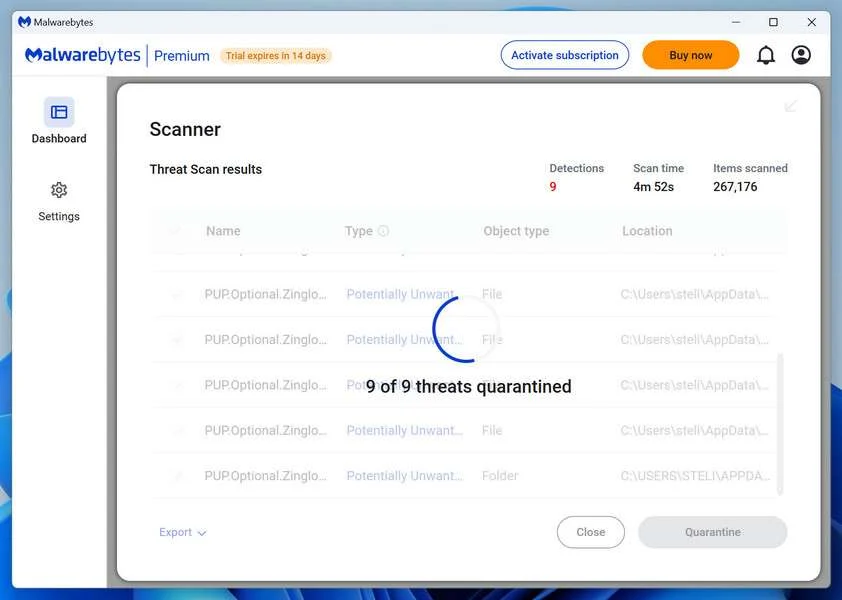
Malwarebytes will now remove the malicious files and registry entries and move them safely into quarantine.
-
Restart Your Computer
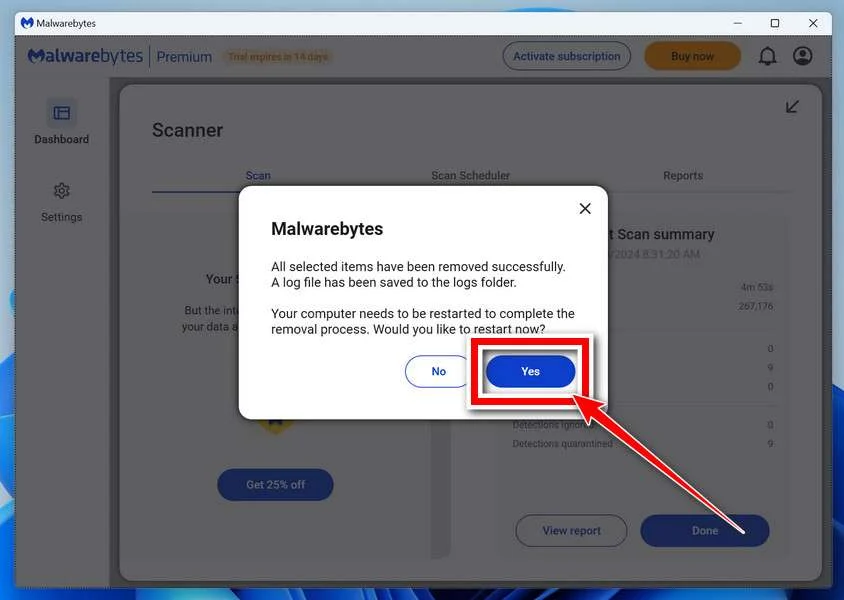
Some threats can only be fully removed after a reboot. If Malwarebytes asks you to restart, click Yes. Once you’re logged back in, Malwarebytes has finished removing the threats it found.
That’s it — your Windows PC is now clean of trojans, adware, and other malware, and should be back to running smoothly.
If you are still having problems with your computer after completing these instructions, then please follow one of the steps:
- Run a computer scan with ESET Online Scanner
- Ask for help in our Windows Malware Removal Help & Support forum.
Run a Malware Scan with Malwarebytes for Mac
Malwarebytes for Mac is a free on-demand scanner that removes the malware other security software tends to miss — adware, browser hijackers, and unwanted programs included. Cleaning an infected Mac with Malwarebytes has always been completely free, and it’s our go-to recommendation. Follow the steps below to scan and clean your Mac in just a few minutes.
-
Download Malwarebytes for Mac
Click the button below to download the latest version of Malwarebytes for Mac.
Download MalwarebytesOfficial installer for macOS. Your download starts right away.Want real-time protection? See Malwarebytes PremiumMalwarebytes Free for MacScans and removes malware at no cost -
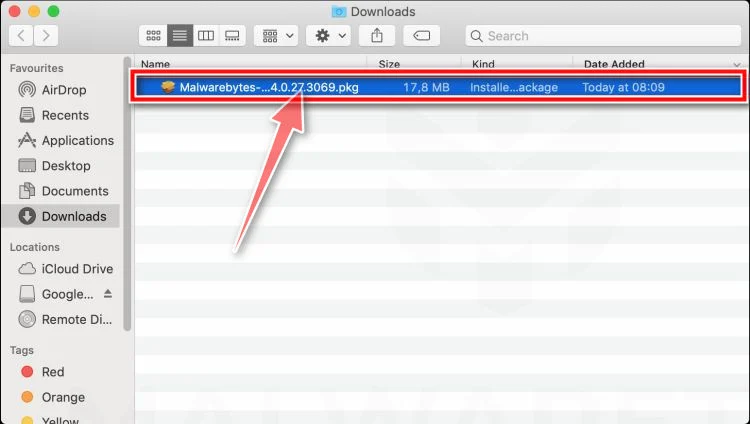
Open the Malwarebytes setup file
When the download finishes, open your Downloads folder and double-click the setup file to begin the installation.
-
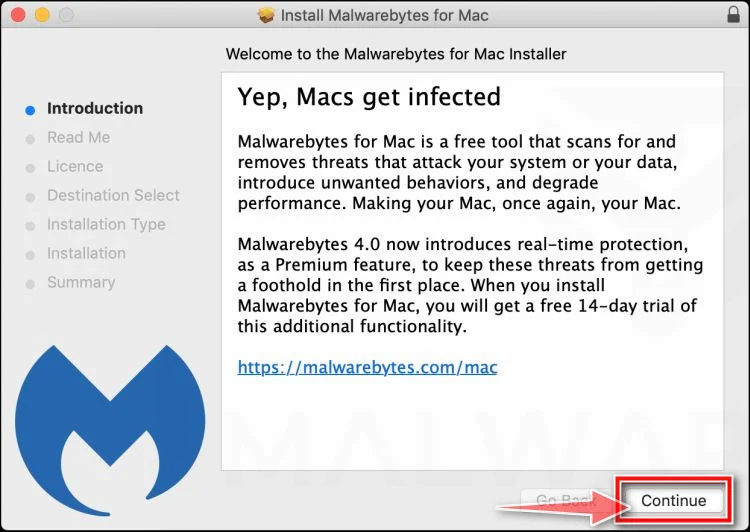
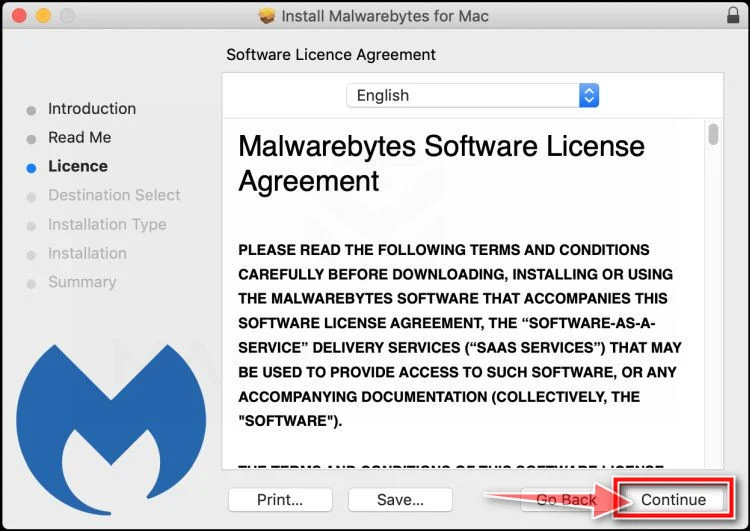
Follow the On-Screen Prompts to Install Malwarebytes
The Malwarebytes for Mac Installer will guide you through a few quick screens. Click “Continue” and keep following the prompts until the installation completes.
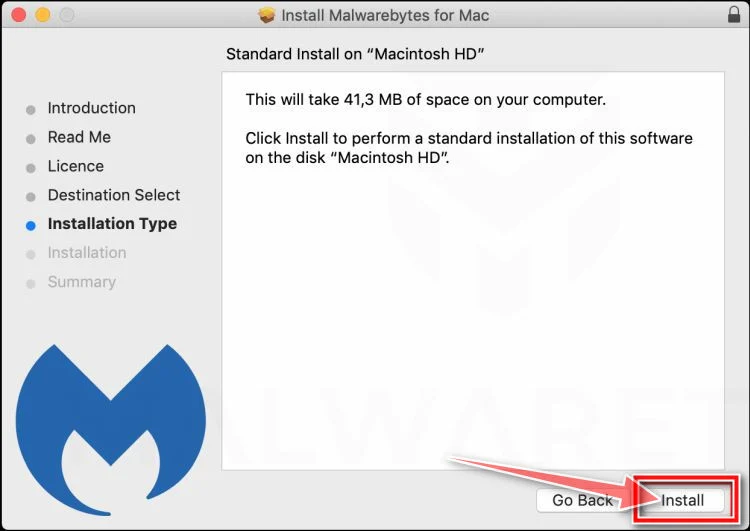
When the installation is complete, Malwarebytes opens to the Welcome to Malwarebytes screen. Click “Get started“.
-
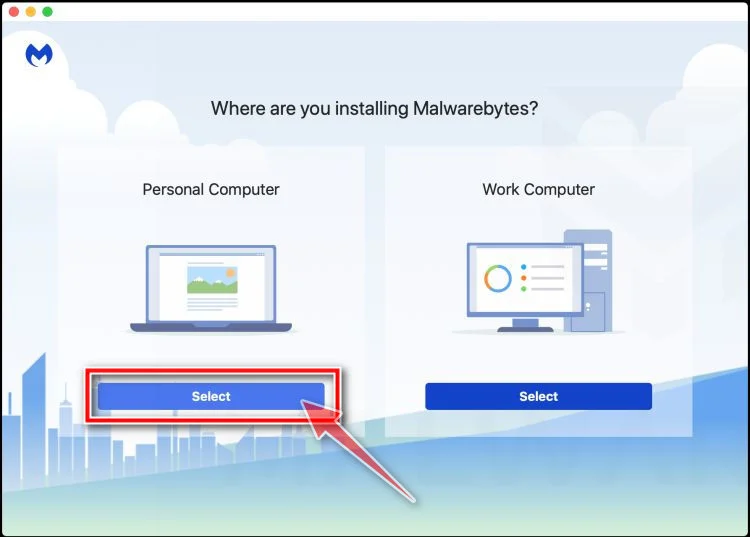
Select “Personal Computer” or “Work Computer”
Malwarebytes will ask what type of computer you’re installing it on. Click either Personal Computer or Work Computer, whichever applies.
-
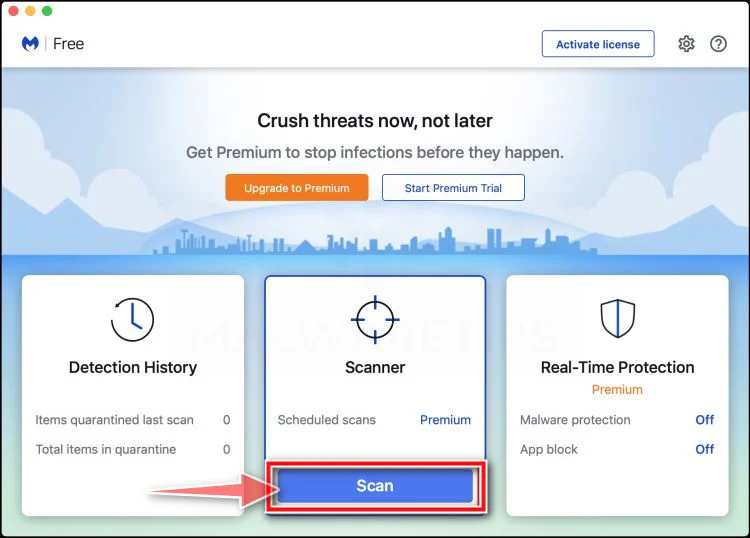
Start the Scan
Click the “Scan” button. Malwarebytes will automatically update its detection database and begin checking your Mac for malware.
-
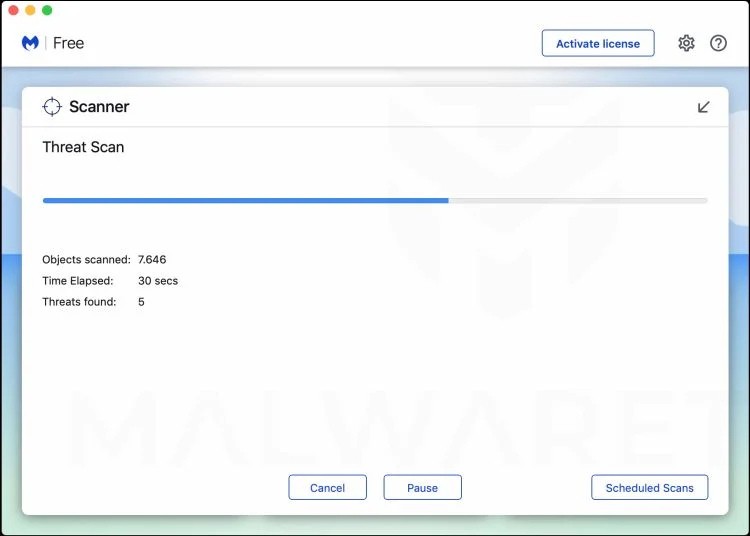
Wait for the Scan to Finish
Malwarebytes will scan your Mac for adware, browser hijackers, and other malicious programs. This can take a few minutes, so feel free to do something else — just check back occasionally to see the progress.
-
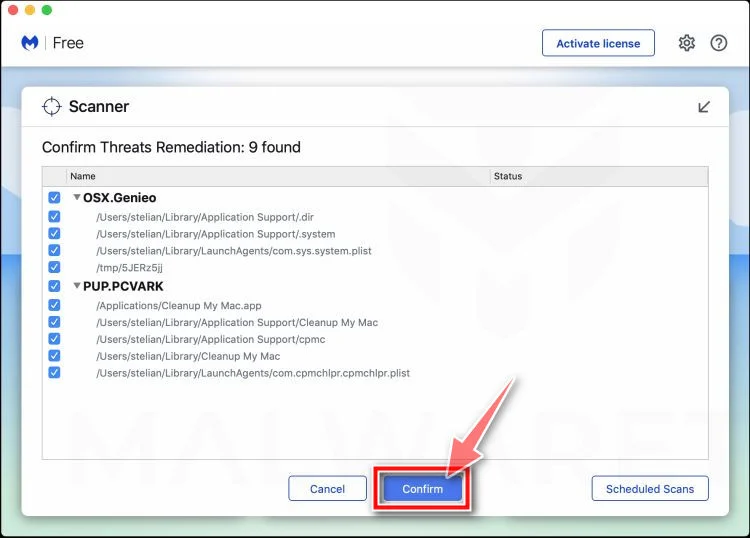
Quarantine the Detected Threats
When the scan is done, you’ll see a list of everything Malwarebytes found. Click the “Quarantine” button to remove all the threats at once.
-
Restart Your Mac
Malwarebytes will now remove all the malicious files it found. Some threats can only be fully removed after a reboot — if Malwarebytes asks you to restart, allow it. Once you’re logged back in, your Mac is clean.
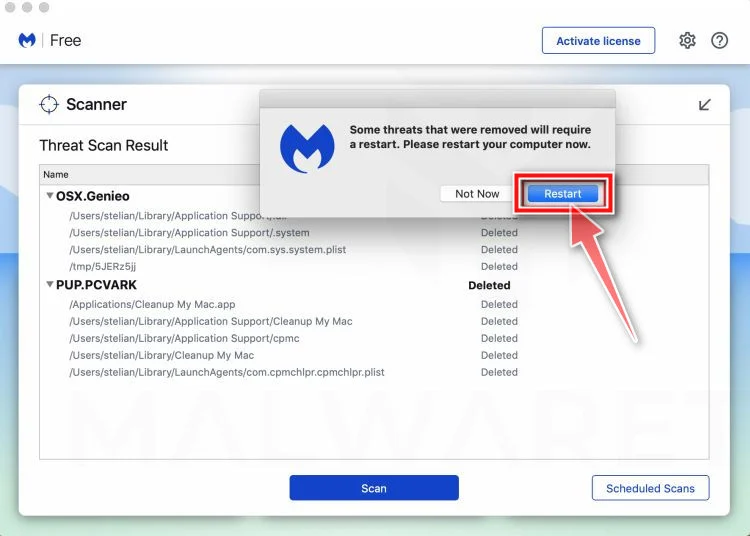
That’s it — your Mac is now free of adware, rogue browser extensions, and other potentially harmful software.
If you are still experiencing problems while trying to remove a malicious program from your computer, please ask for help in our Mac Malware Removal Help & Support forum.
Run a Malware Scan with Malwarebytes for Android
Malwarebytes for Android automatically detects and removes dangerous threats like malware and ransomware so you don’t have to worry about your most-used device being compromised. Aggressive detection of adware and potentially unwanted programs keeps your Android phone or tablet running smooth.
-
Download Malwarebytes for Android.
You can download Malwarebytes for Android by clicking the link below.
Get Malwarebytes for AndroidOpens Google Play in a new tab.Want real-time protection? See Malwarebytes Premium for AndroidMalwarebytes for AndroidScans your phone and removes malware at no cost -
Install Malwarebytes for Android on your phone.
In the Google Play Store, tap “Install” to install Malwarebytes for Android on your device.

When the installation process has finished, tap “Open” to begin using Malwarebytes for Android. You can also open Malwarebytes by tapping on its icon in your phone menu or home screen.

-
Follow the on-screen prompts to complete the setup process
When Malwarebytes will open, you will see the Malwarebytes Setup Wizard which will guide you through a series of permissions and other setup options.
This is the first of two screens that explain the difference between the Premium and Free versions. Swipe this screen to continue.
Tap on “Got it” to proceed to the next step.
Malwarebytes for Android will now ask for a set of permissions that are required to scan your device and protect it from malware. Tap on “Give permission” to continue.
Tap on “Allow” to permit Malwarebytes to access the files on your phone.
-
Update database and run a scan with Malwarebytes for Android
You will now be prompted to update the Malwarebytes database and run a full system scan.

Click on “Update database” to update the Malwarebytes for Android definitions to the latest version, then click on “Run full scan” to perform a system scan.

-
Wait for the Malwarebytes scan to complete.
Malwarebytes will now start scanning your phone for adware and other malicious apps. This process can take a few minutes, so we suggest you do something else and periodically check on the status of the scan to see when it is finished.

-
Click on “Remove Selected”.
When the scan has been completed, you will be presented with a screen showing the malware infections that Malwarebytes for Android has detected. To remove the malicious apps that Malwarebytes has found, tap on the “Remove Selected” button.

-
Restart your phone.
Malwarebytes for Android will now remove all the malicious apps that it has found. To complete the malware removal process, Malwarebytes may ask you to restart your device.
That’s it — your Android phone is now clean — no more malicious apps, adware, or browser redirects.
If you are still having problems with your phone after completing these instructions, then please follow one of the steps:
- Restore your phone to factory settings by going to Settings > General management > Reset > Factory data reset.
- Ask for help in our Mobile Malware Removal Help & Support forum.
Stay Protected: Block Ads and Malicious Sites
Now that your device is clean, keep it that way. Most infections start with a malicious ad or a fake download button — so blocking them at the source is your best defense.
We recommend AdGuard, which blocks malicious ads, phishing pages, and dangerous redirects before they can reach you.
👉 Download AdGuard and browse safely
Frequently Asked Questions About the TrySheReview.com Sephora Reviewer Scam
Is TrySheReview.com affiliated with Sephora?
No. TrySheReview.com is not connected to Sephora in any way. It falsely uses Sephora’s name and branding to appear trustworthy but is not endorsed, owned, or operated by the company.
Will I get paid for reviewing Sephora products through TrySheReview.com?
No. Despite claims of high hourly pay and free product shipments, no users receive actual products or compensation. It is a scam designed to exploit user activity for affiliate profits.
What happens after I sign up on the website?
After signing up, users are redirected to multiple “offers” or “deals” that include:
- App downloads
- Survey sites
- Free trials requiring credit card information
- Sweepstakes entries that are phishing traps
These offers benefit the scam operators through affiliate commissions.
Why does the website look so professional?
Scammers design the site to mimic Sephora’s branding closely, including logos, typography, and marketing language. The professional look is meant to disarm skepticism and encourage trust.
Can I be charged for completing the tasks?
Yes. Many tasks involve signing up for trials with your credit card. If not canceled in time, these trials can turn into recurring monthly charges. Some users report unauthorized transactions.
Is it safe to enter my email or phone number?
No. Your contact information will likely be sold to marketing companies or used in future scams. Victims often receive an increase in spam emails, robocalls, or phishing texts after signing up.
What should I do if I already submitted my info?
Immediately:
- Change your passwords
- Cancel any suspicious subscriptions
- Contact your bank or credit card company if you submitted payment info
- Run antivirus/malware scans
- Report the scam to the FTC and IC3
Will I get a gift box of Sephora products?
No. There is no evidence that any participant has ever received a gift box or product. The offer is entirely fabricated to lure users through monetized funnels.
How can I report TrySheReview.com?
Report the scam to:
- FTC: reportfraud.ftc.gov
- IC3: www.ic3.gov
- BBB Scam Tracker
- Sephora’s customer support
How can I avoid similar scams in the future?
- Always verify promotions via the official brand website
- Be skeptical of high-paying, low-effort “job offers”
- Avoid offers that require unrelated purchases or downloads
- Use spam filters and browser security tools
The Bottom Line
The TrySheReview.com “Sephora Reviewer” job is not a real opportunity. It’s a well-designed scam that uses familiar branding, persuasive copy, and fake urgency to lure users into a trap of affiliate offers, data harvesting, and in some cases, financial loss. Despite appearances, the site is not affiliated with Sephora, and it offers no legitimate paid review jobs.
Once you submit your details, you’re funneled through a series of tasks meant only to generate income for the scammers—not to onboard you into a reviewer program. Completing these “deals” doesn’t bring you closer to a paycheck or a box of free products—it only exposes your personal information to third-party advertisers, marketers, or worse.
The best defense is awareness. Always research suspicious promotions. If a deal sounds too good to be true—especially one offering $50/hour and premium brand perks—it probably is.
Here are your key takeaways:
- TrySheReview.com is not endorsed by Sephora or any legitimate brand
- No gift box or job is ever sent or offered to users
- Your personal data may be collected and sold
- The scam uses affiliate marketing tactics to make money off your actions
- Protect yourself by reporting the scam and helping others stay informed
Stay skeptical. Stay alert. And share this information to protect others from falling for the same trap.

Reviews & discussion
0 commentsShare a firsthand experience, or ask a question.
Community reviews
tryshereview.com
Moderated reader experiences, not an editorial verdict.
Start the conversation
Have a question or something useful to share? Add the first comment.