

The sweltering heat of summer has many of us searching for ways to stay cool without breaking the bank on expensive air conditioning units. This demand has given rise to a new wave of “miracle” cooling devices that claim to provide sweet relief from the heat at a fraction of the cost of traditional ACs. One such product is the Ultra Air Cooler, a small fan-based unit that promises effective cooling through proprietary “Insta-Frost” technology.
But can a compact desktop device really rival the cooling power of full-size air conditioners? In this in-depth exposé, we’ll uncover the truth behind the Ultra Air Cooler and explain why you’re better off avoiding this dubious gadget.
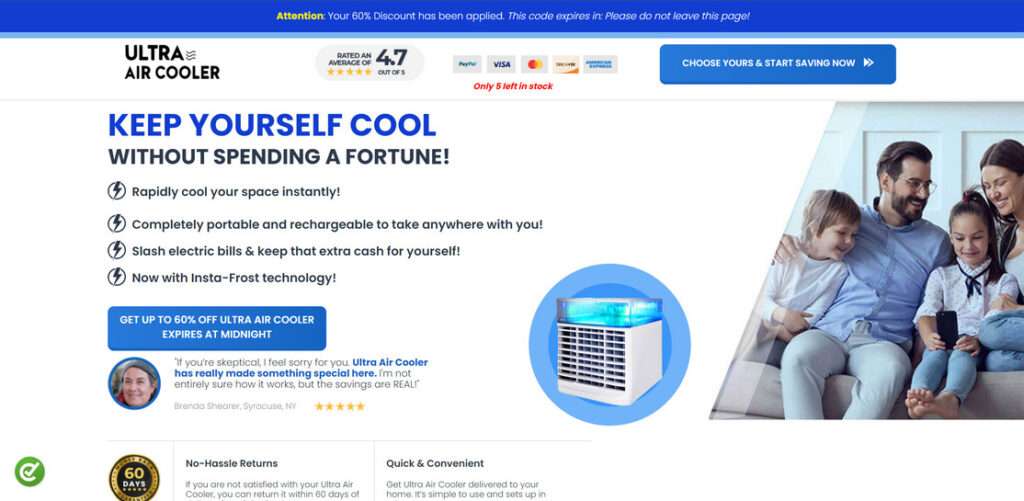
What is the Ultra Air Cooler?
The Ultra Air Cooler is a compact, portable evaporative cooler marketed as a revolutionary new way to stay cool without the expense of air conditioning. It is advertised as using breakthrough “Insta-Frost” technology to rapidly cool rooms and slash electricity bills.
The device is shaped like a small desktop fan with the addition of a water reservoir. It pulls in hot air, passes it through a wet filter to add moisture, and then blows out cooled air. The makers claim this evaporation process is enhanced by Insta-Frost to provide stronger cooling power.
The Ultra Air Cooler is currently being promoted through fake celebrity endorsements and “news” style ads. These ads feature doctored images of billionaire Elon Musk, falsely claiming he invested in and endorsed the product.
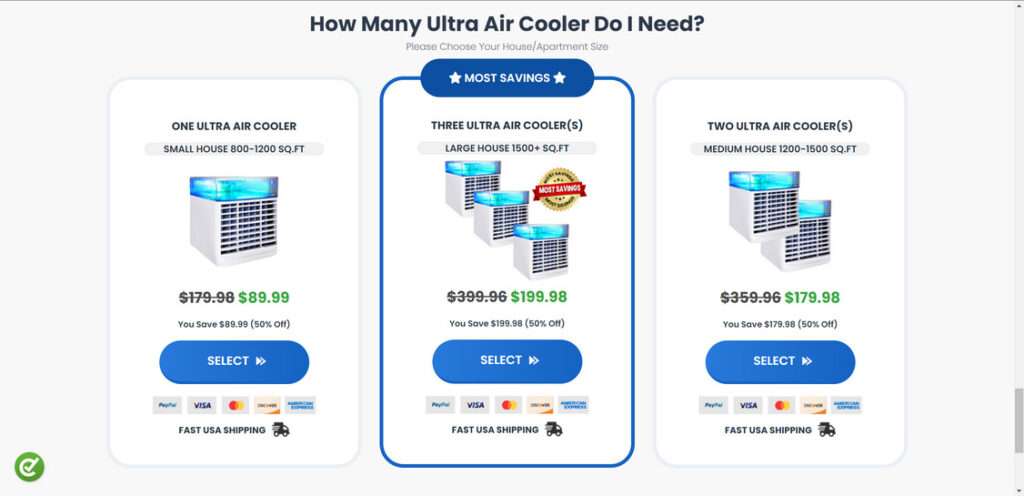
Too Good to Be True: How the Ultra Air Cooler Scam Works
The outlandish claims and phony celebrity endorsements are telltale signs of a scam. Here are the red flags that reveal how the deceptive marketing hides the reality that the Ultra Air Cooler simply cannot work as advertised:
- Fake celebrity endorsements – Elon Musk has not endorsed this product. His quotes and image are fabricated.
- Misleading “news” style ads – The ads mimic news reports to appear credible but are entirely fabricated.
- Unsubstantiated claims – “Insta-Frost technology” is never explained. No proof for “miracle” cooling powers.
- Sketchy sales pitch – High-pressure tactics push people to buy before thinking it through.
- No refunds – Refund window is very short. Many report issues getting money back.
- No verifiable company information – Website provides no legitimate company details or address.
- Reviews are suspicious – Reviews seem fake and focus on money savings, not cooling ability.
With these red flags, it is clear the Ultra Air Cooler uses deceptive marketing to make impossible claims that lure in unsuspecting consumers.
Why the Ultra Air Cooler Simply Cannot Work as Advertised
Put plainly, the Ultra Air Cooler is making promises that defy the laws of physics. Cooling requires transferring heat energy, which demands a significant amount of power. The Ultra Air Cooler would have to violate thermodynamics to cool as advertised. Here’s why experts dismiss its capabilities:
- Too weak – Its wattage is far too low to meaningfully impact room temperature.
- Too small – The tiny size makes it only able to affect the area directly in front of it.
- Not cold enough – Evaporative cooling cannot get anywhere close to actual AC temperatures.
- Exaggerated power – Most of the “cooling” feelings come from the unit’s fan, not temperature reduction.
- No heat transfer – Lacks a critical component of AC units – a way to expel heat outside. Trapped heat overwhelms its capacity.
- No seals – Has no insulation or sealed vents to contain cooled air. Any cooled air will quickly mix with ambient air.
- Moisture issues – Adding moisture to air can make the temperature feel lower but adds excess humidity.
The bottom line according to experts and real user reviews is that the Ultra Air Cooler simply cannot work as a true alternative to AC. Reviewers commonly report it provides a minor cooling effect directly in front of the unit, but no meaningful cooling of an entire room. It certainly cannot “instantly cool” an area or lower air temperature dramatically.
The Marketing Deception Behind the Ultra Air Cooler
The exaggerated and false claims about the Ultra Air Cooler’s cooling capabilities reveal deceptive marketing tricks aimed at misleading consumers. Here are some of the key elements of the misleading advertising:
- Bait and switch – Make unbelievable claims then backtrack in fine print.
- Vague claims – Use undefined, sci-fi sounding phrases like “Insta-Frost technology.”
- Misleading demonstrations – Show the device in unlikely small spaces it could never cool in reality.
- Undisclosed downsides – Fail to mention the device adds uncomfortable humidity.
- Fake complexity – Make simple evaporative cooling sound highly advanced.
- Questionable pricing – Charge far more than competing evaporative coolers that work similarly.
- Fake scarcity – Create false urgency to buy by implying limited supply.
Each of these shady marketing tactics builds the illusion that this basic device is an air conditioning miracle. Preying on hot and desperate consumers, the company tricks people into spending $200+ on an overpriced fan.
Ultra Air Cooler has been also investigated by Jordan Liles on his YouTube channel, where he offers a detailed video on the subject. We recommend watching his content for a comprehensive understanding of the scam.
Next, let’s who might be behind this scam.
Who’s Behind the Ultra Air Cooler Scam?
Pinpointing exactly who is behind the Ultra Air Cooler scam is difficult since the company hides behind the deceptive website TopAirCooler.com. The site provides no legitimate contact details or company information.
Some clues linking it to known scammers:
- Located at the same mailing address in Ontario as several other known scam websites.
- Shares unique tactics and sales pitches with ESaverWatt.com, a company notorious for fake electricity saving devices.
- Web domain is registered privately to hide owner’s identity.
While the precise individuals behind it remain hidden, it clearly shares many connections with previous shady operations known for ripping off consumers. This lack of transparency should make anyone even more cautious about sending them money.
Consumer Beware: Real-Life Ultra Air Cooler Reviews
Seeing through the deception of the marketing claims, many real consumers who bought the Ultra Air Cooler have taken to the internet to share their disappointing experiences. Some key takeaways from customer reviews:
- The device only provides a weak stream of air directly in front. No cooling effect elsewhere in room.
- No noticeable change to room temperature, especially in spaces larger than a small office.
- Unit stopped working properly after a short period, sometimes only weeks.
- Multiple complaints about difficulties getting refunds within the advertised 60-day window.
- Reported the device adds an uncomfortable level of humidity without actually cooling.
- Very loud noise makes it undesirable to use while sleeping or concentrating.
Overall, customers confirm what experts have said – the Ultra Air Cooler simply does not work as a real alternative to ACs. Reviewers say any cooling effect is negligible, making it a hugely overpriced fan.
The Better Alternative: Legitimate Air Conditioning
The Ultra Air Cooler fails so badly at cooling because it lacks the key components that make air conditioners work. Real ACs include:
- A refrigerant system – Compressors and chemical refrigerants are needed to absorb, remove, and expel heat.
- Significant power – Effective cooling requires large capacity measured in tons or BTUs.
- A way to expel heat – Heat has to be pumped outside, usually via condenser units and vents.
- Tight seals – The cooled area must be sealed off from warmer areas.
- Thermostats – Precise temperature regulation automatically adjusts cooling capacity.
- Proper sizing – Capacity is tailored to the size of the space for optimal efficiency.
While more complex and expensive, this real AC technology is the only way to truly cool rooms and provide relief from heat. More affordable options include:
- Window units – Offer localized cooling for one room at moderate prices.
- Portable ACs – Can be moved room to room with vents to expel heat outside.
- Smart thermostats – Provide better temperature regulation and lower energy use.
- DIY insulation – Reduces cooled air escaping and heat entering for greater efficiency.
Frequently Asked Questions about the Ultra Air Cooler Scam
1. What is the Ultra Air Cooler?
The Ultra Air Cooler is a small portable evaporative cooler that is falsely marketed as a revolutionary alternative to air conditioners. It uses basic evaporative cooling technology but misleadingly advertises it as new “Insta-Frost” technology to exaggerate its capabilities.
2. How does the Ultra Air Cooler scam work?
The makers of the Ultra Air Cooler use deceptive marketing tactics to make unrealistic cooling claims that lure in customers. This includes fake celebrity endorsements, misleading “news” style ads, paid actors giving fake reviews, and other shady techniques to make it seem like a miracle device.
3. Why can’t the Ultra Air Cooler work as advertised?
The Ultra Air Cooler simply does not have the power, cooling capacity, or ability to expel heat that a real AC unit has. Its weak evap cooling cannot reduce temperatures significantly. Physics prevents it from “instantly cooling” rooms or providing anywhere near the cooling power of a real AC unit.
4. What proof is there the reviews and claims are fake?
- Fake celebrity endorsements using doctored images prove the ads are untrustworthy.
- Many reviews are word-for-word identical, revealing they are scripted.
- Technical experts have demonstrated the device cannot physically achieve what ads claim.
5. Who is behind the Ultra Air Cooler scam?
While the company hides behind a pseudo-anonymous website, evidence suggests the Ultra Air Cooler comes from known scammers. It shares tactics with fraudulent brands like ESaverWatt and won’t reveal names of owners or a verifiable address.
6. How much does the Ultra Air Cooler cost?
The device is sold for $200 or more, drastically overpriced given its limitations. Similar basic evaporative coolers cost far less, showing the high price takes advantage of customers.
7. Are the ads showing it cooling entire rooms deceptive?
Yes, shots of it cooling large spaces are completely unrealistic and unlikely to represent real-world results. Reviewers consistently report it only provides a slight effect right in front of the unit.
8. What do actual customer reviews say about it?
The vast majority of real customer reviews expose that the Ultra Air Cooler fails to work as advertised. Most say it barely cools and the effects are limited to just inches away from the unit. Many report it breaking quickly.
9. What is a better alternative to the Ultra Air Cooler?
While more expensive upfront, real portable or window AC units with the power to truly cool rooms and expel heat are the only legitimate options. Or simpler fans and evap coolers not making unrealistic claims.
10. Is the Ultra Air Cooler a scam?
Yes, overwhelming evidence reveals the Ultra Air Cooler uses deceptive marketing, exaggerates claims, hides corporate details, and opts for quick sales over quality to scam customers out of their money. It is best avoided.
The Bottom Line: Don’t Be Fooled by the Ultra Air Cooler
When the sweltering heat has you desperately searching for a cooling oasis, it can be tempting to believe the Ultra Air Cooler’s lofty claims and miraculous advertisements. But there is overwhelming evidence this “breakthrough” device simply cannot work as advertised.
All signs point to the Ultra Air Cooler being an egregious scam designed to prey on your desire for cold air and exploit hopes of finding an AC alternative. Behind the compelling sales pitch is a purposefully deceptive marketing scheme full of exaggerated claims, fake testimonials, and misleading demonstrations.
The reality verified by experts and real customer reviews is that the Ultra Air Cooler lacks the power, cooling capacity, and heat transferring abilities to meaningfully impact room temperature. At best, it may provide a slight cooling breeze when positioned directly in front of you. But as a true portable air conditioner, it fails utterly.
Don’t be fooled into wasting hundreds of dollars on this overhyped gadget. To truly stay cool this summer, invest in legitimate AC solutions from trustworthy companies that are honest about capabilities. Your wallet and sweaty self will thank you.
The bottom line: think critically, do your research, and don’t believe the unbelievable when it comes to the Ultra Air Cooler. This device is poised to disappoint you and swindle your hard-earned money. Make the savvy choice and steer clear of this scam.
This article is for educational purposes only and does not constitute professional, financial or legal advice. The content is intended for general information and should not be construed as definitive guidance. Information contained herein is subject to change without notice.  For concerns, please contact us via the provided form.
If you are the owner of the website or product in question and wish to offer clarifications regarding your business or website, please reach out to us through the provided Contact Form.

Join the discussion
0 commentsShare your experience or ask a question about this article.
Discussion
Start the conversation
Have a question or something useful to share? Add the first comment.