

A bank card turns up in your mailbox, but you weren’t expecting a replacement. The envelope looks ordinary enough to make you wonder what you missed.
Before you try to sort it out, consider what happens next. The delivery may not be the only part that needs checking.
Overview
An unexpected card can make a false banking call believable
The unexpected bank card scam uses a physical delivery as a reason to approach you about activation, cancellation, or verification.
Bitdefender highlights a warning from Portugal about unsolicited cards followed by contact from people pretending to represent a financial institution.
The danger is the request for banking access or sensitive information. A caller can know that a card arrived without being authorized by your bank.
The follow-up request matters more than the packaging
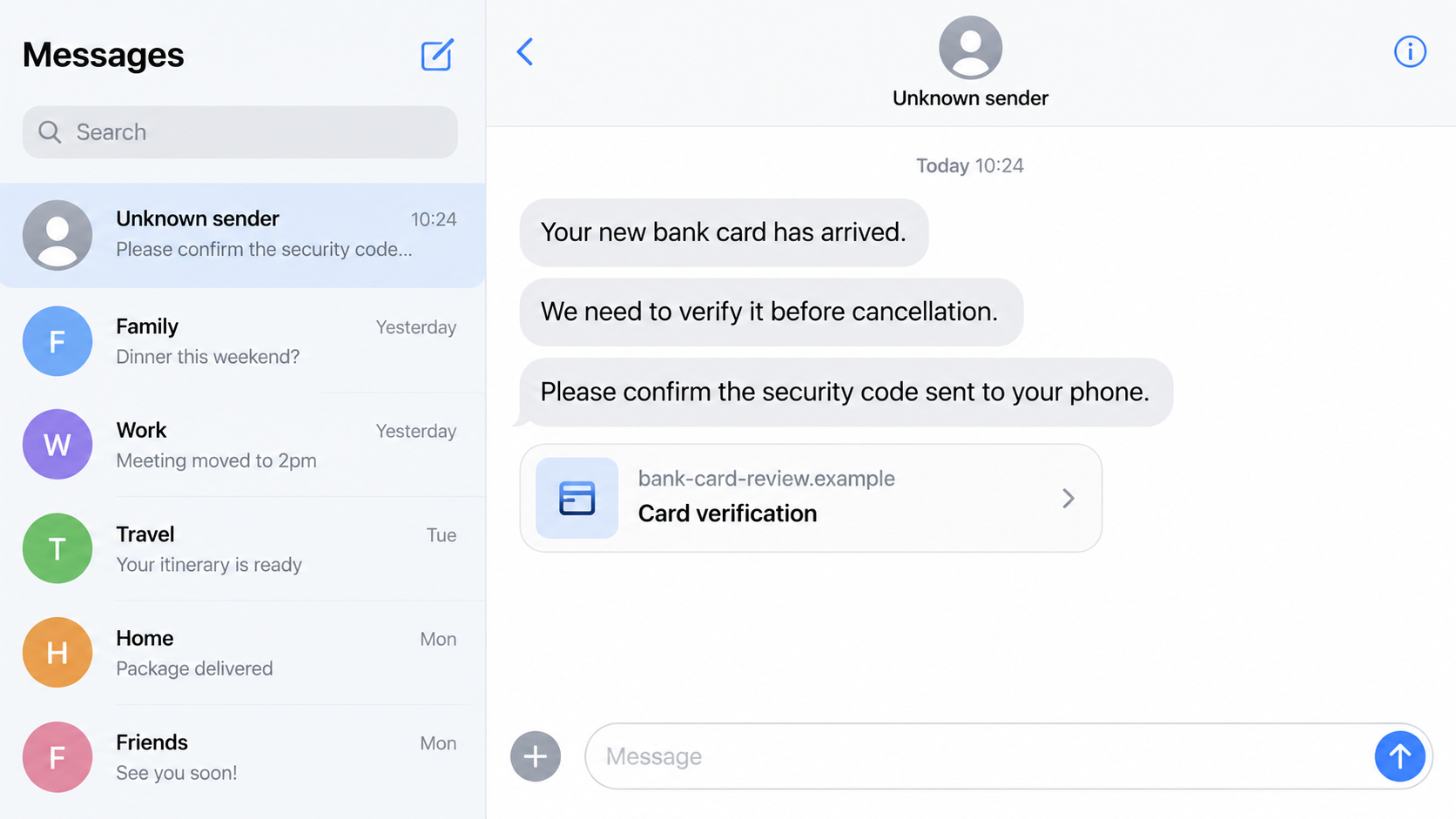
The contact may arrive by phone, text, or email. You could be told that the new card must be verified before a problem can be fixed.
Stop if the person asks you to:
- Read out a login or payment-approval code.
- Reveal your card PIN or online-banking password.
- Sign in through an unfamiliar link.
- Move funds because an alleged investigation requires it.
- Continue before you can independently speak to your bank.
The illustrated messages are fictional examples of that pressure. They aren’t actual texts from a named bank or evidence about your particular card.
Not every unexpected card is fraudulent
Banks can send legitimate replacements, and an unfamiliar mailing can have another explanation. A card’s arrival alone doesn’t settle which situation applies.
Keep it unused while you ask the named institution through an established route. Don’t verify the delivery using contact details supplied only with the questionable card.
If you already disclosed banking secrets, contact your real bank immediately. It can address affected access and transactions without relying on the caller’s story.
The Card Creates a Problem You Feel Obliged to Resolve
A random banking text is easier to doubt than a call about an object now sitting on your kitchen counter.
The delivery makes the conversation feel connected to real events. You may assume a caller who knows about it must have access to the bank’s records.
That assumption is the weak point. The person contacting you could be connected to the delivery itself rather than to the institution they name.
They might also know your name or address. Accurate personal details aren’t the same as authority to manage your account.
You may worry that ignoring the card will leave an unwanted account open. That concern is reasonable, but it doesn’t require accepting the stranger’s cancellation process.
Take the concern to the real institution instead. You can ask whether an account exists and whether the card was issued without giving an unexpected caller access.
A useful rule is to separate the discovery from the response. The mailing alerts you to something worth checking; it shouldn’t dictate whom you trust.
How the Unexpected Bank Card Scam Works
Step 1: An unsolicited delivery establishes the pretext
The card arrives without a request you recognize. You might interpret it as an administrative error, routine replacement, or possible unauthorized account opening.
The Portugal News reports the GNR warning about this setup and advises recipients to contact the institution independently.
Don’t test the card to discover whether it works. Activation or use can complicate a situation the bank should first explain.
Keep the envelope too. Its delivery information and accompanying instructions may be useful when reporting what happened.
Step 2: A supposed representative offers an explanation
A follow-up message can promise to activate the card, cancel it, or resolve an alleged security problem. The caller positions themselves as the helpful answer.
Once you’re concerned, their instructions may feel like relief. You finally have someone who seems to know why the card appeared.
But an explanation isn’t verification. End the contact and reach the bank through its app, an existing card, or independently confirmed official details.
Don’t let the caller insist that disconnecting will prevent cancellation. You can investigate a genuine banking issue without keeping an unverified stranger on the line.
Step 3: Verification becomes a request for access
The supposed check may ask for personal details, credentials, a PIN, or a security code. Read the actual bank message associated with any requested code.
A code can authorize a login, transfer, or account change. Relabeling it as cancellation confirmation doesn’t change what the bank says it will do.
If a caller asks you to ignore that description, stop. Their explanation shouldn’t override the warning displayed by your own bank.
Don’t upload identity documents through a link they supply either. Use the bank’s established process if its real staff need identity verification.
Step 4: Urgency narrows the time available to check
You may be told the problem needs immediate attention. That can turn a cautious question into a series of hurried actions.
A genuine urgent concern is a reason to contact your bank promptly, not a reason to use an unverified contact route.
Don’t move money into an account described as safe by an unexpected caller. Ask your real bank to handle any necessary protection through its normal controls.
Likewise, don’t approve a transfer as a way to cancel something. Check what your screen says you’re actually authorizing.
Step 5: Shared information can expose the real account
The outcome depends on what was disclosed and which actions succeeded. A password, login code, or transfer approval can create different forms of exposure.
Don’t wait for a visible loss before reporting a shared secret. The bank may be able to restrict access or review changes before further activity occurs.
The card doesn’t give an unexpected caller permission to handle your money. Check the claimed problem directly with the institution before sharing anything.
Ask what the bank can verify about issuance and account activity. That gives you concrete answers instead of another explanation from the caller.
Verify the Card Without Using the Caller
Ask the bank whether it actually issued the item
Use your existing banking app or independently obtained institutional contact details. Explain that an unexpected card arrived and you haven’t activated it.
Ask which account it belongs to, why it was sent, and whether a replacement or new-account request appears in the bank’s records.
Don’t assume that a card carrying your name belongs to an account you authorized. Equally, don’t assume a legitimate replacement means someone committed fraud.
Check the associated account changes
Review new cards, beneficiaries, mailing addresses, contact numbers, and transaction activity. Ask the bank to investigate changes you don’t recognize.
A new payee can matter even when no transfer has appeared yet. So can a changed phone number that affects future authentication.
If the bank confirms the card is genuine, follow its instructions for the specific situation. Don’t return to the original stranger for help.
If the bank’s ordinary support route requires a transfer to its fraud team, keep a record of the case reference and confirmed next steps.
Don’t accept a stranger’s claim that the institution cannot be called because an investigation is secret. Independent contact is exactly what protects you here.
Keep credit-account concerns separate from a fake call
An account opened without permission is an identity-theft problem, even if the card and institution are real. That needs investigation with the issuer.
The CFPB discusses unauthorized store credit cards. Its US guidance explains how account disputes and credit-report corrections differ from simply ignoring a mailing.
Rules and reporting routes depend on your country and card type. Start with the issuer’s fraud team rather than assuming one legal rule covers every mailing.
If Someone Tries to Collect a Card at Your Door
A visitor claiming to collect a compromised card is a separate escalation worth treating seriously. Don’t hand over a card, PIN, cash, or access to your home.
The unsolicited-card warning doesn’t prove every case includes a doorstep visit. The protective rule applies if that additional request actually occurs.
You can close the door and call the institution through your known route. If someone won’t leave or you feel threatened, contact local emergency services.
Don’t try to investigate a suspicious visitor face-to-face. Preserving your safety is more important than obtaining an explanation or recording a confrontation.
What to Do if You Have Fallen Victim to This Scam
-
End the false support conversation. Stop sharing information and don’t approve another request to undo the previous one.
If the caller says they need one final code, don’t provide it. Continue only with the bank you independently contact.
-
Explain the exact exposure to your bank. Say whether you shared a password, PIN, login code, card details, or approved an action.
Identify the affected account and approximate time. Ask the bank which cards, sessions, or account functions need restriction.
-
Check transactions and new beneficiaries. Look for payments, transfers, or settings changes you didn’t intend. Don’t rely solely on the available balance.
Give the bank transaction references and explain the deception accurately. A transfer you were persuaded to authorize isn’t the same fact pattern as an unknown transfer.
-
Replace compromised credentials through a trusted route. Use the genuine app or official instructions, preferably on a trusted device if software access was involved.
If you reused the banking password elsewhere, change those copies too. Don’t send the replacements to anyone claiming to handle the incident.
-
Preserve the delivery and messages. Keep the card, envelope, letters, texts, email, and caller identifiers until your bank or investigators advise otherwise.
Photograph relevant material privately if useful, but hide full card numbers and personal details when sharing a warning with others.
-
Report unauthorized account opening separately. If the issuer confirms an account was created without your permission, ask for its fraud-dispute procedure.
In the US, IdentityTheft.gov can help organize recovery. Elsewhere, use your country’s identity-theft and financial-fraud reporting routes.
Don’t assume declining activation removes an existing unauthorized account. Obtain confirmation of how the issuer has handled it.
-
Tell people at home what happened. Someone else may answer a follow-up call or open the door for a supposed bank representative.
Give them a simple instruction: no codes, cards, or money for unexpected contacts. Keep the bank’s verified contact route available.
-
Reject fee-based recovery shortcuts. A person offering to recover money for an advance payment can create another loss.
Keep your bank’s case number and report through the relevant authorities. Don’t abandon that process for a stranger promising an instant solution.
What to Record When There Hasn’t Been a Loss Yet
You don’t need to wait for money to disappear to make a useful report. Record the card’s arrival and the subsequent contact as separate events.
Note which institution was named, what the caller wanted, and whether any bank-generated notification arrived during the exchange.
Keep the identifier displayed by your phone, but don’t treat it as proof of the caller’s location or identity. Caller information can be misleading.
If a link was supplied, preserve it without opening it again. Investigators can work from the address; you don’t need to revisit the page.
Write down what you did and didn’t disclose. That distinction helps the bank choose a proportionate response instead of treating every recipient as fully compromised.
If the bank confirms nothing was issued and no account changed, retain its answer with the report. You can then dispose of the item as instructed.
Ask whether any genuine replacement is still on its way. That prevents confusion when another envelope arrives while you’re already dealing with the suspicious one.
Keep confirmed bank correspondence separate from the questionable mailing. Someone in your household should be able to distinguish the real instructions without relying on memory.
If an item carries another person’s name, don’t assume it is part of your account. Ask the institution or postal service how to handle the misdirected delivery.
Frequently Asked Questions
Does an unexpected bank card always mean a scam?
No. Legitimate replacements and other explanations exist. Keep it unused while the institution independently confirms what it is and why it arrived.
Why would a scammer send a physical card first?
The delivery gives a later banking call or message a believable subject. Knowing about the card doesn’t establish that the caller represents your bank.
Should I use the number printed on the unexpected mailing?
Verify through contact details you already trust, such as your established app or existing card. Don’t rely solely on details inside the questionable package.
Can a code cancel the card or approve something else?
Read the bank’s own description of the code. An unexpected caller’s cancellation story doesn’t change a code intended for login or payment approval.
What if no money has left my account?
Report exposed secrets or unauthorized changes promptly anyway. A visible loss isn’t necessary before the bank can investigate a suspicious event.
Should I destroy the card immediately?
Keep it safely with the envelope until the bank advises you. It may help identify the mailing or document an unauthorized account request.
The Bottom Line
Don’t activate an unexpected card or give banking secrets to someone contacting you about it. Verify the delivery with your real bank first.
If you already shared information, call the bank now and describe the exact action. Preserve the card and messages while affected access is secured.








