

The ValoClean Vacuum Cleaner has been making waves online with bold claims of 550W motor power, 45kPa suction, 60-minute runtime, and 99.9% HEPA filtration. The ads make it look like a Dyson alternative at a fraction of the cost, promising high performance, lightweight convenience, and premium features like LED touchscreens and auto-detection technology.
But is the ValoClean really worth the hype, or is it just another dropshipping operation disguised as a high-end cleaning solution?
In this article, we’ll break down everything you need to know about ValoClean: how it’s marketed, how the operation works, what real buyers are saying, and what to do if you’ve already purchased one and feel scammed.
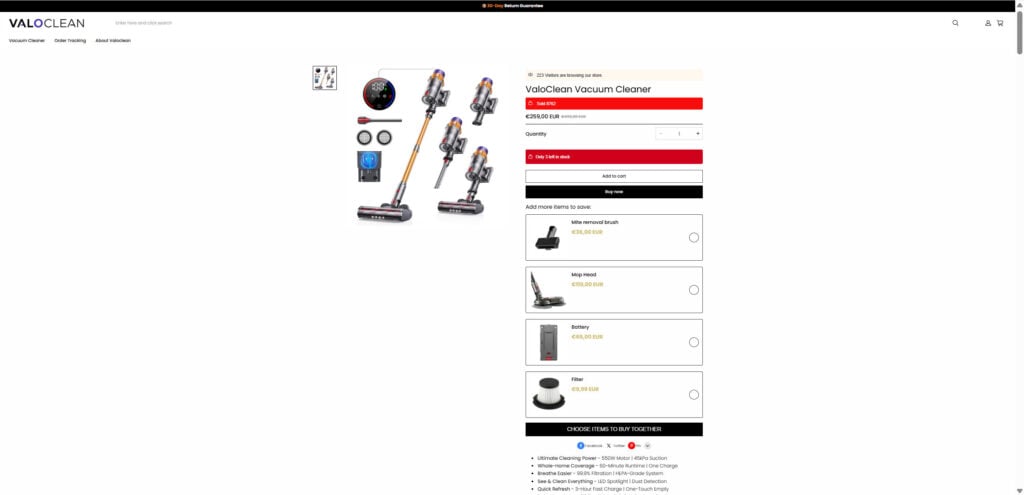
Overview of the ValoClean Vacuum Cleaner
At first glance, ValoClean looks impressive. Their website showcases sleek designs and premium-sounding features:
- High-Powered Motor: 550W with 45kPa suction, marketed as “ultimate cleaning power.”
- Extended Runtime: Up to 60 minutes of continuous use on a single charge.
- HEPA Filtration: 99.9% dust and allergen removal for cleaner air.
- LED Touch Display: A futuristic control screen showing suction levels and battery life.
- Auto Mode: Claims to detect dirt levels and adjust suction automatically.
- Accessories Included: Wall-mount charging station, multiple heads for different surfaces, and optional add-ons like a mop head and mite brush.
The price on their official website is €259, with add-ons like replacement batteries (€65) or mop attachments (€119) costing extra. Compare this to the Alibaba price of $53–$57 USD for identical models, and the huge markup becomes clear.
Why ValoClean Appeals to Buyers
- Looks Like a Dyson Alternative: With a design similar to Dyson stick vacuums, ValoClean positions itself as a budget-friendly competitor.
- Aggressive Discounts: The website often lists “50% off” or “Limited Time Only” deals, making buyers feel like they’re getting a bargain.
- Promised Convenience: Lightweight, cordless, and versatile—ideal for quick cleaning and pet owners.
- Health Appeal: Emphasis on HEPA filtration and “99.9% dust removal” resonates with families concerned about allergies.
Red Flags in the Claims
But when you dig deeper, there are major red flags:
- Exaggerated Specs: While ads say 550W and 45kPa suction, most budget vacuums in this price range can’t realistically achieve that. Even Dyson’s flagship models are below these numbers.
- Website Age: Domain checks reveal the ValoClean website was only registered on May 6, 2025. That makes it very new, with no established reputation.
- Trustpilot Complaints: Several negative reviews cite delayed shipping, poor suction power, and unresponsive customer support.
- Dropshipping Signs: Identical vacuums are available wholesale on Alibaba for under $60, proving ValoClean is marking up prices over 4–5x.
How The ValoClean Operation Works
The ValoClean vacuum cleaner follows the classic dropshipping playbook. Here’s how the operation works in detail:
Step 1: Sourcing Cheap Products
Generic stick vacuums are mass-produced in factories in China and listed on wholesale sites like Alibaba for $50–$60 USD. These vacuums are not unique to ValoClean—they’re available to anyone willing to rebrand them.
Step 2: Creating a “Premium” Brand
Entrepreneurs buy these vacuums and create a branded storefront, in this case, ValoClean. The product is given a sleek website, premium-looking images, and exaggerated performance claims.
Step 3: Inflated Pricing
While the vacuum is sourced for under $60, ValoClean sells it for €259 (over $275 USD), adding optional extras to further inflate revenue. The “original” price of €499 is likely fabricated to make the discount appear massive.
Step 4: Aggressive Marketing
ValoClean runs social media ads on Facebook, Instagram, and TikTok, highlighting:
- Dyson-like designs
- Huge discounts
- Urgency tactics like “Only 3 left in stock” or “223 people are viewing this now”
- Emotional triggers like showing families, pets, and allergy-sensitive households benefiting from “cleaner air”
Step 5: Manipulated Reviews and Ratings
The website shows 4.9-star ratings and glowing testimonials. However, on independent platforms like Trustpilot, reviews are mixed or negative. Some customers never received their orders, while others complain about weak suction and cheap build quality.
Step 6: Complicated Refunds
Although the website claims a “30-day return guarantee,” the fine print makes refunds very difficult:
- Customers often have to ship returns back to China, which can cost nearly as much as the vacuum.
- Some refunds are denied outright, citing “hygiene” or “used condition” policies.
- Customer service is often unresponsive or provides vague answers.
Step 7: Rebranding After Backlash
Dropshipping stores often operate for a few months under one name before rebranding when complaints pile up. If ValoClean gains too many negative reviews, the same vacuum will likely be sold under a different brand name.
What To Do If You Have Fallen Victim
If you purchased a ValoClean vacuum and feel misled, here are the steps to take:
1. Contact ValoClean Directly
- Request a refund through their official email or contact form.
- Keep records of your order, tracking numbers, and communications.
2. File a Chargeback
- If the company refuses to refund you, contact your bank or credit card provider.
- Provide evidence of misleading advertising and the Alibaba product listings that show the true cost.
3. Report the Website
- US buyers: Report to the Federal Trade Commission (FTC).
- UK buyers: Report to Action Fraud.
- EU buyers: Report to the European Consumer Centre (ECC-Net).
4. Leave Honest Reviews
Post your experience on Trustpilot, Reddit, SiteJabber, and Facebook groups to warn other buyers. Public awareness makes it harder for dropshipping brands to thrive.
5. Avoid Similar Scams in the Future
Be cautious of websites that:
- Show constant countdown timers or “limited stock” warnings.
- Use inflated “original” prices with huge discounts.
- Have very recent domain registrations.
- Sell products identical to those on Alibaba or AliExpress.
6. Choose Safer Alternatives
Instead of gambling on questionable brands, buy from trusted vacuum cleaner manufacturers:
- Dyson V11 or V15 Detect – High-end performance with real warranties.
- Shark Cordless Stick Vacuums – Affordable alternatives with strong suction.
- Hoover and Bissell – Reliable and budget-friendly with customer support.
The Bottom Line
The ValoClean Vacuum Cleaner is marketed as a high-performance cordless vacuum with premium features, but the reality tells a different story. The brand is new, unverified, and selling generic vacuums from Alibaba at inflated prices.
While some buyers may receive a functional product, the exaggerated claims, refund difficulties, and lack of transparency make ValoClean look more like a dropshipping opearation than a trustworthy appliance brand.
Verdict: Should you buy it? No. If you want reliable suction power, long battery life, and true HEPA filtration, stick to established brands with proven track records.








