

Weight loss supplements promising dramatic results with little effort have flooded the market in recent years. With enticing promotions and transformations, these products capture the attention of consumers frustrated with stubborn excess fat. One of the latest to gain traction is a supplement called Veronvy Weight Loss Drops.
Veronvy drops claim to offer revolutionary, natural weight loss just by placing a few drops under your tongue daily. With bold promises of rapid fat burning without diet or exercise, Veronvy has become another “miracle” weight loss staple.
But with so many overhyped supplements failing to deliver, should you trust the marketing claims and invest in Veronvy drops? Or are they just another shady scam?
This in-depth review will scrutinize Veronvy’s formulation, advertised benefits, scientific backing, potential red flags, customer reviews and more to uncover the truth about this popular diet drop product.
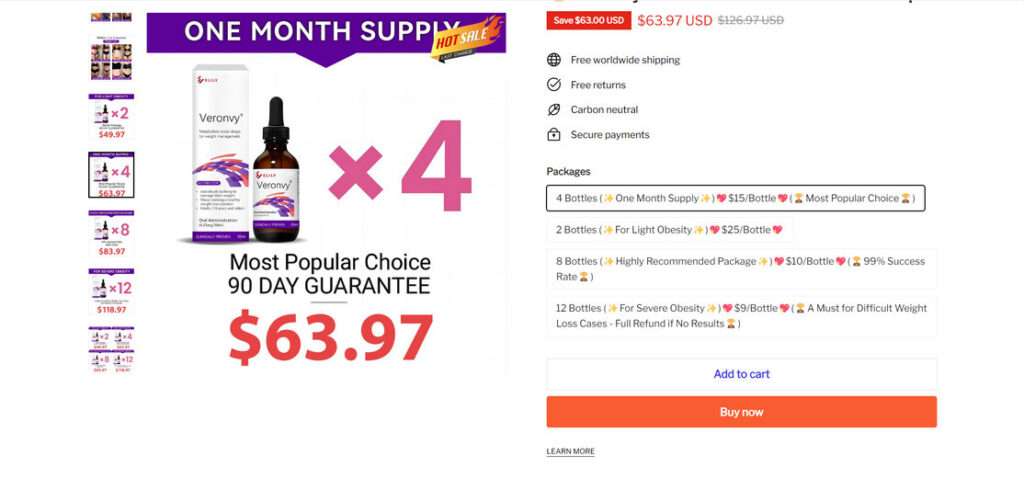
Overview of Veronvy Weight Loss Drops
Veronvy drops are marketed as a unique liquid weight loss formula that works to “target fat directly” via sublingual absorption under the tongue.
The company touts an all-natural blend of herbs, plant extracts and nutrients designed to attack stubborn fat through enhanced metabolism, appetite suppression, and other processes.
Some of the touted benefits of the Veronvy drops formula include:
- Rapid fat burning
- Suppressed appetite
- Increased energy
- Faster metabolism
- Reduced fat cell production
- Weight loss without dieting or exercise
With promises of easy, fast, risk-free weight loss just by taking a few drops daily, Veronvy is positioned as a breakthrough solution for unwanted body fat. But what does science have to say about the ingredients inside and the bold claims made?
Analyzing the Veronvy Drops Formula
Unlike many shady weight loss supplements, Veronvy does disclose its primary active ingredients on the website and product labels. The proprietary formula contains:
Garcinia Cambogia
This popular weight loss fruit contains hydroxycitric acid (HCA) purported to inhibit fat production and reduce appetite by increasing serotonin. However, multiple studies conclude HCA has minimal to no impact on body weight in humans [1].
Green Tea Extract
Some research shows green tea extract, with EGCG and caffeine, may potentially help burn calories and fat by enhancing thermogenesis. However, effects tend to be modest even at optimal doses [2].
Apple Cider Vinegar
While apple cider vinegar is commonly promoted for weight loss and digestive health, evidence from human studies suggests minimal effects, if any, on fat loss [3].
Grapefruit Essential Oil
Grapefruit oil is claimed to reduce appetite and prevent weight gain in animal studies. But current research does not confirm these effects translate to meaningful weight loss in humans [4].
Peppermint Essential Oil
Some studies suggest peppermint oil may improve digestion and suppress appetite temporarily. But there’s insufficient evidence that peppermint oil promotes significant weight loss [5].
Stevia Leaf Extract
Stevia is often added to supplements for its sweet taste, not weight loss properties. There’s no proof stevia extracts in Veronvy drops impact appetite, metabolism, or fat burning.
Critical Analysis of Ingredients and Claims
Reviewing the research on Veronvy’s formula reveals there is very little evidence confirming these herbal extracts and oils can produce dramatic weight loss results as advertised.
At best, some minor ingredients like green tea and ACV may provide mild metabolism or appetite effects. But for substantial fat loss, studies use larger, optimized ingredient doses than what is likely contained in Veronvy drops.
Significant scientific flaws in Veronvy’s marketing claims include:
- No proof garcinia cambogia inhibits fat production or causes weight loss in humans at typical supplemental doses.
- No evidence confirming grapefruit or peppermint essential oils result in appetite suppression or weight loss.
- Lack of data on the concentrations of active ingredients.
- No clinical trials on the formula as a whole demonstrating safety and efficacy.
For a product promoted as “revolutionary”, Veronvy drops lack scientific validation of their weight loss and fat burning powers. Based on the evidence, it’s improbable the ingredients would produce anything beyond minor or negligible results.
Potential Health Risks and Side Effects
With promises of being all natural, stimulant-free and made in an FDA-registered facility, Veronvy drops are marketed as completely safe. But several factors suggest consumers should exhibit caution:
Firstly, there are no human clinical trials establishing safety at the doses used. Natural extracts can still potentially cause adverse effects depending on the dosage and individual.
Secondly, certain ingredients like garcinia cambogia and green tea extract may interact with medications or cause complications in people with health conditions [6]. Pregnant/nursing women and those with medical issues should consult a doctor before use.
Finally, some users have reported side effects like headaches, nausea, abdominal pain, increased heart rate and vision changes. While generally mild, these side effects contribute to questions regarding Veronvy’s safety.
Considering the lack of evidence and testing, Veronvy drops carry uncertain risks that consumers should be aware of. Talk to your doctor before trying them if you have any concerns.
Veronvy Drop Reviews and Customer Complaints
The Veronvy website shows several impressive before-and-after photos and weight loss stories from people who apparently lost significant weight using the drops. However, such testimonials on a company’s own sales site always need to be scrutinized closely. There’s no proof they underwent any real transformation from using this specific product.
Searching for independent Veronvy drops reviews reveals very mixed and concerning experiences. Many reviews calling it a scam point towards:
- Failure to produce any actual weight loss for most users.
- Misleading marketing using fake before-and-after images.
- Unauthorized monthly billings for product not ordered.
- Difficulty contacting company and receiving refunds.
- Potentially dangerous side effects.
While some reviews praise Veronvy drops, many of them appear fake or posted by affiliates merely trying to profit from sales. Based on in-depth analysis, Veronvy has many telltale signs of a weight loss scam preying on desperate consumers through deceptive promotion of a likely ineffective product.
Verdict: Should You Buy Veronvy Weight Loss Drops?
Determining the legitimacy of weight loss supplements requires meticulous analysis of the evidence, marketing tactics and consumer experiences. When it comes to Veronvy Weight Loss drops, there are several concerning factors:
- No scientific evidence verifying dramatic weight loss claims.
- Misleading promotions using dubious before-and-after photos and testimonials.
- No transparency about ingredient concentrations.
- Multiple negative reviews and scam accusations.
- Side effect and safety risks.
Considering the available information, Veronvy has not proven to be a supplement capable of significant or consistent weight loss results for customers. At best, extremely mild benefits might be possible for some but are unlikely to lead to dramatic transformation.
While certain ingredients like green tea extract may provide general wellness advantages, Veronvy drops are rife with red flags as an effective weight loss solution. For those seeking substantial fat loss, spending $50-$200 on this unproven product constitutes a dubious investment.
Veronvy drops are far from the miraculous effortless solution for weight management they’re marketed as. Avoid falling for the hype and potential scam. You’re better off saving your money and prioritizing evidence-based diet and lifestyle measures – not overpriced diet drops with no clinical backing.
References
[1] https://pubmed.ncbi.nlm.nih.gov/28316237/
[2] https://pubmed.ncbi.nlm.nih.gov/30385132/
[3] https://pubmed.ncbi.nlm.nih.gov/34373223/
[4] https://pubmed.ncbi.nlm.nih.gov/27103999/
[5] https://pubmed.ncbi.nlm.nih.gov/22804815/
[6] https://www.ncbi.nlm.nih.gov/pmc/articles/PMC7161052/
This article is for educational purposes only and does not constitute professional, financial or legal advice. The content is intended for general information and should not be construed as definitive guidance. Information contained herein is subject to change without notice.  For concerns, please contact us via the provided form.
If you are the owner of the website or product in question and wish to offer clarifications regarding your business or website, please reach out to us through the provided Contact Form.








