

Lately, social feeds have been flooded with the same kind of “miracle supplement” pitch: dramatic videos, bold headlines, and a product that supposedly fixes what doctors “won’t tell you.” VisiUltra is one of the latest names being pushed through these aggressive campaigns. And when you slow down and look closely, the promotion follows a familiar playbook built on hype, pressure, and shaky evidence.
If you’re thinking about buying VisiUltra, it helps to understand how these campaigns work, what the marketing language really means, and what warning signs to watch for before you enter your payment details. Because the biggest risk is not just “it might not work” but how quickly a slick pitch can push you into a purchase you regret.
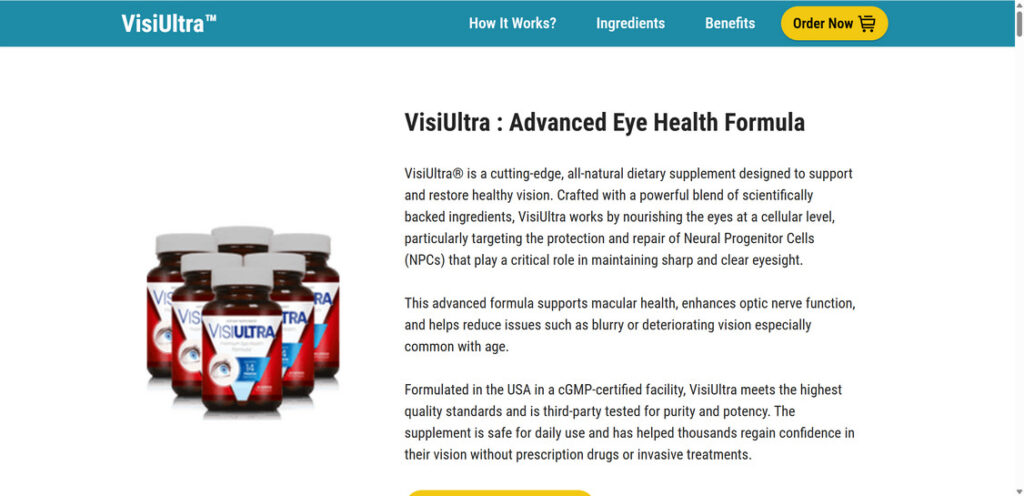
How VisiUltra Is Marketed: The Scam-Ad Playbook
VisiUltra’s promotions are less about education and more about momentum. The ads are designed to hit you fast, trigger emotion, and move you off the platform to a page that does the “closing.” That’s why the messaging often feels urgent, dramatic, and strangely familiar.
High-Pressure Social Media Ads
Most people first encounter VisiUltra through Facebook, Instagram, TikTok, or YouTube-style short videos. The formula tends to look like this: a confident narrator, a shocking claim, and a promise that the “real truth” is just one click away. Sometimes the ad appears to feature a recognizable public figure, a “doctor,” or a news anchor style presentation. When that happens, it may be a manipulated clip, a voice clone, or an AI-generated deepfake intended to borrow credibility.
The headlines do the heavy lifting. You’ll see variations of “doctors hate this,” “one weird trick,” “banned by Big Pharma,” or “fix your body naturally.” It’s clickbait with a purpose: get you curious enough to leave the platform and land on a page with fewer guardrails and more pressure.
Advertorials That Mimic News Sites
After the click, the next step is often an “article” that looks like a health magazine feature or a news report. These pages are built to feel trustworthy at a glance: headline, author name, comments section, “as seen on” style logos, and dramatic before-and-after stories.
Look closer and the credibility tends to fall apart. The studies are vague or uncited. The experts are hard to verify. The claims are huge, but the proof is thin. The goal is to create a sense that you’ve “researched it,” when you’ve actually stayed inside a funnel designed to sell.
Email, Retargeting, and “You Almost Missed It” Follow-Ups
If you’ve visited the sales page before, you might see follow-up ads that feel personal: “Still thinking about it?” or “Last chance for the discount.” Some campaigns also use spammy email blasts that recycle the same language and urgency, pushing you back into the same checkout flow.
This is intentional. The longer you’re exposed to the message, the more familiar it feels. Familiarity can be mistaken for trust, especially when the ads repeat the same “breakthrough” story over and over.
What VisiUltra Claims to Do
VisiUltra is typically positioned as a “natural” solution with unusually broad benefits. The pitch often promises fast, noticeable results with little effort and minimal risk. On the surface, the branding is clean and confident, and the copy leans heavily on reassuring phrases that sound official.
Common claims and positioning usually include some mix of the following:
- All-natural ingredients
- Non-GMO
- Made in the USA
- Manufactured in an FDA-registered facility
- GMP compliant manufacturing
These phrases can sound like proof. But in practice, they often function as marketing armor: comforting language that distracts from the bigger questions, like whether the product is backed by strong evidence, whether the dosing is meaningful, and how transparent the brand is about who is behind it.
What Those Labels Really Mean (And What They Don’t)
Supplement marketing leans hard on technical-sounding claims because they create the impression of regulation and legitimacy. The catch is that many of these phrases do not mean what shoppers assume they mean.
“Manufactured in an FDA-Registered Facility”
This is one of the most commonly misunderstood lines in the supplement world. Facilities can be registered, but that does not mean the FDA reviewed the product for effectiveness, verified the claims, or approved the supplement the way it approves medications. In other words, “FDA-registered” is not the same as “FDA-approved.”
“All-Natural” and “Non-GMO”
These are often used as trust signals, but they don’t confirm quality, safety, or effectiveness. A product can be “natural” and still be poorly formulated, under-dosed, contaminated, or simply ineffective. These terms are more about vibe than verification.
“GMP Certified”
GMP refers to manufacturing standards, not clinical proof. Even if a product is made in a GMP facility, that does not prove it will deliver the outcomes advertised. It only suggests certain processes exist to reduce manufacturing problems.
“Made in the USA”
This tells you where the product was manufactured or packaged, not where each ingredient came from, how it was sourced, or whether the formula matches the strength implied in the marketing. It can be true and still reveal very little.
Testimonials: Why They Look Convincing (Even When They Aren’t)
VisiUltra sales pages often feature glowing reviews, dramatic transformations, and personal stories that feel emotionally real. That’s not an accident. Testimonials are one of the easiest “proof” tools to manufacture, curate, or exaggerate because shoppers rarely verify them.
A few common patterns show up again and again in supplement funnels:
- Reviews that read like ad copy, with repeated phrases and perfect structure
- Before-and-after photos that look like stock images or unrelated comparisons
- Only positive feedback, with no neutral experiences or mild complaints
- Vague results without details on timing, dosage, or lifestyle changes
Outside the official site, you may find a very different experience reported: “no noticeable change,” “refund problems,” “customer support stopped responding,” or complaints about unexpected charges. The contrast itself is a red flag.
The “Template Site” Problem: Why It Matters
One of the biggest clues that a supplement campaign is questionable is how interchangeable the entire presentation feels. Many of these products are sold through copy-and-paste funnels. The name changes, the bottle label changes, the “doctor story” changes, but the structure stays identical.
Typical template elements include:
- Countdown timers implying a deal is about to end
- “Only X bottles left” scarcity messages
- Pop-ups claiming recent purchases from random cities
- Long-form pages that discourage you from leaving
- Multiple redirects before checkout
These are not “design choices.” They are psychological levers meant to speed up your decision and reduce second thoughts.
Where’s the Evidence? Buzzwords vs. Proof
The most serious issue with many aggressively marketed supplements is the gap between the promise and the proof. The ads often suggest dramatic health outcomes, but the supporting evidence is thin, vague, or missing entirely.
Instead of clear, verifiable research, the marketing tends to rely on phrases like:
- “Clinically proven” (without naming the study)
- “Doctor recommended” (without identifying the doctor)
- “Breakthrough formula” (a sales phrase, not a scientific one)
When a product is truly backed by meaningful research, it’s usually specific: ingredient names, dosages, study references, and clear limits on what the evidence does and does not show. If everything is dramatic but nothing is concrete, that’s a problem.
Why These Campaigns Convert: Urgency, Hope, and Vulnerability
These ads work because they speak to real frustration. People dealing with long-term health issues, insecurity, or fear are more likely to be drawn to a simple promise that feels empowering. The campaign doesn’t need to prove the product works. It only needs to make the buyer feel like this might be the one thing that finally helps.
To push that feeling over the line, the funnel often adds urgency. “Limited supply.” “Today only.” “You’ve been selected.” Those triggers reduce careful thinking and increase impulse action, especially when the page is engineered to keep you scrolling until you hit the order button.
How to Protect Yourself From Supplement Scams Like VisiUltra
If a supplement is being marketed aggressively, assume you’re seeing a sales machine, not a health education effort. Use a simple checklist before you buy anything.
- Search outside the sales page: Look for independent discussions, not just “review sites” that sound like ads.
- Verify the brand: Find a real company name, physical address, and customer support that responds.
- Watch for manipulative framing: “Banned,” “suppressed,” “doctors hate this,” and similar lines are persuasion tactics.
- Be cautious with “risk-free” promises: Refund policies can be strict, complicated, or hard to use in practice.
- Talk to a qualified professional: Especially if you have a medical condition or take medications.
Red Flags Checklist
- Celebrity endorsements that feel too perfect or oddly scripted
- News-style pages with no clear publisher or editorial accountability
- Miracle language: “cure,” “reverses,” “instantly,” “guaranteed,” “works for everyone”
- Scarcity timers and pressure pop-ups
- Vague ingredient info, hidden dosages, or unclear sourcing
- Checkout pages that add bundles by default or push “today only” upgrades
Bottom Line
VisiUltra is not the first product to be promoted with manipulative supplement marketing, and it won’t be the last. The pattern is consistent: flashy ads, borrowed credibility, dramatic claims, templated funnels, and a heavy focus on getting the sale before you slow down and verify anything.
That doesn’t automatically prove every bottle is “fake,” but it does mean the campaign is built like a high-pressure funnel, not a trustworthy health brand. If the marketing feels engineered to override your caution, treat that feeling as a signal, not a coincidence.
Final Thoughts
Supplements can have a place in wellness, but real results usually look boring: consistent habits, realistic timelines, and evidence-based guidance. When a product is sold as a shortcut to dramatic change, especially through sensational ads, it deserves extra skepticism.
If you’re ever unsure, step back, research outside the funnel, and don’t let urgency decide for you. Your health and your wallet both deserve more than a sales page’s promise.








