

In recent weeks, a new wave of aggressive marketing campaigns has emerged across social media platforms like Facebook, Instagram, and TikTok. At the center of this flurry is VitaRenew, a so-called “natural supplement” that promises remarkable health benefits. But a closer look at the advertisements and the product itself reveals a troubling pattern of misleading tactics and unsupported claims.
Before you consider buying VitaRenew, it’s essential to understand the full scope of what you’re dealing with. From celebrity deepfakes to fake news endorsements, the VitaRenew scam ad campaign exemplifies how easily misinformation can spread in today’s digital world.
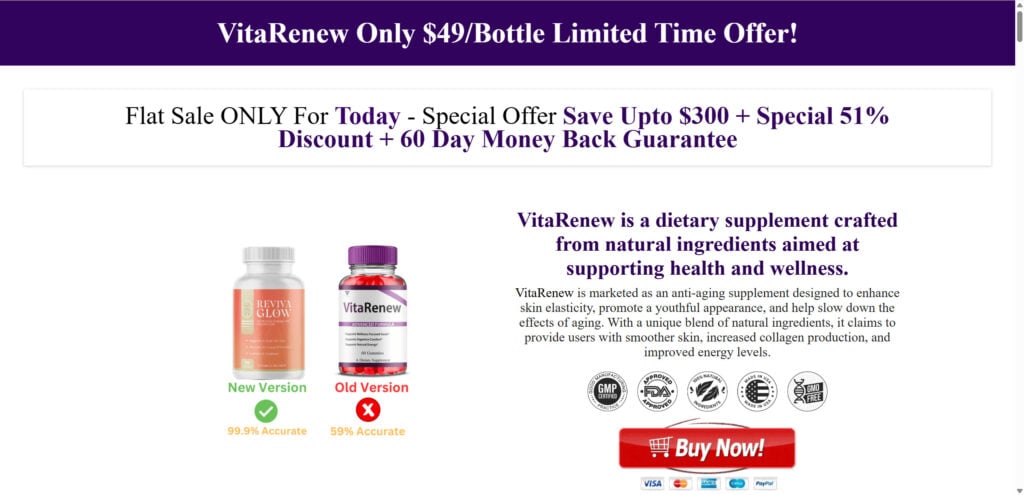
The Rise of Scam Ads: How VitaRenew Is Promoted Online
Misleading Claims Across Social Platforms
One of the most alarming aspects of VitaRenew’s promotion is how it’s marketed on platforms that millions use every day. You may have seen an ad featuring a well-known celebrity, enthusiastically endorsing the product in what appears to be a personalized video. In reality, these are often AI-generated deepfakes — digital forgeries designed to trick viewers into trusting the brand.
Accompanying these videos are headlines like “The Natural Cure Doctors Don’t Want You to Know About” or “One Pill That Reverses Aging Overnight.” These are classic examples of clickbait designed to lure viewers into clicking through to a sales page.
Fake News Articles and Spam Email Campaigns
In addition to social media, VitaRenew is promoted via spam emails and fake news articles. These are often styled to look like legitimate medical journals or popular news websites, complete with fabricated studies and expert quotes. But upon closer inspection, they lack citations, scientific backing, or any real connection to trusted health institutions.
These tactics create a false sense of legitimacy and urgency, pushing users to purchase without doing proper research.
What VitaRenew Claims to Offer
At first glance, VitaRenew appears convincing. Its website is sleek, professionally designed, and loaded with testimonials. It claims to be:
- All-Natural
- GMO-Free
- Made in the USA
- Manufactured in an FDA-Registered Facility
- Certified by GMP (Good Manufacturing Practices)
While these sound impressive, they don’t necessarily mean the product is effective or safe.
Decoding the Labels and Certifications
“Manufactured in an FDA-Registered Facility”
This phrase is often misinterpreted. While the facility may be registered with the FDA, the product itself has not been evaluated, tested, or approved by the agency. This is a crucial distinction, especially for supplements making medical or therapeutic claims.
“All-Natural” and “GMO-Free”
These buzzwords are frequently used in the supplement industry. However, they don’t provide any scientific assurance of quality or effectiveness. In fact, all dietary supplements must already disclose non-natural or GMO ingredients by law, so such claims are more marketing than meaningful information.
“Made in the USA”
This tells consumers where the product is assembled but says nothing about the quality of the ingredients, their sources, or whether the final product meets safety standards.
The Truth Behind the Testimonials
User reviews featured on the VitaRenew website are overwhelmingly positive, often including before-and-after photos, glowing stories, and even video testimonials. But many of these can be fabricated or cherry-picked. It’s not uncommon for such products to pay actors or use stock photos to create the illusion of widespread success.
When looking beyond the official site to independent review platforms or consumer forums, a different picture often emerges: users report minimal to no benefits, difficulty obtaining refunds, and even unexpected side effects.
The Template Behind the Curtain
A telltale sign of a questionable supplement is the use of a templated website design — one that mirrors dozens of other shady products. These sites often include:
- Countdown timers suggesting limited stock
- Pop-ups showing fake recent purchases
- Over-the-top claims with no citations
- Redirects that make it hard to navigate away
This design is intended to pressure visitors into making quick decisions without doing any outside research.
No Scientific Backing, Just Buzzwords
Most concerning is the complete lack of credible scientific evidence supporting the claims made about VitaRenew. There are rarely any peer-reviewed studies cited, nor is there transparency about the ingredient list or dosage amounts.
Instead, the marketing relies on vague phrases like:
- “Clinically Proven”
- “Doctor Recommended”
- “Breakthrough Formula”
Without context or verification, these terms mean little.
Why the Scam Works: The Psychology of Desperation
Many people looking at products like VitaRenew are in vulnerable situations — dealing with chronic health conditions, weight struggles, or other long-standing issues. Scam ads prey on this vulnerability by offering a simple solution to complex problems.
These ads use emotional appeals, fake success stories, and a sense of urgency to override skepticism. The goal is to get your credit card information before you have time to think it through.
How to Protect Yourself From Scam Supplements
Here are steps you can take to avoid falling for the next VitaRenew:
- Research Thoroughly: Look for independent reviews from trusted sources.
- Check the FDA Database: If a supplement makes bold claims, check whether it’s listed or warned against.
- Scrutinize Testimonials: Real reviews are usually mixed. If everything is overly positive, it’s likely curated or fake.
- Avoid Impulse Purchases: Don’t let countdown timers or fake scarcity force your hand.
- Consult a Healthcare Professional: Always speak with a qualified medical provider before starting any supplement.
Red Flags to Watch For
- Ads with AI-generated celebrity endorsements
- Websites with no contact information or physical address
- Vague or overused health claims
- Promises of “miracle” cures
- Lack of transparency about ingredients
The Bottom Line: Be Wary, Stay Informed
VitaRenew is not unique. It follows a formula seen in many health supplement scams that prioritize profit over people. From misleading social media campaigns to fake news articles and unverifiable testimonials, every aspect of the VitaRenew marketing strategy is designed to manipulate, not inform.
The supplement industry is largely unregulated compared to pharmaceuticals, making it a fertile ground for bad actors. Your best defense is critical thinking, proper research, and consultation with healthcare professionals.
Final Thoughts
While the appeal of an all-in-one solution to health problems is strong, the reality is far more nuanced. Supplements like VitaRenew, marketed through deceptive tactics and unsupported claims, rarely live up to their promises.
Instead of chasing shortcuts, focus on evidence-based health strategies. Nutrition, exercise, sleep, and medical advice are proven pillars of good health. Don’t let marketing hype distract you from what truly works.
Stay skeptical, stay smart, and most importantly, stay safe.
Note: If you suspect a product may be fraudulent or harmful, report it to the FDA’s MedWatch program or your country’s equivalent consumer protection agency.









Just received order from VitaRenew. Sounded really good especially with Dr Oz and Dr Phil recommending
it. Boy was I mistaken!!! The only suppliment that was on the label was apple cider vinegar. Other ingredients listed was basically nothing helpful. TOTAL RIPOFF!!!!
Hi Carol, thank you for sharing this.
That is a major red flag. These products are often pushed with fake or misleading celebrity endorsements, but when buyers finally receive them, the label and ingredients do not match the dramatic claims in the ads. If the only meaningful ingredient on the label is apple cider vinegar, that is a far cry from what many of these promotions imply.
Your comment will help warn others before they order.
Does this apply when buying from official website?
Hi Nancy, even on an “official” website for products like this, the red flags (like misleading claims or hard-to-cancel subscriptions) often still apply. It is always safer to consult with a healthcare professional before buying supplements promoted through viral ads.
This company is a SCAM. You order one product and get something totally different. As soon as I received my package, I opened it up and noticed that they were ACV gummies and not the herbs that I ordered. I immediately called and emailed, but nothing. Then I called and emailed Cartpanda, which is the company that took my payment, and they said they would give me 50% back and to just take the product to see how I feel. Just after I told her I’m allergic to ACV, I was floored, and I told her that was not good advice to give.
You have to pay for your shipping and get a tracking number to send the product back. I talked with BBB and filed a complaint against this company(Vitarenew) . I let the lady know it better be the full amount as stated on their website, and she stated it was a guaranteed refund.
Hi Lisa, thank you for sharing this.
What you described is a major red flag: you ordered one product, received something different, were offered only a partial refund, and were told to keep using a product even after explaining that you are allergic to it. That is not acceptable.
You did the right thing by refusing the 50% offer, documenting everything, and filing a BBB complaint. Keep the packaging, product photos, emails, and any screenshots of the “guaranteed refund” promise. That evidence can be very helpful if you dispute the charge with your bank or card issuer.
If I bought this yesterday, what is my recourse for a refund? Possible?
Hi Mary, yes, it may still be possible, especially since the purchase was only yesterday.
Act quickly. Save your order confirmation, receipt, screenshots of the product page, and any email you received after buying. Then contact your card issuer, bank, or PayPal and explain that you believe the product may have been sold through misleading advertising. If nothing has shipped yet, ask whether they can stop or dispute the charge early. If something does arrive and it is not what was promised, dispute it as item not as described. If it never arrives, dispute it as item not received.
Also keep an eye out for extra charges or subscription billing, because some of these sellers try to bill again after the first order.
How do I contact vitarenew
Hi Karen, if the seller is not clearly providing real contact details on the site, that is already a warning sign.
I would first check your order confirmation email, the charge on your bank statement, and any packaging you received for a merchant name, email address, or return information. If you already tried that and cannot get a real response, the safest next step is usually to contact your bank or card issuer and dispute the charge if the product was misleading, never arrived, or the seller is unresponsive.