

Electricity bills can put a major dent in your wallet, especially during the sweltering summer and frigid winter months when air conditioning and heating are in constant use. Who wouldn’t want to slash those expensive utility bills in half? That’s the enticing promise made by the VoltBuddy device, a supposed “electricity bill reduction” product marketed heavily online and on social media. But is VoltBuddy legit? Or is it just another energy savings scam? Let’s take an in-depth look at how the VoltBuddy scam works.
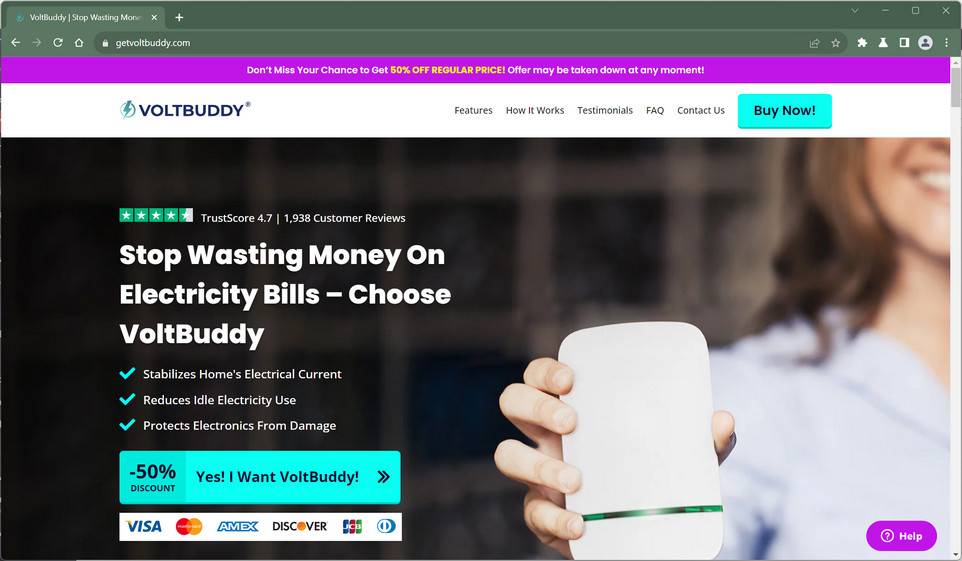
Overview of the VoltBuddy Scam
VoltBuddy is advertised as a small electrical device that you simply plug into your home’s electrical outlet. The maker claims it can reduce your home’s electricity usage by up to 40% by “stabilizing your home’s electrical current.” Sounds too good to be true? That’s because it is.
The VoltBuddy scam uses deceptive marketing techniques and misleading claims to hook unsuspecting consumers into spending $49 on a worthless product. The company promotes VoltBuddy through:
- Slick website with fake reviews
- Facebook ads
- TikTok videos
- Instagram posts
- Fake celebrity endorsements
- Fake news articles that look like the real CNN, ABC, Fox News websites
All of these promote VoltBuddy as a revolutionary device backed by Elon Musk, Bill Gates, and other tech billionaires. The ads are filled with supposed “success stories” of people who cut their electricity bill in half.
In reality, VoltBuddy does not reduce electricity usage at all. It contains basic electrical components that provide no meaningful energy savings. The “reviews” are fake, and the celebrity endorsements are fraudulent. The whole thing is an elaborate hoax designed to prey on people struggling with high electricity bills.
How the VoltBuddy Scam Works
The VoltBuddy scam relies on exaggerated and false claims about its energy-saving capabilities. Here are some of the deceptive tactics used by VoltBuddy marketers:
Claim: VoltBuddy reduces your electricity bill by stabilizing voltage
The VoltBuddy website and ads claim the device “stabilizes your home’s electrical current” and fixes voltage fluctuations that waste electricity.
The truth: Home voltage fluctuations have no impact on electricity usage. VoltBuddy does nothing to stabilize voltage or current in your home. Any small variations in home voltage are already smoothed out by your existing electrical system and appliances.
Claim: VoltBuddy reduces “idle electricity” waste
VoltBuddy ads claim the device reduces “idle electricity” – energy wasted by electronics when turned off or in standby mode.
The truth: There is no way VoltBuddy could impact idle electricity usage across all your home electronics and appliances. Any minor reduction would be negligible. Unplugging devices or using smart power strips are far more effective ways to reduce idle power waste.
Claim: VoltBuddy protects electronics from power surges
The ads suggest VoltBuddy will protect your expensive electronics like TVs and computers from power surges and electrical damage.
The truth: At best, VoltBuddy contains a very basic surge protector. But most homes already have much more sophisticated surge protectors, backups, and other devices to protect from electrical spikes. VoltBuddy offers no meaningful protection.
Claim: Developed by Tech Billionaires
VoltBuddy is touted as being developed by tech billionaires like Elon Musk, Bill Gates, and Mark Cuban.
The truth: There is zero evidence that VoltBuddy has anything to do with these tech titans. There are no proven ties or endorsements. Just fake ads using celebrity names and images without permission.
Claim: Featured on Trusted News Sites
To add legitimacy, VoltBuddy ads use logos of reputable news sites like CNN, ABC, USA Today, and Fox News – implying these outlets have featured favorable reports on VoltBuddy.
The truth: These trusted news sites have never reported on VoltBuddy. The logos are used without permission to try and establish credibility.
Claim: Real Customer Reviews & Testimonials
The VoltBuddy website and ads highlight glowing reviews and dramatic testimonials from supposed satisfied customers.
The truth: The reviews are completely fabricated. The people depicted do not exist – their images are stock photos. The stories of 50% savings are totally made up.
As you can see, VoltBuddy relies on an array of deceptive marketing tricks, false claims, fake reviews, and non-existent celebrity endorsements. It’s a textbook scam designed to extract money from consumers seeking legitimate ways to reduce electricity costs.
What’s Really Inside VoltBuddy?
So if VoltBuddy doesn’t actually reduce your electricity usage, what exactly is inside this device?
Technology analysis and unboxing videos reveal that VoltBuddy contains:
- Basic circuit board
- Capacitor
- LED light
- Standard electrical plug
In other words – cheap, basic components that provide no real energy saving function. The capacitor has a tiny power factor correction effect – but this does not reduce overall electricity usage. The LED light simply turns on when plugged in, giving the illusion that VoltBuddy is “working.”
Multiple electrical engineering experts have confirmed the VoltBuddy device has no measurable effect on residential energy consumption. It does not “stabilize” voltage, reduce waste from other electronics, or provide meaningful surge protection.
VoltBuddy is an empty scam device that does absolutely nothing to cut electricity usage or power bills.
Warning Signs of the VoltBuddy Scam
While the exaggerated claims and fake reviews are big red flags, there are a few other warning signs that VoltBuddy is a total scam:
- No actual company behind it – VoltBuddy has no website or company name attached besides the generic product site.
- No patent or technology – There is no patent, special technology, or innovation behind VoltBuddy.
- Name keeps changing – The same scam device is marketed under names like VoltBox, PowerVolt, SurgeVolt, etc.
- Not carried by major retailers – Legitimate electrical products are sold by hardware/home stores, not just online ads.
- Too good to be true – No plug-in device can seriously reduce home electricity usage by 40% as claimed.
- Fake limited time offers – The site claims “only 37 devices left!” to create false scarcity and urgency.
In summary, VoltBuddy exhibits all the characteristics of a fly-by-night scam. The outlandish claims about electrical savings, fake celebrity endorsements, and bait-and-switch marketing tactics should make anyone highly skeptical before buying.
Dangers of the VoltBuddy Scam
Besides simply wasting money on an ineffective device, there are more serious risks associated with products like VoltBuddy:
- Fire hazard – Electrical devices that are poorly made in other countries can overheat and ignite fires.
- Damages appliances – Faulty electrical devices can actually damage or fry your expensive appliances and electronics.
- Data theft – Deceptive sites like VoltBuddy’s can steal your credit card and personal information for identity theft.
- Delay real savings – Buying bogus products prevents you from taking legit steps to reduce energy usage and bills.
VoltBuddy can potentially put your home and financial information at risk. It also causes consumers to waste time and money on fake electrical savings rather than proven solutions.
How to Protect Yourself From the VoltBuddy Scam
Here are some tips to avoid getting conned by the VoltBuddy scam:
- Research first – Search online for the product name + terms like “scam,” “fake,” or “hoax” to find detailed exposes.
- Beware social media ads – Paid Facebook/Instagram promotions often hawk shady products. Verify claims.
- Check company reputation – Research the seller, parent company, reputation, and contact info before buying.
- Consult electrician – Ask your electrician if the product’s claims of electrical savings seem legit.
- Buy from reputable retailers – Purchase electrical devices only from major hardware/home stores, not random websites.
- See through exaggerated claims – If a product claims to drastically reduce your home electric bills with a simple plug-in device, it’s almost certainly a scam.
- Use credit card – When buying online, use a credit card so you can dispute/cancel fraudulent charges.
Being an informed consumer is the best way to avoid falling victim to “miracle electricity saver” scams like VoltBuddy which unfortunately continue to proliferate online and through deceptive ads. If an electrical product seems too good to be true – it almost certainly is.
What to Do If You Already Purchased VoltBuddy
If you already spent money on a VoltBuddy device, don’t panic. Here are some steps you can take to get your money back and report the scam:
Request an Immediate Refund
If you only recently purchased VoltBuddy directly from the product website, immediately contact the seller and request a full refund. Cite that the product does not work as advertised.
However, expect that the operators behind the scam will be unresponsive or provide excuses/runarounds. Persist if possible, but know that scammers ultimately make refunds difficult or impossible to deter fraud claims.
Dispute the Credit Card Charge
If you purchased VoltBuddy by credit card within the last 60-120 days, quickly dispute the charge as fraudulent with your credit card company. Explain it is a deceptive product/seller that does not work as marketed.
Under the Fair Credit Billing Act, credit card companies are required to properly investigate disputed charges for customers who report them promptly. Provide any supporting details that show VoltBuddy is an electricity bill scam.
Report VoltBuddy as a Scam
To help authorities identify and stop the VoltBuddy scam, report them to:
- Better Business Bureau – File a scam report at BBB.org
- Federal Trade Commission – Report fraud at ReportFraud.ftc.gov
- State Attorney General – Lookup and report scam to your state AG office
- Social Media Sites – Report deceptive VoltBuddy ads/accounts on Facebook, TikTok, Instagram, etc.
The more complaints that come in about VoltBuddy as a fraudulent operation, the more likely action will be taken against them like shutting down websites/ads.
Warn Others About VoltBuddy
Post reviews and warnings about VoltBuddy on consumer sites like Trustpilot and scam alert forums to help publicize that it is an electricity bill reduction scam. The more awareness that exists, the less victims VoltBuddy can claim.
By reporting the scam, disputing credit charges, and warning others, you can obtain refunds where possible and reduce the chances of VoltBuddy conning additional innocent consumers.
Don’t Fall for Electricity Bill Scams – Take Legit Steps to Reduce Energy Costs
With electricity bills continuing to rise, more and more misleading “power savings” devices like VoltBuddy will purport to offer easy solutions. But the reality is there are no quick fixes – just practical steps you can take to lower energy usage and costs in your home:
- Use energy efficient appliances – Replace old appliances like refrigerators, washers, etc. with new ENERGY STAR models.
- Enable smart power settings – Use energy saving modes on computers, TVs and other electronics.
- Switch to LED bulbs – LED lights use up to 90% less power than traditional incandescent bulbs.
- Seal air leaks – Caulk and weatherstrip areas where outside air seeps in to reduce heating/cooling needs.
- Insulate properly – Check that insulation levels in walls, attics, etc. meet guidelines to prevent heat loss.
- Use power strips – Plug electronics into power strips to completely cut off idle power drain.
- Adjust thermostat – Set your thermostat a few degrees higher in summer and lower in winter to reduce usage.
- Upgrade HVAC system – Higher efficiency central air and furnace systems can significanly cut electricity usage.
- Shift usage – Run high demand appliances like dishwashers outside of peak hours.
While it requires more effort than plugging in a magical device like VoltBuddy, taking the right energy efficiency steps can lead to proven electrical and cost savings in your home. Don’t waste money on fake electricity bill reductions – make legitimate upgrades and adjustments for long-term savings.
Frequently Asked Questions About VoltBuddy
Is VoltBuddy a real money-saving device?
No. VoltBuddy is a scam product that uses deceptive claims about reducing your electricity bills. It contains basic components that have no measurable impact on home energy usage.
How does VoltBuddy supposedly work?
The company claims VoltBuddy stabilizes electrical current, reduces wasted idle electricity, and protects devices from power surges. But in reality, the product provides none of these benefits in any meaningful way.
Can VoltBuddy reduce my electricity bill by 40% like advertised?
Absolutely not. There is no evidence VoltBuddy saves any electricity, let alone 40% on your utility bills. No plug-in device can drastically reduce your home’s energy usage.
Is VoltBuddy endorsed by celebrities like Elon Musk?
No. The ads use fake endorsements and celebrity likenesses without permission. VoltBuddy has no genuine celebrity backing or tech billionaire ties.
Are the customer reviews and testimonials real?
No. The VoltBuddy website features completely fabricated reviews and stories using stock images of fake users. None of the wild savings claims have been substantiated.
Is VoltBuddy sold in stores?
No. VoltBuddy is only sold online directly through dubious websites. Legitimate electrical products would be available through major retailers, not just shady websites.
Is buying VoltBuddy risky?
Yes. Besides wasting money, VoltBuddy could potentially be an electrical hazard, damage appliances, or steal your personal/financial data entered on the website.
How can I get a refund on VoltBuddy?
Unfortunately, scammers make refunds nearly impossible. But you can try disputing the charge with your credit card company or reporting VoltBuddy to authorities to warn others.
What are real ways to reduce electricity usage and bills?
Use energy efficient appliances, seal air leaks, upgrade insulation, switch to LEDs, adjust thermostat settings, etc. VoltBuddy offers no real savings – rely on proven efficiency steps.
The Bottom Line on VoltBuddy
In summary, VoltBuddy is a fraudulent scam operation that uses misleading claims, paid ads, fake reviews, and non-existent celebrity endorsements to peddle useless power savings devices for $49.
The cheap electrical components inside VoltBuddy provide no real electricity bill reduction as heavily touted in its deceptive marketing. At best, VoltBuddy is an overpriced LED light with a placebo effect. At worst, it’s an electrical hazard and fire risk.
Do not trust anything promoted by VoltBuddy. Their promises of slashing your electricity bills by 40% with a simple plug-in device are patently false. No magic scaler can override your actual energy usage.
Rather than wasting money on VoltBuddy, take concrete steps like using ENERGY STAR appliances, weather sealing your home, or upgrading your HVAC system if you want guaranteed reductions in electricity costs.
Be a smart consumer – don’t get tricked by VoltBuddy’s shady ads, fake testimonials and absurd electrical savings claims. Protect your wallet and your electrical system against this energy bill reduction scam.

Join the discussion
0 commentsShare your experience or ask a question about this article.
Discussion
Start the conversation
Have a question or something useful to share? Add the first comment.