

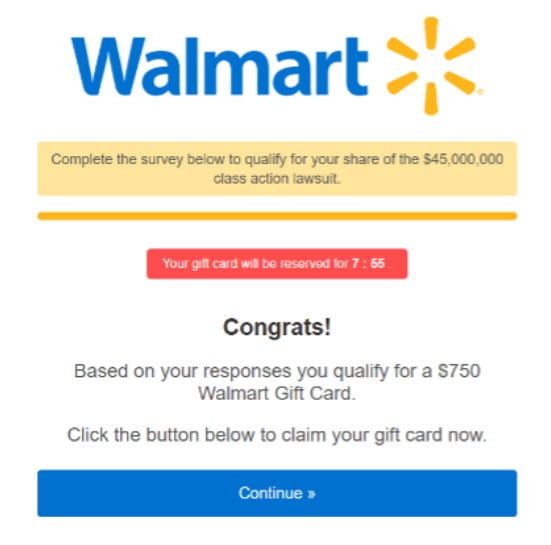
The Walmart Survey Rewards Scam is a fake giveaway scheme that impersonates Walmart and promises expensive prizes in exchange for completing a short customer survey.
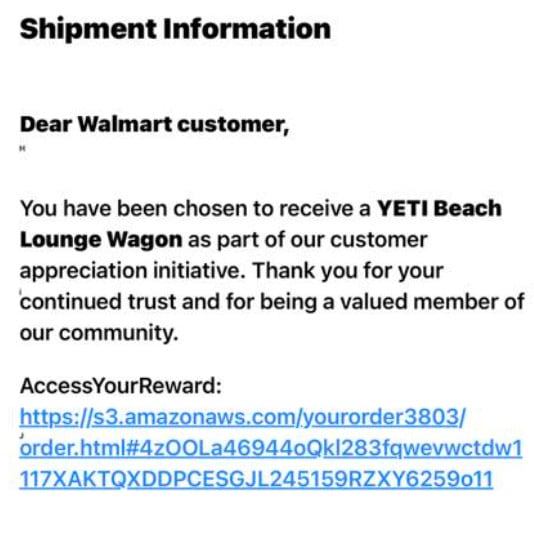
The prize may be a Dell laptop, Samsung Galaxy phone, Samsung TV, iPhone, iPad, YETI cooler, YETI Beach Lounge Wagon, kitchen appliance, gift card, or another high-value product.
The offer may look simple: answer a few questions, pick a prize box, confirm your details, and pay a small shipping fee such as $9.95. But the real goal is usually to collect personal information, steal payment details, and enroll victims into unwanted subscriptions that are difficult to cancel.
Scam Overview
The Walmart Survey Rewards Scam is a phishing-style reward scam that uses Walmart’s name, logo, and familiar retail branding to trick people into trusting a fake offer.
The scam usually starts with an email, text message, pop-up, or social media ad. The message says the recipient has been selected for a Walmart customer appreciation reward, loyalty gift, product testing opportunity, survey prize, or limited-time giveaway.
Common fake prizes include:
- Dell laptops
- Samsung Galaxy phones
- Samsung Smart TVs
- Apple iPhones
- Apple iPads
- YETI coolers
- YETI Beach Lounge Wagons
- Ninja kitchen appliances
- Dyson-style products
- Walmart gift cards
- Mystery boxes
- “Premium customer rewards”
The exact prize changes because scammers test different hooks. A Samsung phone may attract one group of victims. A Dell laptop may attract students or remote workers. A YETI wagon or cooler may perform better during summer. A Walmart gift card sounds believable because Walmart is a major retailer and many people shop there regularly.
The scam often uses names like:
- Walmart Survey Rewards
- Walmart Customer Rewards
- Walmart Loyalty Program
- Walmart Shopper Survey
- Walmart Product Testing
- Walmart Customer Appreciation
- Walmart Rewards Department
- Walmart Gift Center
These names sound official, but they are usually fabricated. The sender address may come from Gmail, Outlook, a random domain, a hacked account, or a spoofed email sender. Scammers often rely on the display name because many people see “Walmart Rewards” and do not check the full email address.
The link inside the message rarely goes to Walmart.com. Instead, it may lead to a random domain, a shortened link, a cloud-hosted page, or a chain of redirects. From there, victims are pushed through a fake survey funnel.
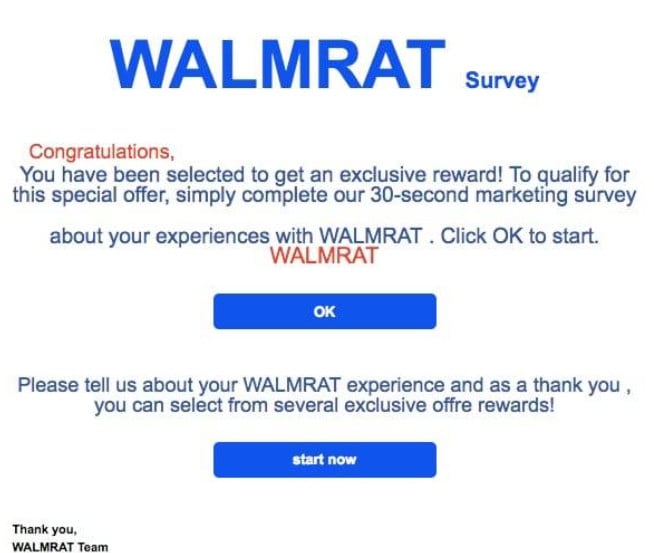
The survey usually asks only a few generic questions. It may ask whether you shop at Walmart, how often you visit, whether you are satisfied, and whether you would recommend Walmart. These questions are not real market research. They are used to make the scam feel like a legitimate customer feedback campaign.
After the survey, the page often shows a fake prize game. The victim is asked to pick a box. The first box may be empty. Then the page gives another attempt, and the second box reveals a prize. This is scripted. The “loss” and “win” are designed to make the result feel more believable.
Next, the victim is asked to enter personal information, including name, phone number, email address, and home address. The final page asks for credit card details to pay a small shipping or handling fee, often around $9.95.
That small payment is the trap. Once the card is entered, victims may be charged immediately and may later discover recurring subscription fees. These charges may appear under unrelated merchant names, making them harder to identify and cancel.
The scam is effective because it combines trust, excitement, and urgency. Walmart is a familiar brand. The prize feels valuable. The survey feels easy. The shipping fee feels small. By the time the victim reaches the payment page, the scam has already created enough momentum to make the request seem reasonable.
But a real prize does not require your credit card information for a surprise shipping fee. The FTC specifically warns that fake prize scams often ask victims to pay money or provide account information to receive a prize that does not exist.
How The Walmart Survey Rewards Scam Works
1. You Receive a Fake Walmart Reward Message
The scam begins with a message claiming that Walmart has selected you for a reward.
The message may say:
- “You have been chosen to receive a Walmart reward.”
- “Complete this short survey to claim your gift.”
- “Your Walmart customer appreciation prize is waiting.”
- “You have won a Samsung TV from Walmart.”
- “Your iPhone reward has been reserved.”
- “Claim your YETI product today.”
- “Answer 4 questions and receive your free gift.”
The message may use Walmart’s colors, logo, product images, and official-looking formatting. It may also include a large “Claim Your Reward” or “Start Survey” button.
2. The Sender Address Looks Suspicious
The sender name may say “Walmart Survey Rewards,” but the actual email address may not belong to Walmart.
This is one of the easiest ways to spot the scam. A legitimate Walmart email should come from a Walmart-controlled domain, not a random personal account or unrelated website. Walmart’s own fraud guidance tells users who suspect a fraudulent email claiming to be from Walmart to send it to Walmart as an attachment for review.
3. The Link Sends You Away From Walmart
The button may look official, but the destination is often not Walmart.com.
Scammers use redirect links to hide the final destination. A victim may click one link, pass through several domains, and land on a fake survey page that has nothing to do with Walmart.
This is a major warning sign. If a Walmart reward cannot be verified by going directly to Walmart’s official website or app, it should not be trusted.
4. The Fake Survey Asks Generic Questions
The survey is usually short and vague.
It may ask:
- Are you a Walmart customer?
- How often do you shop at Walmart?
- Are you satisfied with Walmart?
- Would you recommend Walmart?
- Which product category do you prefer?
- What age group are you in?
The questions are intentionally easy. The goal is not to collect useful feedback. The goal is to make the victim feel like they have completed a legitimate step before receiving a prize.
5. The Page Shows a Fake Prize Box Game
After the survey, the scam page may show a prize game with boxes, gift bags, packages, or spinning wheels.
The first attempt often fails. Then the page allows another attempt, and the second attempt wins.
This is not chance. It is a psychological trick.
The fake loss makes the later win feel more exciting. It also makes the victim feel as if they have earned the reward, which increases the chance they will continue to the next page.
6. You Are Told You Won an Expensive Prize
The site then announces that you have won the advertised product.
Depending on the version, it may claim you won:
- A Dell laptop
- A Samsung Galaxy phone
- A Samsung TV
- An iPhone
- A YETI cooler
- A YETI Beach Lounge Wagon
- A Walmart gift card
- A kitchen appliance
- A mystery reward
The page may include fake comments from supposed winners. It may show countdown timers, limited-stock warnings, or messages saying the reward will expire if you do not act quickly.
These urgency tactics are designed to stop you from leaving the page and checking whether the offer is real.
7. The Scam Collects Your Personal Information
The next page asks for delivery details.
This may include:
- Full name
- Email address
- Phone number
- Home address
- City
- State
- ZIP code
This information can be used for spam, fake delivery messages, future phishing attempts, scam calls, or resale to other marketing and fraud networks.
Even if you do not enter your card, submitting your personal details can still create problems.
8. The Final Page Requests a Small Shipping Fee
The last step asks for payment.
The page says the prize is free, but you must pay a small fee for:
- Shipping
- Handling
- Processing
- Insurance
- Verification
- Delivery confirmation
The amount is usually small, such as $4.95, $6.95, $9.95, or $12.95.
This is the main trap. The payment form gives the operators your credit card details. The FTC warns that requests for money or account information to claim a prize are a clear sign of a fake prize scam.
9. Victims May Be Enrolled in Unwanted Subscriptions
After the payment, victims may not receive the promised prize. Instead, they may see recurring charges on their card.
These charges may appear as:
- Trial memberships
- Shopping clubs
- Rewards clubs
- Lifestyle subscriptions
- Product discount programs
- VIP access plans
- Monthly service fees
The merchant name may not mention Walmart, the prize, or the fake survey. That makes the charge harder to recognize.
Cancellation can also be difficult. Some victims find that the support number does not work, the cancellation page is confusing, or the company claims the victim agreed to recurring billing by accepting the checkout terms.
Common Red Flags
Watch for these warning signs:
- The message says you won a prize you never entered to win.
- The email uses a generic greeting like “Dear Walmart customer.”
- The sender address is not an official Walmart domain.
- The link does not go to Walmart.com.
- The survey asks only a few generic questions.
- The page uses a “pick a box” or prize wheel game.
- You lose first, then win on the second try.
- The prize is expensive, but the only requirement is a short survey.
- The site asks for credit card details to pay shipping.
- The checkout page mentions trials, subscriptions, memberships, or recurring billing.
- The merchant name on your card statement does not match Walmart.
- The page uses countdown timers or “limited supply” warnings.
The simplest rule: if a free Walmart reward asks for your credit card, stop.
What To Do If You Received a Walmart Survey Rewards Email
Do not click the link.
If you already opened the email but did not enter information, close the page and delete the message.
You should also:
- Mark the email as spam or phishing.
- Check the sender address.
- Do not reply to the message.
- Do not call phone numbers listed in the email.
- Do not download attachments.
- Visit Walmart’s official website directly if you want to verify an offer.
Walmart says suspicious emails claiming to be from Walmart can be sent to OnlineAbuse@walmart.com as an attachment. Walmart also recommends reporting scams to law enforcement, the FTC, and the Internet Crime Complaint Center when appropriate.
What To Do If You Entered Personal Information
If you entered your name, address, phone number, or email address, be cautious.
You may receive more scam attempts, including:
- Fake delivery texts
- Fake Walmart order alerts
- Fake subscription cancellation emails
- Prize confirmation messages
- Scam phone calls
- Phishing emails pretending to be from banks or retailers
Do not click unexpected links. Do not provide more information. Treat follow-up messages about the “reward” as suspicious.
What To Do If You Entered Credit Card Details
If you entered payment information, act immediately.
1. Contact Your Bank or Card Issuer
Call the number on the back of your card.
Tell them you entered your card details on a suspected fake Walmart survey reward site.
Ask them to:
- Block or replace the card
- Review recent charges
- Stop recurring billing attempts
- Dispute unauthorized charges
- Monitor the account for additional activity
Do not wait for a large charge. These scams often begin with a small shipping fee and follow with larger recurring payments.
2. Check for Hidden Subscription Charges
Review your statement for unfamiliar merchant names.
Look for small initial charges followed by larger charges days or weeks later.
The billing descriptor may not say Walmart. It may use a generic company name, product club name, or payment processor label.
3. Save Evidence
Keep screenshots or copies of:
- The original message
- The sender address
- The link
- The survey page
- The prize page
- The payment page
- Any confirmation email
- The charge on your bank statement
This can help when disputing charges.
4. Report the Scam
Report the message through your email provider or mobile carrier.
You can also report it to Walmart, the FTC, your bank, and other relevant authorities. Walmart’s fraud alert page lists reporting resources, including the FTC and the Internet Crime Complaint Center.
Is Your Device Infected? Run a Free Malware Scan
Slow performance, constant pop-ups, or strange behavior? These are classic signs of a malware infection. The fastest way to find out is to scan your device with Malwarebytes Free — one of the most trusted malware removal tools available.
The free version detects and removes the most common threats, including:
- Adware — the cause of those annoying pop-ups
- Browser hijackers — unwanted redirects and changed homepages
- Trojans and spyware — hidden programs stealing your data
- Potentially unwanted programs (PUPs) — software you never asked for
👉 Select your device below — Windows, Mac, or Android — then follow the simple steps to download Malwarebytes, scan your system, and remove any threats it finds. The scan usually takes 5 to 20 minutes.
Run a Malware Scan with Malwarebytes for Windows
Malwarebytes is one of the most popular and trusted anti-malware tools for Windows — and it’s completely free for removing infections. It catches threats that many antivirus programs miss, including adware, browser hijackers, and trojans. Follow the steps below to scan and clean your PC in just a few minutes.
Download Malwarebytes
Click the button below to download the latest version of Malwarebytes for Windows from the official source. The free version is all you need — it will scan your computer and remove adware, browser hijackers, and other malicious software at no cost.
Download MalwarebytesOfficial installer for Windows 11 and 10. Your download starts right away.Want real-time protection? See Malwarebytes Premium Malwarebytes Free for WindowsScans and removes malware at no cost
-
Install Malwarebytes
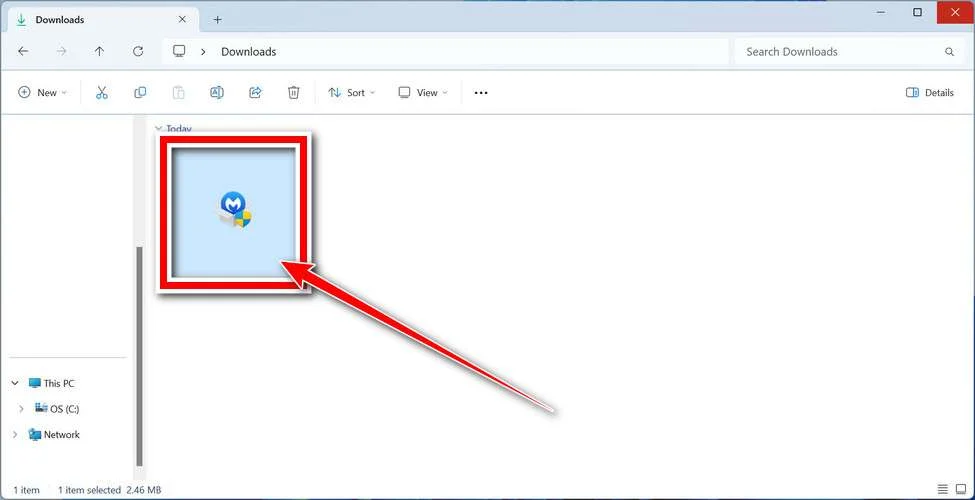
When the download finishes, open your Downloads folder and double-click the MBSetup file. If Windows shows a User Account Control pop-up, click “Yes” to allow the installation.
Follow the On-Screen Prompts to Install Malwarebytes
The setup wizard will walk you through a few quick screens:
-
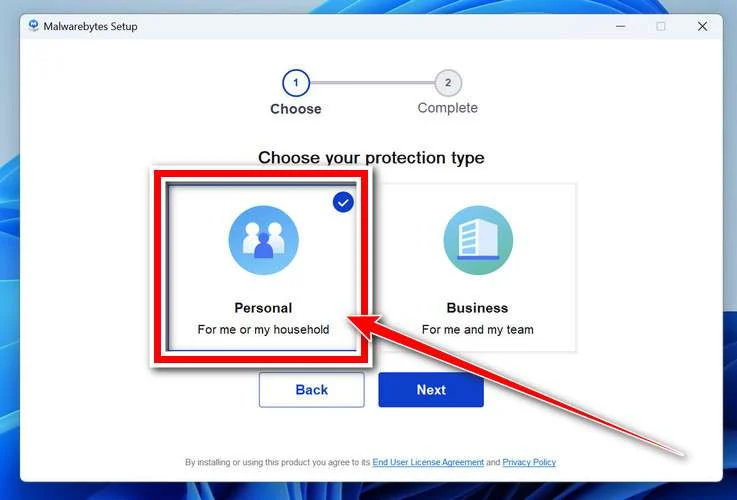
Choose where you’re installing the program — “Personal Computer” or “Work Computer” — then click Next.
-
Malwarebytes will now install on your device. This usually takes under a minute.

-
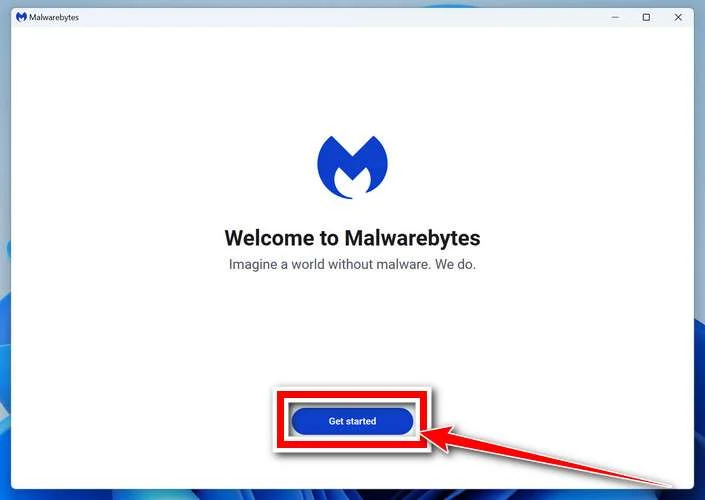
When installation is complete, the “Welcome to Malwarebytes” screen will open automatically.
-
On the final screen, click Open Malwarebytes to launch the program.

-
Enable “Scan for Rootkits”
Before scanning, turn on rootkit detection so Malwarebytes can find even the most hidden threats. Click the Settings gear icon on the left side of the screen.
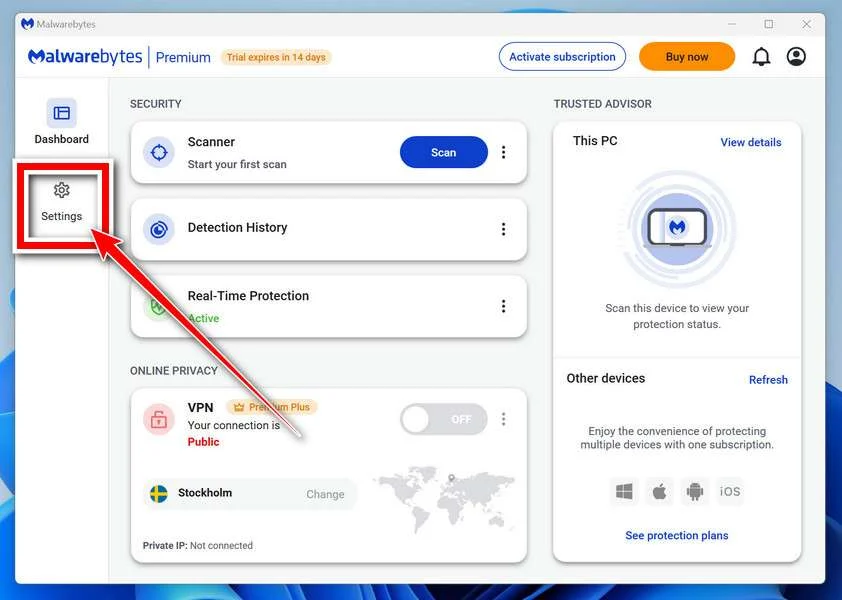
In the settings menu, find “Scan for rootkits” and click the toggle so it turns blue.

Done? Click “Dashboard” in the left pane to return to the main screen.
Start the Scan
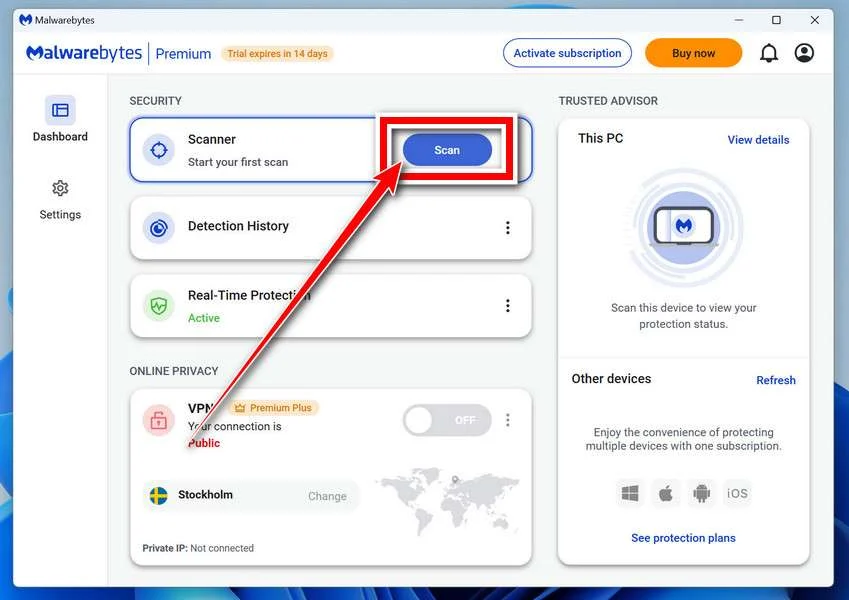
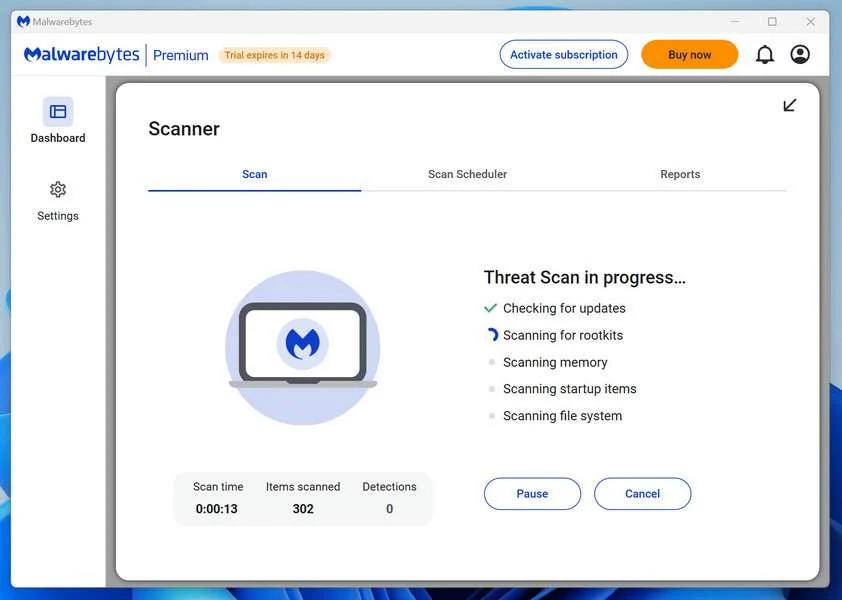
Click the blue Scan button. Malwarebytes will automatically update its virus database and start checking your computer for malware.
-
Wait for the Scan to Finish
The scan checks your entire system for browser hijackers and other malicious programs, so it can take 5 to 20 minutes depending on your computer. Feel free to do something else — just check back occasionally to see the progress.
-
Quarantine the Detected Threats
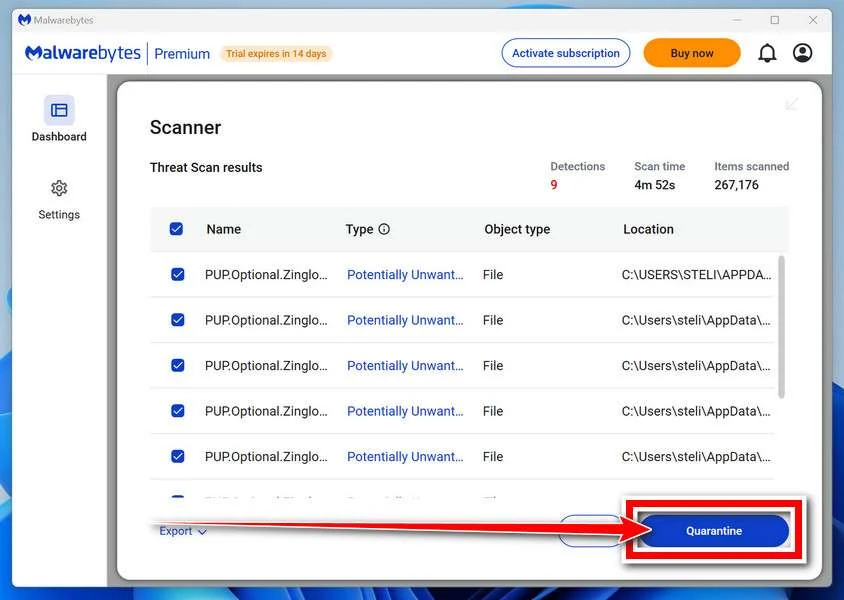
When the scan is done, you’ll see a list of everything Malwarebytes found — malware, adware, and potentially unwanted programs. Click the “Quarantine” button to remove all of them at once.
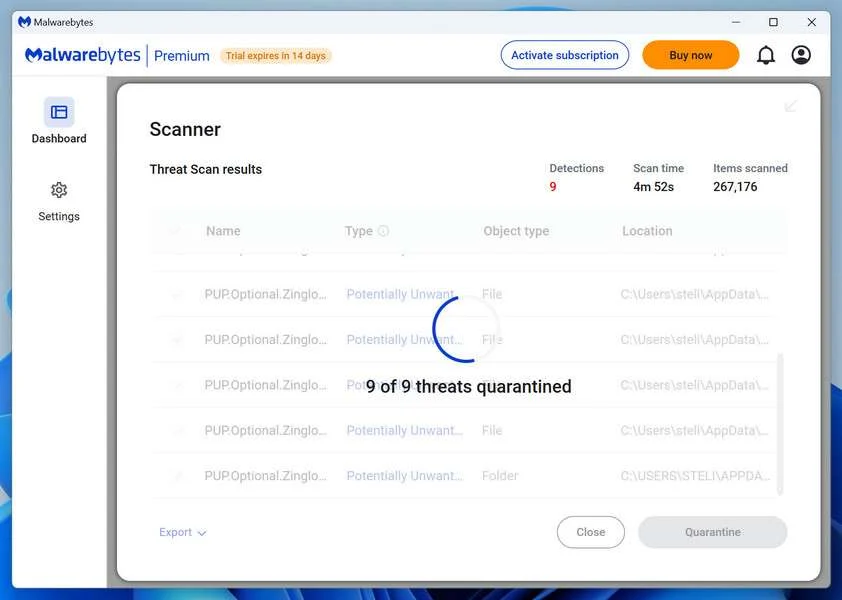
Malwarebytes will now remove the malicious files and registry entries and move them safely into quarantine.
-
Restart Your Computer
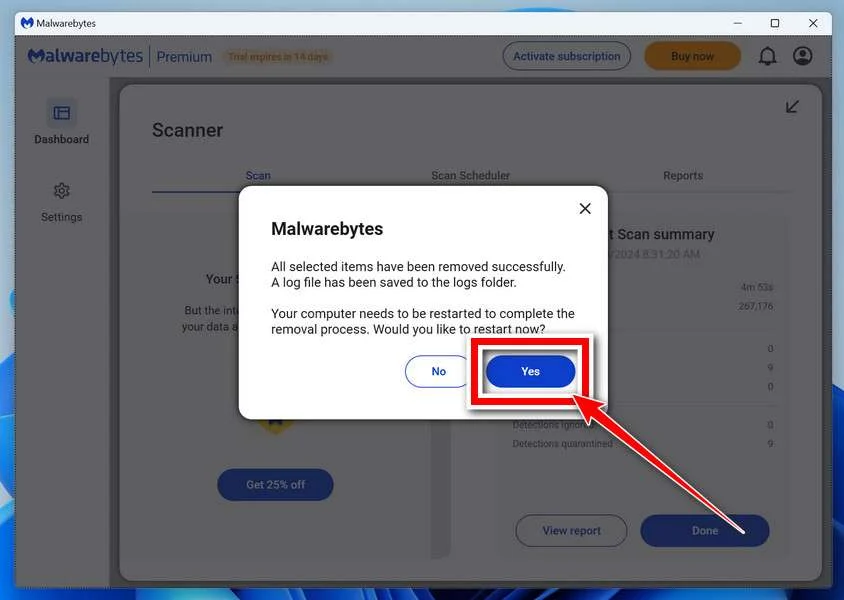
Some threats can only be fully removed after a reboot. If Malwarebytes asks you to restart, click Yes. Once you’re logged back in, Malwarebytes has finished removing the threats it found.
That’s it — your Windows PC is now clean of trojans, adware, and other malware, and should be back to running smoothly.
If you are still having problems with your computer after completing these instructions, then please follow one of the steps:
- Run a computer scan with ESET Online Scanner
- Ask for help in our Windows Malware Removal Help & Support forum.
Run a Malware Scan with Malwarebytes for Mac
Malwarebytes for Mac is a free on-demand scanner that removes the malware other security software tends to miss — adware, browser hijackers, and unwanted programs included. Cleaning an infected Mac with Malwarebytes has always been completely free, and it’s our go-to recommendation. Follow the steps below to scan and clean your Mac in just a few minutes.
-
Download Malwarebytes for Mac
Click the button below to download the latest version of Malwarebytes for Mac.
Download MalwarebytesOfficial installer for macOS. Your download starts right away.Want real-time protection? See Malwarebytes PremiumMalwarebytes Free for MacScans and removes malware at no cost -
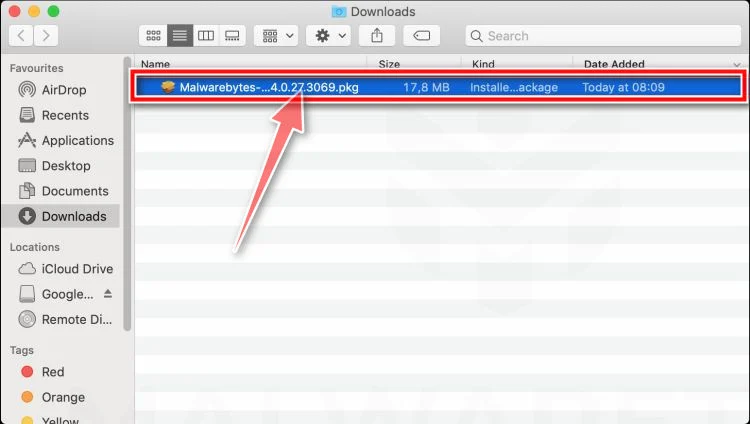
Open the Malwarebytes setup file
When the download finishes, open your Downloads folder and double-click the setup file to begin the installation.
-
Follow the On-Screen Prompts to Install Malwarebytes
The Malwarebytes for Mac Installer will guide you through a few quick screens. Click “Continue” and keep following the prompts until the installation completes.
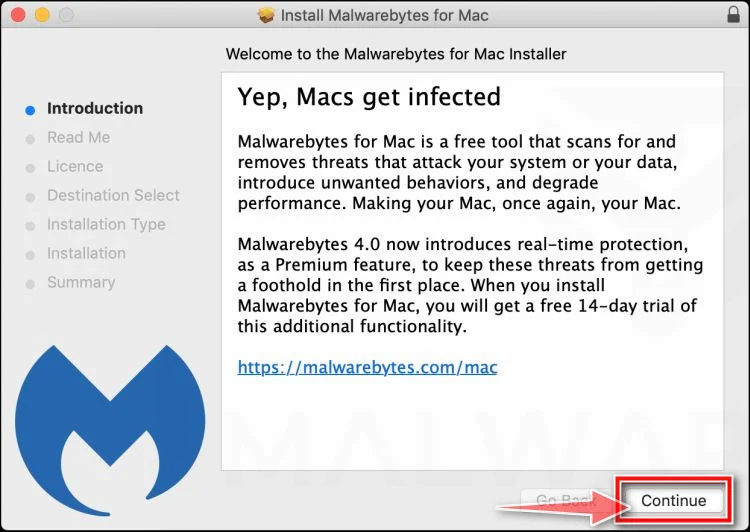
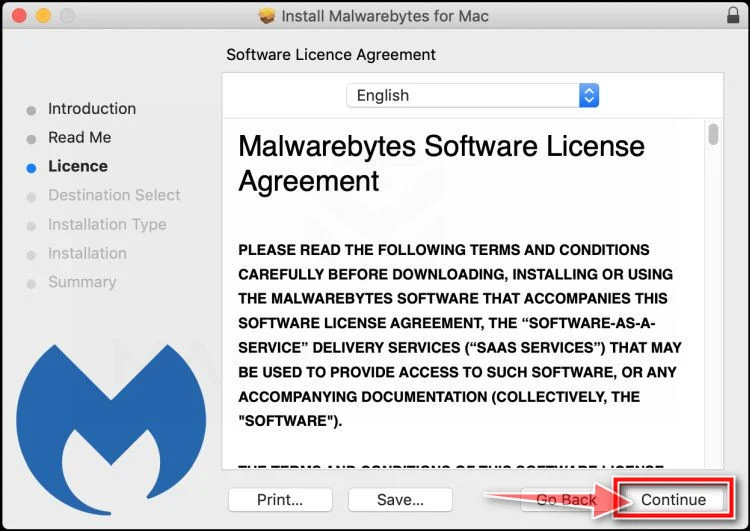
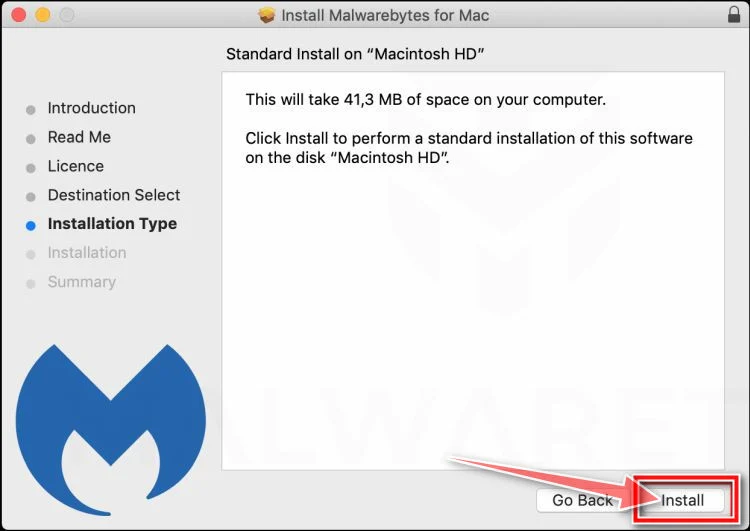
When the installation is complete, Malwarebytes opens to the Welcome to Malwarebytes screen. Click “Get started“.
-
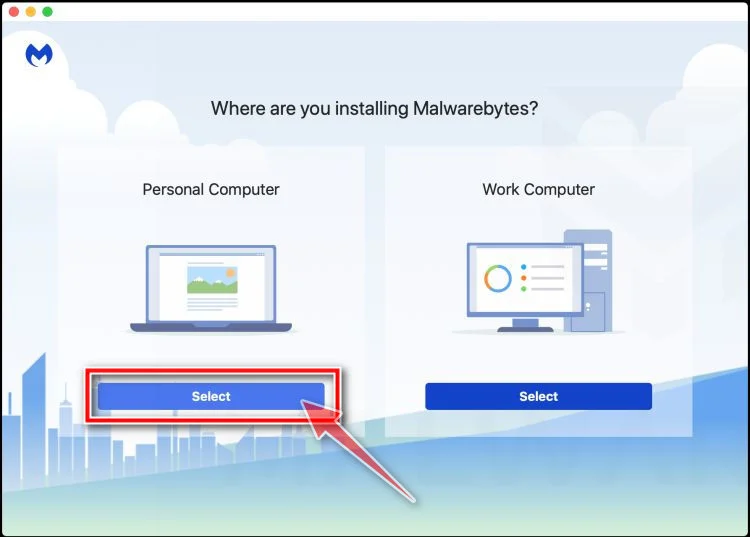
Select “Personal Computer” or “Work Computer”
Malwarebytes will ask what type of computer you’re installing it on. Click either Personal Computer or Work Computer, whichever applies.
-
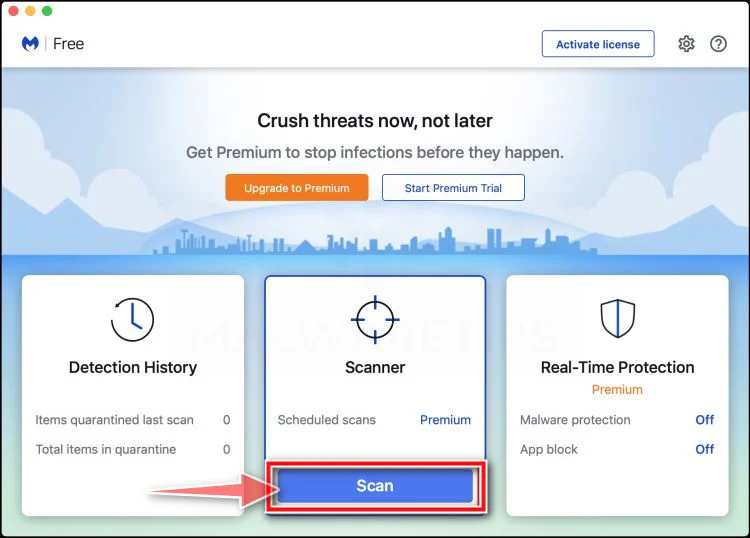
Start the Scan
Click the “Scan” button. Malwarebytes will automatically update its detection database and begin checking your Mac for malware.
-
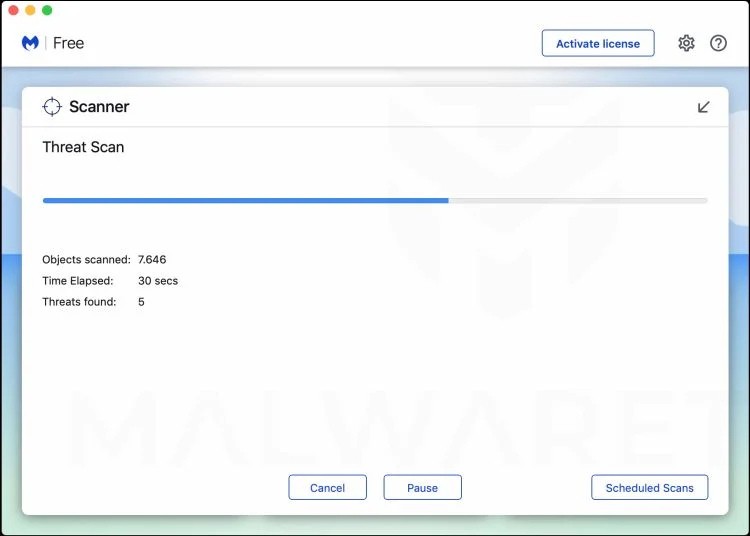
Wait for the Scan to Finish
Malwarebytes will scan your Mac for adware, browser hijackers, and other malicious programs. This can take a few minutes, so feel free to do something else — just check back occasionally to see the progress.
-
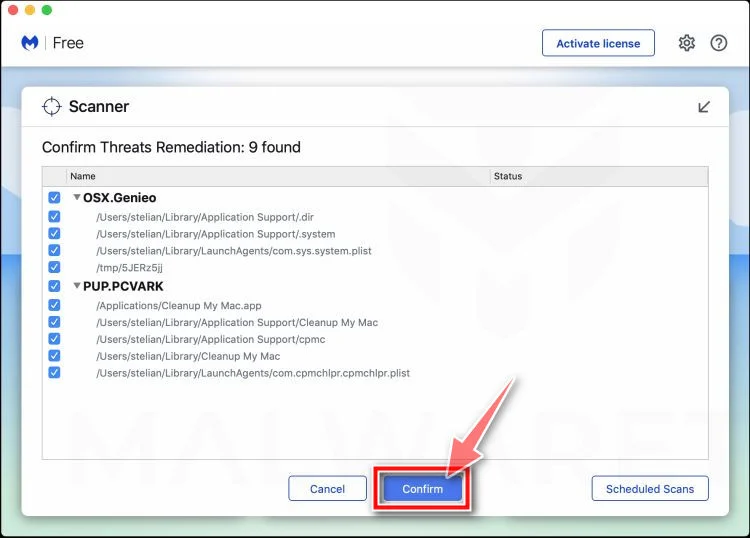
Quarantine the Detected Threats
When the scan is done, you’ll see a list of everything Malwarebytes found. Click the “Quarantine” button to remove all the threats at once.
-
Restart Your Mac
Malwarebytes will now remove all the malicious files it found. Some threats can only be fully removed after a reboot — if Malwarebytes asks you to restart, allow it. Once you’re logged back in, your Mac is clean.
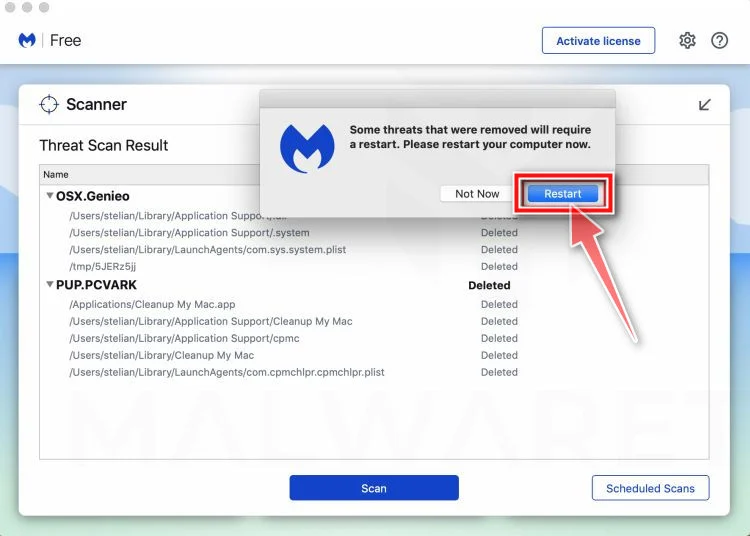
That’s it — your Mac is now free of adware, rogue browser extensions, and other potentially harmful software.
If you are still experiencing problems while trying to remove a malicious program from your computer, please ask for help in our Mac Malware Removal Help & Support forum.
Run a Malware Scan with Malwarebytes for Android
Malwarebytes for Android automatically detects and removes dangerous threats like malware and ransomware so you don’t have to worry about your most-used device being compromised. Aggressive detection of adware and potentially unwanted programs keeps your Android phone or tablet running smooth.
-
Download Malwarebytes for Android.
You can download Malwarebytes for Android by clicking the link below.
Get Malwarebytes for AndroidOpens Google Play in a new tab.Want real-time protection? See Malwarebytes Premium for AndroidMalwarebytes for AndroidScans your phone and removes malware at no cost -
Install Malwarebytes for Android on your phone.
In the Google Play Store, tap “Install” to install Malwarebytes for Android on your device.

When the installation process has finished, tap “Open” to begin using Malwarebytes for Android. You can also open Malwarebytes by tapping on its icon in your phone menu or home screen.

-
Follow the on-screen prompts to complete the setup process
When Malwarebytes will open, you will see the Malwarebytes Setup Wizard which will guide you through a series of permissions and other setup options.
This is the first of two screens that explain the difference between the Premium and Free versions. Swipe this screen to continue.
Tap on “Got it” to proceed to the next step.
Malwarebytes for Android will now ask for a set of permissions that are required to scan your device and protect it from malware. Tap on “Give permission” to continue.
Tap on “Allow” to permit Malwarebytes to access the files on your phone.
-
Update database and run a scan with Malwarebytes for Android
You will now be prompted to update the Malwarebytes database and run a full system scan.

Click on “Update database” to update the Malwarebytes for Android definitions to the latest version, then click on “Run full scan” to perform a system scan.

-
Wait for the Malwarebytes scan to complete.
Malwarebytes will now start scanning your phone for adware and other malicious apps. This process can take a few minutes, so we suggest you do something else and periodically check on the status of the scan to see when it is finished.

-
Click on “Remove Selected”.
When the scan has been completed, you will be presented with a screen showing the malware infections that Malwarebytes for Android has detected. To remove the malicious apps that Malwarebytes has found, tap on the “Remove Selected” button.

-
Restart your phone.
Malwarebytes for Android will now remove all the malicious apps that it has found. To complete the malware removal process, Malwarebytes may ask you to restart your device.
That’s it — your Android phone is now clean — no more malicious apps, adware, or browser redirects.
If you are still having problems with your phone after completing these instructions, then please follow one of the steps:
- Restore your phone to factory settings by going to Settings > General management > Reset > Factory data reset.
- Ask for help in our Mobile Malware Removal Help & Support forum.
Stay Protected: Block Ads and Malicious Sites
Now that your device is clean, keep it that way. Most infections start with a malicious ad or a fake download button — so blocking them at the source is your best defense.
We recommend AdGuard, which blocks malicious ads, phishing pages, and dangerous redirects before they can reach you.
👉 Download AdGuard and browse safely
The Bottom Line
The Walmart Survey Rewards Scam is a fake giveaway campaign that promises prizes such as Dell laptops, Samsung phones, Samsung TVs, iPhones, YETI products, gift cards, and other expensive items.
The scam follows a predictable path: a fake Walmart message, a short survey, a rigged prize game, a personal information form, and a small shipping fee. That fee is used to collect credit card details and may trigger unwanted subscription charges.
A real prize should not require your credit card. If a Walmart survey reward asks you to pay $9.95 or another small fee to claim a “free” item, close the page immediately. If you already paid, contact your bank and monitor your account for recurring charges.
FAQ
Is the Walmart Survey Rewards email real?
No. Most Walmart Survey Rewards emails offering free phones, laptops, TVs, iPhones, YETI products, gift cards, or other expensive items are scams. They use Walmart’s name to make fake prize offers look legitimate.
What prizes are used in the Walmart Survey Rewards scam?
Common fake prizes include Dell laptops, Samsung Galaxy phones, Samsung TVs, Apple iPhones, iPads, YETI coolers, YETI Beach Lounge Wagons, Ninja appliances, Dyson-style products, Walmart gift cards, and mystery rewards.
Why does the message say I was selected?
Scammers use phrases like “you have been selected,” “your reward is waiting,” or “customer appreciation gift” to make the offer feel personal. In reality, the same message is usually sent to thousands of people.
What happens if I click the Walmart survey link?
You are usually taken to a fake survey page with a few generic questions. After that, the site may show a “pick a box” prize game, tell you that you won, ask for your personal details, and then request a small shipping fee.
Why does the scam ask for a $9.95 shipping fee?
The small shipping fee is used to make the offer feel harmless. But once you enter your card details, scammers may charge your card, enroll you in unwanted subscriptions, or sell your payment information.
Will I receive the Walmart reward after paying?
Usually, no. These fake pages are not operated by Walmart. The promised prize often never arrives, and victims may later discover recurring charges from unfamiliar companies.
How can I tell the Walmart survey reward is fake?
Warning signs include a random sender address, a link that does not go to Walmart.com, generic wording, poor formatting, a fake prize game, countdown timers, requests for shipping fees, and credit card forms for a “free” item.
What should I do if I entered my personal information?
Watch for follow-up scams. You may receive fake delivery texts, prize confirmation emails, scam calls, or more phishing messages. Do not click unexpected links or provide additional information.
What should I do if I entered my credit card details?
Contact your bank or card issuer immediately. Ask them to block or replace the card, stop recurring payments, review recent transactions, and dispute any unauthorized charges.
How do I report the Walmart Survey Rewards scam?
Mark the email or text as spam or phishing. You can also report it to Walmart through its official fraud reporting channels, to your bank if you paid, and to the FTC or your local consumer protection agency.

Join the discussion
0 commentsShare your experience or ask a question about this article.
Discussion
Start the conversation
Have a question or something useful to share? Add the first comment.