

The Costco Survey Rewards Scam is a fake giveaway scheme that uses Costco’s name to make people believe they have been selected for a special prize.
The promised reward changes from campaign to campaign. Some emails claim you can receive a Dell laptop, Samsung Galaxy phone, Samsung TV, iPhone, YETI cooler, YETI Beach Lounge Wagon, kitchen appliance, gift card, or another expensive product.
The scam usually starts with a simple message: complete a short survey, claim your reward, and pay a small shipping fee. In reality, the offer is designed to collect personal information, steal credit card details, and often enroll victims into unwanted subscriptions.
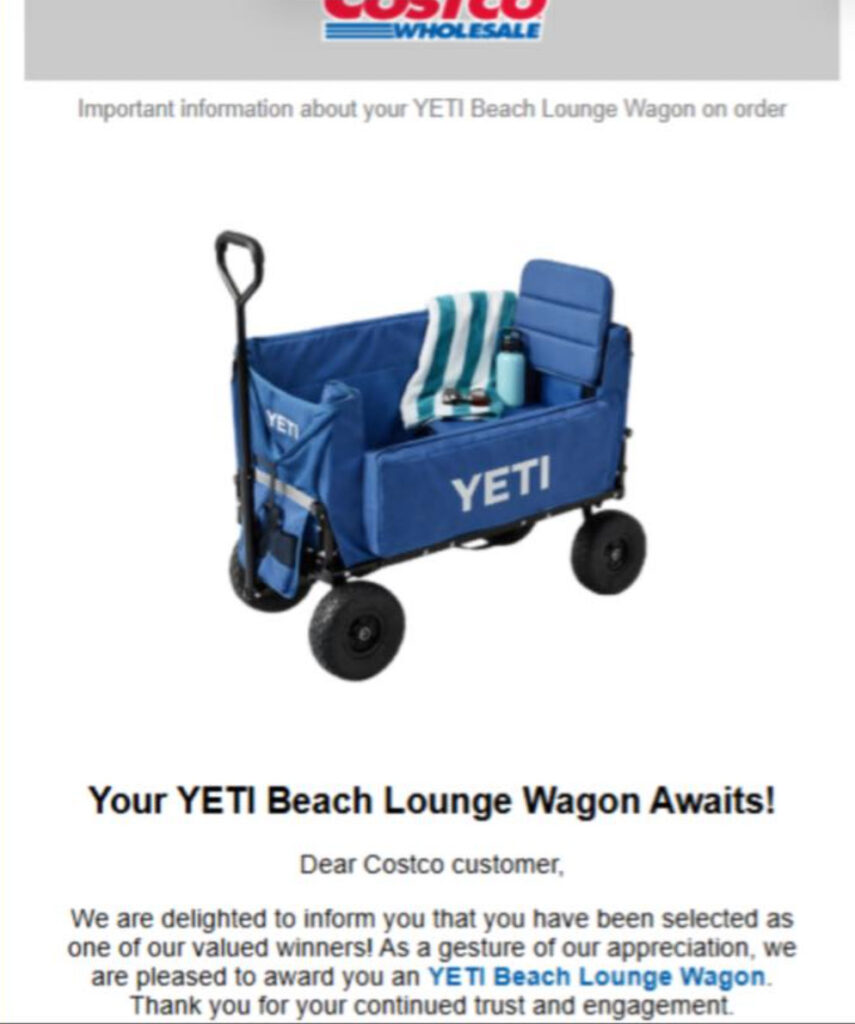
Scam Overview
The Costco Survey Rewards Scam is a phishing and subscription-trap scheme that impersonates Costco through fake emails, text messages, pop-ups, and social media ads.
The message usually claims that the recipient has been chosen to receive a valuable item after completing a quick customer satisfaction survey. The survey may look harmless. It may ask only a few generic questions about shopping habits, Costco membership, product satisfaction, or customer service.
But the survey is not the real point.
The real purpose is to move the victim through a controlled funnel. First, the scam builds trust by using the Costco name, logo, colors, and language. Then it creates excitement by promising a premium reward. Finally, it asks for personal details and a small payment, usually framed as a shipping or handling fee.
The prizes used in this scam vary, but common examples include:
- Dell laptops
- Samsung Galaxy phones
- Samsung TVs
- Apple iPhones
- Apple iPads
- YETI coolers
- YETI Beach Lounge Wagons
- Ninja Creami machines
- Kitchen appliances
- Costco gift cards
- “Mystery rewards”
- “Loyalty gifts”
- “Customer appreciation prizes”
This variety is intentional. Scammers rotate prizes to match trending products and attract different types of victims. A tech-focused version may advertise an iPhone or Samsung Galaxy device. A home-shopping version may advertise a TV or kitchen appliance. A summer version may use YETI products, coolers, beach wagons, or outdoor gear.
The scam often appears under names such as:
- Costco Survey Rewards
- Costco Loyalty Rewards
- Costco Customer Appreciation
- Costco Shopper Survey
- Costco Member Rewards
- Costco Prize Center
- Costco Rewards Department
- Costco Product Testing Program
These names sound official, but they are usually fake. The sender address may come from a random Gmail account, an unrelated domain, a hacked email account, or a spoofed sender name.
In many cases, the link does not go to Costco.com. It may go to a suspicious domain, a cloud-hosted page, a shortened URL, or a redirect chain that passes through several websites before landing on the final scam page. Costco’s official fraud-prevention guidance warns customers to be cautious of suspicious messages using its brand and not to provide personal information through fraudulent links. (Costco)
The scam is effective because it combines three powerful hooks:
- A trusted brand
Costco is a recognized retailer, so people are more likely to believe the message. - An expensive prize
Dell laptops, Samsung TVs, iPhones, and YETI products are desirable enough to generate excitement. - A low payment request
The final fee is usually small, often around $4.95, $6.95, $9.95, or $12.95, making the victim think the risk is minimal.
That small fee is the trap. Once the victim enters credit card details, the operators may charge the card, enroll the person into a recurring subscription, sell the data, or attempt further fraud.
Common Costco Survey Rewards Scam Messages
The wording changes, but many versions follow the same structure.
Examples may include:
“Congratulations! You have been selected to receive a Samsung Galaxy phone after completing our Costco customer survey.”
“Dear Costco customer, your Dell laptop reward is waiting. Complete this short survey to claim your item.”
“You have been chosen for a Costco loyalty reward. Answer 4 questions and receive an iPhone today.”
“Costco Survey Rewards: Your YETI product has been reserved. Confirm your shipping details now.”
“Complete our 30-second Costco shopper survey and receive a Samsung Smart TV.”
“Your Costco customer appreciation gift is ready. Pay only shipping to receive your reward.”
These messages are designed to feel casual, urgent, and believable. They often avoid detailed terms because the scammers want people to click first and think later.
How The Costco Survey Rewards Scam Works
1. You Receive a Fake Costco Message
The scam usually begins with an email, text message, pop-up, or social media ad. It claims to be from Costco or a Costco-related rewards department.
The message says you have been selected for a prize or that a reward is waiting for you. It may use phrases like:
- “You have been chosen”
- “Your reward is waiting”
- “Limited-time survey”
- “Customer appreciation gift”
- “Exclusive Costco member reward”
- “Complete the survey to claim your prize”
A common red flag is that the message does not address you by name. It may simply say “Dear Costco customer” or “Dear valued member.”
2. The Sender Address Looks Wrong
Many fake Costco survey emails use sender names that look official while hiding suspicious email addresses.
For example, the display name may say Costco Survey Rewards, but the actual sender may be a Gmail address, Outlook address, random domain, or unrelated business email.
This matters because scammers can easily fake a display name. The sender name alone does not prove the email came from Costco.
3. The Link Does Not Go to Costco
The message includes a button such as:
- “Claim Your Reward”
- “Start Survey”
- “Confirm Prize”
- “Get My Gift”
- “Continue”
- “Access Your Reward”
When clicked, the link usually does not open Costco.com. Instead, it may open a random domain or redirect through multiple pages.
This is one of the strongest warning signs. A real Costco promotion should be verifiable through Costco’s official website, not through a random reward page.
4. You Complete a Generic Survey
The scam page usually asks a few simple questions. These may include:
- Are you a Costco customer?
- How often do you shop at Costco?
- Are you satisfied with Costco?
- Would you recommend Costco to friends?
- Which prize would you prefer?
- What is your age group?
The questions are not used to determine eligibility. They are part of the illusion.
The short survey makes the victim feel like they are participating in a real customer feedback program. It also creates a sense of progress. After answering several questions, people are more likely to continue because they feel they have already invested time.
5. The Page Shows a Fake Prize Game
Many versions of the scam use a “pick a box” or “choose a gift box” game.
The page may show several boxes, packages, or tiles. The victim is told to select one to reveal the prize.
Usually, the first attempt fails. Then the page says something like:
“Sorry, this box is empty. You have 2 attempts remaining.”
On the second attempt, the victim wins.
This is not random. It is scripted. The fake loss makes the later win feel more believable. The scammer wants the victim to feel lucky and emotionally committed.
6. You Are Told You Won a Valuable Product
After the fake game, the page announces that you won the advertised prize.
Depending on the campaign, the prize may be:
- A Dell laptop
- A Samsung Galaxy phone
- A Samsung Smart TV
- An iPhone
- A YETI cooler
- A YETI Beach Lounge Wagon
- A Costco gift card
- A kitchen appliance
The page may add urgency by saying the prize is reserved for only a few minutes. A countdown timer may appear. This is designed to stop you from researching the offer.
7. The Site Asks for Personal Information
Next, the page asks for delivery information.
This may include:
- Full name
- Email address
- Phone number
- Home address
- City
- State
- ZIP code
This information can be used for spam, follow-up scams, fake delivery messages, identity profiling, or resale to other marketers and fraud networks.
Even if you stop before entering payment details, submitting personal information still creates risk.
8. The Final Page Asks for a Small Shipping Fee
The last step is the payment form.
The page claims the prize is free, but you must pay a small fee for shipping, handling, processing, insurance, or verification.
The fee is usually low enough to seem harmless. Examples include:
- $4.95
- $6.95
- $9.95
- $12.95
This is the key moment in the scam. The FTC warns that prize scams often ask people to pay money or provide account information to claim a prize, and that paying usually means losing money without receiving the promised item.
9. Hidden Subscription Charges May Follow
After entering card details, victims may later discover unexpected charges.
These may appear as:
- Monthly subscription fees
- Trial membership charges
- “VIP rewards club” fees
- Product club charges
- Wellness, lifestyle, or shopping membership charges
- Unrecognized merchant names
The charges may not say “Costco.” They may appear under a completely different company name, which makes them harder to identify.
Some victims try to cancel and find that the cancellation process is confusing, slow, or ineffective. Customer support may be unreachable, or the company may claim the victim agreed to the recurring charges by accepting the terms.
That is why these scams are dangerous. The initial charge may be only $9.95, but the real loss can come from repeated billing.
Red Flags of the Costco Survey Rewards Scam
Watch for these warning signs:
- The message says you won a prize you never entered to win.
- The email uses a generic greeting like “Dear Costco customer.”
- The sender address is Gmail, Outlook, Yahoo, or a random domain.
- The link does not go to Costco.com.
- The message uses urgency or countdown timers.
- The prize is unusually expensive for a simple survey.
- The survey asks only generic questions.
- The site uses a fake “pick a box” game.
- You are asked to pay shipping for a “free” prize.
- The checkout page asks for credit card details.
- The terms mention subscriptions, trial periods, clubs, or recurring billing.
- The merchant name does not match Costco.
- The same giveaway appears under different retailer names.
The clearest rule is simple: if a “free” prize requires your credit card, treat it as a scam.
Why Scammers Use Costco’s Name
Scammers impersonate Costco because the brand already has trust.
Many people associate Costco with bulk deals, membership rewards, limited-time promotions, and valuable products. That makes a “survey reward” sound plausible at first glance.
The scam also borrows credibility from well-known product brands. A Dell laptop, Samsung Galaxy phone, Samsung TV, iPhone, or YETI product feels valuable and recognizable. The victim is not just tempted by a random prize. They are tempted by a product they already know.
This is brand impersonation. Costco, Dell, Samsung, Apple, YETI, and other brands are not running these fake pages. Their names are being misused to make the scam more convincing.
What To Do If You Received a Costco Survey Rewards Email
Do not click the link.
If you have already opened the email but did not enter information, close the page and delete the message.
You should also:
- Mark the email as spam or phishing.
- Check the sender address carefully.
- Do not reply to the message.
- Do not call phone numbers listed in the email.
- Do not download attachments.
- Visit Costco’s official website directly if you want to verify an offer.
Do not use the link inside the message to “check” whether the offer is real. That is exactly what the scam wants.
What To Do If You Entered Personal Information
If you entered your name, address, phone number, or email address, stay alert for follow-up scams.
You may receive:
- Fake delivery messages
- Fake prize confirmation emails
- Fake subscription notices
- Fake cancellation emails
- Scam phone calls
- More reward offers
- Phishing messages pretending to be from banks or retailers
Do not click links in unexpected messages. Do not provide additional information to anyone who contacts you about the prize.
What To Do If You Entered Credit Card Details
If you entered your card information, act immediately.
1. Contact Your Bank or Card Issuer
Call the number on the back of your card. Tell them you entered your details on a suspected fake Costco survey reward site.
Ask them to:
- Block or replace the card
- Review recent transactions
- Stop recurring charges
- Dispute unauthorized charges
- Monitor the account for future attempts
Do not wait for a large charge to appear. Subscription traps often begin with a small amount and then bill larger amounts later.
2. Check for Hidden Recurring Billing
Review your card statement carefully.
Look for unfamiliar merchant names, especially charges that appear a few days or weeks after the initial shipping fee.
The charge may not mention Costco, the advertised product, or the fake survey page.
3. Save Evidence
Keep screenshots or copies of:
- The original email or text
- The sender address
- The link destination
- The survey page
- The prize page
- The payment page
- Any confirmation page or email
- Your bank statement showing the charge
This can help your bank process a dispute.
4. Report the Scam
Report the message through your email provider’s phishing option.
You can also report the scam to:
- Your bank or card issuer
- Costco through official customer service channels
- The FTC if you are in the U.S.
- Your local consumer protection authority
Is Your Device Infected? Run a Free Malware Scan
Slow performance, constant pop-ups, or strange behavior? These are classic signs of a malware infection. The fastest way to find out is to scan your device with Malwarebytes Free — one of the most trusted malware removal tools available.
The free version detects and removes the most common threats, including:
- Adware — the cause of those annoying pop-ups
- Browser hijackers — unwanted redirects and changed homepages
- Trojans and spyware — hidden programs stealing your data
- Potentially unwanted programs (PUPs) — software you never asked for
👉 Select your device below — Windows, Mac, or Android — then follow the simple steps to download Malwarebytes, scan your system, and remove any threats it finds. The scan usually takes 5 to 20 minutes.
Run a Malware Scan with Malwarebytes for Windows
Malwarebytes is one of the most popular and trusted anti-malware tools for Windows — and it’s completely free for removing infections. It catches threats that many antivirus programs miss, including adware, browser hijackers, and trojans. Follow the steps below to scan and clean your PC in just a few minutes.
Download Malwarebytes
Click the button below to download the latest version of Malwarebytes for Windows from the official source. The free version is all you need — it will scan your computer and remove adware, browser hijackers, and other malicious software at no cost.
Download MalwarebytesOfficial installer for Windows 11 and 10. Your download starts right away.Want real-time protection? See Malwarebytes Premium Malwarebytes Free for WindowsScans and removes malware at no cost
-
Install Malwarebytes
When the download finishes, open your Downloads folder and double-click the MBSetup file. If Windows shows a User Account Control pop-up, click “Yes” to allow the installation.
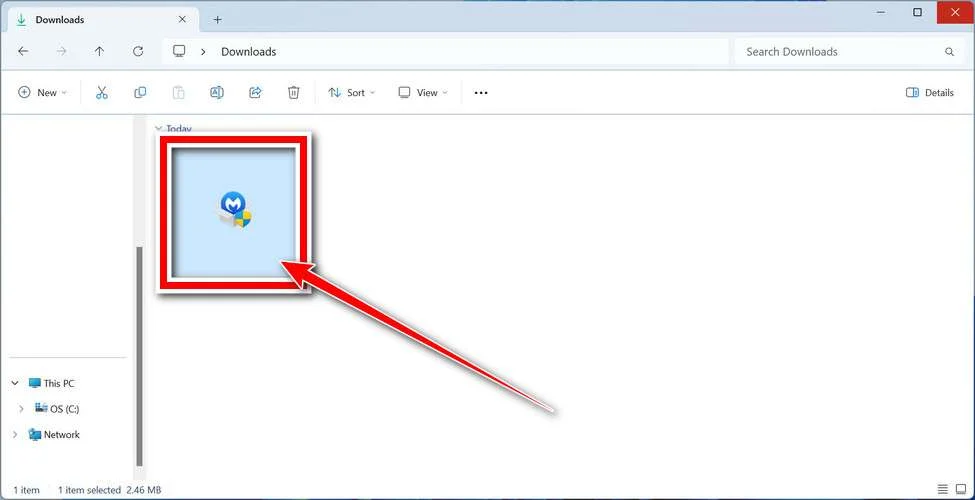
Follow the On-Screen Prompts to Install Malwarebytes
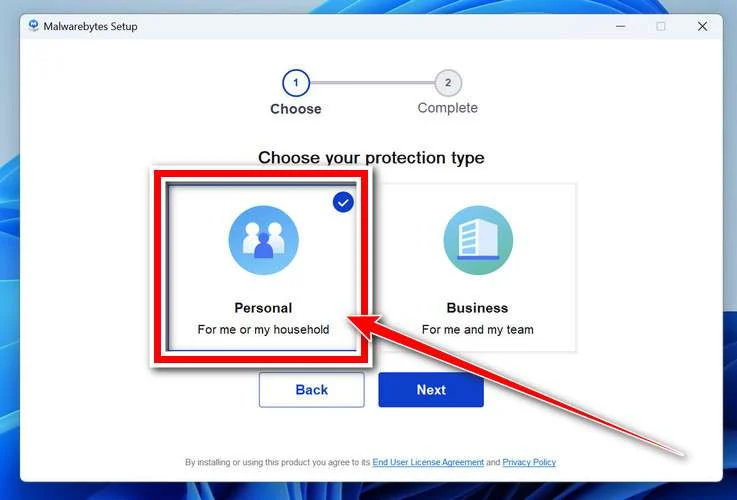
The setup wizard will walk you through a few quick screens:
-
Choose where you’re installing the program — “Personal Computer” or “Work Computer” — then click Next.
-
Malwarebytes will now install on your device. This usually takes under a minute.

-
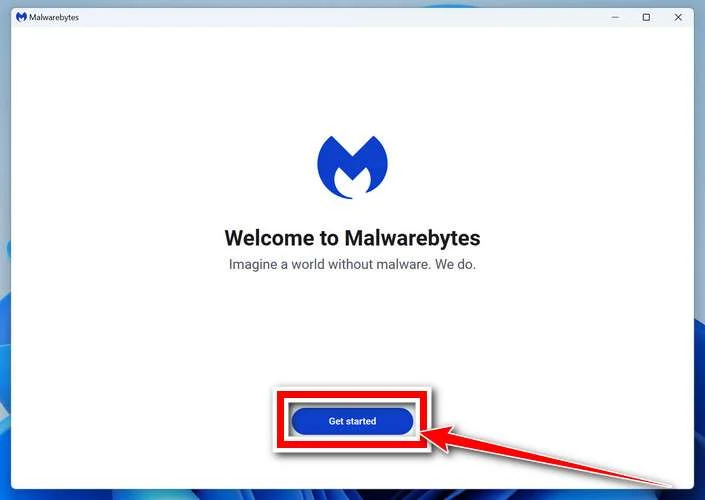
When installation is complete, the “Welcome to Malwarebytes” screen will open automatically.
-
On the final screen, click Open Malwarebytes to launch the program.

-
Enable “Scan for Rootkits”
Before scanning, turn on rootkit detection so Malwarebytes can find even the most hidden threats. Click the Settings gear icon on the left side of the screen.
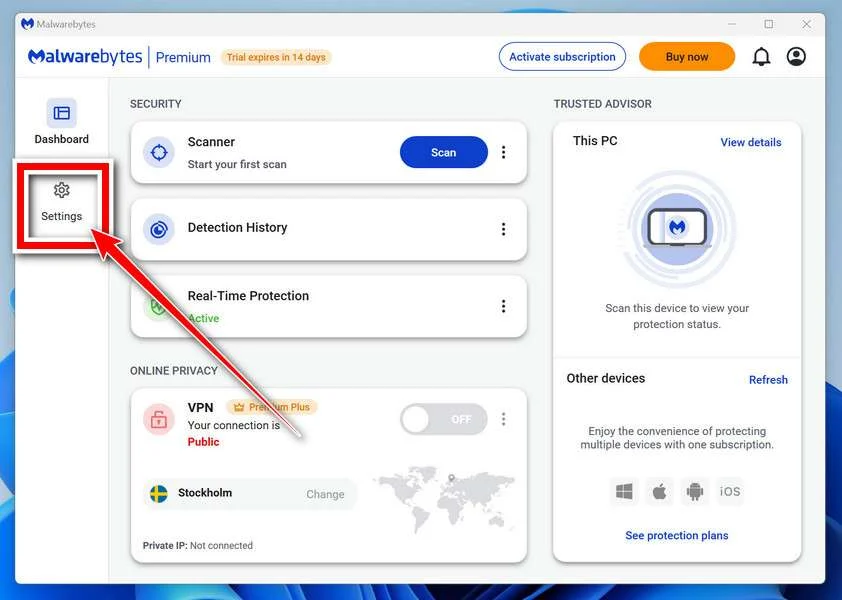
In the settings menu, find “Scan for rootkits” and click the toggle so it turns blue.

Done? Click “Dashboard” in the left pane to return to the main screen.
Start the Scan
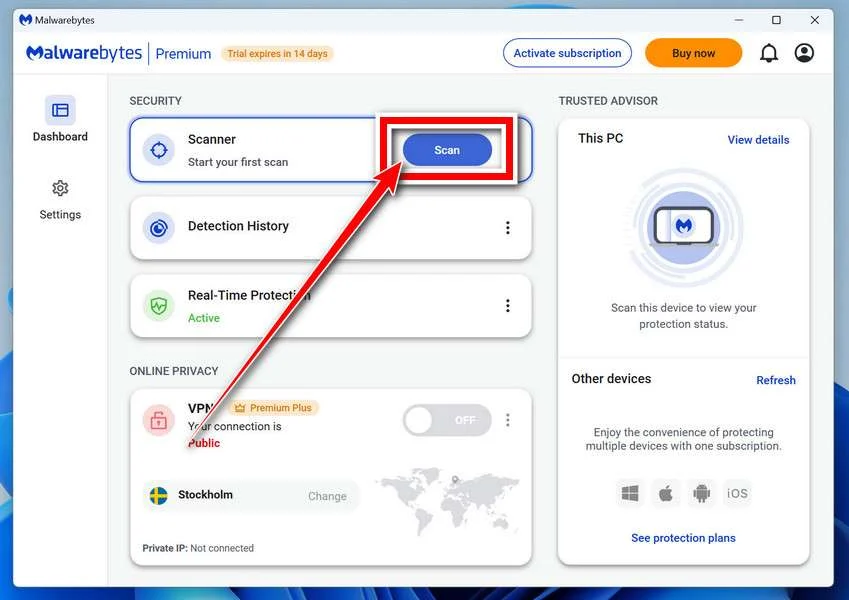
Click the blue Scan button. Malwarebytes will automatically update its virus database and start checking your computer for malware.
-
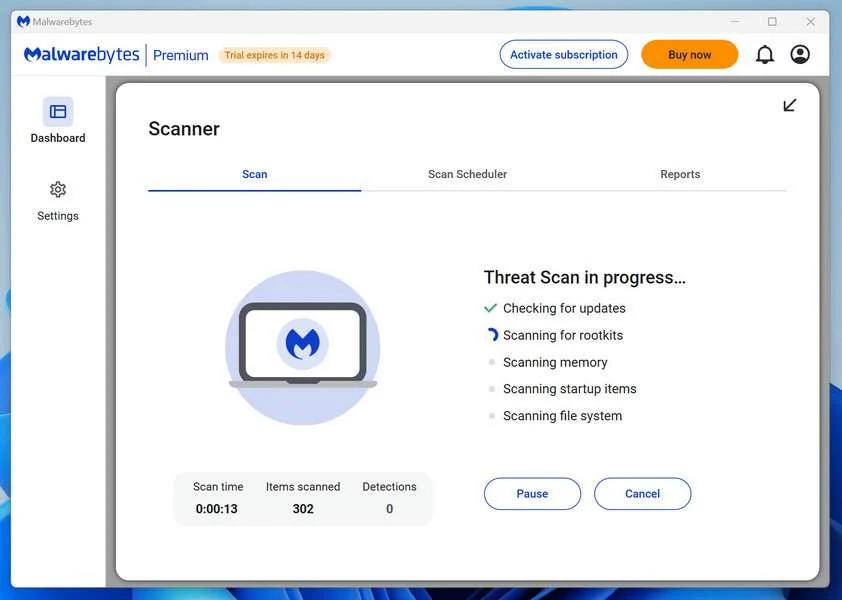
Wait for the Scan to Finish
The scan checks your entire system for browser hijackers and other malicious programs, so it can take 5 to 20 minutes depending on your computer. Feel free to do something else — just check back occasionally to see the progress.
-
Quarantine the Detected Threats
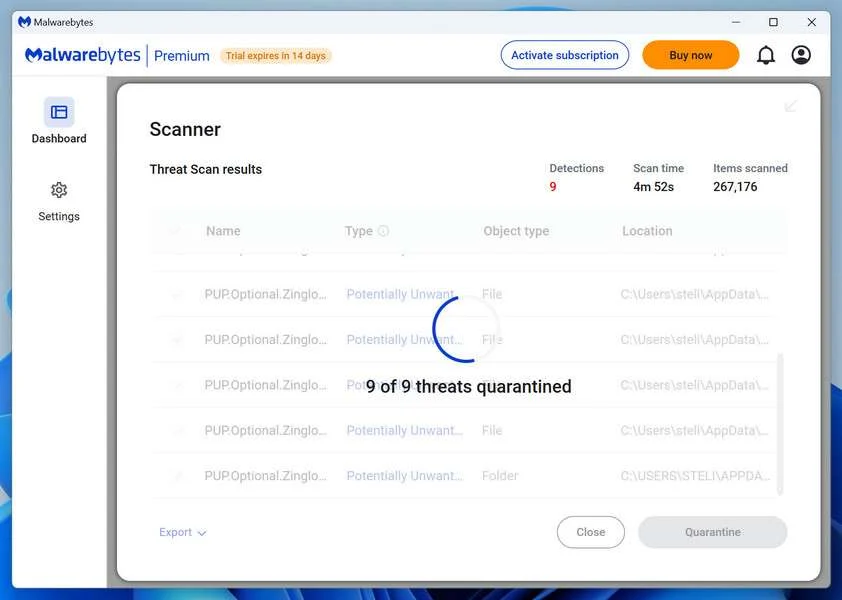
When the scan is done, you’ll see a list of everything Malwarebytes found — malware, adware, and potentially unwanted programs. Click the “Quarantine” button to remove all of them at once.
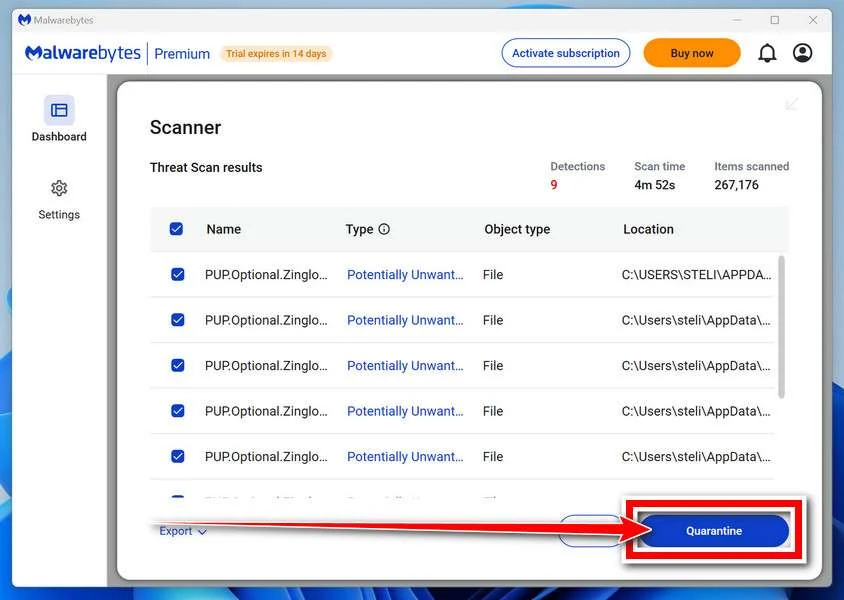
Malwarebytes will now remove the malicious files and registry entries and move them safely into quarantine.
-
Restart Your Computer
Some threats can only be fully removed after a reboot. If Malwarebytes asks you to restart, click Yes. Once you’re logged back in, Malwarebytes has finished removing the threats it found.
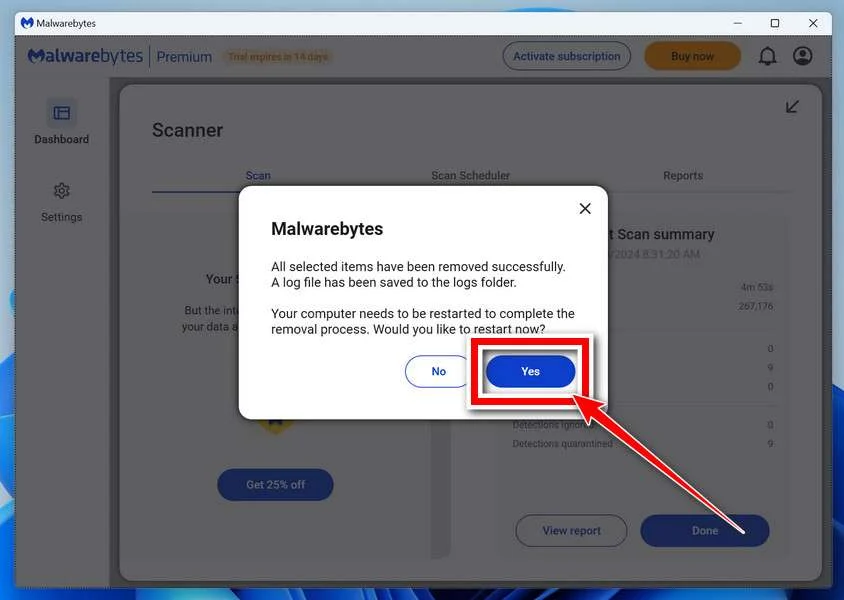
That’s it — your Windows PC is now clean of trojans, adware, and other malware, and should be back to running smoothly.
If you are still having problems with your computer after completing these instructions, then please follow one of the steps:
- Run a computer scan with ESET Online Scanner
- Ask for help in our Windows Malware Removal Help & Support forum.
Run a Malware Scan with Malwarebytes for Mac
Malwarebytes for Mac is a free on-demand scanner that removes the malware other security software tends to miss — adware, browser hijackers, and unwanted programs included. Cleaning an infected Mac with Malwarebytes has always been completely free, and it’s our go-to recommendation. Follow the steps below to scan and clean your Mac in just a few minutes.
-
Download Malwarebytes for Mac
Click the button below to download the latest version of Malwarebytes for Mac.
Download MalwarebytesOfficial installer for macOS. Your download starts right away.Want real-time protection? See Malwarebytes PremiumMalwarebytes Free for MacScans and removes malware at no cost -
Open the Malwarebytes setup file
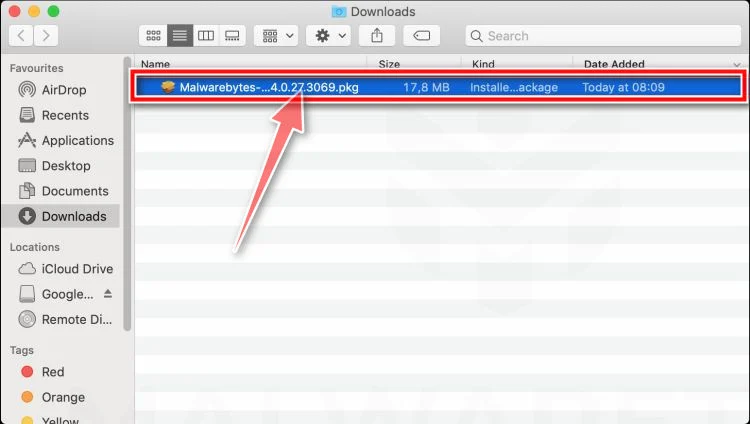
When the download finishes, open your Downloads folder and double-click the setup file to begin the installation.
-
Follow the On-Screen Prompts to Install Malwarebytes
The Malwarebytes for Mac Installer will guide you through a few quick screens. Click “Continue” and keep following the prompts until the installation completes.
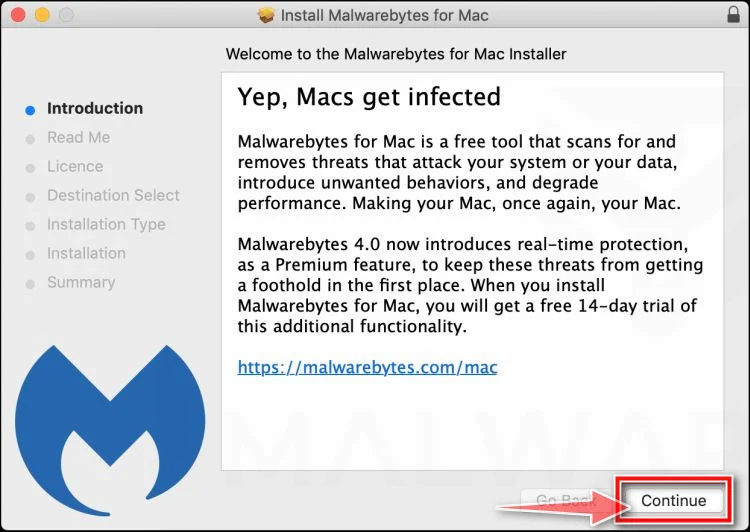
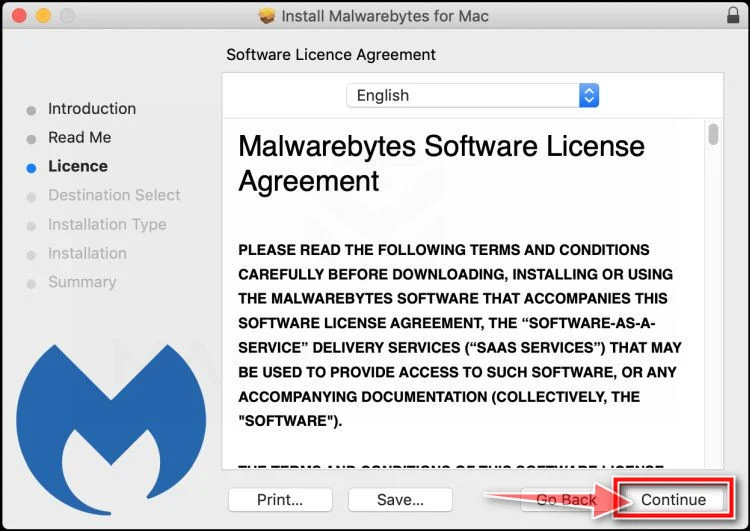
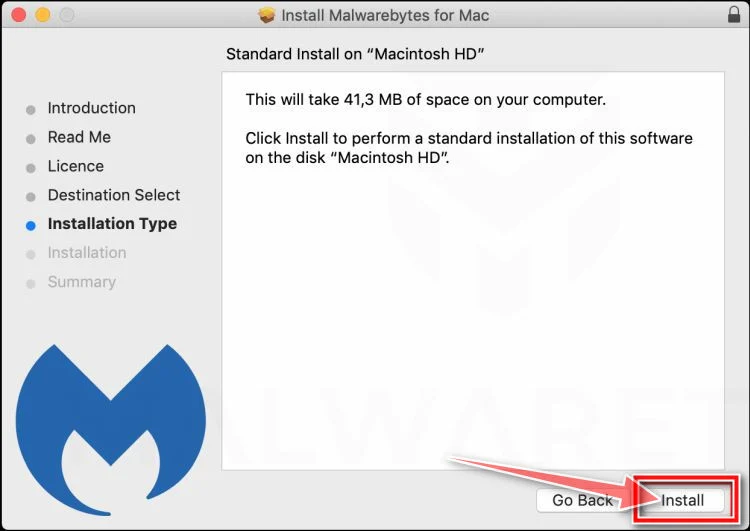
When the installation is complete, Malwarebytes opens to the Welcome to Malwarebytes screen. Click “Get started“.
-
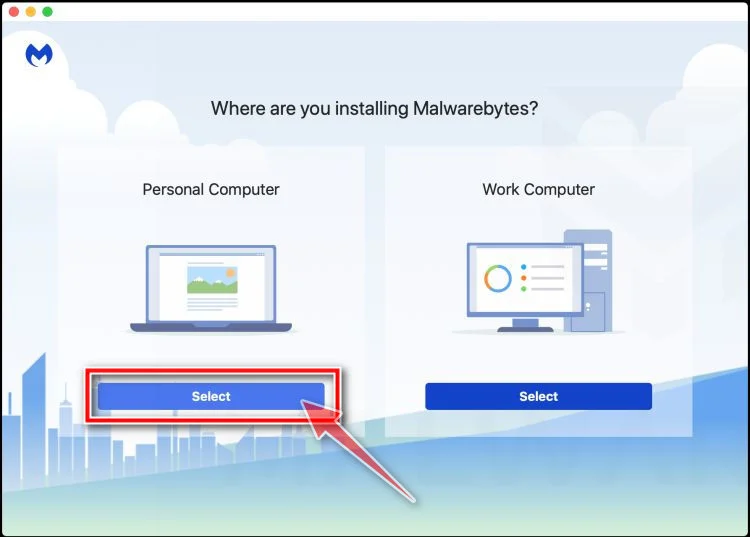
Select “Personal Computer” or “Work Computer”
Malwarebytes will ask what type of computer you’re installing it on. Click either Personal Computer or Work Computer, whichever applies.
-
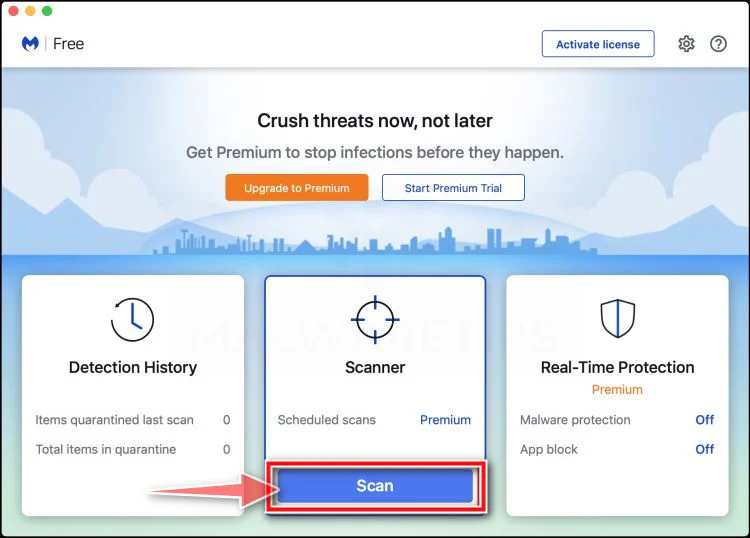
Start the Scan
Click the “Scan” button. Malwarebytes will automatically update its detection database and begin checking your Mac for malware.
-
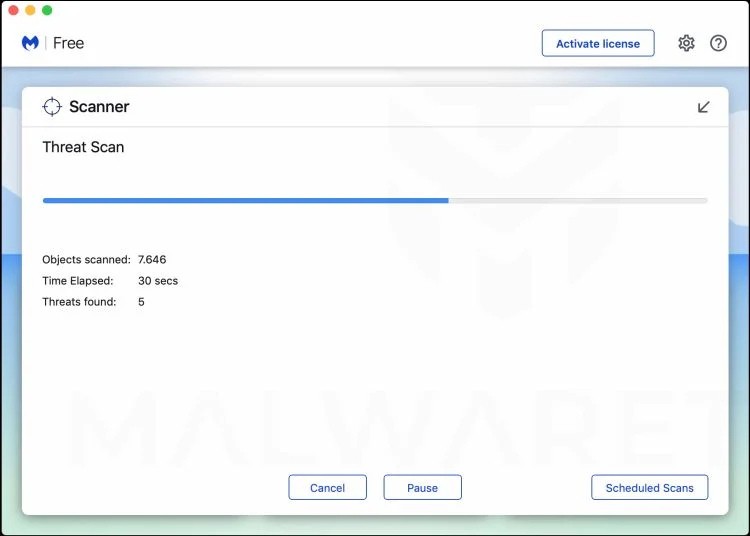
Wait for the Scan to Finish
Malwarebytes will scan your Mac for adware, browser hijackers, and other malicious programs. This can take a few minutes, so feel free to do something else — just check back occasionally to see the progress.
-
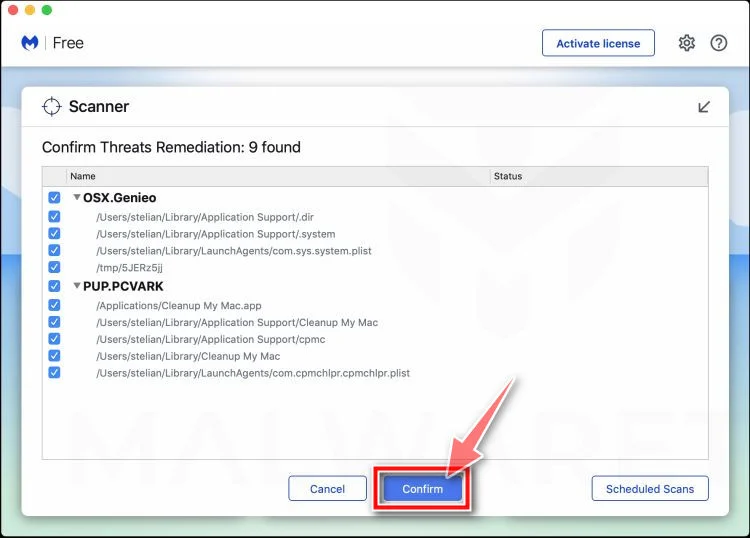
Quarantine the Detected Threats
When the scan is done, you’ll see a list of everything Malwarebytes found. Click the “Quarantine” button to remove all the threats at once.
-
Restart Your Mac
Malwarebytes will now remove all the malicious files it found. Some threats can only be fully removed after a reboot — if Malwarebytes asks you to restart, allow it. Once you’re logged back in, your Mac is clean.
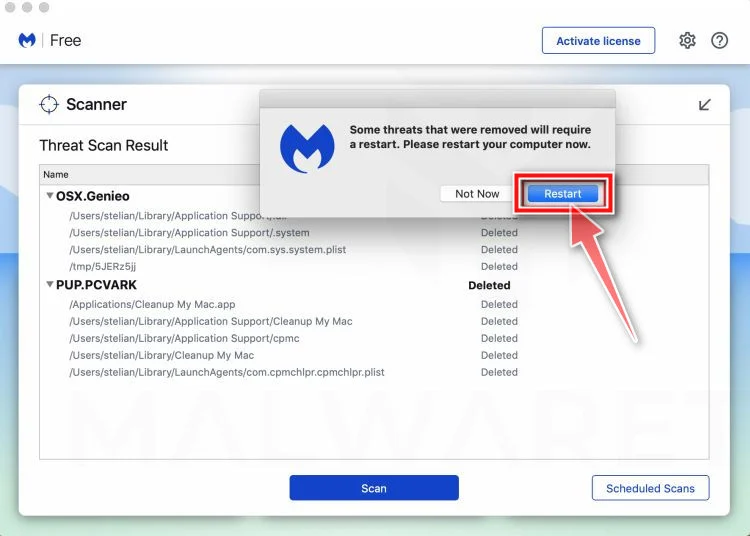
That’s it — your Mac is now free of adware, rogue browser extensions, and other potentially harmful software.
If you are still experiencing problems while trying to remove a malicious program from your computer, please ask for help in our Mac Malware Removal Help & Support forum.
Run a Malware Scan with Malwarebytes for Android
Malwarebytes for Android automatically detects and removes dangerous threats like malware and ransomware so you don’t have to worry about your most-used device being compromised. Aggressive detection of adware and potentially unwanted programs keeps your Android phone or tablet running smooth.
-
Download Malwarebytes for Android.
You can download Malwarebytes for Android by clicking the link below.
Get Malwarebytes for AndroidOpens Google Play in a new tab.Want real-time protection? See Malwarebytes Premium for AndroidMalwarebytes for AndroidScans your phone and removes malware at no cost -
Install Malwarebytes for Android on your phone.
In the Google Play Store, tap “Install” to install Malwarebytes for Android on your device.

When the installation process has finished, tap “Open” to begin using Malwarebytes for Android. You can also open Malwarebytes by tapping on its icon in your phone menu or home screen.

-
Follow the on-screen prompts to complete the setup process
When Malwarebytes will open, you will see the Malwarebytes Setup Wizard which will guide you through a series of permissions and other setup options.
This is the first of two screens that explain the difference between the Premium and Free versions. Swipe this screen to continue.
Tap on “Got it” to proceed to the next step.
Malwarebytes for Android will now ask for a set of permissions that are required to scan your device and protect it from malware. Tap on “Give permission” to continue.
Tap on “Allow” to permit Malwarebytes to access the files on your phone.
-
Update database and run a scan with Malwarebytes for Android
You will now be prompted to update the Malwarebytes database and run a full system scan.

Click on “Update database” to update the Malwarebytes for Android definitions to the latest version, then click on “Run full scan” to perform a system scan.

-
Wait for the Malwarebytes scan to complete.
Malwarebytes will now start scanning your phone for adware and other malicious apps. This process can take a few minutes, so we suggest you do something else and periodically check on the status of the scan to see when it is finished.

-
Click on “Remove Selected”.
When the scan has been completed, you will be presented with a screen showing the malware infections that Malwarebytes for Android has detected. To remove the malicious apps that Malwarebytes has found, tap on the “Remove Selected” button.

-
Restart your phone.
Malwarebytes for Android will now remove all the malicious apps that it has found. To complete the malware removal process, Malwarebytes may ask you to restart your device.
That’s it — your Android phone is now clean — no more malicious apps, adware, or browser redirects.
If you are still having problems with your phone after completing these instructions, then please follow one of the steps:
- Restore your phone to factory settings by going to Settings > General management > Reset > Factory data reset.
- Ask for help in our Mobile Malware Removal Help & Support forum.
Stay Protected: Block Ads and Malicious Sites
Now that your device is clean, keep it that way. Most infections start with a malicious ad or a fake download button — so blocking them at the source is your best defense.
We recommend AdGuard, which blocks malicious ads, phishing pages, and dangerous redirects before they can reach you.
👉 Download AdGuard and browse safely
How to Verify a Real Costco Offer
To check whether a Costco promotion is legitimate:
- Go directly to Costco.com by typing it into your browser.
- Log in through the official Costco website or app.
- Check your account messages.
- Contact Costco customer service through official contact information.
- Search Costco’s official fraud-prevention page.
- Avoid links from unsolicited emails, texts, or social media ads.
Never rely on a button inside an unexpected reward email.
The Bottom Line
The Costco Survey Rewards Scam is a fake giveaway scheme that uses Costco’s name to promote expensive prizes such as Dell laptops, Samsung Galaxy phones, Samsung TVs, iPhones, YETI products, and other high-value items.
The scam follows a predictable pattern: a fake reward message, a short survey, a staged prize game, a personal information form, and a small shipping fee. That small fee is used to capture credit card details and may lead to unwanted subscription charges.
A real prize should not require your credit card. If a Costco survey reward asks you to pay $9.95 or any other fee to claim a “free” product, close the page immediately. Delete the message, report it as phishing, and contact your bank if you already entered payment information.
FAQ
Is the Costco Survey Rewards email real?
No. Most “Costco Survey Rewards” emails offering free laptops, phones, TVs, iPhones, YETI products, or gift cards are scams. They impersonate Costco to push victims toward fake survey pages and payment forms.
Why does the email say I was selected for a reward?
Scammers use phrases like “you have been selected,” “your reward is waiting,” or “customer appreciation gift” to make the offer feel personal. These messages are usually mass-sent to many people.
What prizes are used in the Costco Survey Rewards scam?
Common fake prizes include Dell laptops, Samsung Galaxy phones, Samsung TVs, Apple iPhones, iPads, YETI coolers, YETI Beach Lounge Wagons, kitchen appliances, mystery boxes, and Costco gift cards.
What happens after I click the survey link?
You are usually sent to a fake survey page with a few generic questions. After that, the site may show a “pick a box” game where you lose once, then win. The next pages ask for personal information and credit card details.
Why do they ask for a small shipping fee?
The shipping fee is the trap. It may look harmless, often around $4.95, $6.95, $9.95, or $12.95, but it gives scammers your card details. Victims may later see unwanted subscription charges.
Will Costco send me the prize after I pay?
No. These fake pages are not run by Costco. The promised Dell laptop, Samsung phone, iPhone, TV, YETI product, or gift card usually never arrives.
How can I tell a Costco survey reward is fake?
Red flags include a random sender address, a link that does not go to Costco.com, generic greetings, urgent wording, a fake prize game, requests for shipping fees, and checkout pages that ask for credit card details for a “free” reward.
What should I do if I entered my personal information?
Watch for follow-up scams. You may receive fake delivery texts, subscription emails, prize confirmations, or scam calls. Do not click unexpected links or provide more information.
What should I do if I entered my credit card details?
Contact your bank or card issuer immediately. Ask them to block or replace the card, stop recurring billing, review recent charges, and dispute unauthorized transactions.
How do I report the Costco Survey Rewards scam?
Mark the email or text as phishing. You can also report it to your bank if you paid, to Costco through official customer service channels, and to the FTC or your local consumer protection agency.

Join the discussion
0 commentsShare your experience or ask a question about this article.
Discussion
Start the conversation
Have a question or something useful to share? Add the first comment.