


An email says your mailbox is caught in a server migration. The transfer has supposedly stopped, and a control-panel button offers more information.
For someone who depends on email throughout the day, that is an uncomfortable message to leave unanswered. Start by checking whose maintenance process it describes.
Overview
A suspended-service notice wrapped in migration language
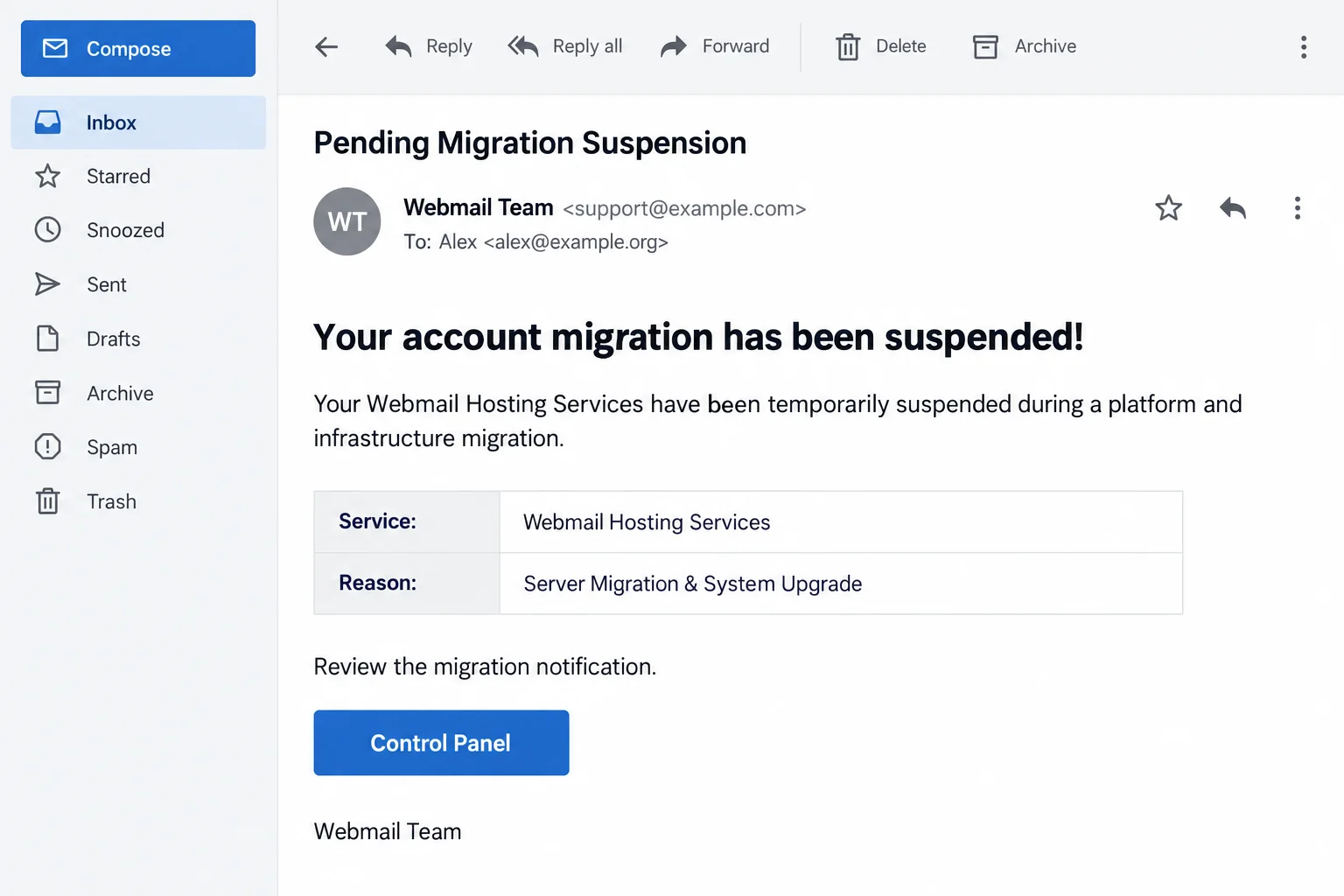
The webmail migration suspended email scam uses the subject “Pending Migration Suspension.” It claims Webmail Hosting Services have been temporarily suspended during infrastructure work.
The notice describes a Server Migration & System Upgrade and says the transfer was paused to maintain data integrity. A Control Panel button invites review.
This combines two concerns: losing current email access and wondering whether existing messages will survive a technical move. The email supplies no independently confirmed maintenance record.
The administrative story directs attention to an unverified login route
The reported destination was already unavailable when the message was analyzed. A working credential form and its exact current appearance are therefore not established here.
The reported concern is credential theft, not an actual migration failure. Any password supplied through that route should be treated as potentially disclosed.
If you used a linked form earlier, its later disappearance does not resolve the exposure. What you supplied matters more than whether the site still responds.
A real migration can be verified outside this message
Providers genuinely move infrastructure and communicate with customers. The problem is not the word migration; it is trusting this notice’s route without establishing its authority.
- The subject announces a suspended transfer.
- The body also describes temporarily suspended service.
- Technical labels make the message resemble a hosting notice.
- A due date adds a sense of administrative obligation.
- The Control Panel button becomes the proposed next step.
The illustration uses example addresses and omits the old deadline. It depicts the message’s maintenance story, not a live notice from your own provider.
What the Notice Leaves Unanswered
Who authorized the move?
A migration normally belongs to a known relationship: your hosting company, employer, managed-service provider, or administrator. Begin with the organization responsible for the actual mailbox.
A generic Webmail Team signature does not establish that relationship. The name in the message must connect to a provider you can reach independently.
If you manage several domains, identify the account concerned before acting. Familiar terminology can otherwise make a broad notice seem relevant to whichever mailbox worries you most.
Ask whether a planned change exists and who owns it. There is no need to authenticate through the questionable button to ask that basic question.
What is supposedly suspended?
The headline concerns migration, while the body refers to service suspension. Those are different operational conditions, even if both can occur during maintenance.
A paused transfer does not automatically mean existing email has stopped working. Nor does a temporary outage prove that this particular message came from the provider.
Check current account access through your normal application or saved Webmail address. Report any real failure using its actual wording.
Let the responsible team connect that failure to an authentic service event. Do not let an unsolicited explanation become the diagnosis by default.
What does the date require you to do?
The reported copy lists October 28, 2026. That is a date written in the specimen, not an independently confirmed deadline for your account.
A past date does not make an old credential request safe. It also should not be presented as proof that a current migration is pending.
Messages can be forwarded or encountered later. Check any genuine requirement through current account records rather than trying to satisfy a historical email field.
If a real provider deadline applies, ask what action is required and where it can be performed safely. The suspicious message should not choose that route.
How the Webmail Migration Suspended Email Scam Works
Step 1: Infrastructure language makes the notice seem specialized
The message refers to platform upgrades, mail routing, and data integrity. These are recognizable operational concerns that many ordinary mailbox users cannot independently evaluate.
That knowledge gap can encourage compliance. A recipient may decide the technical team must understand the problem better and follow its offered shortcut.
Expert-sounding vocabulary is not a support relationship. Anyone can write a hosting-style notice without controlling the server or knowing how your mailbox is configured.
Use the known provider to establish the underlying event first. You do not need specialist knowledge to ask whether its team actually sent the notice.
Step 2: Suspension makes review feel like an existing obligation
The email describes the process as already underway. The recipient is not invited to consider a new service; they are told to react to a problem.
This can make delay feel irresponsible. Someone awaiting business correspondence may worry that inaction will prolong an outage or put stored messages at risk.
However, the claim has not established either result. A verified service status or administrator can explain what is happening without relying on the email’s narrative.
For a workplace account, tell the help desk about the notice instead of independently approving migration work. That keeps account changes with the people authorized to manage them.
Step 3: Control Panel sounds like a destination you already trust
The button uses an administrative label rather than explicitly asking the reader to disclose a password. That can make the next click seem like routine review.
But a button label is not a provider identity. The important question is whether its actual destination is an established part of your account service.
Legitimate hosts can use separate control-panel addresses and federated sign-in. An unfamiliar domain needs verification, not an automatic verdict based solely on its appearance.
The safe alternative is your existing hosting bookmark, provider app, or known support contact. Use that route to locate any authentic migration notice.
Step 4: A review request can become a request for account credentials
In maintenance-themed phishing, a linked page may ask for the mailbox password as a supposed prerequisite to reviewing or restoring service.
Here, the unavailable destination limits what can be said about the exact form. No particular fields, code request, or completed account takeover were reproduced.
If you entered information when a page was available, treat each real secret as potentially exposed. Do not wait for the same form to return.
If you never supplied anything, avoid creating that exposure while investigating. The actual provider can address a real migration without requiring you to explore an unverified page.
Confirming Real Maintenance Without Making Changes Yourself
Find the provider’s own change record
Look for a customer-portal notice, an established support ticket, or an internal maintenance announcement. Compare the affected service and required action, not just the word upgrade.
A legitimate notice about a different domain or product does not authenticate this email. Keep the exact account and operational event connected.
If the provider confirms maintenance, ask which instructions apply to your role. A mailbox user may have different responsibilities from the hosting-account administrator.
Do not forward passwords to make the inquiry easier. Support needs enough information to identify the account through its approved process, not another copy of its secret.
Distinguish account access from mail delivery
Signing into Webmail and receiving new messages are different functions. Describe whether you cannot sign in, cannot send, or are missing expected incoming mail.
The distinction helps support investigate the real condition. A vague statement that migration is broken can send attention toward the email’s invented explanation.
For an ordinary delivery check, use non-sensitive content and an account you control if your provider recommends testing. Do not send private records as a diagnostic experiment.
Business users should let the administrator assess service logs and any domain-level configuration. Avoid making DNS or routing changes because an unsolicited notice sounds technical.
Keep existing data intact while checking the claim
Do not empty folders, remove the account from your mail client, or delete a local archive to make space for an unverified migration.
Some mail applications hold local-only material. Removing an account or recreating a profile can affect information that is not safely stored elsewhere.
If a real migration requires preparation, ask the provider about backups and retention. Understand what will be copied, what remains local, and who can restore missing items.
Those are legitimate maintenance questions. They should be answered through your established support process, not a credential form introduced by this message.
If You Used the Button Before the Page Disappeared
Start with your own interaction, not the website’s current availability. Write down whether you entered an address, password, code, or another piece of information.
An email address alone is not the same exposure as an account password. A code may authorize a particular action that the provider needs to identify.
If you tried several passwords after seeing an error, consider where each one is actually valid. The failed appearance of the page does not protect those secrets.
Do not return to obtain a better record. Save the original email and existing screenshots privately, without posting live links or identifying information publicly.
If the interaction included a download or remote-support request, mention it separately. Neither is established for every recipient of this notice.
A clear record helps the provider prioritize the response without assuming all linked accounts were breached. Practical recovery can begin before every detail of the page is known.
Why a Real Outage Can Make This Email More Convincing
A mailbox may genuinely have an unrelated service problem when a fraudulent maintenance notice arrives. Coincidence can make a general campaign feel unusually well informed.
Do not assume the sender caused the outage or knows private server details. Those conclusions need evidence beyond the timing of an email.
The reverse matters too. A working mailbox does not prove a password submitted elsewhere stayed private. Service health and credential exposure are separate questions.
Resolve both through the right route: the provider for actual maintenance and account recovery, and device support for any software installed during the interaction.
Keep genuine administrator instructions available through a trusted channel. That reduces the temptation to treat whichever explanation reaches the inbox first as authoritative.
What to Do If You Responded
Stop using the migration button. Do not repeat the supposed review or complete a new verification request from the same unconfirmed source.
If you did not click, reply, or supply information, begin with reporting and independent service verification. The notice alone is not evidence of account takeover.
Contact the real host or administrator. Use established account records and explain the subject, claimed suspension, and any actual service problem.
Ask whether migration work exists and which actions are genuinely required. Keep handling any confirmed maintenance through that independent relationship.
Replace real passwords you submitted. Open the genuine provider directly and follow its recovery process if access has changed.
Secure reused secrets on other services too. Do not make replacement passwords by typing them into the same page that introduced the exposure.
Review access that can remain after a password change. Ask about active sessions, recovery settings, forwarding, rules, app passwords, and connected access.
For personal Google accounts, its account-recovery guidance provides a supported route. Managed mailboxes should be handled with their administrator.
Check relevant messages and business activity. Look for unauthorized sent mail or changes to important conversations after any confirmed account intrusion.
Verify unusual payment instructions with the other party separately. A restored mailbox does not automatically retract messages an intruder may already have sent.
Inspect the device if software was involved. Malwarebytes can help assess suspicious downloads or programs actually used during the interaction.
AdGuard may reduce malicious advertising and some unsafe destinations. Neither product completes a server migration or secures an online account by itself.
Report through an established process. Retain the original message and relevant incident records. Use your provider’s or organization’s phishing-reporting route.
Google’s phishing guidance explains its reporting options. Reject strangers offering guaranteed mailbox recovery after a separate fee.
Is Your Device Infected? Run a Free Malware Scan
Slow performance, constant pop-ups, or strange behavior? These are classic signs of a malware infection. A quick way to check is to scan your device with Malwarebytes Free, one of the most trusted malware removal tools available. If you only visited a scam page and didn’t download or install anything, this scan is optional.
The free version detects and removes the most common threats, including:
- Adware — the cause of those annoying pop-ups
- Browser hijackers — unwanted redirects and changed homepages
- Trojans and spyware — hidden programs stealing your data
- Potentially unwanted programs (PUPs) — software you never asked for
👉 Select your device below — Windows, Mac, or Android — then follow the simple steps to download Malwarebytes, scan your system, and remove any threats it finds. The scan usually takes 5 to 20 minutes.
Run a Malware Scan with Malwarebytes for Windows
Malwarebytes is one of the most popular and trusted anti-malware tools for Windows — and it’s completely free for removing infections. It catches threats that many antivirus programs miss, including adware, browser hijackers, and trojans. Follow the steps below to scan your PC and remove what Malwarebytes finds.
Download Malwarebytes
Click the button below to download the latest version of Malwarebytes for Windows from the official source. The free version is all you need — it will scan your computer and remove adware, browser hijackers, and other malicious software at no cost.
Download MalwarebytesOfficial installer for Windows 11 and 10. Your download starts right away.Want real-time protection? See Malwarebytes Premium Malwarebytes Free for WindowsScans and removes malware at no cost
-
Install Malwarebytes
When the download finishes, open your Downloads folder and double-click the MBSetup file. If Windows shows a User Account Control pop-up, click “Yes” to allow the installation.
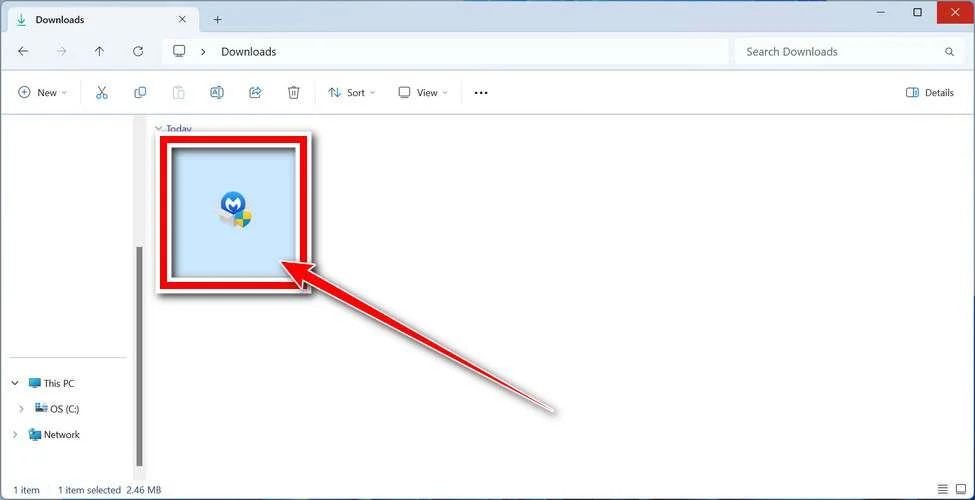
Follow the On-Screen Prompts to Install Malwarebytes
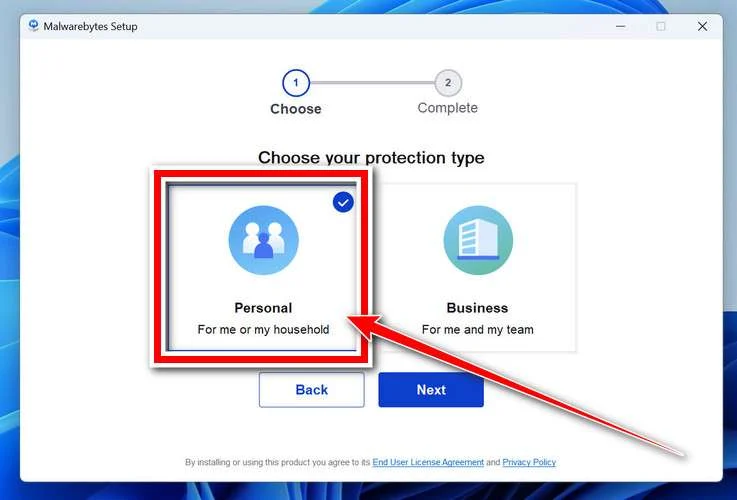
The setup wizard will walk you through a few quick screens:
-
Choose where you’re installing the program — “Personal Computer” or “Work Computer” — then click Next.
-
Malwarebytes will now install on your device. This usually takes under a minute.

-
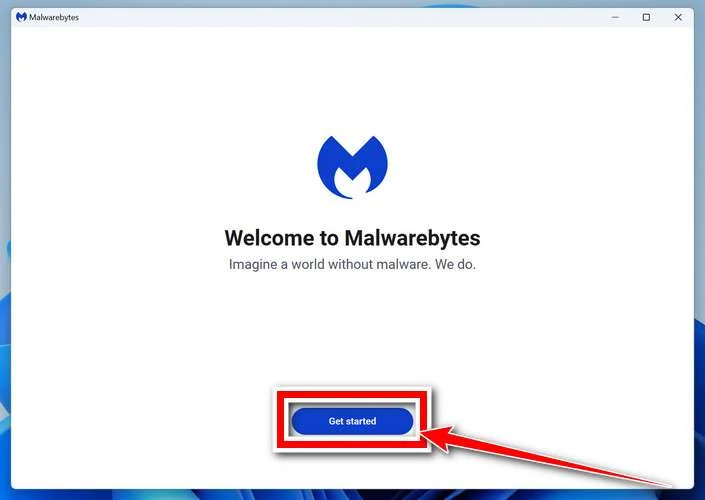
When installation is complete, the “Welcome to Malwarebytes” screen will open automatically.
-
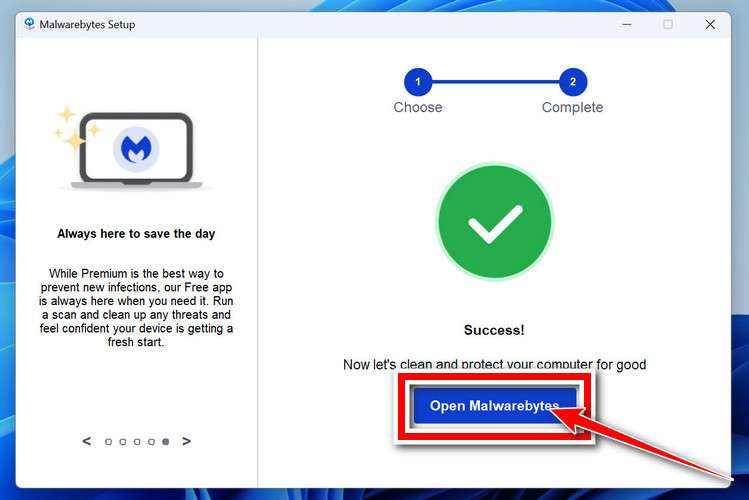
On the final screen, click Open Malwarebytes to launch the program.
-
Optional: Check for rootkits with a Custom Scan
You don’t need to change any settings for a normal scan. The standard Threat Scan in the next step is enough for most problems, so you can go straight to it.
If you also want to check for rootkits, use a Custom Scan. In current versions of Malwarebytes, rootkit scanning is only available there:
- On the Scanner tile, click the three-dot menu and select Advanced Scan.
- Choose Custom Scan. In its options, check Scan for rootkits.
- Select your system drive (usually C:\) as the location to scan, then start the scan. It takes longer than a Threat Scan.
- When it finishes, review and quarantine the results as described in the steps below.
Rootkit scanning isn’t available on Windows devices with ARM processors.
Start the Scan
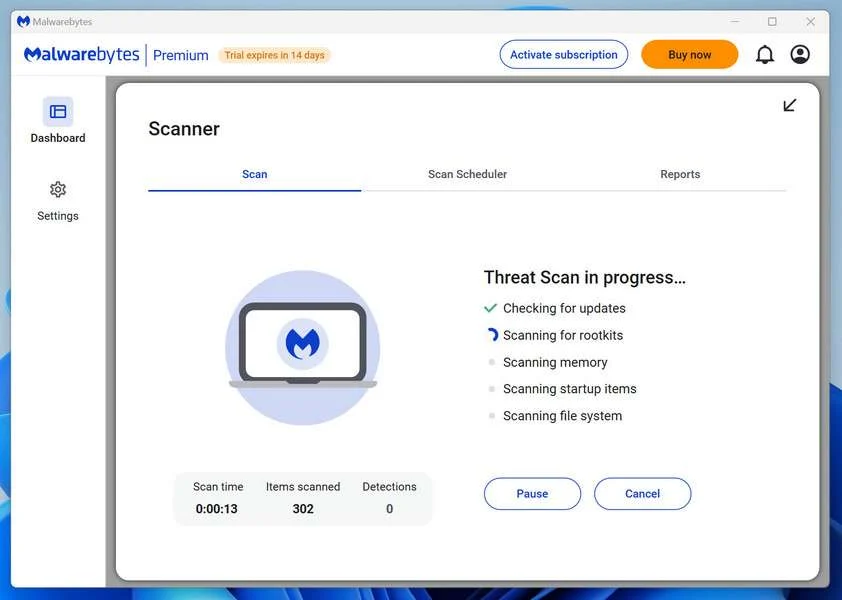
Click the blue Scan button. Malwarebytes will automatically update its virus database and start checking your computer for malware.

-
Wait for the Scan to Finish
The scan checks your entire system for browser hijackers and other malicious programs, so it can take 5 to 20 minutes depending on your computer. Feel free to do something else — just check back occasionally to see the progress.
-
Quarantine the Detected Threats
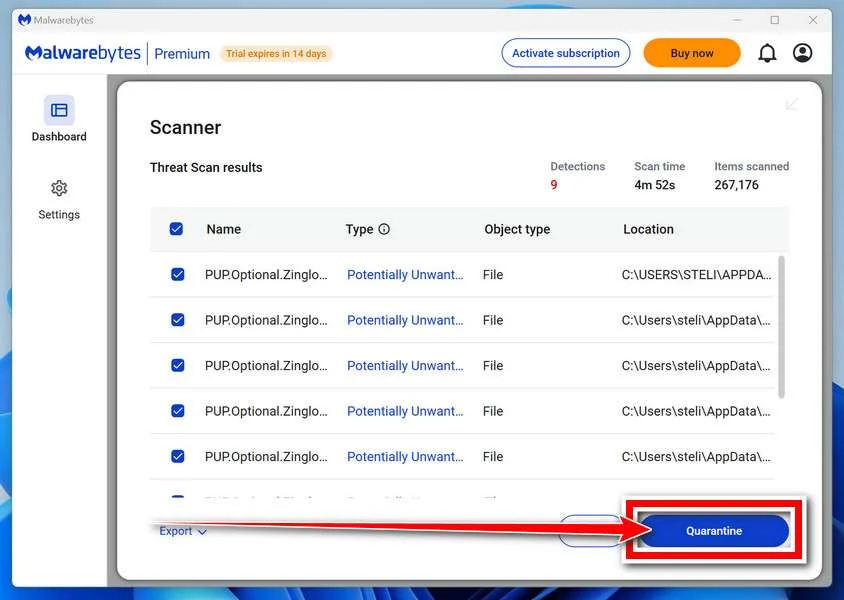
When the scan is done, you’ll see a list of everything Malwarebytes found — malware, adware, and potentially unwanted programs. Click the “Quarantine” button to remove all of them at once.
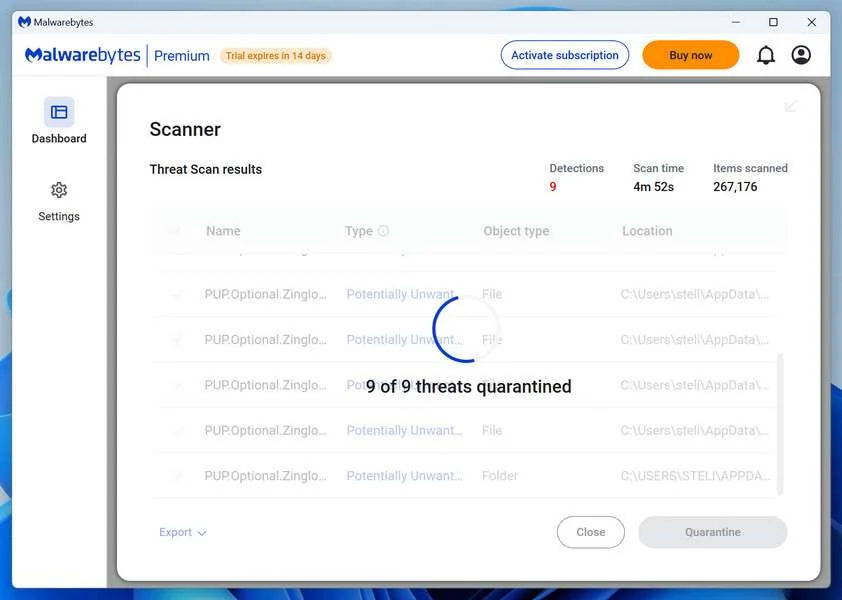
Malwarebytes will now remove the malicious files and registry entries and move them safely into quarantine.
-
Restart Your Computer
Some threats can only be fully removed after a reboot. If Malwarebytes asks you to restart, click Yes. Once you’re logged back in, Malwarebytes has finished removing the threats it found.
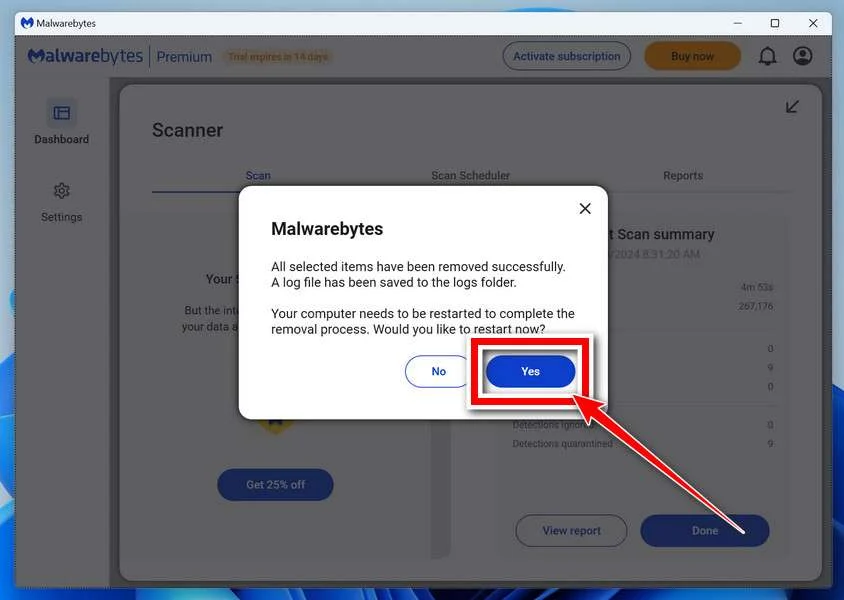
When the scan is done, check whether the problems you noticed have stopped. If they continue, see the options below.
If you are still having problems with your computer after completing these instructions, then please follow one of the steps:
- Run a computer scan with ESET Online Scanner
- Ask for help in our Windows Malware Removal Help & Support forum.
Run a Malware Scan with Malwarebytes for Mac
Malwarebytes for Mac is a free on-demand scanner that removes the malware other security software tends to miss — adware, browser hijackers, and unwanted programs included. Cleaning an infected Mac with Malwarebytes has always been completely free, and it’s our go-to recommendation. Follow the steps below to scan your Mac and remove what Malwarebytes finds.
-
Download Malwarebytes for Mac
Click the button below to download the latest version of Malwarebytes for Mac.
Download MalwarebytesOfficial installer for macOS. Your download starts right away.Want real-time protection? See Malwarebytes PremiumMalwarebytes Free for MacScans and removes malware at no cost -
Open the Malwarebytes setup file
When the download finishes, open your Downloads folder and double-click the setup file to begin the installation.
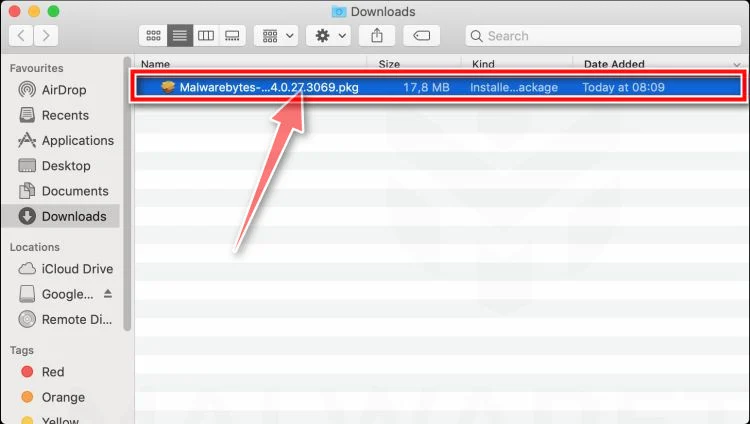
-
Follow the On-Screen Prompts to Install Malwarebytes
The Malwarebytes for Mac Installer will guide you through a few quick screens. Click “Continue” and keep following the prompts until the installation completes.
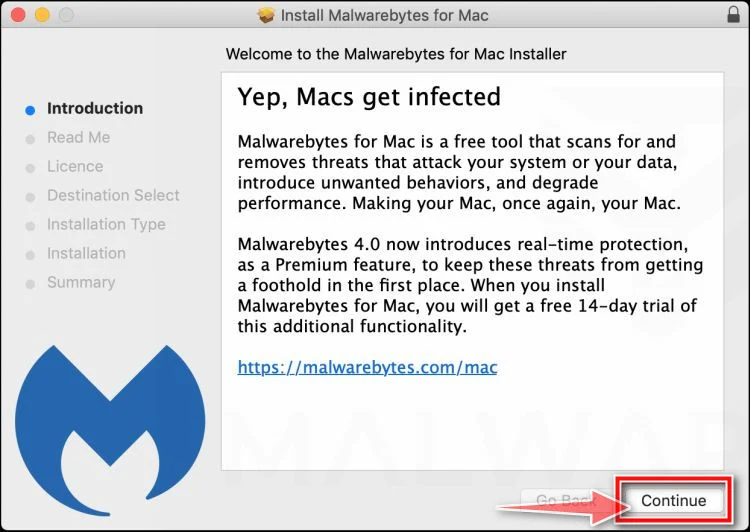
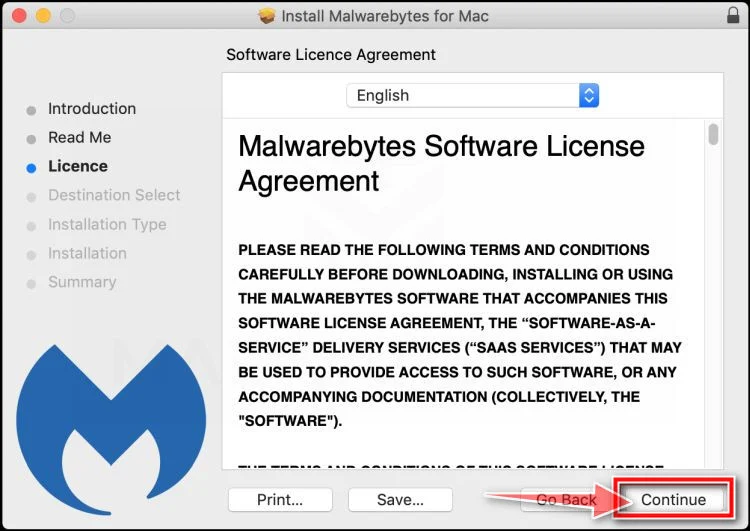
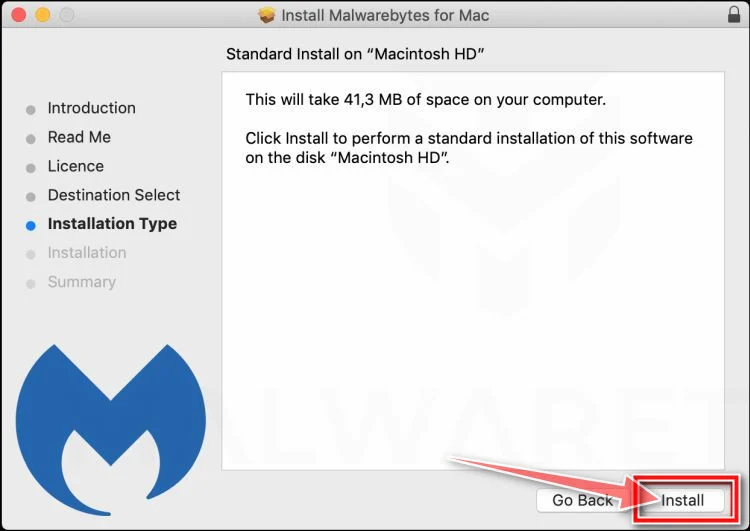
When the installation is complete, Malwarebytes opens to the Welcome to Malwarebytes screen. Click “Get started“.
Malwarebytes needs Full Disk Access to check your whole Mac. When it asks, open System Settings > Privacy & Security > Full Disk Access, turn on Malwarebytes (it may be listed as Malwarebytes Protection), and confirm with your password or Touch ID. Then return to Malwarebytes. On macOS Monterey and earlier, this setting is in System Preferences > Security & Privacy > Privacy.
-
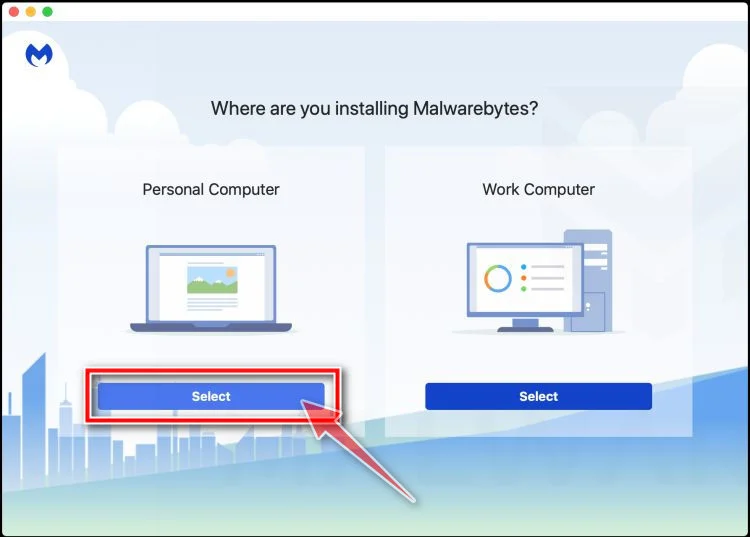
Select “Personal Computer” or “Work Computer”
Malwarebytes will ask what type of computer you’re installing it on. Click either Personal Computer or Work Computer, whichever applies.
-
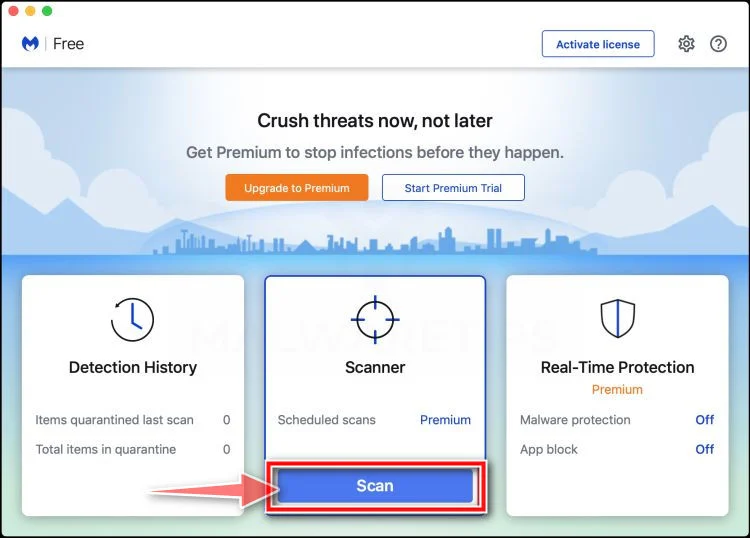
Start the Scan
Click the “Scan” button. Malwarebytes will automatically update its detection database and begin checking your Mac for malware.
-
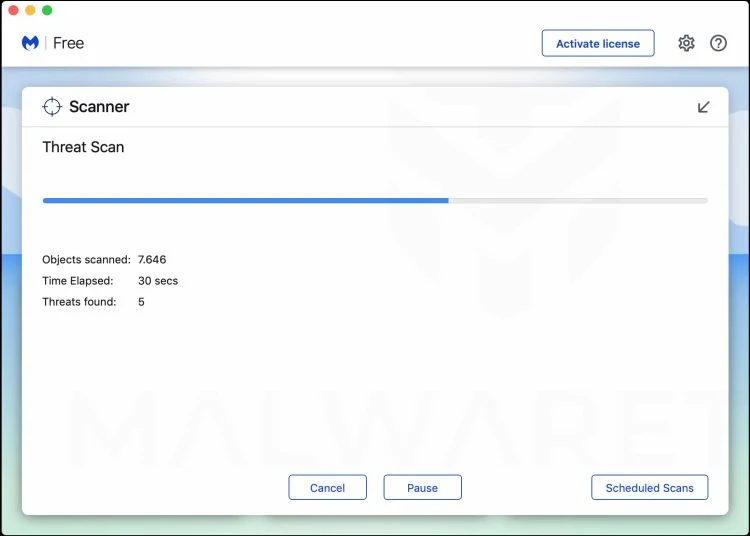
Wait for the Scan to Finish
Malwarebytes will scan your Mac for adware, browser hijackers, and other malicious programs. This can take a few minutes, so feel free to do something else — just check back occasionally to see the progress.
-
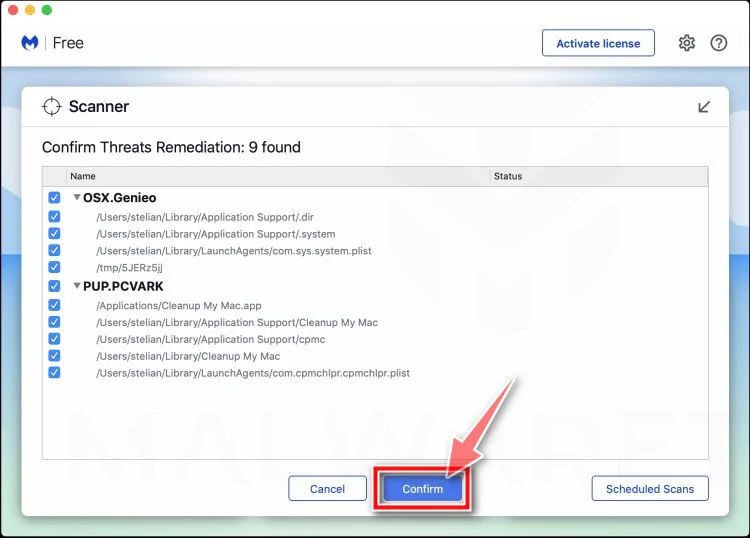
Quarantine the Detected Threats
When the scan is done, you’ll see a list of everything Malwarebytes found. Click the “Quarantine” button to remove all the threats at once.
-
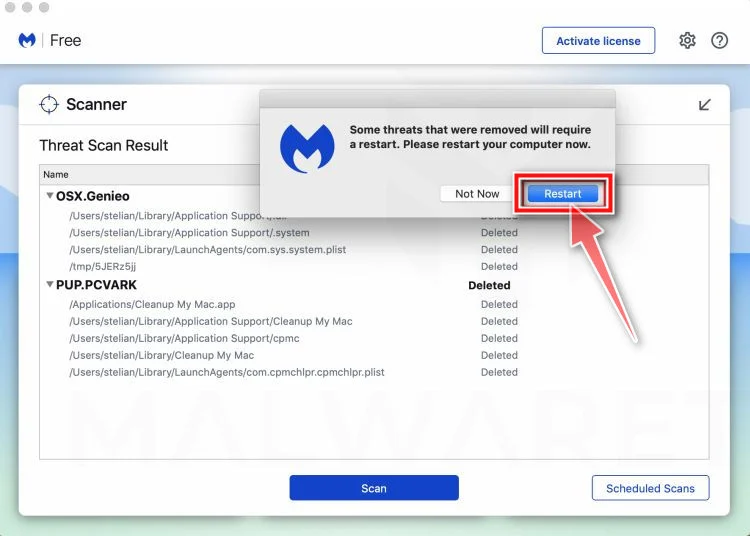
Restart Your Mac
Malwarebytes will now remove all the malicious files it found. Some threats can only be fully removed after a reboot — if Malwarebytes asks you to restart, allow it. Once you’re logged back in, check whether the problems you noticed have stopped. If they come back, save the scan report and ask for help in our forum.
If the problems you noticed continue after the scan, see the options below.
If you are still experiencing problems while trying to remove a malicious program from your computer, please ask for help in our Mac Malware Removal Help & Support forum.
Run a Malware Scan with Malwarebytes for Android
Malwarebytes for Android scans your phone or tablet for malware, adware, and potentially unwanted apps. The free version scans only when you start a scan. Real-time protection, which checks apps automatically, is part of the paid Premium version.
-
Download Malwarebytes for Android.
You can download Malwarebytes for Android by clicking the link below.
Get Malwarebytes for AndroidOpens Google Play in a new tab.Want real-time protection? See Malwarebytes Premium for AndroidMalwarebytes for AndroidScans your phone and removes malware at no cost -
Install Malwarebytes for Android on your phone.
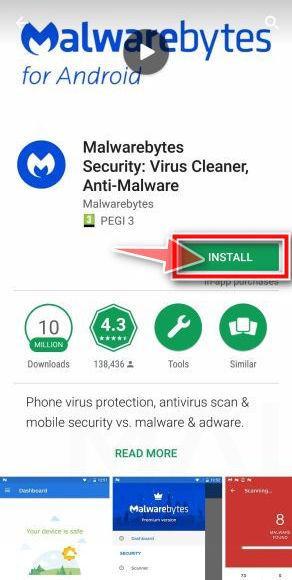
In the Google Play Store, tap “Install” to install Malwarebytes for Android on your device.
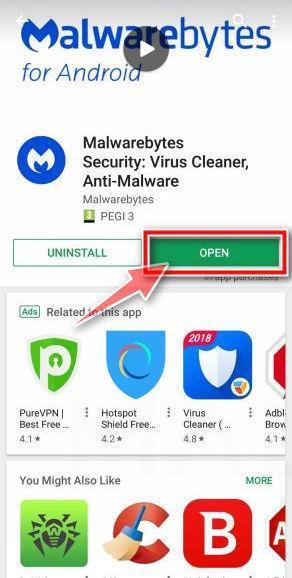
When the installation process has finished, tap “Open” to begin using Malwarebytes for Android. You can also open Malwarebytes by tapping on its icon in your phone menu or home screen.
-
Follow the on-screen prompts to complete the setup process
When Malwarebytes opens, it walks you through a short setup. Tap Get started and follow the prompts. If you see an offer for a trial or a paid plan, read it before you accept. You can skip it and keep using the free scanner.
Malwarebytes will ask for permission to access the files on your phone so it can scan them. Tap Allow, or turn on the permission in the Android screen that opens, then return to Malwarebytes.
-
Run a scan with Malwarebytes for Android
On the main screen, tap Scan now. In some versions, you open the menu, tap Scanner, and then tap Run a scan.
-
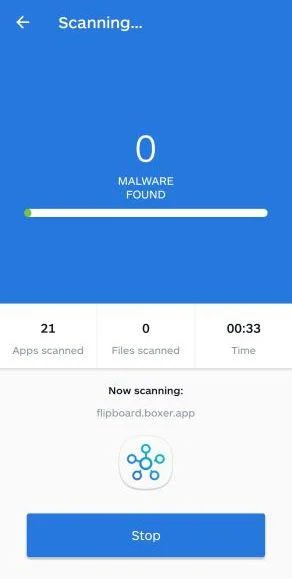
Wait for the Malwarebytes scan to complete.
Malwarebytes will now start scanning your phone for adware and other malicious apps. This process can take a few minutes, so we suggest you do something else and periodically check on the status of the scan to see when it is finished.
-
Remove the detected apps.
When the scan has been completed, you will see a list of the threats that Malwarebytes for Android has detected. Next to each detected item, tap the menu icon (three dots), then choose to uninstall the app or delete the file. Android then asks you to confirm. Tap OK or Uninstall to remove the app.
-
Restart your phone.
When the detected apps are removed, restart your phone if Malwarebytes asks you to. Then check whether the problems you noticed have stopped.
If the problems you noticed continue after the scan, see the options below.
If you are still having problems with your phone after completing these instructions, then please follow one of the steps:
- Ask for help in our Mobile Malware Removal Help & Support forum.
- Only as a last resort, reset your phone to factory settings. Read the warning below first.
- Back up your photos, videos, files, and messages, for example to your Google account or a computer.
- Make sure you know your Google account email and password. The phone asks for them after the reset. If you changed the password recently, Google recommends waiting 24 hours before you reset.
- On a Samsung phone, also make sure you know your Samsung account password.
- If you use an authenticator app for two-step verification, move your accounts to another device or save your backup codes first.
Stay Protected: Block Ads and Malicious Sites
No scan can prove a device is completely clean, so it helps to block threats before they reach you. Most infections start with a malicious ad or a fake download button — so blocking them at the source is your best defense.
We recommend AdGuard, which blocks malicious ads, phishing pages, and dangerous redirects before they can reach you.
👉 Download AdGuard and browse safely
Frequently Asked Questions
Has my webmail migration actually been suspended?
The email does not establish that. Ask the actual provider or administrator and compare the claim with a genuine change record.
Does the October 28, 2026 date apply to my account?
It is a field in the reported specimen, not a confirmed deadline for you. Verify any current maintenance requirement through the real service.
Was a working fake login page reproduced?
No. The reported destination was unavailable. The precise form and its present appearance are not established, so recovery should follow your actual interaction.
Can a legitimate host use a different control-panel domain?
Yes. Providers can use separate services or federated authentication. Verify that relationship independently rather than trusting the button or condemning every third-party domain.
Does a dead link mean an entered password is safe?
No. Later unavailability cannot establish what happened to information supplied earlier. Replace real exposed secrets and review continuing account access.
Should I change DNS records to restart the migration?
Not because of this email. Domain-level changes belong with the authorized administrator and verified provider instructions. Unnecessary changes can create a real delivery problem.
The Bottom Line
Do not review this supposed suspension through the unverified Control Panel button. Confirm any real migration with your provider using an account route you already trust.
If you submitted credentials, secure the genuine mailbox and inspect continuing access. A vanished webpage does not replace account recovery or an appropriate device check.

Join the discussion
0 commentsShare your experience or ask a question about this article.
Community experiences
Did this happen to you?
Your experience could help someone recognize the same scam. Submit a private report for our team to review.
I experienced this tooReports are reviewed before publication. Sharing publicly is always your choice.
Discussion
Start the conversation
Have a question or something useful to share? Add the first comment.