

A brighter smile for a photograph or meeting, without an appointment or a large dental bill, is an appealing idea. WellaSmile makes that promise look effortless.
Its removable veneers are presented as a quick cosmetic fix. Before choosing a kit, it helps to separate the advertised appearance from the practical and health questions.
Overview
The product and the promise
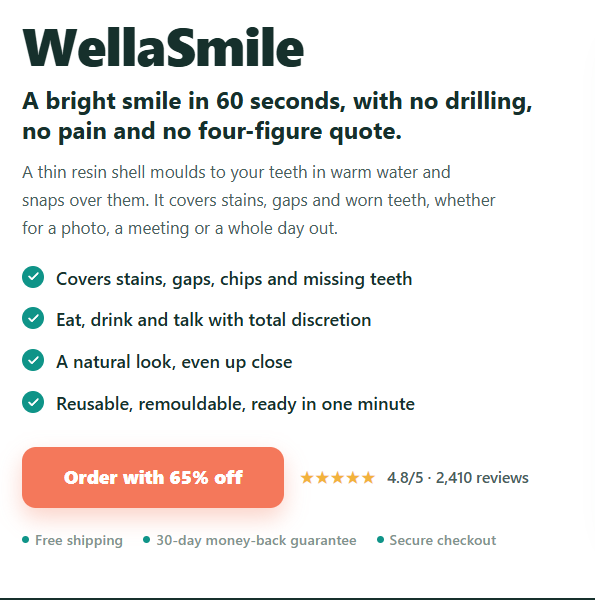
WellaSmile sells removable resin shells that the customer warms, molds, and snaps over existing teeth. The seller says fitting can take about 60 seconds.
The page advertises a brighter look for stains, gaps, chips, and even missing teeth. It says the shells are reusable and can be worn while talking.
Those claims describe a cosmetic accessory, not a repair for damaged teeth. The site itself says the product is not a medical device or dental treatment.
The sales signals need independent context
During our October 1 review, the page claimed a 4.8 score from 2,410 reviews and more than 120,000 transformed smiles.
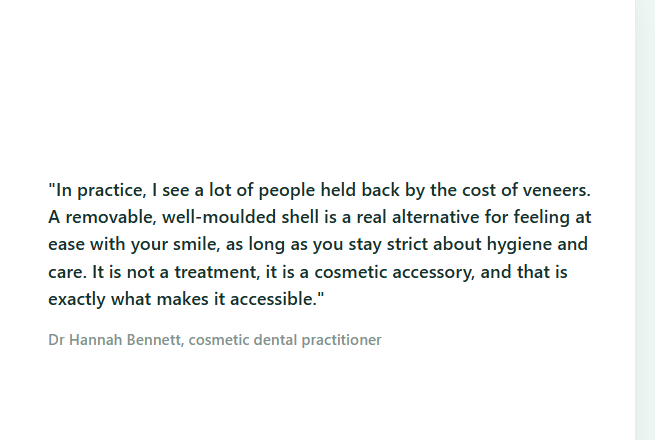
It also showed a prominent practitioner quote and survey-style satisfaction figures. The reviewed page did not provide independent methods for confirming those totals.
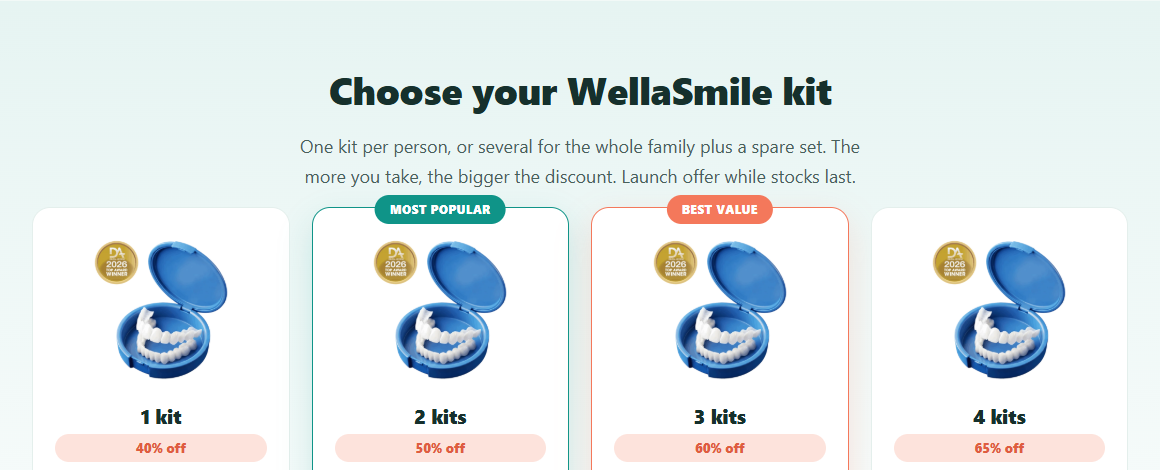
A discount button led to one-, two-, three-, and four-kit offers. Buying more reduced the displayed price per kit, but it increased the total order.
The central buyer risk
A snap-on shell may change appearance in a photograph, yet fit, speech, chewing, cleanliness, and comfort vary from person to person.
The seller promises a 30-day money-back guarantee. We did not locate detailed public return steps or a physical return address on the reviewed sales page.
We did not purchase or test WellaSmile. The evidence supports questions about claims, dental suitability, and return transparency, not a verdict that every order is fraudulent.
- The item is a removable cosmetic shell, not professionally placed veneers.
- One kit was advertised at $59.95 during our review.
- Large review and customer totals appear on the seller’s own page.
- Multi-kit offers increase the amount charged, even when per-kit pricing falls.
- Specific refund logistics deserve confirmation before opening or molding a kit.
The safest decision starts with realistic expectations. If a tooth hurts, a shell is not a substitute for diagnosis or treatment.
Snap-On Veneers Are Not Dental Veneers
The word “veneers” hides a major difference
Professionally placed dental veneers involve a clinician, preparation, and individualized fitting. WellaSmile describes a removable resin piece shaped by the customer at home.
Those are not interchangeable procedures. A detachable shell can cover how teeth look without fixing decay, gum disease, a fractured tooth, or a bite problem.
The page acknowledges that distinction in its fine print. A shopper should give that limitation as much weight as the before-and-after photography.
“Covers missing teeth” also deserves careful reading. A cosmetic surface may conceal a visible gap, but it cannot replace a missing tooth’s function.
If a gap is new or accompanied by pain, bleeding, or swelling, speak with a licensed dental professional instead of masking it.
Fit can change the experience completely
The seller says to soften the resin in warm water and mold it. A quick home fit may not match every mouth shape or bite.
A loose shell could move when speaking; a tight one could be uncomfortable. We have not tested this model, so those are practical possibilities, not product-specific findings.
Ask whether the kit includes upper and lower pieces, replacement molding material, and clear instructions for a failed first attempt.
Find out whether the seller allows a refund after molding. That is often the moment when a buyer first learns whether the product works for them.
Do not use a shell over a painful or unstable tooth. Concealing a problem can delay care when it matters most.
Eating and hygiene claims deserve caution
WellaSmile says users can eat, drink, and talk while wearing its product. That statement is broad, and foods differ in temperature and texture.
Ask for the manufacturer’s exact limits on hot drinks, sticky food, chewing pressure, cleaning agents, and overnight wear.
The American Dental Association’s news discussion of do-it-yourself veneers notes concerns that snap-on coverings can trap food and contribute to dental problems.
That general warning is not a laboratory test of WellaSmile. It is a reason to follow hygiene guidance and seek professional advice about your mouth.
Remove and clean the device as directed. If it irritates gums or changes your bite, stop using it and consult a dentist.
How the WellaSmile Sales Journey Works
Step 1: A familiar insecurity becomes the hook
The landing page invites readers to imagine a confident smile without drilling, pain, or a four-figure quote. That contrast is emotionally effective.
It can especially appeal before a wedding, job interview, or family event. A short-term cosmetic need feels more urgent than a long-term dental plan.
Remember that a dramatic first impression does not tell you how the appliance feels after an hour of conversation.
Step 2: Before-and-after imagery supplies the aspiration
The page uses a close-up smile comparison and a polished model image. Such visuals show the result the seller wants visitors to imagine.
They do not tell you whether the displayed person used the exact kit, how long the effect lasted, or whether editing changed the appearance.
We cannot establish that the images are AI-generated or false from appearance alone. Ask for ordinary customer examples under consistent lighting.
Pay attention to gumline, thickness, and speech, aspects still photographs cannot reveal.
Step 3: Ratings and expert language reduce doubt
Beside the order button, WellaSmile cites 2,410 reviews. Elsewhere it claims more than 120,000 transformed smiles and displays a dental-practitioner endorsement.
The reviewed sales page did not provide an independent source for those figures or documentation establishing the practitioner’s examination of the product.
That does not mean the named person is fictitious. It means a cautious reader should ask what was tested and who verified the results.
Survey percentages also need a sample, questions, dates, and method. Without those, a number can sound more conclusive than it is.
Step 4: The price ladder encourages extra kits
The one-kit offer was $59.95 during our review. The page then offered two, three, and four kits with increasingly large advertised discounts.
Multiple kits may make sense for a household or as replacements. They do not improve the fit of the first kit automatically.
Calculate the full charge, not just the per-kit saving. Confirm whether each kit is identical and whether opened extras remain refundable.
A “best value” badge expresses the seller’s preferred bundle. Your best value may be a single kit, or no purchase until the fit questions are answered.
Step 5: A guarantee answers only part of the risk
The page repeats a 30-day money-back promise. The reviewed sales content did not spell out exactly where to send a used or molded kit.
Ask whether trial use voids eligibility, whether return shipping is paid, and when the 30 days begin.
Get the full policy link before checkout. A broad guarantee is hard to evaluate without eligibility and procedure.
Keep a screenshot of the offer and the seller’s reply. Policies can change after an order is placed.
Step 6: The kit arrives and reality replaces the ad
Inspect the package and instructions before heating or fitting the resin. Photograph any missing parts or damaged packaging.
Follow only the manufacturer’s temperature and timing directions. Do not improvise with boiling water if the instructions specify a safer method.
If the device pinches, affects breathing or swallowing, or irritates tissue, remove it. Seek dental advice for persistent symptoms.
Contact support promptly if the fit fails. Ask whether remolding, replacement, or a refund is available under the written terms.
Company, Address, and Fulfillment Questions
The storefront name is not a legal seller disclosure
WellaSmile is the name visitors see on the sales page. We did not find a clear legal company name in the reviewed offer content.
Check the full checkout terms and payment confirmation for the entity accepting the order. Write down the statement descriptor when the charge posts.
A mismatch can be ordinary payment processing. It should still be explainable by customer service when a refund is requested.
A return address matters for a hygiene-sensitive item
Refund eligibility can be especially important for an item placed in the mouth. The buyer may not know whether it fits until after molding.
We could not verify a physical return address from the sales page reviewed. Ask whether opened or molded kits are accepted and where they go.
Do not assume the parcel’s shipping label is a return destination. It could identify a fulfillment partner rather than the responsible merchant.
Request written instructions before mailing a kit. Preserve tracking if a return is authorized.
Customer support should explain the guarantee precisely
The page lists care@wellasmile.org for assistance. We did not test whether that inbox responds or how quickly it handles refunds.
Ask a narrow question: “If I mold one kit and the fit is unusable, can I return it within 30 days?”
A useful answer should say yes or no, identify deductions, and explain postage. Generic reassurance does not settle the main risk.
Keep the response even if you decide not to buy. It shows what the seller represented before the transaction.
Manufacturing claims need a real label
The site describes the shells as resin and BPA-free. Those claims are not the same as a full materials specification or independent safety test.
Ask for the material name, manufacturer or importer, instructions, and warnings. A country-of-origin label alone cannot establish safety or performance.
We have no evidence to state this exact kit is contaminated, made in a particular country, or inherently dangerous.
For an appliance used in the mouth, traceable materials and clear cleaning guidance are sensible minimum questions.
How to Judge the Evidence Before Buying
Look beyond the score beside the button
Star ratings can be useful when readers can examine the underlying reviews. A single sales page controls which quotes and counts it displays.
Search for reports about long-term comfort, speech, cleaning, and the seller’s handling of returns. Give more weight to concrete details than superlatives.
Be careful with reviews that repeat the same phrases or never mention fitting. A device’s fit is the question most real users would notice.
Do not assume every negative post is accurate either. Compare patterns across independently hosted accounts and dates.
Separate a temporary look from oral health
A removable cover may be suitable for a photograph even if it is impractical for meals. Those are different use cases.
If you have gum disease, loose teeth, pain, or recent dental work, ask your dentist whether an over-the-counter shell is appropriate.
Do not postpone a dental examination because a cover makes a visible problem less obvious.
The site itself says the product is cosmetic. Treat any implication of actual tooth restoration skeptically.
Compare the true options
Before buying a bundle, ask whether an ordinary dentist consultation would better answer your concern. An evaluation may identify an issue requiring treatment.
For purely cosmetic short-term use, compare documented materials, realistic customer footage, and return policies among sellers.
Do not finance multiple kits based on a discount ladder if you have never used the product type.
The cheapest price may be the most expensive choice if it brings discomfort, no practical use, and difficult returns.
What to Do If You Ordered WellaSmile
- Confirm the exact order. Check quantity, bundle, shipping, and statement descriptor. Save the checkout page and confirmation before changing anything.
- Read the fitting instructions first. Inspect the kit and record missing parts. Follow temperature guidance exactly rather than improvising the molding process.
- Stop if it causes discomfort. Remove the shell if it hurts, irritates gums, or changes your bite. Seek a dental professional’s advice for persistent symptoms.
- Ask about the guarantee promptly. Email support with your order number and a precise explanation. Ask whether a molded kit remains refundable.
- Keep the packaging and correspondence. Do not ship the device to an unconfirmed address. Request return authorization and retain any tracking.
- Escalate an unresolved billing or description dispute. If the seller does not honor a clear written promise, ask your card issuer about available remedies and deadlines.
Feeling disappointed with an online cosmetic item is common. Focus on what the page promised, what you received, and what remedy the seller actually offers.
Frequently Asked Questions
Is WellaSmile a confirmed scam?
No. The reviewed evidence raises marketing and return-transparency questions, but it does not prove fraud or that every buyer has the same experience.
Are WellaSmile shells the same as dentist-made veneers?
No. They are removable cosmetic covers fitted at home. They do not replace professional treatment for tooth decay, damage, or gum disease.
Can I eat while wearing them?
The seller says users can eat and drink. Ask for specific food and cleaning limits, and stop using the shell if it causes discomfort.
Is the named practitioner endorsement verified?
The page displays the endorsement. We did not find independent documentation on that page showing how the product was examined or the claim validated.
Can a molded kit be returned?
The page advertises 30 days but does not clearly answer that practical question in the content reviewed. Obtain a written answer before fitting.
What if my teeth hurt after trying it?
Remove the cover and seek dental advice if pain persists. A cosmetic shell should not be used to hide or treat a dental condition.
The Bottom Line
WellaSmile sells a quick appearance change, not dental care. Its strongest claims deserve independent context, and its 30-day promise needs practical details.
Ask about molded-kit returns and materials before buying. If you have pain or an underlying oral-health concern, start with a dentist, not a bundle offer.

Join the discussion
0 commentsShare your experience or ask a question about this article.
Discussion
Start the conversation
Have a question or something useful to share? Add the first comment.