

The first stock tip may actually rise. So may the second. Inside the private group, strangers celebrate, screenshots pile up, and the “professor” seems to know tomorrow’s market before everyone else.
That early success is what makes the WhatsApp pump-and-dump scam dangerous. It does not always ask for money on day one. It may spend weeks teaching victims to trust a voice, a group, and a pattern.
Then one urgent recommendation turns all that borrowed confidence into someone else’s exit liquidity.
Overview
The investment group is a carefully managed stage
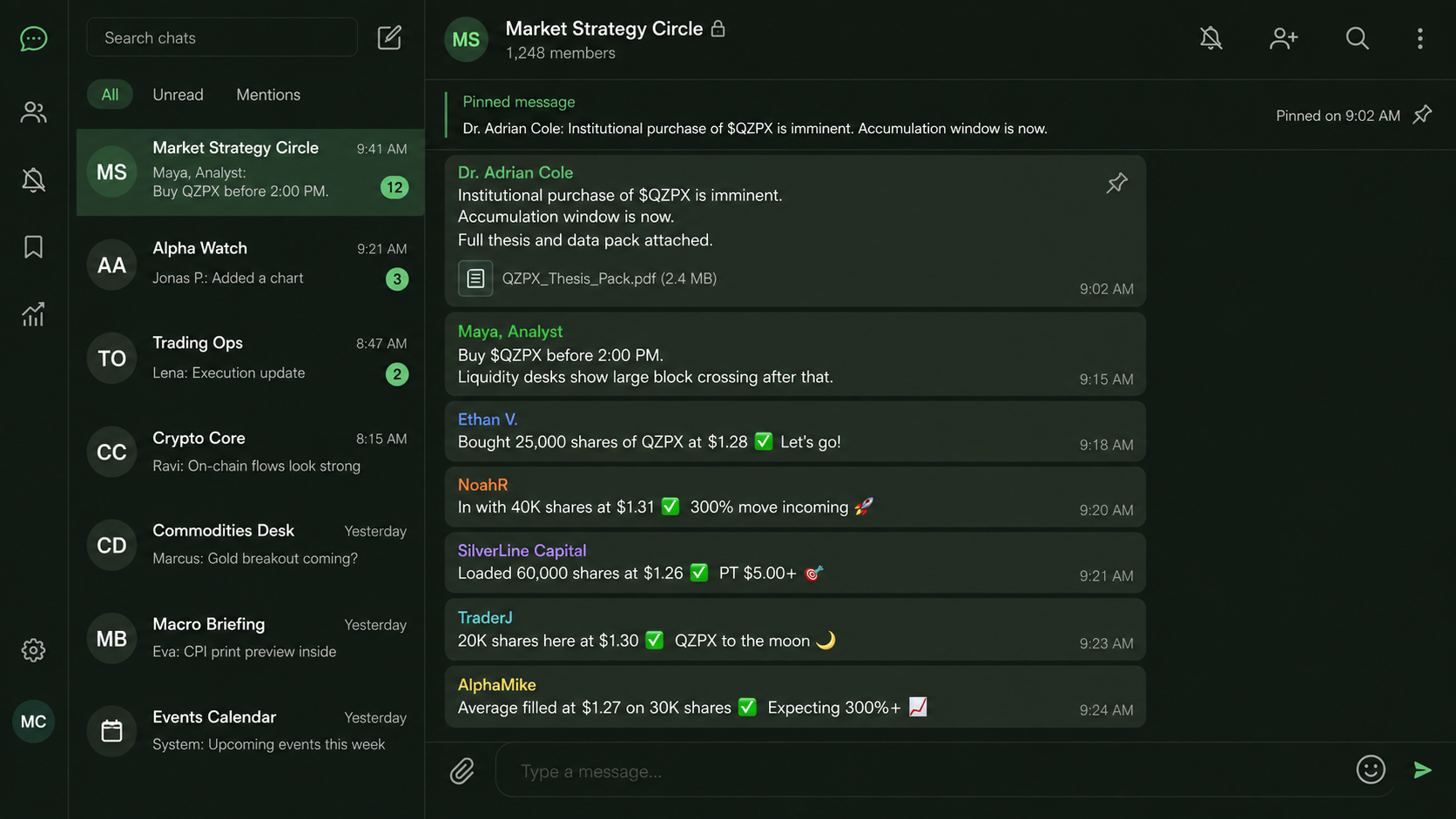
The WhatsApp pump-and-dump scam often begins with a social media ad promising free stock analysis, an invitation from an unknown number, or a message from someone posing as an assistant to a famous investor. The victim is moved into a busy group filled with charts, lessons, market news, and apparent success stories.
Many of the members may be controlled by the same criminal operation. Their job is to ask easy questions, praise the leader, post profitable screenshots, and make hesitation feel like the only reason someone would miss out.
The identity at the center may be borrowed from a real bank, brokerage, analyst, professor, or investment firm. The real person or company has nothing to do with the group. Logos and biographies are copied because they are faster to steal than trust is to earn.
Small wins prepare the victim for one oversized trade
A crude stock scam shouts “buy now” immediately. A stronger one starts with widely traded shares and plausible observations. Some recommendations rise because the broader market rises, because the tip was selected after momentum had already begun, or simply because the group highlights winners and quietly forgets losers.
Those early calls are not the main event. They build a record inside the victim’s mind. When the leader later announces access to an institutional allocation, merger, coordinated purchase, or “high conviction” small-cap opportunity, the victim is encouraged to commit much more than before.
FINRA has warned about investment-group impostor scams that move targets into encrypted chats, impersonate financial professionals, and promote thinly traded securities. FINRA also described a sharp increase in complaints about ramp-and-dump schemes.
The promised surge becomes a sudden collapse
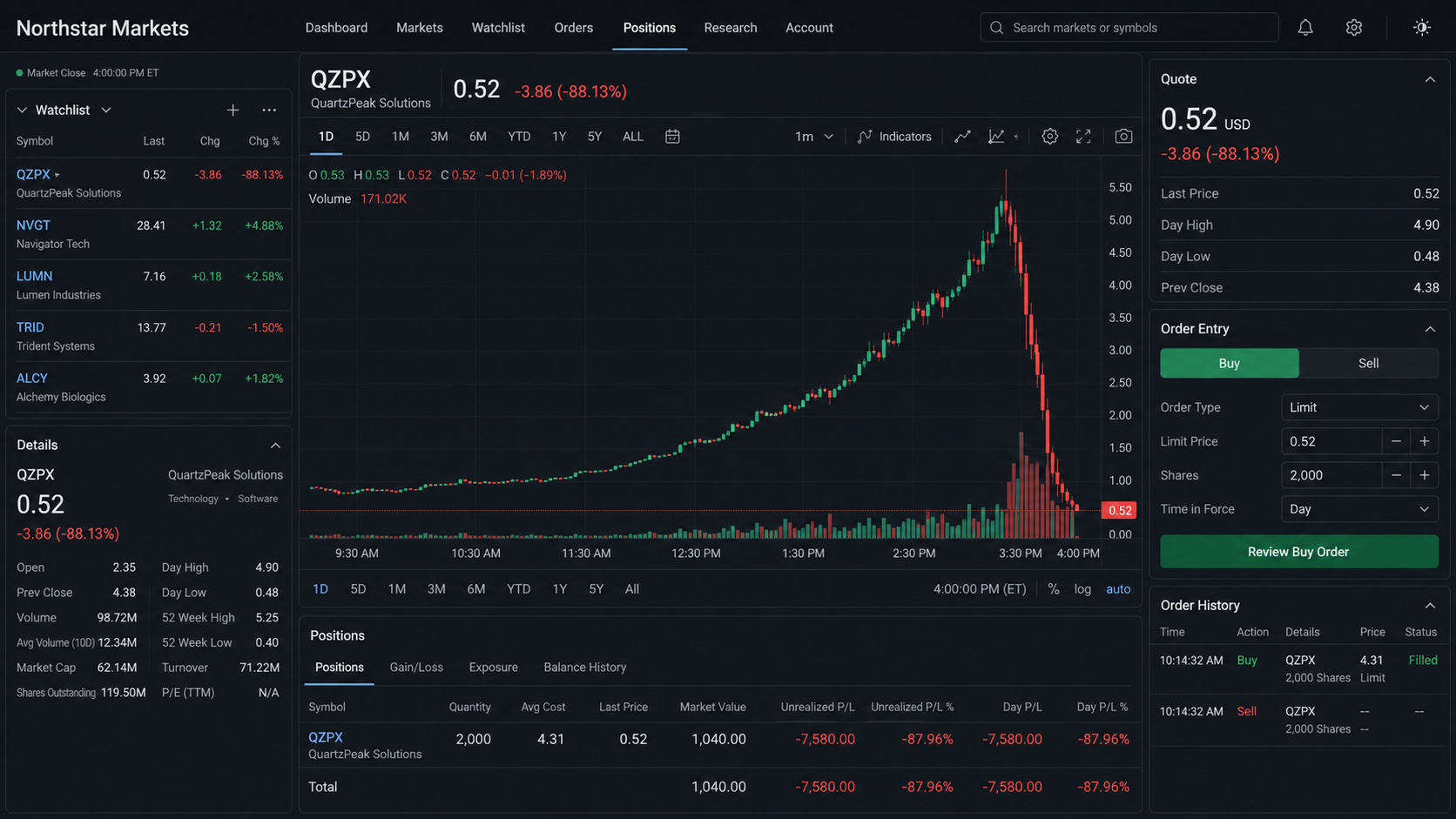
The final ticker is usually different from the familiar stocks used during the trust-building phase. It may trade at a low price with limited volume, making it easier for coordinated purchases to push the chart upward.
Victims are told exactly when to buy and may be warned not to sell before the leader’s target. As group members pile in, the operators unload shares they acquired earlier. The price collapses, buyers cannot exit near the displayed quote, and the “analysts” blame panic, short sellers, or disobedient members.
Warning signs include:
- An unsolicited ad or message leads to a private investment group.
- The group impersonates a real bank, brokerage, professor, or analyst.
- An assistant handles enrollment and speaks for the supposed expert.
- Members post constant profits but never verifiable brokerage records.
- The leader claims private knowledge of an institutional purchase.
- A low-volume stock is presented as a guaranteed 200% or 300% opportunity.
- You are told to buy at a specific time and keep the ticker secret.
- The group pressures members to increase position size after earlier wins.
- Questions about registration, conflicts, or compensation are deleted.
- After the crash, the operator recommends depositing more to recover.
How the WhatsApp Pump-and-Dump Scam Works
Step 1: A social ad finds people interested in investing
The ad may offer a free stock, AI trading signals, a market course, or entry to an elite wealth group. It often uses a familiar financial logo or a stolen photo of a commentator. The goal is not to sell the course. It is to move the conversation into a private channel the advertiser controls.
Inside WhatsApp, the operator can change names, delete messages, remove critics, and create new groups quickly. The privacy of the chat feels exclusive to the victim while giving the organizer freedom from public scrutiny.
Step 2: The fake expert and assistant divide the roles
The “professor” posts polished market commentary and appears only at scheduled times. An assistant welcomes new members, answers practical questions, and checks whether each person has a brokerage account. Separating the roles makes the operation look larger and more professional.
The assistant also profiles the victim. Questions about experience, available capital, retirement goals, and past losses reveal how much pressure to apply later. Friendly coaching is really financial reconnaissance.
Step 3: Controlled members manufacture agreement
A chorus of accounts responds to each lesson. One says the professor changed her life. Another shares a five-figure gain. A supposed beginner asks the exact question needed for the assistant to explain why the next opportunity is safe.
This is social proof created on demand. A victim cannot tell whether fifty names represent fifty independent investors, five operators, or automated accounts. The volume of messages proves only that the organizer controls a busy chat.
Step 4: Early recommendations build a believable record
The group discusses liquid stocks whose prices are difficult for one chat to manipulate. If a call works, it is pinned, repeated, and added to a running scorecard. If it fails, the discussion shifts to market volatility or a later entry point.
Some victims make real gains during this phase. That does not prove the leader has special access. A confidence scheme can afford to let a target win while the stakes are small if the win encourages a much larger final trade.
Step 5: The leader unveils the secret small-cap play
The operator announces that a partner fund, wealthy client, or institutional desk is about to buy a little-known company. Members are told the group received a limited allocation and that disclosing the ticker early could ruin the plan.
The secrecy explains why the claim cannot be verified. The deadline prevents research. The promised target makes the current price look irrelevant. Every part of the story directs the victim away from independent judgment.
Step 6: Coordinated buying lifts the price
Members receive a ticker, time, suggested limit, and instructions not to sell. In a thin market, their combined orders can create a visible spike. The operator points to that movement as proof that the prediction was correct.
The SEC explains that pump-and-dump promoters spread misleading claims to create buying interest, then sell their own holdings into the inflated demand. Later buyers are left with the collapse.
Step 7: The promoters sell while the group is told to hold
The leader may raise the target as the chart climbs. Anyone asking whether to take profit is mocked for lacking discipline. That instruction is crucial because the operators need buyers to remain in place while their own shares are sold.
Once selling overwhelms demand, the displayed price can fall faster than victims can place orders. A quote on screen does not guarantee an executable price when few legitimate buyers remain.
Step 8: The group rewrites the failure
After the crash, messages may claim the exchange interfered, a rival group attacked, or one member leaked the plan. The leader promises a recovery trade and asks members to keep faith. Screenshots of supposed buyers may continue even as real victims report losses.
Another version moves the victim to a fake trading platform, where the account still shows profits but withdrawals require tax, insurance, or verification fees. Sending more money does not release a fake balance.
Why the First Winning Tips Prove So Little
A correct market call can come from skill, luck, momentum, or selective reporting. Inside a private group, the operator controls which predictions remain visible and which results are celebrated. There is no independent record unless the advice, timing, and full performance history can be verified outside the chat.
Consider how an honest adviser would behave. They would explain risk, disclose conflicts, avoid guarantees, identify the legal entity providing advice, and give clients time to understand a security. They would not need hundreds of members to buy the same thinly traded stock at the same minute.
Also watch the change in position size. The early trades may involve amounts the victim can afford to lose. The final “institutional” opportunity often comes with suggestions to use savings, retirement funds, loans, or margin. That jump is the business model of the scam.
The SEC’s Investor.gov warns that group chats and social media can serve as gateways to investment fraud, including impersonation and manipulation. Popularity inside a chat is not regulatory status.
What to Check Before Acting on a Group Stock Tip
Start with the security. Look up its exchange, filings, trading volume, public float, recent news, and any trading halt. A tiny company with no credible announcement cannot support a guaranteed surge merely because a chat leader predicts one.
Then examine the recommendation itself. Is there a public source for the claimed event? Does the leader disclose owning the stock or being paid to promote it? Is the promised target based on analysis, or only on a countdown and screenshots?
Search the adviser and firm in official regulatory databases. Use contact details from those records, not from the WhatsApp profile. If a real professional’s name is being used, call the established firm through its published number and ask whether the group belongs to them.
Finally, ask a question the group cannot answer with excitement: who will buy your shares at the promised price? If the only answer is more members following the same instruction, you are looking at manufactured demand, not a sound investment thesis.
Company, Address, and Fulfillment Checks
Verify the adviser in an official registry
Search the claimed professional and firm through FINRA BrokerCheck, the SEC’s Investment Adviser Public Disclosure database, or the relevant state regulator. Matching a name is not enough; compare the employer, office, phone number, and approved communication channels.
Call the firm using independently sourced details
Do not use the assistant’s number or a link inside the group. Type the firm’s official website yourself and ask whether the named employee operates the chat. An impersonated firm can usually confirm the fraud quickly.
Check the address and legal entity
A prestigious office address may have been copied from the real company. Ask which legal entity provides the advice, where it is registered, and how complaints are handled. Vague references to a “global team” do not answer those questions.
Identify who benefits from your purchase
A legitimate recommendation should disclose conflicts and compensation. In a pump-and-dump, the hidden seller benefits directly when group members create demand. Refusal to discuss ownership is a major warning.
What to Do if You Have Fallen Victim to This Scam
- Stop following the group’s instructions. Do not buy more to lower the average price and do not enter a promised recovery trade.
- Contact your brokerage immediately. Explain that you may have traded during a coordinated manipulation campaign. Ask about open orders, account security, and the correct process for preserving records.
- Do not assume a market sell will produce the displayed quote. Discuss order types and liquidity with the brokerage. MalwareTips cannot tell you whether to hold or sell a specific security.
- Preserve the full chat. Save the group name, member list, admin numbers, messages, voice notes, ticker, timestamps, ads, trade confirmations, and payment records. Do this before reporting accounts that may disappear.
- Secure your accounts. Change any password shared with a group website or fake trading portal. Enable strong two-factor authentication and remove unfamiliar sessions.
- Call your bank if money left the brokerage system. Report wires, card payments, cryptocurrency purchases, or transfers to a supposed analyst or platform immediately.
- Scan any device that received software. If the group installed a trading app, remote-access tool, browser extension, or certificate, disconnect from sensitive services and run a full Malwarebytes scan.
- Block malicious follow-up pages. AdGuard can help stop many known phishing and malvertising destinations after cleanup, but it cannot determine whether a stock tip inside WhatsApp is honest.
- Report the manipulation. File reports with the SEC, FINRA, your brokerage, the exchange if appropriate, WhatsApp, and local law enforcement. Include the exact ticker and trade times.
- Tell other members carefully. A brief warning may help, but expect admins and controlled accounts to attack or remove you. Preserve evidence before posting.
- Ignore asset-recovery services. Anyone demanding an upfront payment, wallet connection, or remote access to recover the loss is attempting another fraud.
Frequently Asked Questions
Can a WhatsApp stock group give legitimate advice?
Possibly, but the app does not verify investment expertise or registration. Treat unsolicited groups, impersonated professionals, guaranteed returns, and coordinated small-cap buying as severe warning signs.
Why do some early stock picks make money?
They may benefit from ordinary market movement, selective timing, or luck. Early wins can be deliberately used to build confidence before the promoter introduces the stock that the operation controls.
Is every sharp stock collapse a pump-and-dump?
No. Prices fall for many legitimate reasons. The relevant pattern is misleading promotion, coordinated buying, hidden promoter selling, and pressure on recruits to hold while insiders exit.
Can a famous bank or analyst operate through WhatsApp?
A real professional may use messaging tools, but you should verify the channel through the firm’s official website and regulatory records. A copied name, photograph, logo, or profile badge proves nothing.
Will paying a withdrawal fee recover money on a fake platform?
No. A platform that demands tax, insurance, or verification payments before releasing a balance is displaying numbers it controls. Additional payments usually create additional excuses.
Can the broker reverse a stock-market loss?
There is no general chargeback for a trade the account holder authorized. Contact the broker and regulators immediately because account security, open orders, manipulation evidence, and legal options depend on the specific case.
The Bottom Line
The WhatsApp pump-and-dump scam is patient. It may provide lessons, friendly support, and even a few winning trades before asking for the one purchase that matters to the criminals.
No genuine institutional edge requires strangers in a chat to buy the same low-volume stock at the same time and hold while an anonymous leader sells. Verify the professional, research the security, and leave the group before urgency replaces judgment.

Join the discussion
0 commentsShare your experience or ask a question about this article.
Discussion
Start the conversation
Have a question or something useful to share? Add the first comment.