

X Protocol sounds like the name of something confidential. The surrounding pitch makes an ordinary purchasing decision feel like access to information few people possess.
Before paying for that access, set the story aside briefly. What the order actually includes is a much more useful place to start.
Overview
X Protocol is presented as a paid recording-based program
The investigated X Protocol campaign sells a supposed route to abundance through recordings, a ritual, and claims involving the pineal gland.
It is not established as an investment account. The recorded advertisement eventually introduces recordings, while a current same-name order page advertises a digital purchase.
That distinction changes the investigation. The concern is a misleading wealth promise and represented celebrity endorsement, not a verified deposit-and-withdrawal platform.
Other software, cryptocurrency, or technical projects can use similar names. This report concerns the wealth-recording offer, not every organization containing the words X Protocol.
The celebrity narrative does not establish the program’s value
The documented promotion depicts Jim Carrey and Elon Musk as sources of a supposedly hidden mental or spiritual method behind extraordinary success.
The apparent endorsements are fabricated commercial presentations. Neither celebrity’s recognizable voice nor the letter X establishes ownership of the advertised product.
MalwareTips has separate coverage of the individual celebrity stories. Here, the focus is the paid program, the available order terms, and what customers should do.
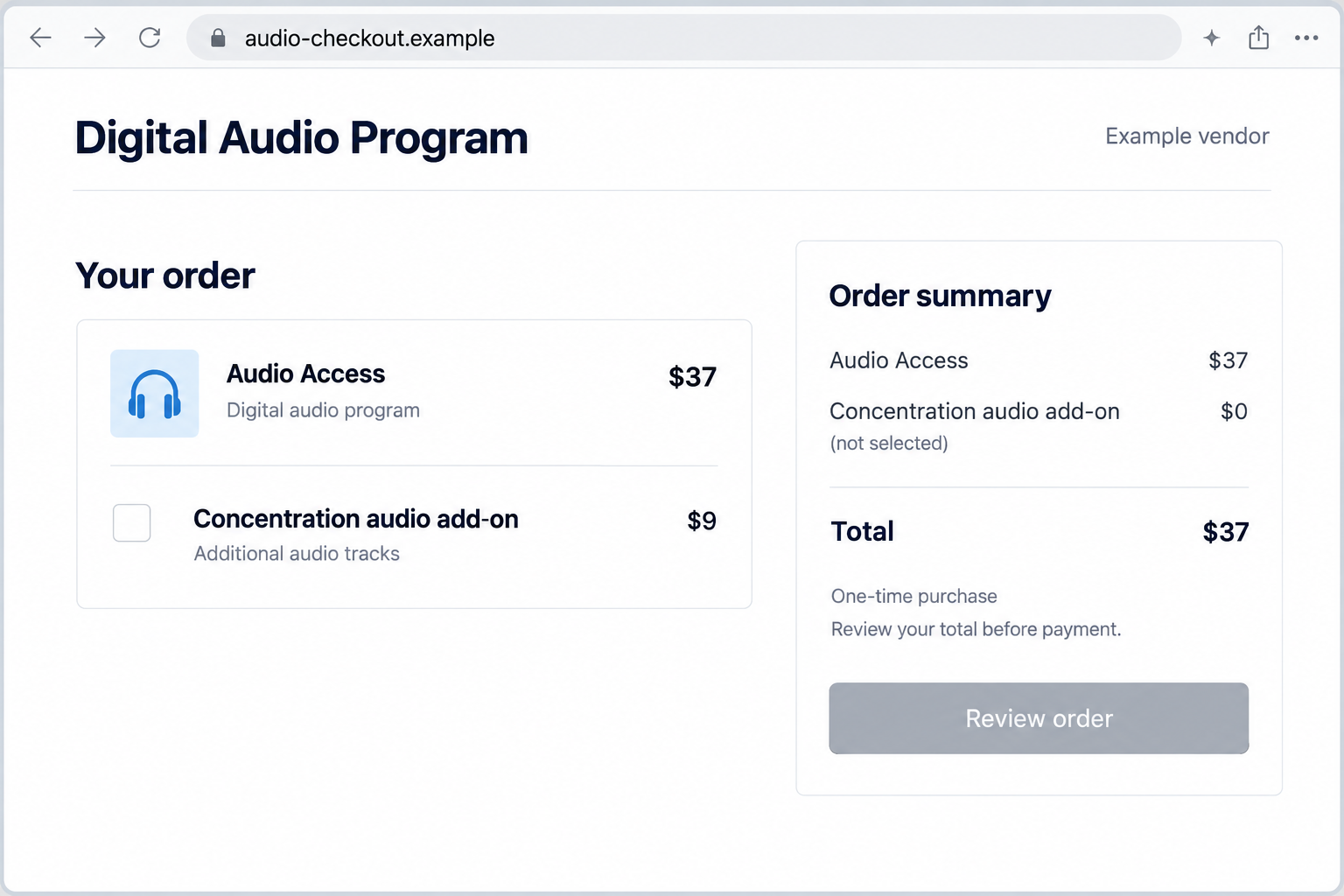
- The current same-name checkout lists a $37 base price.
- A separate $9 concentration-related add-on is offered.
- The page explicitly describes a single payment, not recurring fees.
- The displayed vendor name is blueocean.
- A 60-day return policy is stated, with refunds handled by the vendor.
A real payment page does not authenticate the advertisement
The JVZoo order page provides concrete purchasing information. It does not independently substantiate the celebrity story or establish that listening to the program will generate wealth.
The exact path from the recorded advertisement to that current checkout was not independently traced. Treat it as a current same-name offer, not proof of identical operators.
The lead illustration uses a fictional checkout to explain the purchasing format. It is not a capture of JVZoo or a record of a completed order.
The recommendation is straightforward: do not purchase X Protocol expecting a celebrity-backed method of attracting money. The sales narrative does not support that expectation.
What the X Protocol Checkout Actually Shows
The base offer is $37 before applicable tax. A buyer’s final amount can vary with location and any additional product they deliberately select.
The optional X Concentration Protocol costs another $9. Its description refers to concentration and productivity, which are separate claims from the central wealth narrative.
Read the order as separate decisions: whether to buy the main program, whether to add the extra, and whether the resulting total is acceptable.
A lower-looking base price can make an additional item feel inconsequential. But the extra still needs its own justification and should not become an unnoticed purchase.
The order page expressly states that the purchase is a single payment. That is important counterevidence against describing this observed offer as an automatic subscription.
A refund dispute or an unwanted additional purchase could still occur. Neither possibility permits inventing a monthly charge that the examined terms do not show.
The payment descriptor shown is JVZOO*X Protocol. Customers looking at their statements should compare that text with their actual receipts rather than relying on memory.
The checkout also describes temporary payment-detail reuse for approved subsequent offers. That does not mean an additional transaction should occur without the customer’s agreement.
If another offer appears after payment, read it as another purchase screen. Closing the browser is different from clicking a button that accepts the next item.
How the X Protocol Advertising Scam Works
Step 1: An apparent interview gives a sales claim borrowed credibility
The recorded campaign opens with a celebrity-style conversation rather than a clear explanation of a digital product. That presentation lowers the audience’s guard.
A viewer may expect an interesting account of someone’s life or success. Instead, the conversation has been constructed to support a purchase that arrives later.
The difference matters even if some unrelated interview footage is genuine. Authentic footage does not authenticate a new sales script placed around it.
Ask whether the apparent speaker identifies this exact product in an independently verifiable endorsement. A persuasive imitation cannot provide that authorization.
Step 2: A suppressed-secret story makes missing evidence feel meaningful
The advertisement introduces claims about a hidden ritual, removed information, and knowledge withheld from ordinary people. Secrecy becomes part of the supposed proof.
That is a convenient arrangement for the advertiser. A lack of independent confirmation can be recast as evidence that powerful interests wanted the discovery concealed.
The viewer is encouraged to feel fortunate for seeing the message before it disappears. Urgency replaces the slower task of checking what is actually being sold.
Do not adopt the advertisement’s explanation for its own missing evidence. A commercial promise needs substantiation outside the story explaining why substantiation is unavailable.
Step 3: Brain terminology turns an aspiration into a purchasable mechanism
References to a frequency and the pineal gland make the offer sound procedural. Listen correctly, the story suggests, and an important internal switch will change.
From there, the pitch stretches toward abundance and financial transformation. That leap needs evidence connecting the exact program with a meaningful financial outcome.
A relaxing recording might help someone unwind. That possibility does not substantiate the much larger claim that a proprietary sound explains wealth.
Nor does an inspiring account of visualization prove that this particular audio program caused a celebrity’s success. Those are different propositions.
Step 4: The lengthy revelation ends at an ordinary price and checkout
After sustained attention, the viewer reaches X Protocol. Time already spent on the presentation can make paying a modest amount feel like finishing the journey.
This is the right moment to pause. Ask what files, lessons, access period, support, and usage rights the payment actually purchases.
A program name is not a delivery specification. Buyers should not have to discover after payment whether they purchased recordings, a subscription, coaching, or something else.
In the available evidence, recordings are part of the advertised product. A trading balance, withdrawal restriction, or investment deposit was not demonstrated.
Step 5: The buyer must separate delivery from the promise that prompted payment
A seller may deliver an audio file and still fail to substantiate the advertisement. Receiving something does not make the represented celebrity endorsement genuine.
That distinction is useful when seeking a refund. Explain the specific representation that influenced the purchase, not simply that your bank balance did not change overnight.
Likewise, keep the remedy tied to actual transactions. If the problem is an unwanted add-on, identify that item’s receipt and amount separately.
Documenting the issue clearly makes it harder for a support conversation to drift into unrelated questions about motivation, belief, or whether you listened enthusiastically enough.
Vendor, Platform and Refund Responsibility
The vendor alias is not a complete legal identity
The examined checkout identifies the product creator as blueocean. An account name tells a buyer less than a verified legal business identity.
It does not establish a corporate connection to Musk, the X platform, or Carrey. Those links must not be inferred from branding or the advertisement.
Keep the merchant details on your actual receipt. Similar product names can lead to different vendors, and an unrelated project’s support team cannot resolve your purchase.
JVZoo’s role should not be mistaken for an endorsement
JVZoo provides the order infrastructure in the current example. Its checkout disclaimer says it does not independently verify the truthfulness of promotional claims.
That means a functioning payment button is not a quality certificate. Nor does the platform’s existence prove that every vendor using it is fraudulent.
A physical returns warehouse is not the central issue for this digital offer. The relevant chain connects the vendor, payment record, delivered access, and refund process.
The 60-day policy needs a timely, documented request
The page states a 60-day return period and directs refund responsibility to the vendor. Save the terms associated with your own order.
The JVZoo refund policy explains that vendor policies govern requests. A policy is a route to pursue, not proof that your request has already been approved.
Ask for a case reference and keep the response. If an unresolved conversation approaches a payment-provider deadline, seek advice from that provider without waiting indefinitely.
Digital delivery should be documented as carefully as payment
Keep the access email, the name of the delivered program, and any error messages preventing access. Avoid sharing login links publicly.
If the item differs from the description, state the difference precisely. Missing files and an unsupported wealth claim are related concerns but not identical evidence.
No test purchase was made for this investigation. The contents behind payment, responsiveness of support, and results for customers were not independently tested.
Why a Small Price Does Not Make the Decision Risk-Free
The initial amount is only one part of the decision. Your attention, payment information, and potential follow-up offers also enter the transaction.
A $37 product does not deserve less scrutiny simply because an investment scam might demand much more. The relevant question remains whether the purchase is honestly represented.
At the same time, avoid escalating this evidence into a different accusation. The available order does not demonstrate stolen cryptocurrency, blocked investment withdrawals, or a fake brokerage.
The strongest criticism is already sufficient: the promotion uses a manufactured celebrity narrative to sell a wealth-related result the program has not substantiated.
What an Honest Digital-Program Description Should Resolve
Before buying audio access, a customer should understand whether the recordings can be downloaded, where they are played, and how long account access lasts.
They should also know whether extra sessions, applications, or purchases are needed. An inexpensive entry product can feel quite different if the advertised experience requires additional spending.
Those are ordinary questions about delivery. A seller’s answer should describe the product rather than return to the celebrity story or make a larger financial promise.
If you already bought, compare the delivered access with that description. Keep any missing-feature complaint separate from the claim that the advertising falsely represented an endorsement.
This makes the request easier to follow. Support can identify what was delivered, while the saved advertisement explains why the original purchasing decision was affected.
What to Do If You Paid for X Protocol
-
Identify the purchase precisely. Find the order confirmation and compare its product name, vendor, amount, date, and transaction reference with your statement.
Separate the main program from any concentration add-on or later offer. A single remembered price may not explain several individually authorized transactions.
-
Keep the advertising evidence. Save the represented Musk or Carrey recommendation, the wealth promise, and the page leading to payment.
Record why you understood the offer differently from a simple recording purchase. That explanation can help the merchant or payment provider assess a misrepresentation complaint.
-
Ask the vendor for the remedy you want. Use the contact route attached to the receipt and make the refund request within the stated period.
Include the order reference and keep a dated copy. Do not send your full card number or passwords in an attempt to prove your identity.
-
Use the platform’s documented assistance route if needed. Locate help through JVZoo’s own website rather than a search advertisement claiming to offer special recovery support.
Explain the vendor response and attach the relevant records. The existence of a platform does not remove the need to follow its actual process.
-
Review unfamiliar charges instead of assuming they are subscriptions. Compare each charge with the items and terms you accepted.
If a transaction was not authorized, contact your payment provider promptly. If it was authorized but misrepresented, describe that issue accurately and ask about dispute options.
-
Do not buy another program to unlock a refund or promised result. A request for additional spending deserves scrutiny of its own.
Decline remote access or account credentials requested by supposed recovery helpers. An ordinary digital-product refund should not require control of your computer or banking session.
Frequently Asked Questions
What is X Protocol supposed to provide?
The investigated promotion describes recordings associated with a supposed wealth ritual. A current same-name checkout sells a digital program, not a verified investment account.
Did Elon Musk or Jim Carrey endorse X Protocol?
The commercial depictions in the documented campaign are not authentic endorsements. Recognizable appearances do not establish that either person developed or sells this offer.
Is X Protocol a monthly subscription?
The examined JVZoo page explicitly says single payment. Check your own confirmation for any different arrangement rather than assuming every version uses identical terms.
Why might the final charge exceed $37?
Applicable tax and an optional $9 concentration add-on can change the total. Examine the completed order before treating a difference as an unauthorized charge.
Does the 60-day guarantee prove the program is legitimate?
No. It describes a potential remedy, not verification of the wealth claim. Customers still need to submit a request and document the outcome.
Should I trust another X Protocol project less because of this campaign?
No. Similar names are not evidence of shared ownership. Match the exact product, domain, vendor, and transaction before making any accusation.
The Bottom Line
Do not buy X Protocol as a celebrity-backed shortcut to wealth. A purchasable recording and functioning checkout do not substantiate the story used to sell it.
Already paid? Identify the precise vendor and items, preserve the misleading representation, and pursue the written refund route while your payment-provider options remain available.

Join the discussion
0 commentsShare your experience or ask a question about this article.
Discussion
Start the conversation
Have a question or something useful to share? Add the first comment.