


Slip a finger into a small clip, wait eight seconds, and read your blood sugar without a single prick. For anyone testing several times a day, that’s a tempting promise.
If you’re looking up Zakdavi glucose meter reviews before buying one, or after one arrived, here’s what the device could and couldn’t measure.
Overview
What Zakdavi sold
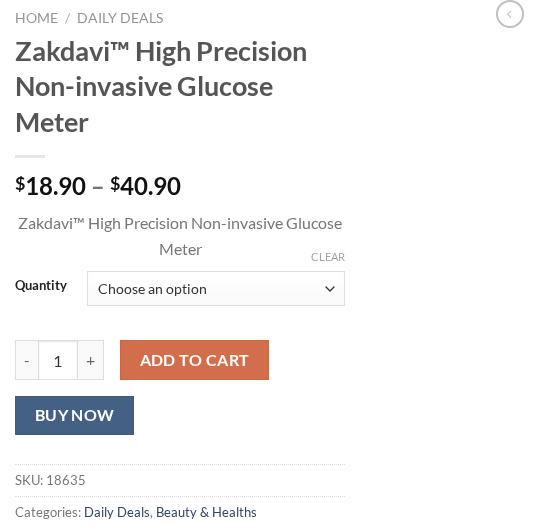
Zakdavi.com sold three versions of the same idea: a High Precision Non-invasive Glucose Meter, a Smart Non-invasive Glucose Monitor and a GlucoSense Laser Blood Glucose Monitoring Device.
All three cost $18.90 for one, $25.90 for two or $40.90 for four. The store filed them under Daily Deals and Beauty & Healths, next to brow pens and skin creams.
Why a fingertip light can’t read blood sugar
The device clips onto a finger and shines light through it, the same way a pulse oximeter estimates oxygen and pulse. The store never showed it could measure glucose.
Zakdavi has no FDA clearance or approval, and the FDA has separately warned people not to rely on needle-free glucose smartwatches and rings.
What to do if you have one
The store is offline, and the brand moved on to unrelated products. The device can still sit in a drawer looking like a real health tool, which is the danger.
- Stop using a Zakdavi device to check your blood sugar.
- Keep taking your prescribed treatment and keep using your regular meter or CGM.
- Show the box to your pharmacist or diabetes care team, especially if you changed a dose based on its numbers.
- Dispute the charge with your card issuer or PayPal and report the device to the FDA.
Zakdavi Glucose Meter Reviews: What the Listings Claimed
The product pages piled up claims faster than any real device maker could document them. The biggest was that Zakdavi was “3x more accurate than traditional test strips.”
The same page promised 99.9% accuracy, real-time readings, Bluetooth reports on your phone and the title of the world’s only blood glucose meter with artificial intelligence.
It also claimed to measure blood pressure, blood oxygen and heart rate, and it discussed blood lipid tests as if the clip covered those too.
The certification list was just as long: BfArM, TÜV SÜD, MDR, CE, ISO 15197, RoHS, FDA and GMP. The pages never said who issued each certificate, or for which device.
The origin story changed from paragraph to paragraph. One section called it a German device developed for the EU market.
Another section on the same page credited advanced Australian technology trusted by leading hospitals across Australia.
The GlucoSense page went further. It claimed TGA and ARTG certification, Australian technology and American engineering, then quoted a price of AS $49.99 while the listed price was $18.90.
Some of the claims contradict how these products work. ISO 15197 is the accuracy standard for meters that test a drop of blood, which a needle-free clip never collects.
The technical explanation pointed to the Lambert-Beer law and optical absorption. That principle lets an ordinary pulse oximeter estimate oxygen saturation, which is why the clip looks like one.
Other features point the same way. Six rotating display modes and automatic shutoff after eight seconds without a signal are standard on cheap fingertip oximeters.
The store’s own pages also disagreed about reviews. A banner promised a 96% positive review rate, while every product page said there were no reviews yet.
What the FDA Says About Needle-Free Glucose Readings
On February 21, 2024, the FDA issued a safety communication titled Do Not Use Smartwatches or Smart Rings to Measure Blood Glucose Levels.
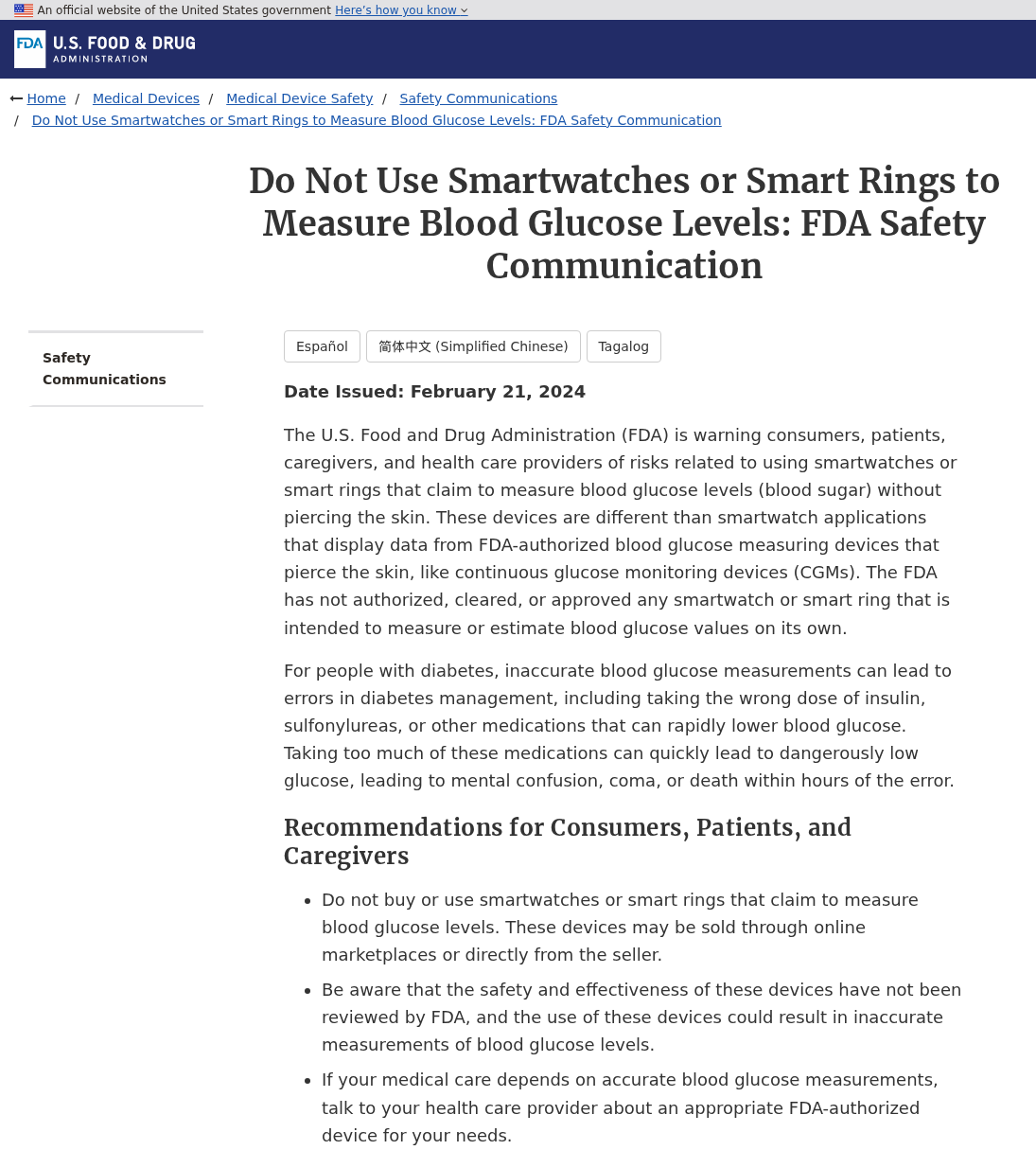
The notice covers smartwatches and smart rings that claim to measure blood sugar without piercing the skin. It doesn’t name Zakdavi or fingertip clips.
Its warning about the risk applies just as clearly here. The FDA says inaccurate readings can lead to the wrong dose of insulin, sulfonylureas or similar drugs.
Too much of those medications can cause dangerously low glucose. The agency lists mental confusion, coma and death within hours of the error as possible results.
The FDA’s advice for consumers is direct. Don’t buy or use these devices, and ask your health care provider about an FDA-authorized option if your care depends on accurate readings.
Zakdavi’s FDA claim doesn’t hold up either. The FDA’s public device databases show no 510(k) clearance, premarket approval or establishment listing under the Zakdavi name.
The wording itself is a tell. The FDA clears or approves medical devices rather than certifying them, and Germany’s BfArM is a regulator, not a certification service.
You can check any device yourself. The FDA’s 510(k) and registration databases are free to search by company or product name, and a cleared device has a K number.
Why Needle-Free Glucose Readings Are So Hard
Researchers have chased needle-free glucose testing for decades, so the idea itself isn’t absurd. Getting it accurate enough to dose medication is the hard part.
Glucose produces a faint optical signal compared with water, skin and moving blood. Temperature, finger pressure, skin tone and hydration can all change what a light sensor picks up.
That’s why authorized products still sample blood or the fluid just under the skin. An $18.90 clip that claims to beat professional meters deserves skepticism, not trust.
A device that shows a plausible number every time is not the same as one that measures. Without a blood sample to compare against, you can’t tell the difference.
How the Zakdavi Glucose Meter Scam Worked
The listing followed a familiar health-gadget script. Each stage made the next one easier to believe.
Step 1: A pain-free promise aimed at people with diabetes
The page opened by asking whether you were still using finger pricks. It then put the annual cost of strips, needles and CGMs at $3,000 to $4,000.
Against that figure, an $18.90 device promising savings of up to 90% looks like an obvious win, especially for someone paying for supplies out of pocket.
Step 2: A wall of borrowed authority
Certification badges, regulator names and hospital claims filled the space where test data should have been. Logos did the work that documents normally do.
The leading hospitals that supposedly trusted the device were never named, and no clinical study, accuracy chart or comparison with a standard meter appeared.
Step 3: Testimonials that describe the impossible
The GlucoSense page quoted three Australian customers who said their blood sugar dropped by 15% to 20% after using the device.
A meter can’t lower glucose; it can only report it. A testimonial that credits a monitor with better blood sugar is describing something no monitor does.
None of the three names came with a way to check them, and the review sections they sat above were empty.
Step 4: Bundles, a free gift and a deadline
Crossed-out prices of $45.90, $65.90 and $99.90 made the bundles look like bargains. No quantity was selected in advance; buyers had to choose one, two or four units.
A free TempScan no-touch thermometer was offered to the first 300 buyers, with its own FDA Approved badge. The GlucoSense page added that only a few units were left.
Step 5: A fingertip clip arrives
Instructions told buyers to insert a finger and press gently, then read a number within five to eight seconds. Whatever that number reflects, it isn’t a measured blood glucose value.
Step 6: The store vanishes
By October 2026 the domain was on hold at its registrar and no longer loaded. Buyers lost the order tracker, the only support tool the store ever offered.
Who Sold the Zakdavi Glucose Meter? Seller Identity and Returns
A health device without a traceable seller leaves you with nobody to hold responsible. Zakdavi’s pages gave almost nothing to go on.
A company history older than its website
The footer said Zakdavi Ltd. had been offering top-quality products since 2016. The zakdavi.com domain was registered on February 7, 2025, and its pages gave no company number or address.
A contact page filled with placeholder text
The Contact page carried a list of frequently asked questions. Every answer was Lorem ipsum, the dummy text designers use before writing real content.
The site listed no email address, phone number or street address. The only support tool was an order tracker asking for an order ID.
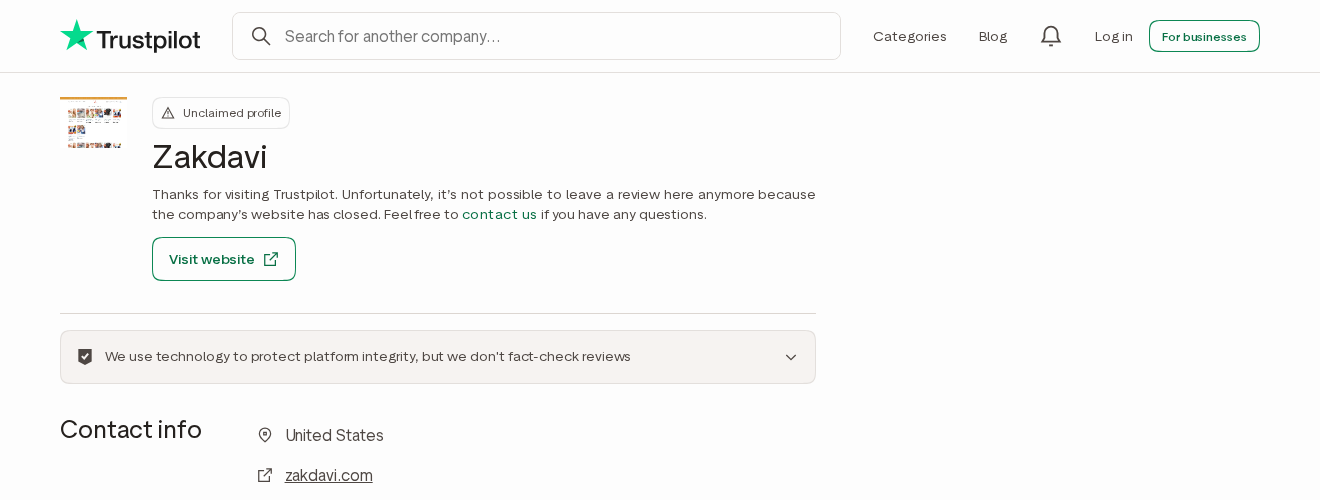
With no contact details on the site, Trustpilot became one of the few public traces left. It no longer accepts Zakdavi reviews because the company’s website has closed.
Its only review, from a British shopper, called the offer too good to be true. The reviewer pointed out it wasn’t sold on Amazon and found scam warnings while searching.
The profile is unclaimed, so no one from Zakdavi ever responded there.
Free returns, or returns at your own cost
The homepage offered free returns to a UK returns center, a line that also appears in stock theme demo text. The product pages said customers pay return shipping.
Neither version named the returns address. A 30-day money-back promise means little when there’s no one listed to send the device to.
Count the countries: German development, Australian technology and American engineering, all for a device priced at $18.90.
One brand name, many unrelated products
By early 2026 the Zakdavi name sat on brow pens and skin care. A Facebook Page called Zakdavi advertised shapewear and a collagen cream sold on another store, wollerahorizons.com.
That pattern fits a general-purpose sales label, not a medical device company. We’ve seen the same fingertip format in our reports on Laozik, Pryxo and Ring Minds.
Safer Ways to Check Your Blood Sugar
The good news is that checking glucose has become easier, cheaper and less painful through devices that the FDA has actually reviewed.
A standard fingerstick meter with test strips is still the most widely available option. Pharmacists can help you compare meters and strip prices, including store-brand systems.
If cost pushed you toward a cheap gadget, ask about coverage. Medicare and many insurance plans cover CGMs for people who use insulin, and some cover other patients too.
Continuous glucose monitors, such as Dexcom and FreeStyle Libre sensors, use a thin filament under the skin. They track glucose all day and send readings to a phone.
Since 2024 the FDA has cleared over-the-counter CGMs, such as Dexcom Stelo and Abbott Lingo, for adults who don’t use insulin. Both still use a small sensor under the skin.
Smartwatches can legitimately display glucose data from one of those authorized sensors. The FDA’s warning targets watches and rings that claim to produce the number on their own.
Needle-free watches are a common variation of the same pitch, as our report on the fake Omron glucose watch shows.
What to Do If You Bought a Zakdavi Glucose Meter
Start with your health, then deal with the money. A wrong reading can do more damage than a lost $40.
-
Stop using it to check your blood sugar. Store it with its box, away from daily supplies, so nobody in your household relies on its numbers.
-
Keep your prescribed treatment. Continue your insulin or other medication and your usual meter or CGM exactly as your care team directed.
-
Show the box to a pharmacist or clinician. Tell them how long you used it and whether any dose, meal or skipped test was based on its readings.
-
Recheck recent decisions with a real meter. If you felt shaky, sweaty or confused while trusting the device, check your glucose with a standard meter right away.
Follow your care team’s plan for low blood sugar, and get urgent help if symptoms are severe or don’t improve.
-
Report the device to the FDA. Use the MedWatch voluntary reporting form, especially if a reading led to a health problem.
-
Keep the device and its packaging. The box, any leaflet and your order email support both a health report and a payment dispute.
-
Dispute the charge. Ask your card issuer for a chargeback because the product wasn’t as described. PayPal buyers can open a dispute within 180 days of payment.
-
Report the seller. File a report at ReportFraud.ftc.gov with your order email and any screenshots of the claims.
Frequently Asked Questions
Is the Zakdavi glucose meter legit?
No. It claimed to read blood glucose through your fingertip without blood, listed certifications it couldn’t document and came from a store with no address or contact details.
Is the Zakdavi blood sugar monitor FDA approved?
No. There is no FDA clearance, approval or listing under the Zakdavi name. That also covers the FDA Approved badge on its free TempScan thermometer.
What do Zakdavi blood sugar monitor reviews say?
Independent ones barely exist. The product pages showed no reviews beside a 96% positive banner, and Trustpilot’s only review came from someone who decided not to buy.
Where can I still buy a Zakdavi glucose meter?
Zakdavi.com no longer loads, and Amazon and Walmart searches return no Zakdavi glucose meter. Look-alike fingertip devices still circulate under other brand names, and the same advice applies to them.
Is there any needle-free glucose monitor I can trust?
Not yet. FDA-authorized glucose devices still use a drop of blood or a small sensor under the skin. For diabetes care, ask about a standard meter or a CGM.
Why did my Zakdavi readings look normal?
A number on a screen isn’t proof of a measurement. Compare it with a standard meter at the same moment, and if they differ, trust the standard meter.
The Bottom Line
The Zakdavi glucose meter was a fingertip light sold as a blood sugar test. Its FDA claim didn’t check out, and the FDA’s needle-free wearable warning describes the same risk.
Don’t buy it or any look-alike clip, watch or ring that promises glucose readings without piercing the skin.
If you already own one, stop using it, keep your prescribed treatment and show the box to your pharmacist or diabetes care team. Then dispute the charge.

Join the discussion
0 commentsShare your experience or ask a question about this article.
Discussion
Start the conversation
Have a question or something useful to share? Add the first comment.