

It looks sleek. It claims to be revolutionary. It promises to measure your blood sugar without pricking your finger. But the so-called “Laozik Non Invasive Smart Glucose Meter” that’s making rounds on social media isn’t what it seems. If you’ve seen the ads on Facebook, Instagram, or YouTube promoting this too-good-to-be-true medical device, here’s what you need to know: this product has nothing to do with Laozik. It’s part of a widespread scam that’s tricking vulnerable consumers and putting lives at risk.
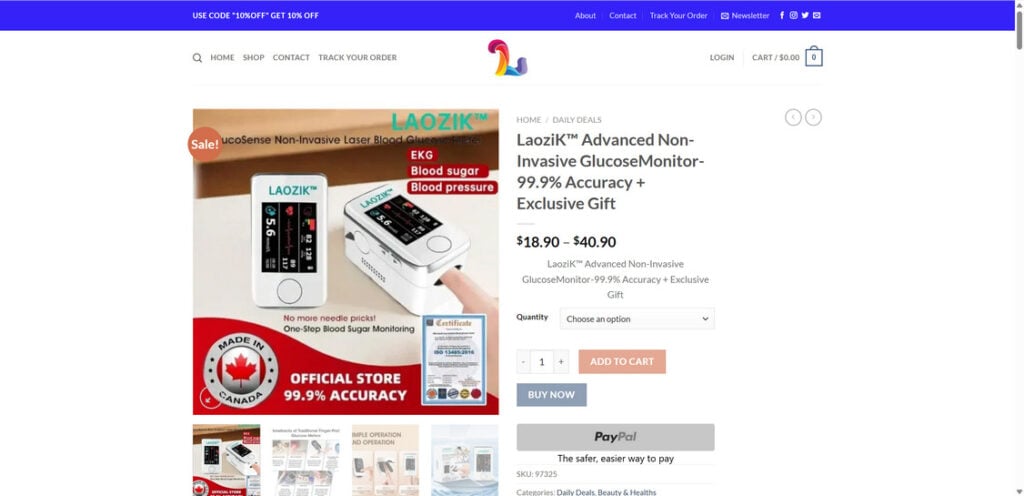
Scam Overview: The Fake Laozik Non Invasive Smart Glucose Meter
The scam begins with a bold claim: a portable, painless, and non-invasive glucose monitor branded as an Laozik product. These devices are sold through questionable websites using cheap domains like .shop, .xyz, .top, and others that are often linked to scam operations. The product images are professional and convincing, and the use of a trusted brand name like Laozik gives it a false air of credibility.
What the Scammers Claim
According to the marketing materials seen on these sites and ads:
- The device can measure blood sugar, blood oxygen, heart rate, uric acid, and blood pressure all in one
- It provides 99% accuracy
- It is certified by the FDA and CE
- It uses laser or photonic sensors for bloodless glucose testing
- It offers real-time readings in 8 seconds
- It connects via Bluetooth for mobile syncing
These claims are completely unsupported by science or regulatory approval. There is currently no FDA-approved non-invasive device that can measure blood glucose accurately for home use.
The Device is Just a Repackaged Pulse Oximeter
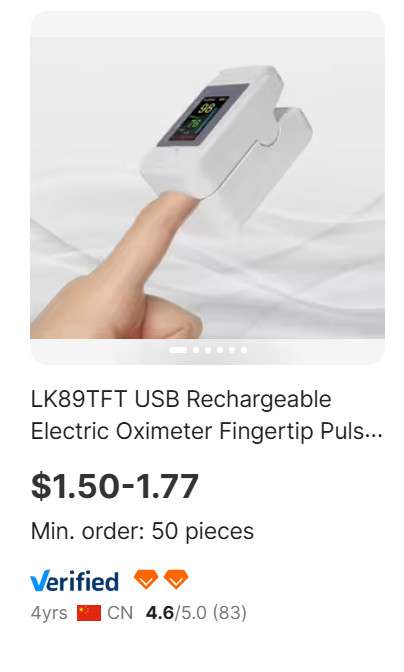
Most of the devices sold under the Laozik name in these scams are generic pulse oximeters you can find for less than $2 on wholesale websites. These devices are designed to measure oxygen levels and pulse rate only, not glucose or uric acid. The product’s display and casing may be customized, but its functionality is unchanged.
Fake Authority and Medical Credentials
The sites often list endorsements from made-up doctors and show certificates with misleading claims about compliance with FDA or EU medical regulations. None of these certifications are legitimate or verifiable.
Fraudulent Testimonials and Social Proof
Scam websites include hundreds of glowing reviews, photos of happy users, and fabricated success stories. Some even embed fake social media comments and claim that the product has been featured by well-known health organizations—without offering a shred of proof.
How the Laozik Non Invasive Smart Glucose Meter Scam Works
Let’s break down the full process to understand how scammers trick people into buying these fake medical devices.
1. Ads Appear on Social Media Platforms
Scammers run ads across Facebook, Instagram, YouTube, and Google. These ads often feature elderly people or diabetic individuals using the device pain-free. The visuals include blood sugar charts, medical terms, and dramatic claims like “stop finger pricks forever.”
2. The Link Redirects to a Fake Store
Clicking the ad takes users to a scam website using a domain like bestglucose.shop or healthscan.top. These sites are designed to mimic legitimate e-commerce pages, complete with fake customer reviews, live purchase notifications, and countdown timers to pressure buyers.
3. Deceptive Product Pages
The product page includes features such as:
- Multiple “versions” of the device (e.g., Version 2025 1.0, 2.0, 3.0)
- Add-ons like ECG monitoring and uric acid testing
- High-resolution images with the Laozik logo
- False comparison charts claiming superiority over leading glucose meters
All of these are designed to build trust and boost perceived value.
4. Inflated Pricing with Fake Discounts
Prices are usually marked down by “50%” from an invented MSRP. A $1.50 pulse oximeter is sold for $50 to $100, with urgency tactics like “Only 4 left in stock” or “Flash sale ends in 10 minutes.”
5. Unsafe or Shady Payment Gateways
Buyers are directed to enter credit card information or use questionable third-party gateways that lack secure SSL encryption. This puts users at risk of identity theft and credit card fraud.
6. Poor or No Delivery
Some customers report never receiving anything. Others receive a basic oximeter that cannot measure glucose levels. In every case, the device does not perform as advertised.
7. No Customer Service or Returns
The websites have no real customer support. Emails go unanswered, contact forms are non-functional, and return policies are either fake or completely ignored.
8. Repeat Scam Under New Names
Once a domain gains enough negative attention, scammers shut it down and launch a nearly identical site under a new name and domain. They then rerun the same ads with minimal changes.
Scammers Are Also Using Smartwatches and Other Gadgets
The glucose monitor scam isn’t limited to fake pulse oximeters. Scammers are now using low-cost smartwatches and fitness trackers, repackaging them with fake medical claims. These devices are often advertised as being able to monitor blood sugar non-invasively, using vague terms like “infrared sensors,” “laser therapy,” or “advanced biosensing technology.”
In reality, these smartwatches are just basic fitness gadgets—often purchased for a few dollars from wholesale sites—and cannot measure glucose levels at all. The readings shown on the screen are fake or pre-programmed, designed only to create the illusion of real-time health monitoring.
Despite the claims of “99% accuracy,” “FDA certification,” or “professional-grade diagnostics,” there is no smartwatch currently approved by any medical authority to measure blood sugar without blood samples. These products are just another layer of the same scam, exploiting trust in wearable tech to target diabetic and health-conscious buyers.
What to Do If You Have Fallen Victim to the Laozik Glucose Monitor Scam
If you’ve bought one of these devices, take action immediately to protect your finances, identity, and health.
1. Stop Using the Device
Do not rely on the device to measure your blood sugar or any other health metric. It is not medically validated and could lead to dangerous decisions.
2. Request a Refund or Chargeback
- Contact your bank or credit card provider and file a chargeback
- Describe the purchase as a case of fraud or misrepresentation
- Provide screenshots, the website URL, and a description of the scam
3. Report the Scam
- FTC (USA): https://reportfraud.ftc.gov
- FDA MedWatch: https://www.accessdata.fda.gov/scripts/medwatch/
- Better Business Bureau (BBB): https://www.bbb.org
- Social Media Platforms: Report the ad directly within Facebook, Instagram, or YouTube
4. Monitor Your Credit and Identity
If you entered personal or payment information on a suspicious site:
- Monitor your credit reports
- Consider placing a fraud alert with credit bureaus
- Change your bank card and passwords
5. Warn Others
- Leave honest reviews on Trustpilot, Reddit, and scam alert sites
- Share your experience on social media to prevent others from falling for it
6. Save Documentation
Keep records of your order, emails, payment receipts, and screenshots of the site. This can help with your dispute or complaint.
Frequently Asked Questions About the Laozik Non Invasive Smart Glucose Meter Scam
Can any device measure blood sugar without drawing blood?
Currently, no consumer device on the market has been clinically approved to accurately measure blood glucose levels without a blood sample. All legitimate devices either require a small blood prick or use subcutaneous sensors.
How are scammers using the Laozik brand?
Scammers are illegally using the Laozik name, logo, and reputation to lend false credibility to a generic and unapproved device. They often fabricate features like uric acid testing, ECG readings, and laser-based glucose monitoring, none of which are backed by science.
What kind of product do victims actually receive?
Most victims either receive nothing or are sent a basic pulse oximeter. These devices can measure blood oxygen and pulse, but they are not capable of monitoring blood glucose, uric acid, or performing any of the advanced functions claimed.
Is it dangerous to use this device for glucose monitoring?
Yes. Relying on an inaccurate or fake device for glucose readings can lead to serious health risks, including incorrect medication dosing, undetected high or low blood sugar, and delayed medical care.
Where are these scams being advertised?
These fake Laozik monitors are commonly promoted through scam ads on Facebook, Instagram, YouTube, and Google. The ads often use emotional messaging, fake testimonials, and false urgency to drive quick sales.
What domains do scam sites use?
Most operate on low-trust domains such as .shop, .top, .xyz, and similar extensions. These websites often look legitimate but disappear or rebrand frequently to avoid detection.
What should I do if I bought one?
Stop using the device immediately. File a chargeback with your payment provider, report the scam to the FTC and FDA, monitor your bank account, and share your experience to warn others.
Is there any legal action from Laozik?
Yes. Laozik has issued official warnings and is pursuing legal action against counterfeiters for trademark infringement. They urge consumers to verify their purchases through authorized sellers.
How can I avoid similar scams in the future?
Always research health devices before buying. Look for official FDA or EU approvals, check the manufacturer’s official website, avoid flashy ads with unrealistic claims, and only buy from verified retailers.
The Bottom Line
The Laozik Non Invasive Smart Glucose Meter scam is a highly coordinated fraud operation that leverages a respected brand to sell a dangerous and misleading product. Laozik has no affiliation with these devices, and there is no such thing as a non-invasive glucose meter approved for consumer use today.
Do not trust medical claims made through Facebook ads, flashy discounts, or unverifiable websites. Always research a product through official sources, check regulatory approvals, and buy only from known, reputable retailers.
When it comes to your health, accuracy and legitimacy are non-negotiable. Don’t let a scam cost you your safety—or your money.








