
- Content source
- https://youtu.be/XcqG8rAXNeY
Avira vs Panda Dome: The Shocking Truth You Need to See!
 Avira vs Panda Dome: The Shocking Truth You Need to See!


Open MalwareTips from your Home Screen or desktop. Follow discussions, find answers and pick up where you left off.
If you cannot find an install option, update your browser or use its bookmark option to keep MalwareTips close.
After installation, open the app and sign in. Enable push notifications in Preferences if you want alerts. On iPhone and iPad, push requires a Home Screen web app and iOS or iPadOS 16.4 or later.
Sign in to manage notificationsInstallation is optional. Your notification settings stay under your control.
 Thread starter
NB InfoTech
Thread starter
NB InfoTech

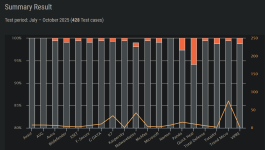
A single comparison video is not enough to draw a strong conclusion about either product.Avira vs Panda Dome: The Shocking Truth You Need to See!
View attachment 296503Avira vs Panda Dome: The Shocking Truth You Need to See!


But 15%? SUPERAntiSpyware would do better!I already know Panda is not good+ in many ways not just in detection either, its unstable, needs a full rethink, & difficult to install as out of morbid interest I tried it last year & never again


 At times being on this forum is like watching the 6:00 P.M. news; fear, dread, everybody and everything is being hacked, compromised etc. etc. Not that I don't want to be informed which is a majority of the forum, but it gets to be a bit much.
The test is a classic "local execution" scenario, dumping a massive zip file of malware directly onto the desktop and rapid-firing the executables. This is not a "true route of infection" test, and it severely skews the results against engines like Panda for a few key reasons.
 It's time to get out more and spend less time here, and observing that "no, the sky is not falling"
  I'll keep the F-Secure thread updated, unless @Lord Ami beats me to it Cheers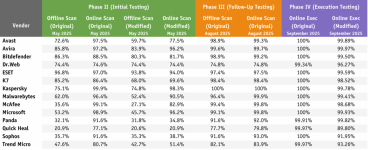


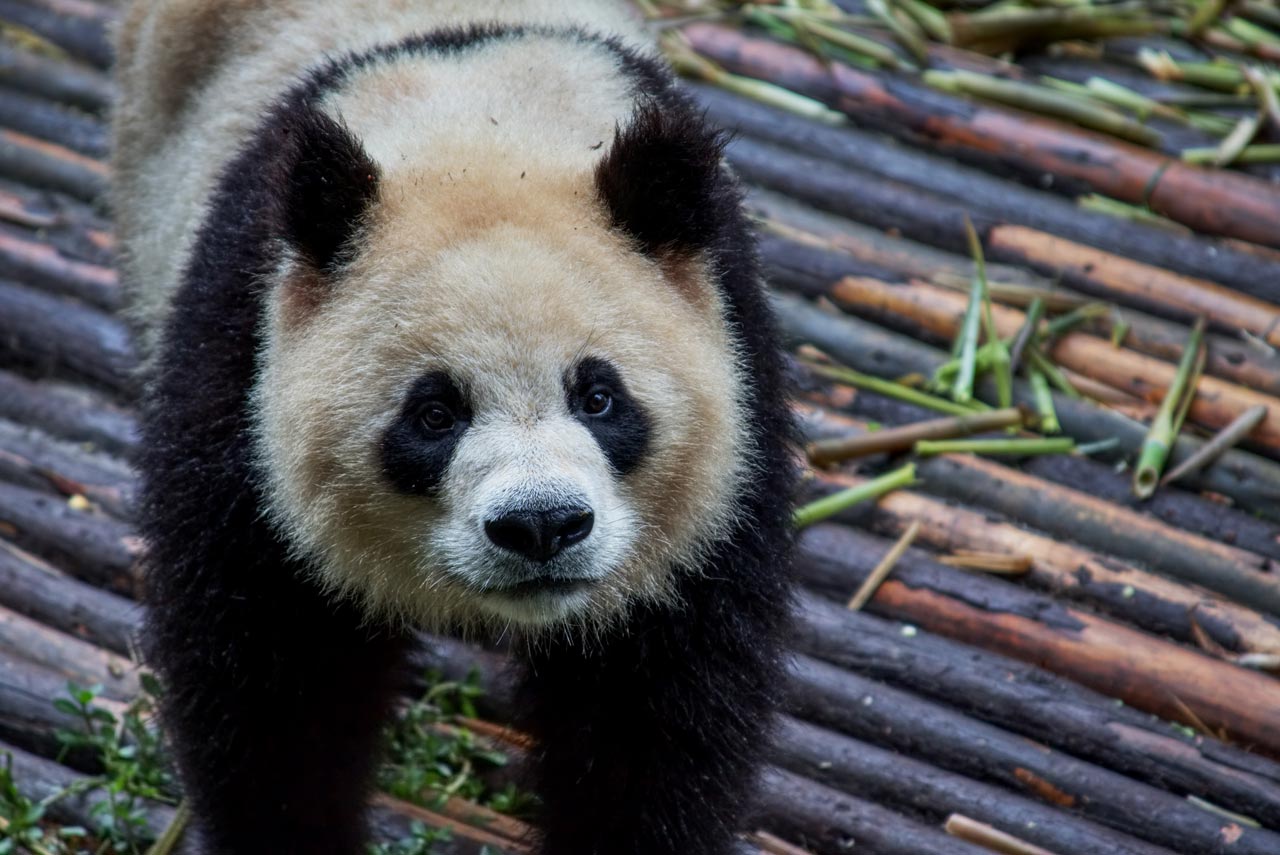
Panda AV originated from Spain. Likely they want to show the world that Panda is a native of Spain and not from China.I don't understand why the antivirus program was named after the panda, as the animal is notoriously lazy. However, cats have fast reflexes, so the outcome might have been better if they had selected a cat rather than a panda. And to make the name more technologically appropriate, I think a name like Thunder Cat Antivirus would be nice.
 www.pandasecurity.com

People love pandas, I stopped using Panda, when they removed Panda tray icon, it was a deal breaker for me. No Panda, no AV! Kaspersky allowed to use Panda tray icon.I don't understand why the antivirus program was named after the panda, as the animal is notoriously lazy.

So you would like them to run an add campaign, informing the public at large, that they are changing their name to "Pussy Antivirus"I don't understand why the antivirus program was named after the panda, as the animal is notoriously lazy. However, cats have fast reflexes, so the outcome might have been better if they had selected a cat rather than a panda. And to make the name more technologically appropriate, I think a name like Thunder Cat Antivirus would be nice.

There's no tray icon at all? Or just something bland?I stopped using Panda, when they removed Panda tray icon, it was a deal breaker for me.
They have removed Panda icon, what is the point of using Panda AV without Panda icon!There's no tray icon at all? Or just something bland?
Panda cries.  It is not like people would use Panda AV for protection.
or pay a little bit more and get that of Chrome for Edge.Speaking of antivirus software icons, shouldn't Microsoft purchase the AVG icon and replace the Windows Security/Defender icon with it? It appears to be very Microsoft-like.
Australia could have a cute and cuddly AV such as "Quokka Love & Protect" or something similar.don't understand why the antivirus program was named after the panda, as the animal is notoriously lazy
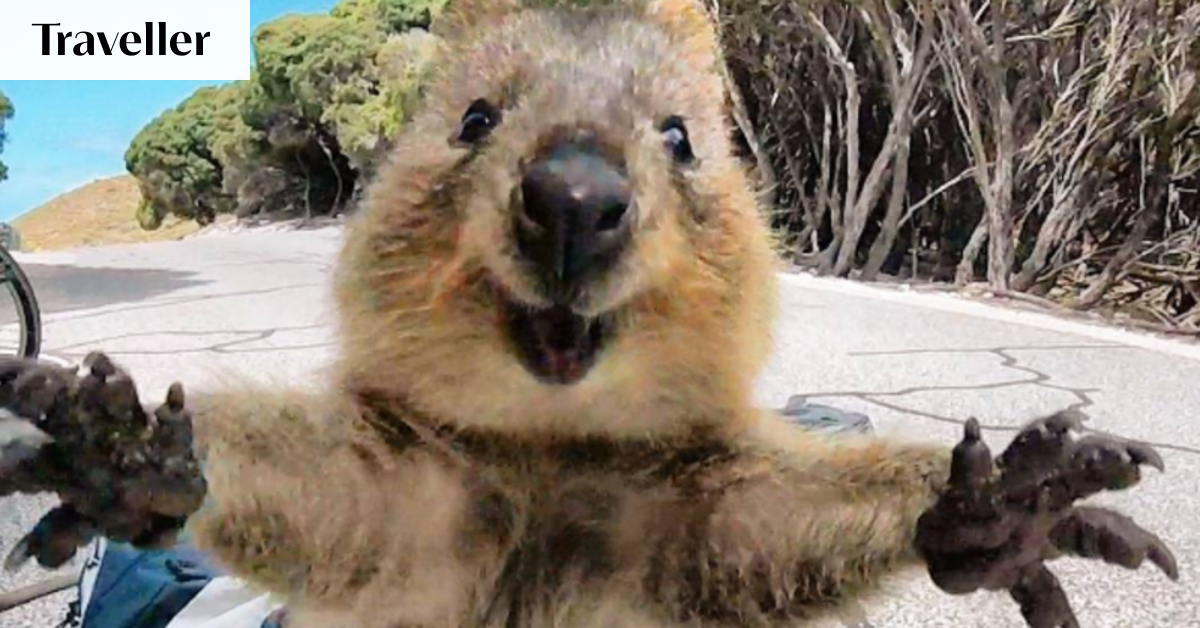

Lots of ideas for Oz. That's3 home to lots of dangerous,venomous and unfriendly animals.Australia could have a cute and cuddly AV such as "Quokka Love & Protect" or something similar.
'World's happiest animal', the quokka, becomes the most popular tourist attraction at Australia's Rottnest Island
They have been described as the 'world's happiest animal' and a photo of a Quokka snapping a selfie has proven why.www.smh.com.au
Australia could also make a more agressive AV such as "Taipan Assassin" or something like that.
Coastal taipan - Wikipedia
en.wikipedia.org
Members who viewed this thread in the last 5 minutes


