AppControl Changelog
1.4.0.414 · July 24, 2026
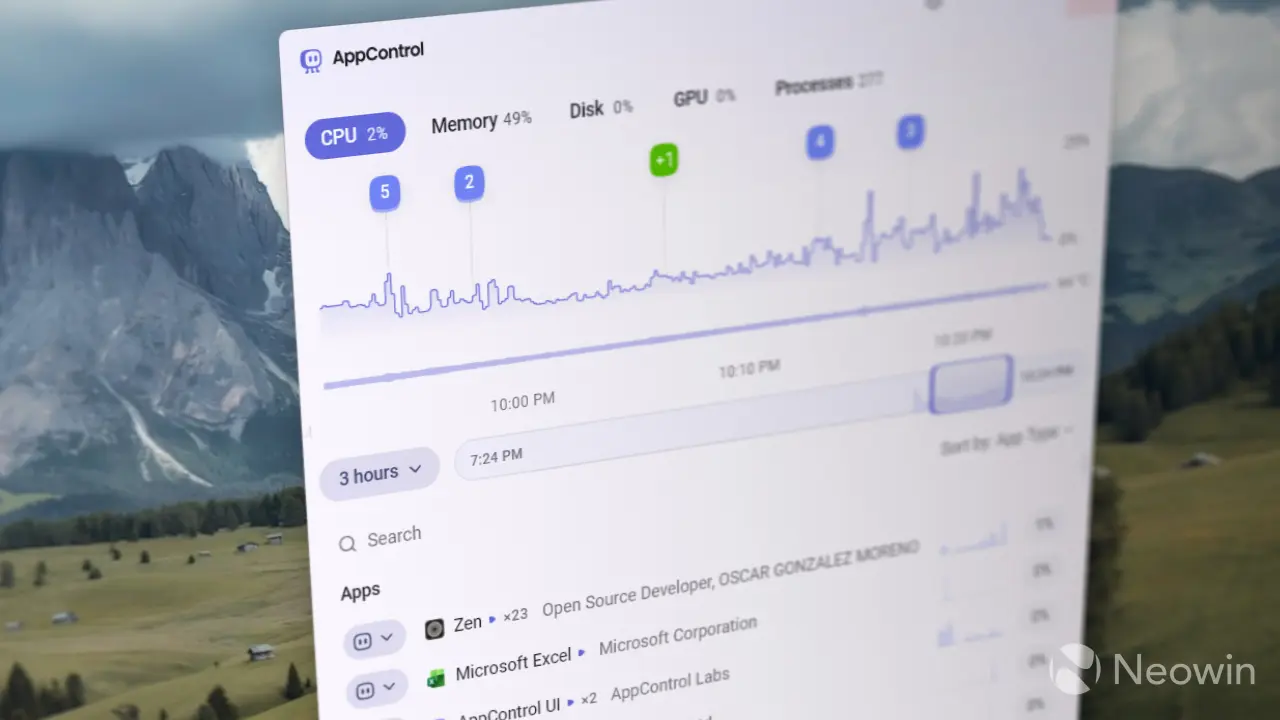
AppControl’s temperature bar for CPU/GPU may now be more colorful due to us optimizing it so it’s easier to notice temperature change ranges.
The memory screen now shows a new visual representation bar of your total memory usage.
Click your mouse center scroll wheel to instantly close any AppControl notifications.
AppControl has colored triangles to show if a process is actively running, and outlined triangles if it is not. You can now mouse over the triangle to understand what it means, along with showing the last time a process ran on your PC.
Our optional MCP server has been updated to work with this improved AppControl Windows version.
When viewing details about an executable in AppControl’s drawer, Windows System Properties are only one click away. Click “system properties” in the executable details drawer in AppControl to open the full Windows properties view.
Get alerted if any application accesses your AppControl MCP server, if you chose to turn that MCP server feature on.
AppControl now supports displaying Windows Services.
AppControl now has an improved method of detecting updated executables that should work more reliably. You may suddenly receive a large number of new executable events immediately after installing this update, due to this change, then things will go back to normal.
Explore the latest AppControl updates, feature additions, improvements, and bug fixes. Stay up to date with our development progress.

www.appcontrol.com








 ) and spyshelter, i will pass.


