AV-Comparatives Consumer Malware Protection Test March 2026

Disclaimer
  1. This test shows how an antivirus behaves with certain threats, in a specific environment and under certain conditions.
    We encourage you to compare these results with others and take informed decisions on what security products to use.
    Before buying an antivirus you should consider factors such as price, ease of use, compatibility, and support. Installing a free trial version allows an antivirus to be tested in everyday use before purchase.

Minimalist

Level 12
Thread author
Verified
Top Poster
Well-known
Forum Veteran
Oct 2, 2020
576
5,550
1,068
Slovenia
AV-Comparatives is pleased to present the results of the March 2026 Malware Protection Test for consumer security solutions. As part of our ongoing Consumer Main-Test Series, this evaluation examines how effectively leading anti-malware products protect users from today’s rapidly evolving threats.

Thanks for sharing this test result.

AV-Comparatives’ Malware Protection Test is one of the more useful comparative references because it looks at protection in realistic malware-blocking scenarios, not just simple on-demand detection.

What this type of test usually helps show
  • How well a product blocks malicious files before they can run
  • How strong the full protection stack is, including signatures, behavior blocking, and other protection layers
  • The balance between protection and false positives

What to keep in mind when interpreting the results
  • A single month’s result is only one snapshot in time
  • Protection scores alone do not tell the full story about system performance, usability, ransomware resilience, support quality, or false-positive impact in real daily use
  • Small differences in percentages may not translate into a meaningful difference for most home users
  • Default settings, cloud lookups, and internet connectivity can significantly affect outcomes

Practical takeaway

For most users, the most useful conclusion is usually not just “which product scored highest,” but which products performed consistently well across multiple recent tests while also maintaining low false positives and reasonable usability.

If anyone is choosing between products, it is better to compare this result alongside recent:
  • Real-World Protection tests
  • Performance tests
  • False-positive results
  • Ransomware or behavior-based protection evaluations, where available

Bottom line

This is a valuable data point, but it should be treated as part of a broader pattern rather than a final verdict on any one antivirus product.
 
I find it hard to believe that Avast scored higher than Bitdefender, especially given how strong Bitdefender’s web protection is. After switching from Avast to Bitdefender, I realized just how much Avast needs to improve in this area. Avast’s file protection is strong and reliable. However, its web protection still needs improvement. The company clearly has the resources to enhance this area, but it seems that as it has grown larger, it has become less responsive to issues focusing more on maintaining the product at a basic level rather than meaningfully improving it.
 
AV-Comparatives is pleased to present the results of the March 2026 Malware Protection Test for consumer security solutions. As part of our ongoing Consumer Main-Test Series, this evaluation examines how effectively leading anti-malware products protect users from today’s rapidly evolving threats.

https://www.av-comparatives.org/wp-content/uploads/2026/04/avc_fps_202603.pdf Damn way too many false positives for some unexpected products
 
I find it hard to believe that Avast scored higher than Bitdefender, especially given how strong Bitdefender’s web protection is. After switching from Avast to Bitdefender, I realized just how much Avast needs to improve in this area. Avast’s file protection is strong and reliable. However, its web protection still needs improvement. The company clearly has the resources to enhance this area, but it seems that as it has grown larger, it has become less responsive to issues focusing more on maintaining the product at a basic level rather than meaningfully improving it.
In malware protection test they don't test web protection components. Malware files are already on system where they subject to on access and on demand scan before execution. Real world protection test is the one that tests all protection components including web protection.
 
Funny as an AV-less PC user, I sometimes have a look at these test and I read that Avast Free usually scores as well as big payware names (Bitdefender, kaspersky and Norton). The impression I have, is that Avast free also scores well across different independent test organisations (AV-test, AV-comparatives, MRG, AV-lab), no wonder they were bought by the holding company of Norton. Due to @Shadowra tests, I also have the impression that AVAST Achilles heel is script protection, but that can be easily resolved by installing @Andy Ful Simple Windows Hardening.

The only thing keeping me from changing from Microsoft Defender to Avast Free on my wife's windows laptop, is that I read somewhere that Defender somehow makes SAC to accept the MOTW/SmartScreen findings when Defender is also running (causing less SAC False Positives). On her previous Windows 10 laptop I ran WHHL with Bitdefender Free because I thought it was a good idea to combine a top notch whitelist (WDAC-ISG) with a topnotch blacklist (BD), but that combo sometimes blocked (WDAC) the updates of a Dutch program she used. After moving to Windows 11 SAC+Defender the updates are always allowed.
 
Last edited:
I agree that Avast as a free product has had an amazing track record (except for the data‑selling part). It was the only AV I used during my Windows 7 years. It’s still my favorite alternative to Windows Defender, especially when installed on other people’s computers (now with Andy Ful's hardener and a couple of extensions).

It’s also been pointed out that if a product reaches something like a 99.5% real-world protection rate, nitpicking other products over that may make very little difference for average consumers.

OTOH, as someone who collects all these stats like kids hoarding favorite trading cards, my current paid favorites are Kaspersky and ESET, in that order.
 
Interpretation of Panda results:
The large gap between offline (56.1%) and online (88.2%) detection equals the cloud-dependency.
The gap between online detection (88.2%) and online protection (99.17%) equals cloud-based behavioral protection.
And of couse the false positive detections (54) are shame.

I find it hard to believe that Avast scored higher than Bitdefender, especially given how strong Bitdefender’s web protection is. After switching from Avast to Bitdefender, I realized just how much Avast needs to improve in this area. Avast’s file protection is strong and reliable. However, its web protection still needs improvement. The company clearly has the resources to enhance this area, but it seems that as it has grown larger, it has become less responsive to issues focusing more on maintaining the product at a basic level rather than meaningfully improving it.
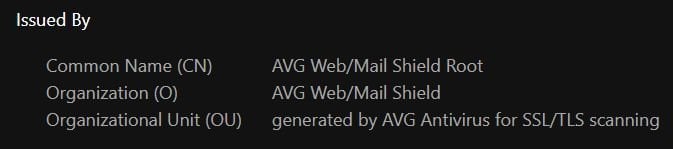
Avast/AVG are no longer scanning https without inserting their certificate, as it was before!

Capture.JPG