cruelsister
Level 43
Thread author
Verified
Honorary Member
Top Poster
Content Creator
Well-known
Forum Veteran


 Was it Celtic?
 There's other ways of automatically executing code at the boot of the environment. Such as through installed device drivers,or the registry to trick a program into loading a malicious DLL, etc. However, you can check Startup Entries for software through Task Manager usually (go to the Startup tab).Do i always need to check my Startup Entries before shutting down the pc?
 !sometimes I use Pchunter for this purpose! pls, see how good it is. everything you said is well covered.
There's other ways of automatically executing code at the boot of the environment. Such as through installed device drivers,or the registry to trick a program into loading a malicious DLL, etc. However, you can check Startup Entries for software through Task Manager usually (go to the Startup tab).
For example, if a program stores the file path of a DLL on-disk via the registry so it knows the correct path when it starts up, the value to that key name can be hijacked to provide a path of a rogue DLL. Now when that said program starts up, the rogue DLL is loaded instead.
A different example would be via AppInit_DLLs. Any modules set for this will be loaded in a newly started process as long as the architectures of compilation match, and that the process has User32.dll loaded (therefore affecting GUI processes only).
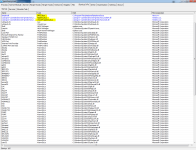
The image you posted shows that Yandex browser is auto-injecting a DLL into processes which load user32.dll (GUI processes), the file-name of the module implies they're performing API hooking within. Unless they have another injection method, if you build a program with no user32.dll or locally intercept Ldr*, you can block Yandex from injecting that module at ease and beat their self-protection/HIPS featuresometimes I use Pchunter for this purpose
There's other ways of automatically executing code at the boot of the environment. Such as through installed device drivers,or the registry to trick a program into loading a malicious DLL, etc. However, you can check Startup Entries for software through Task Manager usually (go to the Startup tab).
For example, if a program stores the file path of a DLL on-disk via the registry so it knows the correct path when it starts up, the value to that key name can be hijacked to provide a path of a rogue DLL. Now when that said program starts up, the rogue DLL is loaded instead.
A different example would be via AppInit_DLLs. Any modules set for this will be loaded in a newly started process as long as the architectures of compilation match, and that the process has User32.dll loaded (therefore affecting GUI processes only).

I was wondering if I could get away with playing a Gaelic lullaby on a security video.
Glad you guys liked it (it's soooo pretty...).
Cats- I've said this before, but your lady has impeccable taste in music (and my Ophelia was on my lap as I made this one).


Hey Sly,
Thanks for sending this video I've forwarded it to our development team for investigation. I will update you once i hear from them.
Regards,
OG
Fortinet TAC Engineer, Americas