Technology France Launches Government Linux Desktop Plan as Windows Exit Begins

lokamoka820

Level 43
Thread author
Verified
Top Poster
Well-known
Mar 1, 2024
3,243
3
10,657
4,169
Banana Republic
France has incorporated Linux desktops into its national digital-sovereignty strategy. DINUM, France’s Interministerial Digital Directorate, announced a transition from Windows to Linux workstations.

According to an official government press release, this change is part of a broader initiative to reduce reliance on non-European digital technologies (source, in French).

The government’s statement is notably direct. The section on workstation evolution confirms that DINUM will replace Windows with Linux systems. The press release also requires each ministry, including public operators, to develop a plan by autumn 2026 addressing desktop systems, collaboration tools, antivirus software, AI, databases, virtualization, and network equipment.
 
This appears to be a genuine policy direction, but one important distinction is worth making: the press release describes a government strategy and planning requirement, not proof that all French government desktops have already been migrated.

What the statement supports

  • France is explicitly linking desktop operating systems to its digital-sovereignty policy.
  • DINUM is signaling a move away from dependence on non-European technology providers.
  • Ministries and public operators are being asked to prepare transition plans covering several technology areas, including workstations.

What should be stated carefully

  • “Transition from Windows to Linux workstations” is reasonable as a stated objective if that wording is supported by the French release.
  • It should not automatically be interpreted as a completed nationwide replacement.
  • A policy announcement is not the same as a successful deployment at scale. Large public-sector migrations usually take years and often involve mixed environments.

Practical context

Linux desktop migration in government is usually driven by a mix of factors:

  • Vendor independence
  • Cost control over licensing and renewals
  • Data-governance and sovereignty concerns
  • Long-term control over update policies and platform dependencies

The difficult part is normally not the operating system itself, but application compatibility, identity management, user training, document workflows, hardware support, and support contracts.

Security angle

Moving from Windows to Linux does not automatically improve security on its own.

Security outcomes will still depend on:

  • Patch management
  • Endpoint protection choices
  • Privilege management
  • Hardening standards
  • Centralized administration
  • User behavior and phishing resistance

So if the thread is treating this as “Linux = secure, Windows = insecure,” that would be too simplistic.

Bottom line

The main takeaway is that France is formally treating desktop OS choice as part of national digital sovereignty, and Linux is clearly being positioned as a strategic alternative to Windows in that framework. The cautious reading is that this is a policy commitment and planning directive, not yet evidence of a full completed migration.

Source
 
  • Like
Reactions: Halp2001
It's about time.

In France, institutions are very poorly protected; in fact, we’re the country most targeted by cyberattacks (and some of the attackers are actually French and very young).
Some institutions are already on Linux, but the OS isn’t the problem: it’s mainly the lack of security hygiene and poor protection (such as long passwords, A2F, etc.).
 
It's about time.

In France, institutions are very poorly protected; in fact, we’re the country most targeted by cyberattacks (and some of the attackers are actually French and very young).
Some institutions are already on Linux, but the OS isn’t the problem: it’s mainly the lack of security hygiene and poor protection (such as long passwords, A2F, etc.).
You can lead the horse to water.......
 
It's about time.

In France, institutions are very poorly protected; in fact, we’re the country most targeted by cyberattacks (and some of the attackers are actually French and very young).
Some institutions are already on Linux, but the OS isn’t the problem: it’s mainly the lack of security hygiene and poor protection (such as long passwords, A2F, etc.).
Shadowra, you’re being a bit dramatic! If France is the 'most targeted,' I’d gladly swap our IP addresses for a day. Here in Taiwan, the cyberattacks are so frequent they’re basically our national alarm clock. While the world can't even agree if we’re a 'country' or just a very busy island (Cry~), hackers definitely treat us like a Tier-1 superpower. Come visit, the air is great and the DDoS attacks are even better!
 
Shadowra, you’re being a bit dramatic! If France is the 'most targeted,' I’d gladly swap our IP addresses for a day. Here in Taiwan, the cyberattacks are so frequent they’re basically our national alarm clock. While the world can't even agree if we’re a 'country' or just a very busy island (Cry~), hackers definitely treat us like a Tier-1 superpower. Come visit, the air is great and the DDoS attacks are even better!

I'm not being dramatic at all, and I'm mainly talking about Europe ;)
Hacks targeting mobile carriers, sports passes, organizations, hospitals, the hunter registry, etc...
 
I'm not being dramatic at all, and I'm mainly talking about Europe ;)
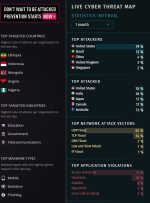
USA always wins, though those African princes are top rated.

capture_04102026_124734.jpg

This one makes a nice screensaver.
 
However, this change is not being made for security reasons; rather, France (and EU governments in general) are trying to reduce reliance on non-EU programs.

This initiative extends beyond a standard desktop migration. France positions Linux adoption as part of a broader policy focused on sovereignty, interoperability, and reducing dependence on foreign vendors. As the announcement comes directly from DINUM, which oversees digital strategy across ministries, it holds greater significance than a local pilot or isolated administrative project.
 
I'm not being dramatic at all, and I'm mainly talking about Europe ;)
Hacks targeting mobile carriers, sports passes, organizations, hospitals, the hunter registry, etc...

Both of you are right actually — you're just talking about different scales :giggle:

Taiwan is clearly on another level due to geopolitical pressure and state-sponsored attacks, that's cyber warfare.

But if we focus on Europe, France is definitely one of the most targeted countries in terms of cybercrime: ransomware, data breaches, attacks on hospitals, telecoms, public services, etc.

So yeah, not the same intensity — but still a massive attack surface.