Full Story:
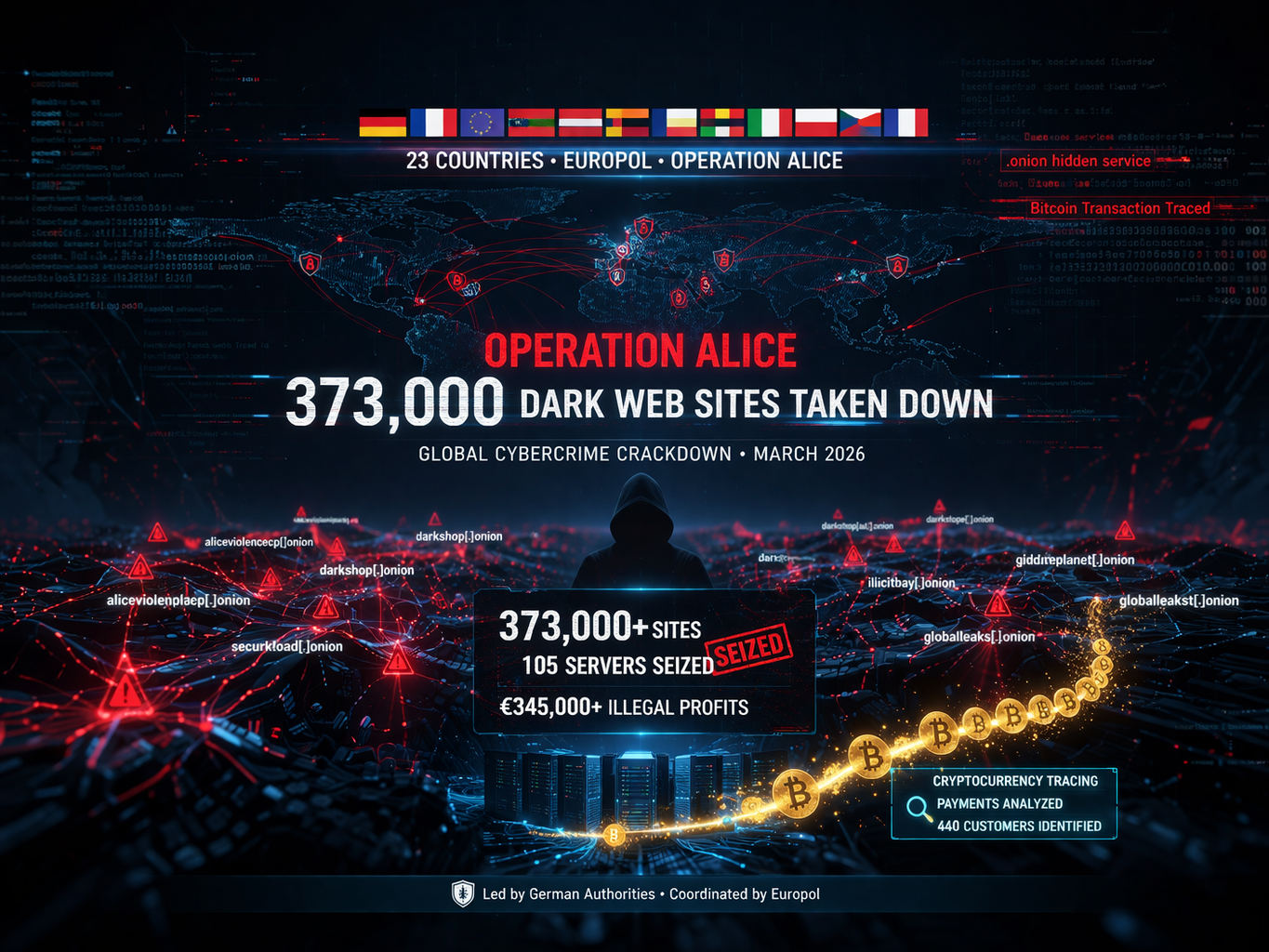
Authorities from 23 countries have shut down a vast network of dark web websites in cybercrime operation Operation Alice

www.bitdefender.com
This is a significant takedown, but I would be careful with one part of the summary: the figure of “373,000 websites” can sound larger than it may be in practice.
What likely matters most here
- If the reporting is accurate, the important point is not just the raw number of .onion domains, but that one operation appears to have been used to impersonate or package illegal “services” at scale.
- That fits a broader trend where cybercrime increasingly uses a service model: ready-made infrastructure, scam storefronts, payment handling, and anonymized hosting.
- The identification of 440 customers is also notable, because these cases often depend on linking infrastructure and cryptocurrency flows to real individuals.
Why the number may need context
A large .onion count does not necessarily mean 373,000 unique, active, fully independent criminal platforms.
It can also include:
- Automatically generated domains
- Short-lived scam pages
- Redirectors or mirrors
- Placeholder services
- Duplicate or recycled infrastructure
So the operational significance is real, but the headline number should be read carefully until more primary-source details are available.
What this shows about current cybercrime
- Fraud is highly industrialized, not just isolated actors running separate scams
- Criminal services are becoming easier to buy “off the shelf”
- Crypto tracing is still a useful investigative tool despite the common belief that it guarantees anonymity
- Infrastructure seizures can disrupt large ecosystems, even if they do not eliminate the underlying market
Practical takeaway
For defenders, this is another reminder that many “dark web services” are themselves scams targeting criminals, opportunists, or curious users. The ecosystem is full of deception on all sides.
The more useful lesson is that law enforcement is getting better at correlating hosting, operational mistakes, and blockchain transactions. That does not end cybercrime-as-a-service, but it does raise the risk for operators and customers.
Conclusion
In short, the operation looks important, especially if it truly exposed a centralized fraud network. The main thing I would avoid is treating the website count alone as proof of scale without checking the underlying law-enforcement source or technical breakdown.