
Google Chrome at 17 - A history of our browser

Gandalf_The_Grey

Level 85
Thread author
Verified
Honorary Member
Top Poster
Content Creator
Well-known
Forum Veteran
Apr 24, 2016
7,757
6
82,472
8,389
54
The Netherlands
I still remember the fall of 2008 when Google launched Chrome - a quirky new browser with a comic book as its press release. As someone who’s spent a long time on the Chrome team, I’ve watched this project grow from a secret skunkworks to a browser used by billions. Chrome turns 17 this week, and it feels like a good time to reflect on how far we’ve come in terms of Chrome’s guiding principles: speed, security, stability, and simplicity [1]. In this write-up, I’ll walk through Chrome’s origins and evolution across these pillars (as best I know them), highlight key milestones (from multi-process architecture to AI-powered features), and share a few behind-the-scenes tidbits along the way. It’s been an incredible journey - one driven by relentless performance improvements, cutting-edge security efforts, and an uncompromising focus on user experience. Let’s dive in!
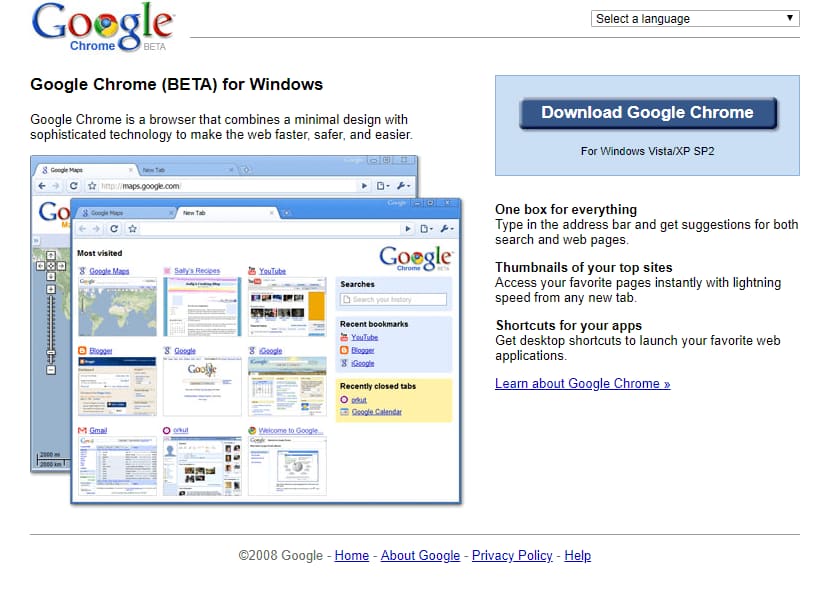
 
This was a very detailed promo for Chrome, but well worth the read. (y)
Chrome’s simplicity is also about feature decisions. Often, the best design choice is to not add a feature that only serves a niche if it would complicate things for everyone.
(y) (y)
Our move to Manifest V3 for extensions (an updated platform that, among other things, forces remote code to be declared and limits some abusive behaviors) caused some debate, but it was driven by the need to keep extensions from undermining security or performance. We’re continuing to iterate on that with community feedback.
Let's hope so.
 
Last edited:
Our move to Manifest V3 for extensions (an updated platform that, among other things, forces remote code to be declared and limits some abusive behaviors) caused some debate, but it was driven by the need to keep extensions from undermining security or performance. We’re continuing to iterate on that with community feedback.

Let's hope so.
And yet, there are still bunch of malicious extensions on Chrome Web Store that successfully attack and scam Chromium users. They did massacre ad blockers though.

The best part is "We’re continuing to iterate on that with community feedback.". The community clearly said they are against this because it makes some extensions useless, but Chromium team went with it anyway.
 
And yet, there are still bunch of malicious extensions on Chrome Web Store that successfully attack and scam Chromium users.
Indeed, they implement different measures, but fail to police the CWS.
forces remote code to be declared and limits some abusive behaviors
Emphasis on "some". MV3 improves security, but clearly not enough.
 
If they wanted to they could lock Chrome down to the highest security level. What is the reason they don't :cautious:?
The goal of MV3 was never a security, rather than making ad blockers step-by-step less and less efficient. Google realized they can't fight them anymore because they became so advanced and powerful, so they used their position as the most used web browser (and engine) in the world and limited what ad blockers can do under excuse of privacy and security.

Remember how every time politicians try to ban end-to-end encryption it is always under excuse of child pornography and drug trafficking? Make lie believable enough and everyone will follow it.