Technical Analysis & Remediations
MITRE ATT&CK Mapping
T1566.002
(Phishing: Spearphishing Link)
T1593
(Search Open Websites/Domains)
T1036
(Masquerading).
CVE Profile
N/A (Technique-based, maps to CWE-1007)
CISA KEV Status: Inactive for the general technique, though actively exploited in the wild for specific software implementations.
Telemetry
Domains
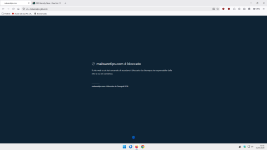
gοogle-example[.]com
xn--gogle-example-abc[.]com
Constraint
Based on the documentation provided, the structure suggests an initial access and credential harvesting vector. However, without definitive binary or network analysis from a live environment, the exact payload type cannot be confirmed. Origin: Insufficient Evidence.
Remediation - THE ENTERPRISE TRACK (NIST SP 800-61r3 / CSF 2.0)
GOVERN (GV) – Crisis Management & Oversight
Command
Establish policies for registering defensive lookalike domains (brand protection) and strictly define acceptable character sets for internal communications.
DETECT (DE) – Monitoring & Analysis
Command
Implement SIEM rules to alert on DNS queries resolving to domains with the xn-- (Punycode) prefix, treating newly observed IDNs as high-risk.
RESPOND (RS) – Mitigation & Containment
Command
Isolate endpoints that have successfully resolved and connected to unverified Punycode domains until forensics can determine if credential theft occurred.
RECOVER (RC) – Restoration & Trust
Command
Force global password resets for any user interacting with suspicious IDN domains and validate all associated MFA configurations.
IDENTIFY & PROTECT (ID/PR) – The Feedback Loop
Command
Configure email gateways and web proxies to normalize Unicode and force the display of Punycode strings (rather than rendered homoglyphs) to end-users.
Remediation - THE HOME USER TRACK (Safety Focus)
Priority 1: Safety
Command
Disconnect from the internet immediately if you suspect you have clicked a homoglyph link and entered credentials or downloaded an unknown file.
Command
Do not log into banking/email until verified clean.
Priority 2: Identity
Command
Reset passwords/MFA using a known clean device (e.g., phone on 5G) for any accounts accessed via the suspected spoofed domain.
Priority 3: Persistence
Command
Check Scheduled Tasks, Startup Folders, and Browser Extensions for unknown entries, particularly if the homoglyph attack led to a file download.
Hardening & References
Baseline
CIS Benchmarks for Web Browser Security (Configure browsers to always display Punycode for IDNs).
Framework
NIST CSF 2.0 / SP 800-61r3.
Source
Seqrite Blog
Cyber Security News




 cybersecuritynews.com