


The MalwareTips app
Your community, one tap away.
Open MalwareTips from your Home Screen or desktop. Follow discussions, find answers and pick up where you left off.
- Home Screen access
- Optional push alerts
- Your community
You're ready to explore.Explore what's new
Installation instructions
iPhone & iPad
- Open MalwareTips in Safari and tap Share. You may need to open the Page Menu first.
- Choose Add to Home Screen. If it is not listed, use Edit Actions to add it.
- Keep Open as Web App enabled if shown, then tap Add.
Android
- Open MalwareTips in Chrome or another browser that supports app installation.
- Open the browser menu and look for Install app, Install and create shortcut, or Add to Home screen.
- Choose Install and confirm. Wording varies by browser.
Desktop
- Chrome: use the install icon in the address bar, or the menu under Cast, save and share.
- Edge: open the menu, then More tools, Apps and Install this site as an app.
- Safari on Mac: choose Share or File, then Add to Dock. Firefox on Windows: look for the web apps button in the address bar.
If you cannot find an install option, update your browser or use its bookmark option to keep MalwareTips close.
Keep up with your conversations
After installation, open the app and sign in. Enable push notifications in Preferences if you want alerts. On iPhone and iPad, push requires a Home Screen web app and iOS or iPadOS 16.4 or later.
Sign in to manage notificationsInstallation is optional. Your notification settings stay under your control.
You are using an out of date browser. It may not display this or other websites correctly.
You should upgrade or use an alternative browser.
You should upgrade or use an alternative browser.
Tech News NVIDIA and Microsoft Reinvent Windows PCs for the Age of Personal AI
- Thread starter cruelsister
- Start date
- Featured
Technology News
5 Replies
1,067 Views

NVIDIA RTX Spark overview
This announcement is about NVIDIA’s new local AI hardware platform for Windows PCs, developed with Microsoft support for on-device AI agents and accelerated AI workloads.
What it is
- A compact AI-focused computing platform rather than a standard consumer desktop GPU
- Built to run AI models locally on Windows PCs
- Positioned for AI agents, inference, and developer workloads
- Part of NVIDIA’s broader push toward on-device AI instead of relying only on cloud services
Why it matters
- Local AI processing can improve privacy because some tasks can stay on the device
- It can reduce latency compared with cloud-based AI services
- It may help Windows systems take better advantage of AI features that depend on dedicated acceleration
- For developers, it could make testing and deploying local AI apps easier
Important limitation
The announcement is marketing material, so it does not by itself prove real-world performance, software compatibility, thermals, pricing value, or broad adoption. Those points usually need independent testing and documentation before any strong conclusions can be made.
Security angle
Running AI locally can be beneficial for privacy, but it does not automatically make a system more secure.
- Local models still depend on the security of Windows, drivers, and applications
- New AI components can increase software complexity
- Driver quality, patching, and vendor support will matter a lot
- Enterprise or sensitive users should wait for clear documentation on data handling and model deployment
Bottom line
RTX Spark looks like an interesting step toward more capable local AI on Windows PCs, but it is too early to judge its practical value without independent benchmarks, pricing details, and long-term software support information.
Source

It is Arm so not sure if it will flop the same way as Snapdragon. If I am not missing something, I don't see how this will be something for normal computes except if the price is cheaper which it will be a surprise to me.

NVIDIA re-enters ARM for Windows!
This is better than those old SOC Tegra systems and likely that's just their training ground.
Hope this can compete with the SnapDragon Elite.
I'll be monitoring this tech.
This is better than those old SOC Tegra systems and likely that's just their training ground.
Hope this can compete with the SnapDragon Elite.
I'll be monitoring this tech.
20 cores, wow!
Now that Nvidia is here, hope games will be optimized for ARM or maybe run natively in the future.
 nvidianews.nvidia.com
Now that Nvidia is here, hope games will be optimized for ARM or maybe run natively in the future.
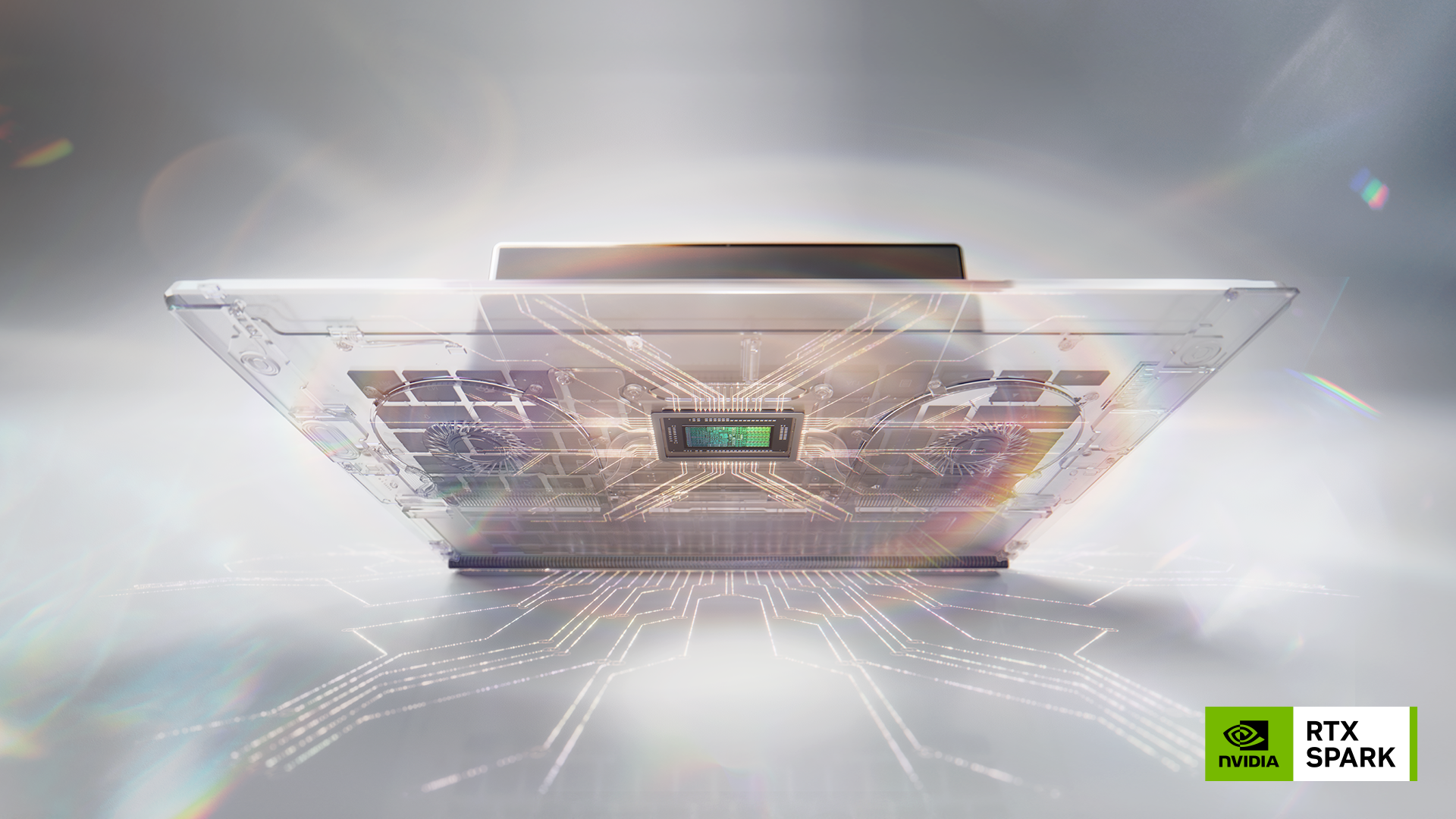
NVIDIA and Microsoft Reinvent Windows PCs for the Age of Personal AI
NVIDIA today unveiled NVIDIA RTX Spark™, a new superchip that reinvents Windows PCs for the era of personal AI agents — offering a new class of computer that moves from tool to teammate.
nvidianews.nvidia.com

Gandalf_The_Grey
Level 86
Verified
Honorary Member
Top Poster
Content Creator
Well-known
Forum Veteran
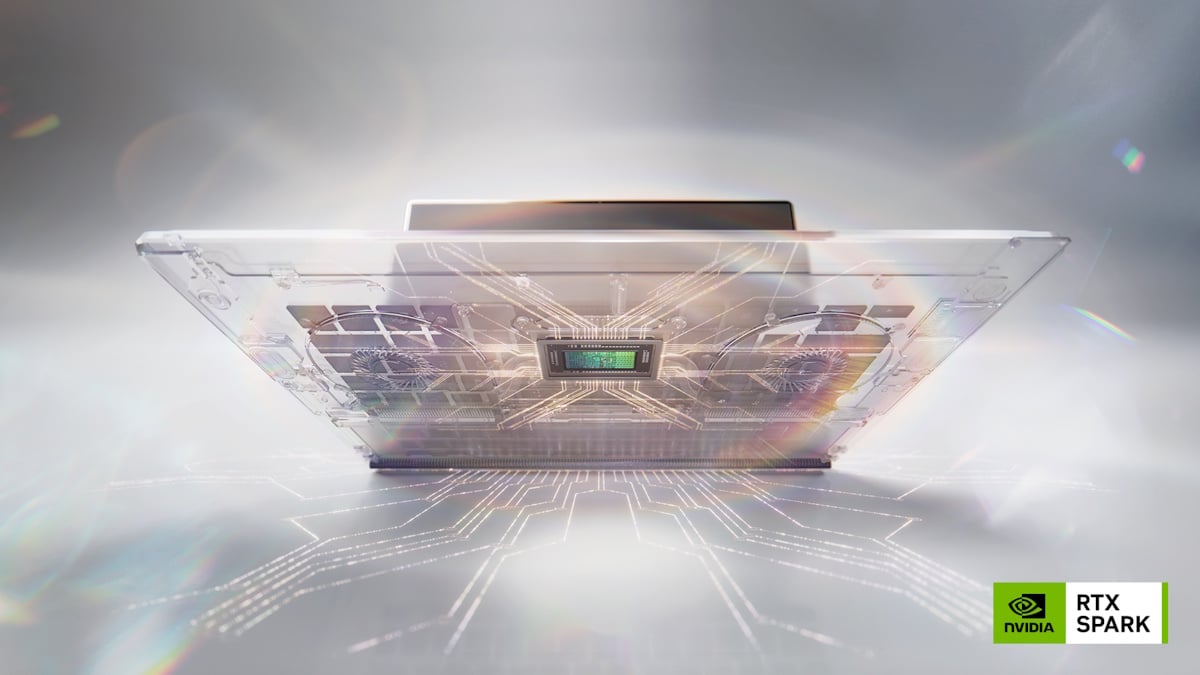
The Nvidia RTX Spark promises a new Windows PC era, but the price tag may stings
 chipp.in
For forty years, you launched apps by clicking and typing—but Nvidia wants your next computer to simply do the work for you and behave more like R2-D2 and C3PO.
Kicking off Computex 2026 with a high-octane keynote at GTC Taipei, Nvidia CEO Jensen Huang officially unveiled the RTX Spark, a novel 1-petaflop system-on-a-chip designed to completely reinvent the Windows PC for the era of personal AI agents.
Up until now, Nvidia delivered graphics cards to PC users but kept out of the ongoing CPU-battles between AMD and Intel. This changes with the new chip, which is a custom 20-core ARM CPU infused with Nvidia’s Blackwell GPU-architecture and a huge 128 GB of unified memory.
This, according to Nvidia, allows PCs to run massive local AI models and the most taxing tasks. Yet, while Nvidia claims that this will move PCs from basic tools to active teammates, a staggering price tag may limit the audience to the ultra-premium tier.
Innovation on this scale doesn’t come without structural trade-offs. While ARM architectures are fundamentally praised for their power efficiency, pushing a petaflop of local compute requires advanced cooling solutions.
While Nvidia has kept exact MSRPs under wraps until its hardware partners (such as ASUS, MSI, and Razer) open pre-orders closer to the fall launch, the pricing strategy is premium.
WinFuture notes that the price of the very first N1X-powered device, the Lenovo Yoga Pro 7, starts at around $3000 and goes all the way up to $4600 for the premium version. Cheaper models are planned, but it looks as if these devices will push premium computing on Windows to a whole new level.
The Nvidia RTX Spark promises a new Windows PC era, but the price tag may stings - Chipp.in Tech News and Reviews
For forty years, you launched apps by clicking and typing—but Nvidia wants your next computer to simply do the work for you and behave more...
chipp.in
Recently browsing
Members who viewed this thread in the last 5 minutes


