Solved Question malware found

Status
Not open for further replies.
How do I find out if my personal files on my Windows PC have not been changed, deleted, or corrupted by this malware? It has already been deleted by Defender, so I can't scan it again.
You will have to verify your files one by one, if you have a backup, then you can compare the hashes.

You expect some sort of a magical solution.

There is no such solution.
 
no backup in pc, has many files, i downloaded in pc check ok after copy for external hdd after scan defender found 1 dll QtWebKit4.dll (Trojan:Win32/Wacatac.C!ml)
kaspersky free and malwarebytes free never detected this filçe in full scan my pc
 
  • Like
Reactions: Khushal
How do I find out if my personal files on my Windows PC have not been changed, deleted, or corrupted by this malware? It has already been deleted by Defender, so I can't scan it again.
You’re fine, dude. Whether it was Kaspersky Free or Windows Defender, your antivirus has been guarding you since late last year. Remember those “dropper detected” alerts? That just means your AV swatted the dropper before it could unpack its nasty payload. This one was a Lumma Stealer — nothing your AV couldn’t handle.

Even during my festival break, I sent your suspicious file to Kaspersky and other AV companies because I knew it was bad news. I thought that would calm you down. But nope — you’re still running around MalwareTips and other forums like it’s the end of the cyber world.

Listen: if none of your accounts were hacked in the past year, that’s a big hint you’re not compromised. Stop making life miserable for yourself and everyone else. Take it easy.
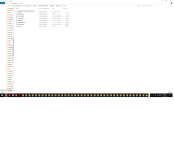
1760203391804.png

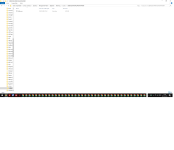
1760203413794.png
 
Modification date shows when the file was last modified (on the attacker side), not when it was dropped on your system.

The file probably arrived as maliciously modified either cracked or modded game.

The QT framework is generally harmless and could be an artefact but… the signature on VirusTotal does not match.

The file was legit and signed, but later on, it was maliciously tampered with.

The file was first seen on VT in 2013.

It probably remained under the shadows.

Your files haven’t been damaged.
The sample uploaded by him has certificate initially signed (but later revoked) in 2024 and was first uploaded on 8 december 2024. Its C2 was also created around the same time. As explained earlier he is fine as he was protected by Kaspersky or Defender or whichever AV he was using around that time. if not he should clarify whether he was compromised around that time.
 
I used Kaspersky Free for many years. I've now switched to Microsoft Defender because Kaspersky Free will be deactivated by the company. A few months or last year, some people accessed my Mega.nz accounts in other countries. I don't know how they accessed them, but I recently changed my password, and this didn't happen. I don't know if it was a leak within Mega or malware, but during this period, I always used Kaspersky Free and completed a regular complete scan.

That's why I was concerned about this QT DLL found with Microsoft Defender after I uninstalled Kaspersky Free.
 
  • Like
Reactions: Khushal
I used Kaspersky Free for many years. I've now switched to Microsoft Defender because Kaspersky Free will be deactivated by the company. A few months or last year, some people accessed my Mega.nz accounts in other countries. I don't know how they accessed them, but I recently changed my password, and this didn't happen. I don't know if it was a leak within Mega or malware, but during this period, I always used Kaspersky Free and completed a regular complete scan.

That's why I was concerned about this QT DLL found with Microsoft Defender after I uninstalled Kaspersky Free.
'Some people' suggests data breach probably but i won't confirm. U were fine with Kas most probably. In search of gold u lost a diamond. (Anyways the diamond is no longer free anyways)
 
  • Like
Reactions: roger_m
If an antivirus (kaspersky free) does not have a signature (database) of a trojan and it is not detected in the full scan, then it will also not be detected in real-time protection due to the behavior of this malware active in the operating system because the antivirus does not know the malware?
 
If an antivirus (kaspersky free) does not have a signature (database) of a trojan and it is not detected in the full scan, then it will also not be detected in real-time protection due to the behavior of this malware active in the operating system because the antivirus does not know the malware?
The missed DLL is only a dll and it is not standalone malware. Even it was there all these months Defender might have flagged it via a scan initiated by u. So it was not active in memory.
 
The missed DLL is only a dll and it is not standalone malware. Even it was there all these months Defender might have flagged it via a scan initiated by u. So it was not active in memory.
All these months and some years I used Kaspersky Free, I started using Defender a few days ago and in the first full scan it detected this strange DLL, in the full scan of Kaspersky Free this DLL was never detected
 
All these months and some years I used Kaspersky Free, I started using Defender a few days ago and in the first full scan it detected this strange DLL, in the full scan of Kaspersky Free this DLL was never detected
i bet u keep on pirating with Windows defender as ur realtime AV, any other third party second opinion scanner be it KVRT, Malwarebytes, NPE, Adwcleaner will find something. But the dfference will be that bcoz u do those scans more often they will show earlier than what happened to u here.
 
i bet u keep on pirating with Windows defender as ur realtime AV, any other third party second opinion scanner be it KVRT, Malwarebytes, NPE, Adwcleaner will find something. But the dfference will be that bcoz u do those scans more often they will show earlier than what happened to u here.
I not never piracy antivirus or antimalware i use some Kaspersky free (after defender), malwarebytes free, adwcleanerfree
 
My question wasn't answered: a Trojan (example: QtWebKit4.dll (Trojan:Win32/Wacatac.C!ml) not identified in the Kaspersky Free full scan with an updated database will also not be recognized and will remain active and hidden in the system, performing operations on files and hackers?

Does real-time protection also require the malware signature (database) used in the scan to protect in real time?

When the malware is in a DLL, what is its active behavior?
 
My question wasn't answered: a Trojan (example: QtWebKit4.dll (Trojan:Win32/Wacatac.C!ml) not identified in the Kaspersky Free full scan with an updated database will also not be recognized and will remain active and hidden in the system, performing operations on files and hackers?

Does real-time protection also require the malware signature (database) used in the scan to protect in real time?

When the malware is in a DLL, what is its active behavior?
Kaspersky and all other AVs perform scanning of modules as well as post-execution behavioural monitoring. This includes reputation, static analysis, heuristics and everything else that is used on executables. Modules have a very similar structure to executables, just the main() method is missing.

The dll needs to be ran through rundll or it needs to be loaded by another executable. Kaspersky in this moment analyses either the behaviour of rundll or the behaviour of the loading process, plus the relationship between them.

Most likely this folder was created after the uninstallation of Kaspersky. Defender uploaded the unknown file and soon after it was identified by cloud machine learning.

Yes, the pre-execution real time scan is the same as on demand scan and requires the same resources.
 
Kaspersky and all other AVs perform scanning of modules as well as post-execution behavioural monitoring. This includes reputation, static analysis, heuristics and everything else that is used on executables. Modules have a very similar structure to executables, just the main() method is missing.

The dll needs to be ran through rundll or it needs to be loaded by another executable. Kaspersky in this moment analyses either the behaviour of rundll or the behaviour of the loading process, plus the relationship between them.

Most likely this folder was created after the uninstallation of Kaspersky. Defender uploaded the unknown file and soon after it was identified by cloud machine learning.

Yes, the pre-execution real time scan is the same as on demand scan and requires the same resources.
This folder with the DLL inside was created well before uninstalling Kaspersky Free, the folder was created before 2024 but this DLL was only detected by Defender, so before Defender detected this DLL with malware was it active in the system performing hidden operations at the time you used Kaspersky Free and kaspersky free not detected dll in scan?
 

Attachments

  • virus Microsoft Defender.png
    virus Microsoft Defender.png
    69.2 KB · Views: 53
  • Like
Reactions: Khushal
This folder with the DLL inside was created well before uninstalling Kaspersky Free, the folder was created before 2024 but this DLL was only detected by Defender, so before Defender detected this DLL with malware was it active in the system performing hidden operations at the time you used Kaspersky Free and kaspersky free not detected dll in scan?
My guess is in the folder with the randomly generated name (at the very top), there was a suspicious executable.

The suspicious executable was deleted (because the folder is blank) but the module QTWebkit wasn’t.

If you look at the “Date Last Modified”, everything else was created at 7:59, this module was created later at 8:10, most likely fetched from a C&C website.

This module is the original module with the digital signatures but it has been maliciously modified by attackers. The malicious functions are called by the executable that was in the randomly generated name folder. Attackers are targeting solutions that don’t properly validate digital signatures and for them, the module will look like it is signed (though honestly not sure which solution this will be).

There are also 2 archives, in these archives most probably is the exfiltrated data.

The fact that the archives are old (no new archives created) and they are also not deleted means that the attack was suspended in its roots (by whatever AV you used December last year).

When infostealers are active, they exfiltrate data constantly, it’s not one-time affair.

The malware remained on disk dormant (latent/inactive). It wasn’t actively operating.
 
inside folder

in 2022, 2023, 2024 i used kaspersky free main antivirus and malwarebytes free some scan
 

Attachments

  • virus Microsoft Defender2.png
    virus Microsoft Defender2.png
    59.9 KB · Views: 55
  • Like
Reactions: Khushal
Status
Not open for further replies.