Solved Question malware found

Status
Not open for further replies.
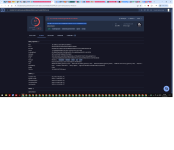
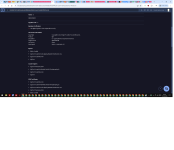
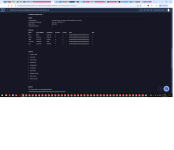
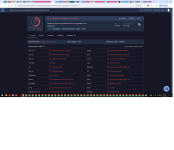
This malware dll was indeed detected in Virus Total and Defender (QtWebKit4.dll was detected as Trojan:Win32/Wacatac.C!ml) but not in the Kaspersky Free and Malwarebytes Free scan. Kaspersky Free's real-time protection also did not activate an alert for this dll.
 

Attachments

  • scan virus total.png
    scan virus total.png
    109.7 KB · Views: 45
  • scan virus total2.png
    scan virus total2.png
    82.1 KB · Views: 36
  • scan virus total3.png
    scan virus total3.png
    81.8 KB · Views: 44
  • scan virus total4.png
    scan virus total4.png
    106.8 KB · Views: 44
It was not added to VT, nor detected in real-time according to OP words.
By real time I mean behavior blocker not signatures, so if you try to run it, and it is not defined in signatures then at that time (real time) the behavior blocker will act and detect its malicious behavior and block it, maybe I did not describe it well in my previous post.
 
  • Like
Reactions: Parkinsond
By real time I mean behavior blocker not signatures, so if you try to run it, and it is not defined in signatures then at that time (real time) the behavior blocker will act and detect its malicious behavior and block it, maybe I did not describe it well in my previous post.
But detecting malware by signature at an earlier phase is more efficient than waiting until executed to be detected by behavioral analysis; the wider the user base, the more rich is the telemetry and consequently, the signatures.
 
But detecting malware by signature at an earlier phase is more efficient than waiting until executed to be detected by behavioral analysis; the wider the user base, the more rich is the telemetry and consequently, the signatures.
You are right but in this sort of software everything nowadays is very convoluted and layered, so just having the users doesn’t mean you have the telemetry. Look at the old Norton that waited for your PC to be idle to send telemetry. And even with a sheer volume of telemetry, you would still need the brain to correlate, process and learn.

Generically analysing though, it’s one of these circles where you have a lot of users -> you do your job well (as proven by tests) -> more users install.
 
You are right but in this sort of software everything nowadays is very convoluted and layered, so just having the users doesn’t mean you have the telemetry. Look at the old Norton that waited for your PC to be idle to send telemetry. And even with a sheer volume of telemetry, you would still need the brain to correlate, process and learn.

Generically analysing though, it’s one of these circles where you have a lot of users -> you do your job well (as proven by tests) -> more users install.
Which AVs are aggressive with sending suspicious files to their cloud for testing/telemetry?
 
Which AVs are aggressive with sending suspicious files to their cloud for testing/telemetry?
Avast, Eset and Kaspersky would be the most efficient in telemetry. Avast doesn’t hide that they extract on average around 250 mb of telemetry from each user daily. In Avast, even though you’ve got many layers (which is the case with Eset as well) the layer that does most of the work is EvoGen. This is similar to Eset.

From the business ones it would be those that have emulation. Including Bitdefender.
 
I did not mean it; you are a genius and I wish you all the best with your project.
Just I consider on-deman scanner less mandatory compared to real-time protection; prevention is better than cure.

In theory, one should not need to resort to 2nd Opinion Scanners IF their Primary Defense of Realtime detected the threats and the confidence on the security product is high.

But in reality, it's needed if something slipped, the Realtime failed and confidence of the detections became low.
 
Last edited:
In theory, one should not need to resort to 2nd Opinion Scanners IF their Primary Defense of Realtime detected the threats and the confidence on the security product is high.

Bur in reality, it's needed if something slipped, the Realtime failed and confidence of the detections became low.
The engine of real-time protection AV such as Norton is better than Norton power eraser; I wonder why NPE is used as the "gold standard" to evaluate Norton; the same applies to K AV and KART.
 
I did not mean it; you are a genius and I wish you all the best with your project.
Just I consider on-deman scanner less mandatory compared to real-time protection; prevention is better than cure.
And what about the tests performed by testers such as @Shadowra? Do they use one of the tools I mentioned in my post #136? All testers use these tools. How will they determine if the machines are clean at the end of the tests? A crystal ball to guess that they are clean? I don't think so. So, they need to perform an on-demand scan using NPE, HouseCall, KVRT, Orion Malware Cleaner, Malwarebytes, and many other malware scanning tools. These tools will give the final verdict on how an AV performed in the tests and whether it left any traces or if the machine was infected. These tools are useful; if they weren't useful, they wouldn't even exist. They may not be useful to you, but for many they are indispensable, especially for malware testers. ;)
 
All testers use these tools. How will they determine if the machines are clean at the end of the tests?
In order to get sound data, they should revise the results not by inferior on-demand scanners, but by running full AVs installed one by one.
But as this procedure takes more time and effort, they prefer the easier solution.
Malwarebytes to judge the results of Kaspersky or McAfee? come on! 🙃
 
In order to get sound data, they should revise the results not by inferior on-demand scanners, but by running full AVs installed one by one.
But as this procedure takes more time and effort, they prefer the easier solution.
Malwarebytes to judge the results of Kaspersky or McAfee? come on! 🙃
I only mentioned Malwarebytes, but nowadays many people no longer use it as a reference due to its decline in malware detection. You are either completely uninformed or out of touch with these tools, because Hitman Pro is just one example that uses several engines when scanning. If I am wrong in my information, @Trident or any malware tester who sees my post can correct me if I am wrong. I know because I have seen it in tests and have used many of these tools, although I have never found anything and have never had to remove anything because I have never had problems with malware.
 
I only mentioned Malwarebytes, but nowadays many people no longer use it as a reference due to its decline in malware detection. You are either completely uninformed or out of touch with these tools, because Hitman Pro is just one example that uses several engines when scanning. If I am wrong in my information, @Trident or any malware tester who sees my post can correct me if I am wrong. I know because I have seen it in tests and have used many of these tools, although I have never found anything and have never had to remove anything because I have never had problems with malware.

NPE, for example, has no virus definitions or behavioral analysis (only reputation check), as I was informed by @Trident; how App like that is used to evaluate the efficacy of AV with signatures, reputation, behavioral analysis?
At least you should use a comparable product.
 
NPE, for example, has no virus definitions or behavioral analysis (only reputation check), as I was informed by @Trident; how App like that is used to evaluate the efficacy of AV with signatures, reputation, behavioral analysis?
At least you should use a comparable product.

1760484106106.png
1760483624824.png
 
Last edited:
Status
Not open for further replies.