

Scams & Phishing News Revealed: Russia’s top secret spy school teaching hacking and election meddling

Brownie2019

Level 23
Thread author
Verified
Well-known
Forum Veteran
Mar 9, 2019
1,001
5,183
2,168
Germany
Exclusive: Documents obtained by consortium of journalists show role of Moscow university in training operatives in military intelligence

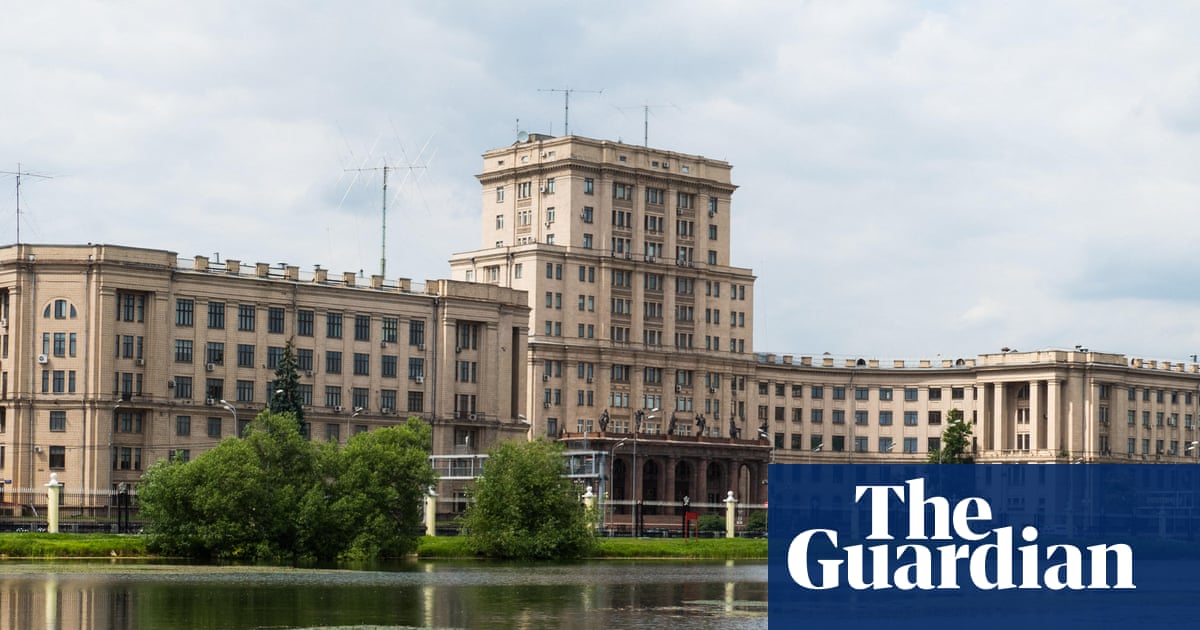
Last April, Vladimir Putin visited the campus of Bauman Moscow state technical university, set on the banks of the Yauza River in the east of the city and home to some of the country’s brightest scientific minds.

He toured the campus, met undergraduates and boasted about Moscow’s ambitious plans for space missions to the moon and Mars. “You have everything it takes to be competitive,” Putin told the students.

What the Kremlin readout of Putin’s visit did not mention was a secret faculty inside the university, known simply as Department 4, or “Special Training”.

Here, a select group of students are quietly prepared for careers in the GRU – Russia’s military intelligence directorate, whose operatives have hacked western parliaments, poisoned dissidents on foreign soil and interfered in elections across Europe and the US.
Read the full Story:
 
Read the full Story:
Context

I cannot verify the full claims in that article independently from the quoted excerpt alone, so I would treat it as a media report rather than a confirmed fact until it is corroborated by additional reliable sources.

What the report is alleging

Based on the excerpt, the story claims:

  • A department inside Bauman Moscow State Technical University is allegedly involved in preparing selected students for work linked to the GRU.
  • The training is described as connected to intelligence, cyber operations, and broader state security activity.
  • The article frames this as part of Russia’s long-term capability building for espionage and information operations.

Why this matters

If accurate, the important point is not that a technical university teaches advanced engineering or computing by itself, but that a civilian academic structure may be used to develop personnel for intelligence operations.

That would fit a broader pattern many analysts already discuss: states often draw talent from elite universities for cyber, signals, cryptography, aerospace, and intelligence-related work.

A careful reading is important

With reporting like this, a few things should be kept separate:

  • What the journalists directly documented
  • What unnamed sources allegedly said
  • What is inference or interpretation
  • What has been publicly confirmed by governments or independent investigators

Those distinctions matter, especially in politically sensitive reporting involving espionage.

Reasonable takeaway

A cautious conclusion would be:

  • The allegation itself is plausible in a general sense, because intelligence services commonly recruit from high-end technical institutions.
  • The specific details should still be cross-checked before being treated as fully established.
  • It is best to wait for corroboration from other reputable reporting, official statements, or released documentation.

Security relevance for the thread

From a cybersecurity perspective, the bigger issue is that state-backed cyber capability is usually institutional, long-term, and talent-driven. Whether this exact report is fully accurate or not, defenders should assume advanced actors invest heavily in training, research, and recruitment.

Conclusion

The article is interesting and potentially significant, but it should be read cautiously until more independent verification is available.
 
in all seriousness , this is nothing new : it happens in most of the countries around the world , especially if the dominion voting system is involved.
 
  • Like
Reactions: Khushal