
Norton safe web is one of the mose efficient against new phishing links
View attachment 296396Safeweb
safeweb.norton.com
View attachment 296397

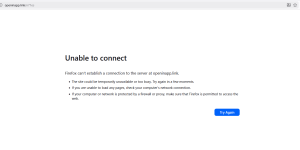
site is down?
Last edited by a moderator:


Open MalwareTips from your Home Screen or desktop. Follow discussions, find answers and pick up where you left off.
If you cannot find an install option, update your browser or use its bookmark option to keep MalwareTips close.
After installation, open the app and sign in. Enable push notifications in Preferences if you want alerts. On iPhone and iPad, push requires a Home Screen web app and iOS or iPadOS 16.4 or later.
Sign in to manage notificationsInstallation is optional. Your notification settings stay under your control.
Norton safe web is one of the mose efficient against new phishing links
View attachment 296396Safeweb
View attachment 296397
Norton safe web is one of the mose efficient against new phishing links
View attachment 296396Safeweb
View attachment 296397
openinapp website is not phishing
it redirects to another link which is phishing.
wrong attribution by norton.
ESET attribution about below site as phishing is correct

It also appears in Google Search. However, I had to allow the URL right here because, even though it’s in Google Search, it’s being blocked and already redirects to a malicious URL.

i hope the urls and RMS backdoor is submitted.I could get the exe that offered that site:
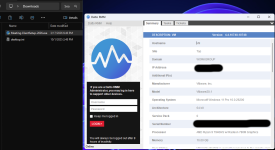
Looks like a Remote Access tool.

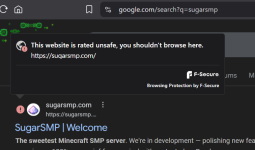

Hmm... that's interesting. Is this valid or not?
I do like some of the other AV's and DNS warnings that are more specific (Reason), than F-Secure's sometime more general, generic warning.
That helps a lotAnd maybe one of that advantages of a browser extension using web rating icons, for a general search before landing on, going to the page?
View attachment 296404

Even if I didn't have any antivirus software or DNS protection extensions. NextDNS alone would block it, see. "The website is being blocked by threat intelligence feeds and AI-based threat detection systems". @Sampei.Nihira, I noticed that he advocates for using a DNS service like NextDNS or ControlD.I do like some of the other AV's and DNS warnings that are more specific (Reason), than F-Secure's sometime more general, generic warning.


I reported, just waiting...
I executed it in my VM + KPremium, it looks like a typical Remote Access tool...

Yes, it's an essential component for me in terms of security, and it has the advantage of not consuming resources.Even if I didn't have any antivirus software or DNS protection extensions. NextDNS alone would block it, see. "The website is being blocked by threat intelligence feeds and AI-based threat detection systems". @Sampei.Nihira, I noticed that he advocates for using a DNS service like NextDNS or ControlD.
Would one of those options be using a Windows app based VPN? @Divergent thank you for bringing this up, as it was education opportunity between Gemini, Perplexity and I. Not to leave anyone here out of answering my questions, but they cover a lot of information succinctly, with my other thoughts and follow up questions as wellThis is a bit of advice for those testing these websites and domains from your systems instead of using third-party tools.
When security software doesn't know a site is compromised until it starts receiving data from it, your computer initiates the "handshake" with the server, and the server begins sending the website's code back to you. Your security software scans this incoming code in real-time, spots a malicious script (like a trojan or phishing attempt), and abruptly cuts the connection.
Because your computer successfully initiated the connection before the software pulled the plug, the compromised server did receive your IP address during that initial handshake.
If you are going to poke around malicious domains, always use a third party web-based tool.


So for those of us who want to see if our AV is flagging it as a malware site, don't do it just to post it here..."look what F-Secure can do", and let it do it's work for normal web surfing, and instead use something like URLScan.io or Browserling as you mentioned. In fact the same could be said for testing our browser extensions on PhishTank Valid site.That’s a great point, @Jonny Quest. A VPN would definitely add a layer of privacy by hiding your real IP from the malicious server (which is always good), but the security risk @Divergent mentioned would still be there.
Even with a VPN, your own browser is still the one 'talking' to the site and processing its code. That’s why tools like URLScan.io or Browserling are so helpful—they act as isolated environments designed to 'take the hit' for you, analyzing the site without anything ever touching your actual system.
Hello,
No malicious software was found in the attached file.
Best regards, Malware Analyst
Members who viewed this thread in the last 5 minutes

