



Gandalf_The_Grey
Level 86
Verified
Honorary Member
Top Poster
Content Creator
Well-known
Forum Veteran
A youthful Steve Jobs unveiled the original Apple Macintosh 42 years ago. Far more than just yet-another-PC launch, Jobs’ unveiling was a pivot point in the way that humans would interact with computers for work and play. It popularized the intuitive windows, icons, menus, and pointers (WIMP) model of computer interactivity. We’re still wedded to this paradigm, despite the best efforts of 3D, AR, XR, VR, voice interaction, gesture controls, and even brain computer interface designers.
The Apple co-founder started his presentation with an inauspicious looking rectangular bag on a desk. It looked a lot like one of the now-familiar insulated takeaway delivery bags, used by delivery app riders.
Jobs lifted the Apple Macintosh out of its cover, placed it on the desk, plugged in a power cable and mouse. The screen briskly came to life with the on-screen disk icon prompting to be fed. Then the Apple exec coolly pulled a 3.5-inch floppy from his blazer pocket, inserted it, and the audience watched a killer computer demonstration - all generated by the computer.
The original Mac demo began with a large ‘MACINTOSH’ scrolling banner, to rapturous applause. However, the key to the popularity and success of WIMP model computing since that time to today came along next. The audience saw a slideshow with a series of GUI-based apps that would introduce intuitive creative workflows to computing. What You See Is What You Get (WYSIWYG) painting, DTP, and a multitude of fonts were all demonstrated 42 years ago, and these capabilities would ship from that momentous day onwards.
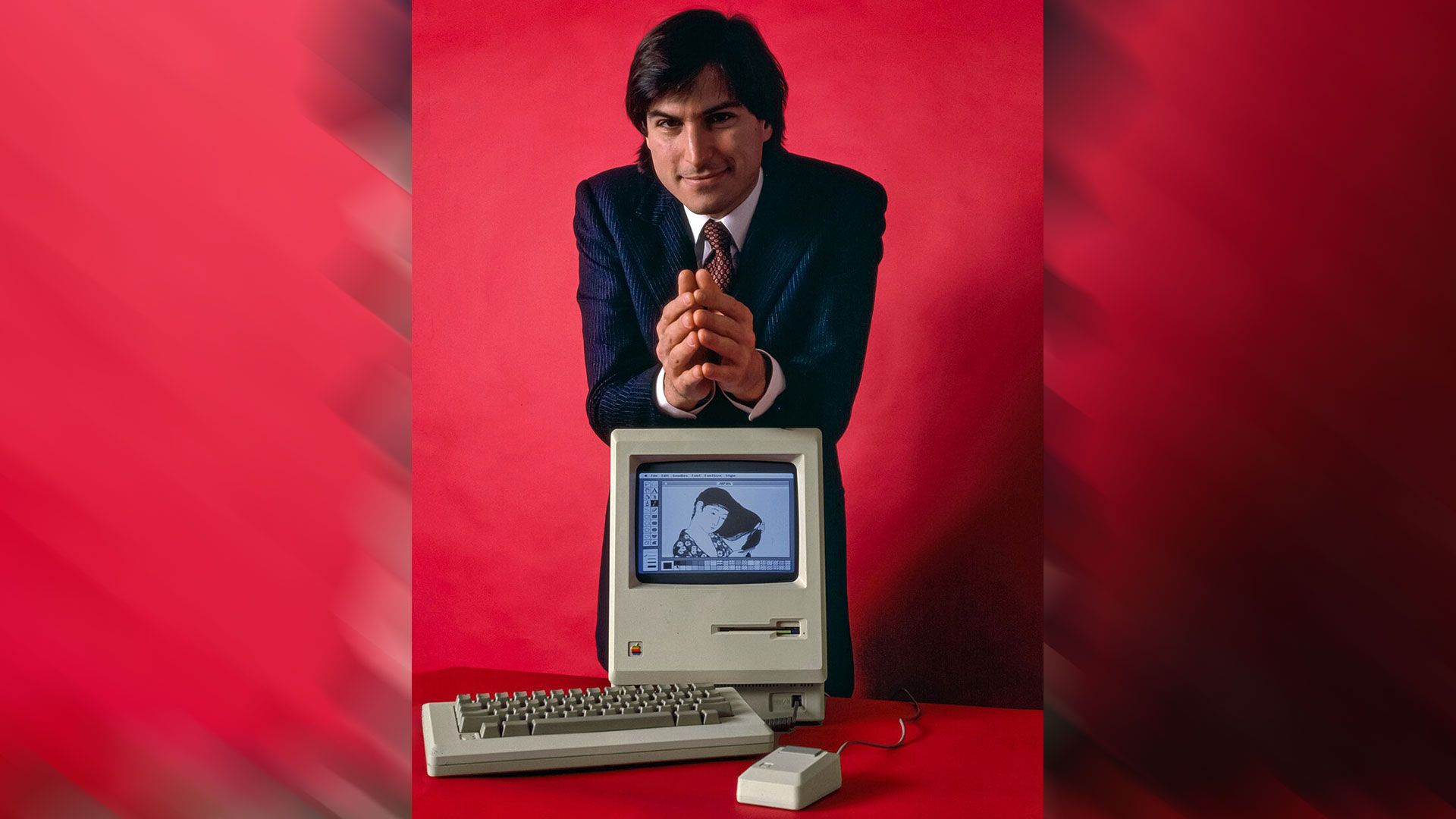
The Apple Mac turned 42 this weekend — we are still using the WIMP GUI WYSIWYG computing paradigm in 2026
Despite the best efforts of 3D, AR, XR, VR, voice interaction, gesture controls, and BCIs, we are still clicking icons with mice and keyboards.


