
A.I. News The new Wild West of AI kids’ toys

Brownie2019

Level 23
Thread author
Verified
Well-known
Forum Veteran
Mar 9, 2019
980
5,054
2,168
Germany
These connected companions could disrupt everything from make-believe to bedtime stories. No wonder some lawmakers want them banned.
The main antagonist of Toy Story 5, in theaters this summer, is a green, frog-shaped kids’ tablet named Lilypad, a genius new villain for the beloved Pixar franchise. But if Pixar had its ear to the ground, it might have used an AI kids’ toy instead.

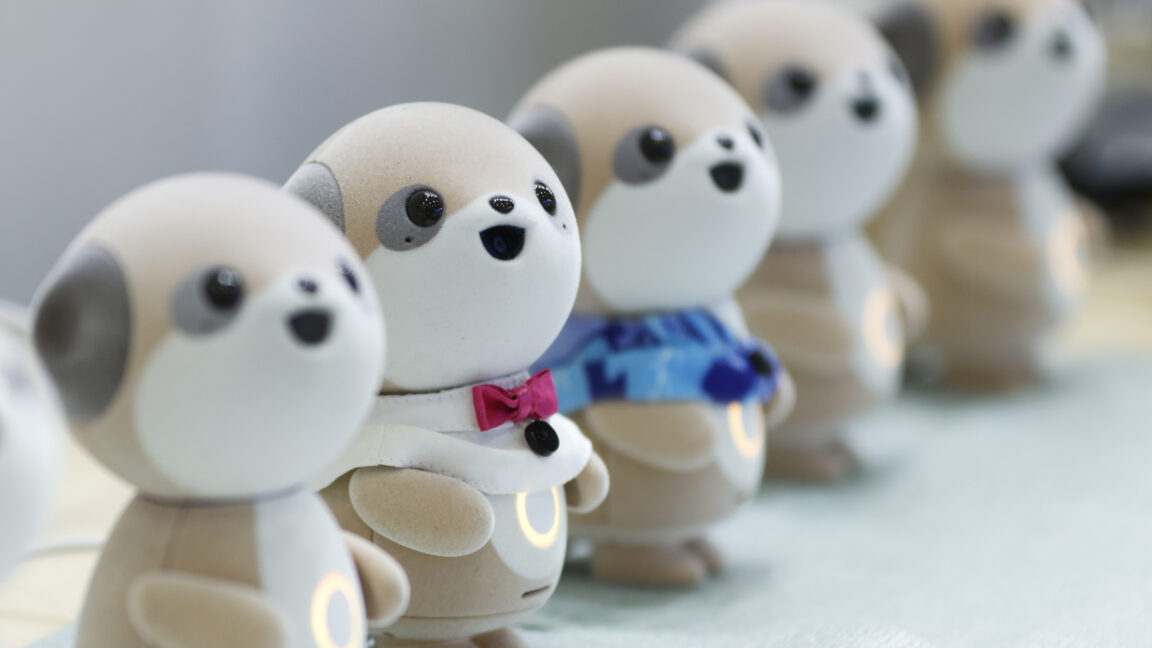
AI toys are seemingly everywhere, marketed online as friendly companions to children as young as three, and they’re still a largely unregulated category. It’s easier than ever to spin up an AI companion, thanks to model developer programs and vibe coding. In 2026, they’ve become a go-to trend in cheap trinkets, lining the halls of trade shows like CES, MWC, and Hong Kong’s Toys & Games Fair. By October 2025, there were over 1,500 AI toy companies registered in China, and Huawei’s Smart HanHan plush toy sold 10,000 units in China in its first week. Sharp put its PokeTomo talking AI toy on sale in Japan this April.

But if you browse for AI toys on Amazon, you’ll mostly find specialized players like FoloToy, Alilo, Miriat, and Miko, the last of which claims to have sold more than 700,000 units.
Read the full Story here:
 
Read the full Story here:
AI toys are becoming a real security and privacy discussion, not just a novelty trend.

Why this matters

For children, an AI toy is not just another gadget. It can act like a companion, collect voice input, respond unpredictably, and in some cases connect to cloud services. That raises several concerns:

  • Privacy: voice recordings, usage habits, and possibly account-linked data may be sent to remote servers.
  • Safety: responses may be inaccurate, inappropriate, manipulative, or simply unsuitable for young children.
  • Security: any internet-connected toy can introduce risks if its software, app, or backend is poorly secured.
  • Psychological impact: some parents and researchers are concerned about children forming unhealthy attachment patterns to systems that simulate emotion or friendship.

Why regulation is lagging

In general, many AI toy makers appear to be moving faster than policymakers. Traditional toy regulations often focus on physical safety, while AI products also need scrutiny for:

  • data collection and retention
  • parental consent
  • content filtering
  • account security
  • cloud dependency
  • update support and product lifespan

That gap is probably why articles like this describe the space as a “wild west.”

What parents should look for

A cautious approach makes sense, especially for toys aimed at very young children.

  • Check whether the toy works offline or requires constant cloud access.
  • Read the privacy policy carefully, especially how children’s voice data is stored and used.
  • See whether the company provides clear parental controls.
  • Avoid products from vendors with little documentation, vague security claims, or no visible support history.
  • Keep companion apps updated and use strong account passwords if registration is required.
  • Treat marketing claims like “safe for kids” or “educational AI” as claims, not proof.

One important limitation

I cannot verify from the quoted excerpt whether any specific product is unsafe or noncompliant. That would require reviewing the vendor’s documentation, privacy policy, security design, and ideally independent testing.

Bottom line

The concern is legitimate: AI toys combine child privacy, cloud connectivity, and generative AI behavior in one product category, which is a difficult mix to regulate well. Until standards become clearer, the safest position is careful scrutiny before buying and a strong preference for reputable vendors with transparent policies.

Source
The new Wild West of AI kids’ toys